Democracy Must Deliver Material Gains to Resist Authoritarian Appeal
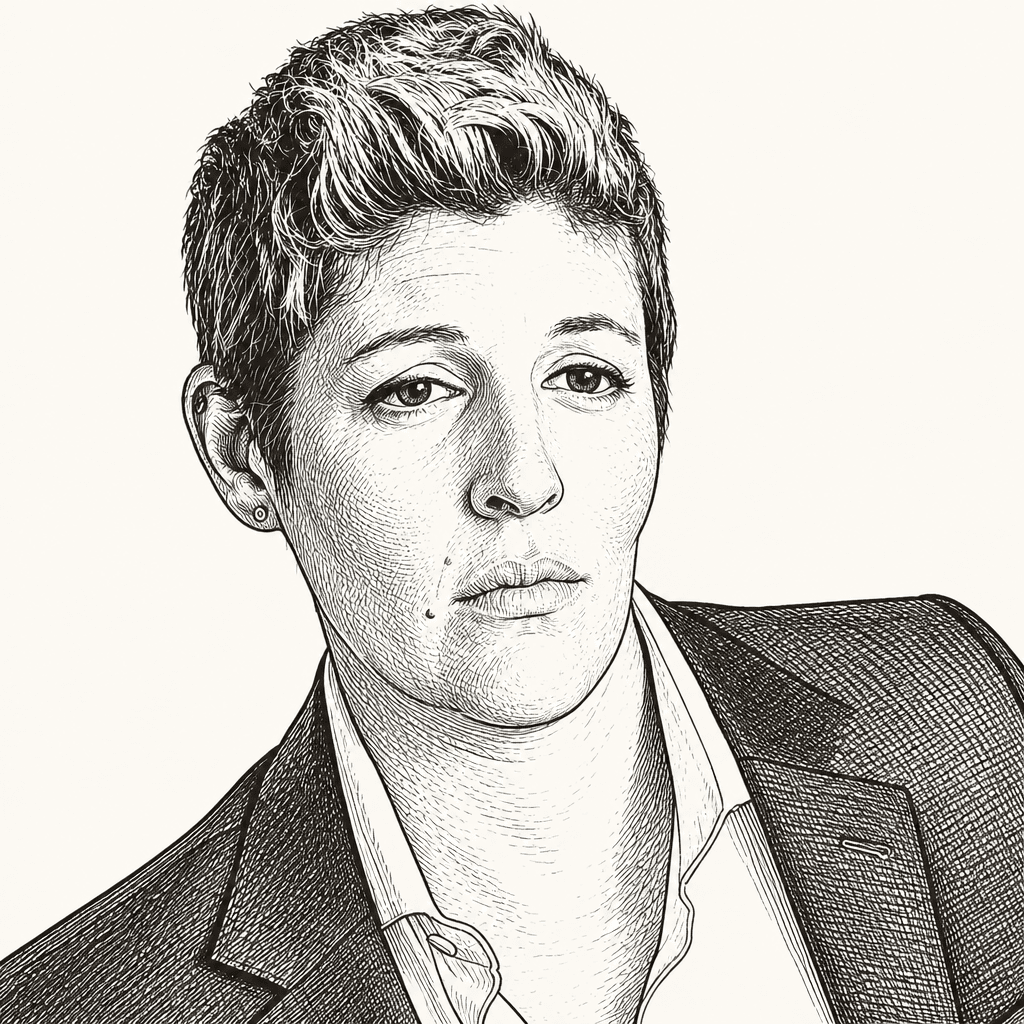

Sally Kohn and Jeff Maurer do not make the case for a formal wealth limit on politicians in this TED “Idea Knock Down” exchange. Instead, Kohn argues that democracy is losing ground because it is failing to deliver material gains for ordinary people, while Maurer says the deeper problem is a political class and party system too detached from the public it claims to represent. Both return to the same underlying concern: money’s grip on politics is weakening democracy’s claim to work for everyone.
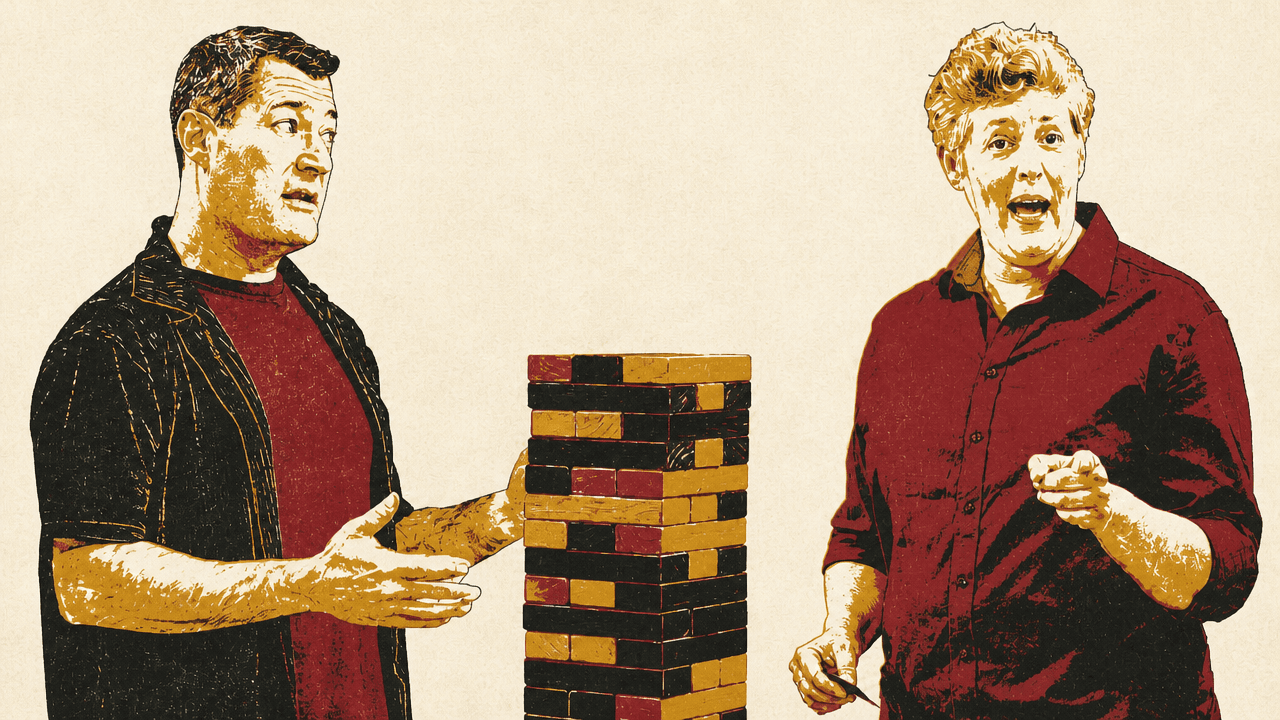
Democracy’s failure is measured in wallets, not slogans
Sally Kohn begins from a premise that democracy can work better “for our lives and our wallets,” but only if it is judged by what it delivers to ordinary people. When asked whether there is a version of democracy that actually works for everyday people, she says yes — but not under current expectations. Her conditions are blunt: get money out of politics and make democracy prioritize working people.
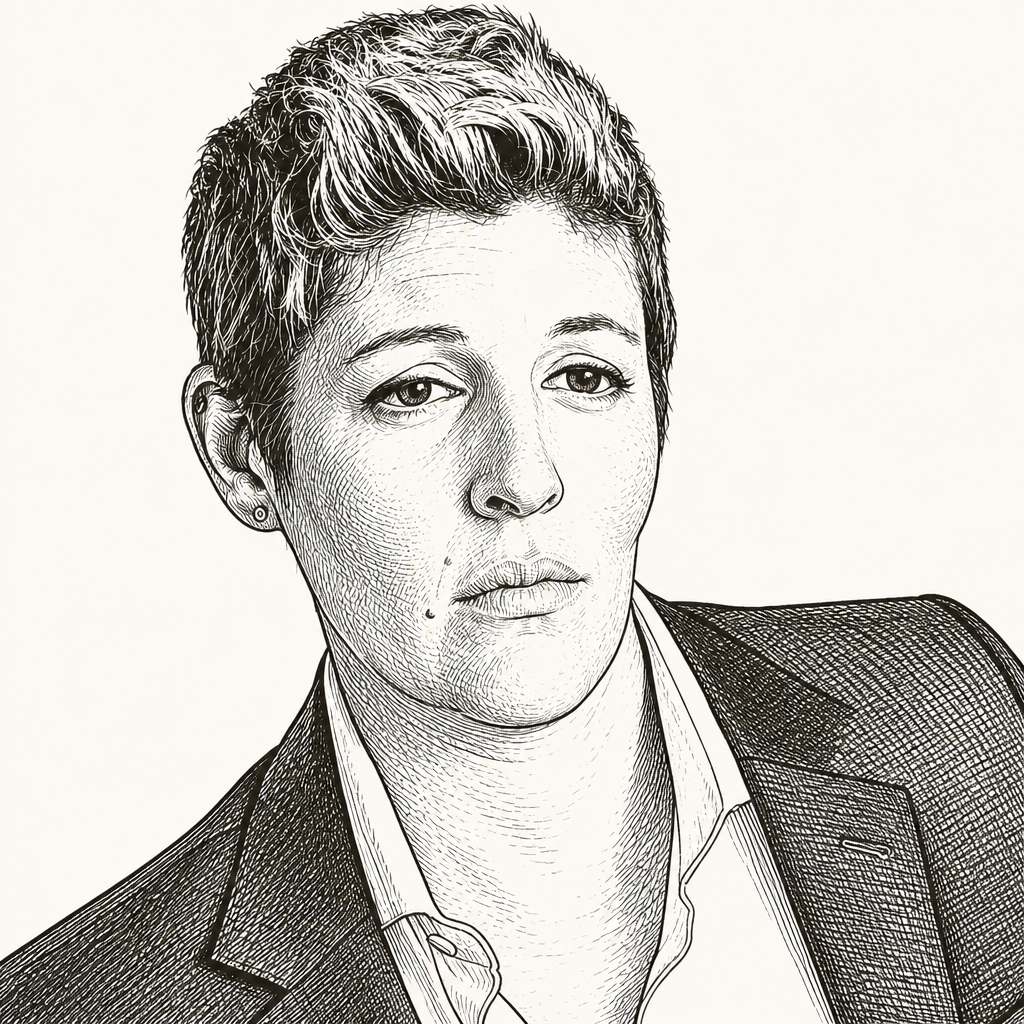
That answer also frames the later question about wealth and officeholding. Neither Kohn nor Jeff Maurer argues for a wealth limit on candidates. Both instead return to the role of money in politics and the distance between political leadership and the people it represents.


Kohn’s material standard shapes her account of why authoritarianism is “having a moment.” She rejects the formulation that authoritarianism is “winning,” and argues instead that authoritarian politics are flaring globally because democracy is failing to deliver tangible improvements in people’s lives, especially financial improvements. She links democratic erosion to extreme income inequality, saying there is a “massive correlation” between countries with extreme inequality and weakening democracy.
Her explanation is less about authoritarian competence than democratic underperformance. If people experience the political system as not working for them, she asks, why would they keep voting for it?
Authoritarianism is flaring up around the globe, not because of anything authoritarianism is doing right, but because of what democracy is getting wrong.
Kohn’s anxiety about the next generation follows the same logic. She describes the United States, and the world more broadly, as being “on a knife’s edge.” The choice, as she frames it, is whether the United States and the global community will “pay forward” wealth, opportunity, roads, schools, and other public goods — or allow extreme wealth and inequality to continue accumulating. She folds into that concern cuts to USAID and aid, the “disintegration of the global world order,” and the unresolved consequences of climate change. The result is not certainty of decline, but a fear that opportunity depends on collective decisions that are still being made.
A wealth limit is less important than breaking money’s hold on politics
On the specific question of whether candidates for office should face a wealth limit, Jeff Maurer does not endorse a cap. He says he does not regard wealth itself as inherently bad, and Kohn teases out what she calls “the little libertarian” in him. But Maurer does not defend the current composition of political leadership either. He says American leadership skews toward the ultra-wealthy, creating a disconnect between representatives and the represented.
The exchange lands less on wealth limits than on political access and representation. Maurer resists a cap as the mechanism, while sharing Kohn’s concern that money distorts politics. Kohn’s stated position is that democracy should prioritize working people and that money should be taken out of politics. Maurer says money should be taken out of politics “100 percent,” and argues that doing so would produce more candidates and representatives who are actually representative of the public.
We're not all millionaires, and nor should be our Congress.
His standard is descriptive as much as normative: most Americans are not millionaires, and Congress should not be a class apart from them. Kohn’s earlier answer supplies the more structural demand — not merely different candidates, but a democracy whose incentives and outcomes prioritize working people.
The exchange also exposes a tension in appeals to founding ideals. Maurer suggests that “our founders” would not have liked a leadership class so disconnected from the people; Kohn interrupts that claim by noting that the founders were “all landed white dudes.” Maurer accepts the complication, reframing the issue as a gap between stated values and political practice. Kohn summarizes that gap as a recurring American pattern: “our values and our history never quite match up.”
Representation fails when money and party labels narrow the public
Jeff Maurer’s objection to wealth concentration in Congress is part of a broader concern about whether political institutions can actually reflect the country. His example of overused political language is “bipartisan,” and his complaint is not just about cliché. The United States, he argues, contains too many factions, perspectives, and points of view for only two parties to represent them adequately.
In that context, language organized around partisan, left, right, and bipartisan politics can become, in Maurer’s words, “a distraction” from the fact that people are not getting their voices heard. A deal can be called bipartisan while still leaving many Americans feeling unrepresented. The same concern runs through his answer on wealth limits: leadership should not be filtered so heavily by money that the people making decisions become socially and economically detached from the people governed by them.
Sally Kohn’s account adds the material consequence of that detachment. If democracy does not improve people’s lives, and if political representation is visibly removed from ordinary experience, the system loses more than rhetorical appeal. It loses the practical claim that participation can matter.
Trust and norms are treated as civic infrastructure
Jeff Maurer’s answer to what is worth rebuilding now is “trust.” He pairs it with integrity and treats both as prerequisites for collective action. Without trust and integrity, he says, there is “no functioning” and “no working together,” which means people cannot do anything greater than themselves.
That emphasis sits beside Sally Kohn’s argument about norms. Asked what version of her country she still holds out hope for, Kohn says hope itself is a civic tool, paired with love: love for the country and for “all, all, all of the people in it.” But she immediately names the fragility beneath that hope. Much of society, she says, is held together by norms — “good behavior, decency, kindness, respect” — and the consequences are serious when those norms are not upheld.
Her concrete example is deliberately ordinary. In her politically diverse community, people arrive at a four-way stop and most respond, “Oh, no, you go first.” To Kohn, that small act captures “the best of us” and supports her hope for the rest of civic life. The example matters because it makes her account of democracy local and behavioral: democratic possibility depends not only on institutional design, but also on repeated habits of decency between people who may not agree.
Privacy enters as a separate pressure on social life. Maurer is pessimistic about whether privacy is still possible, answering “sadly” no. He attributes some social angst and unrest to the fact that people are increasingly tracked and monitored, with technology empowering that surveillance. He points to “big authoritarian technocracies” as a frightening indication of where such capabilities can lead. Kohn agrees on the concern: “The surveillance state is worrying.”
The world does not work as hoped, but responsibility remains
Sally Kohn’s answer on success moves from politics to survival. Asked whether success can exist without someone else losing, she rejects the premise of zero-sum thinking. “We all win when we all win,” she says, arguing that a country or world cannot be sustained if success is defined as one party’s gain requiring another’s loss.
Climate change is her main example. If humanity fails to fix climate change, she argues, no one can meaningfully succeed inside that formula. The issue reveals, for Kohn, the inadequacy of thinking about human affairs as separable wins and losses. Humanity, in her account, has always been interwoven, but is now even more visibly connected.
That sense of interdependence sits alongside Jeff Maurer’s answer to what he would tell a 15-year-old about how the world works. His first sentence is bleak: “Not the way you hope it does.” Kohn immediately adds, “But it could be better.” Maurer accepts the amendment and adds responsibility: the young person has a role in making it better.