A Desktop Full of Files Cannot Guarantee Retrieval
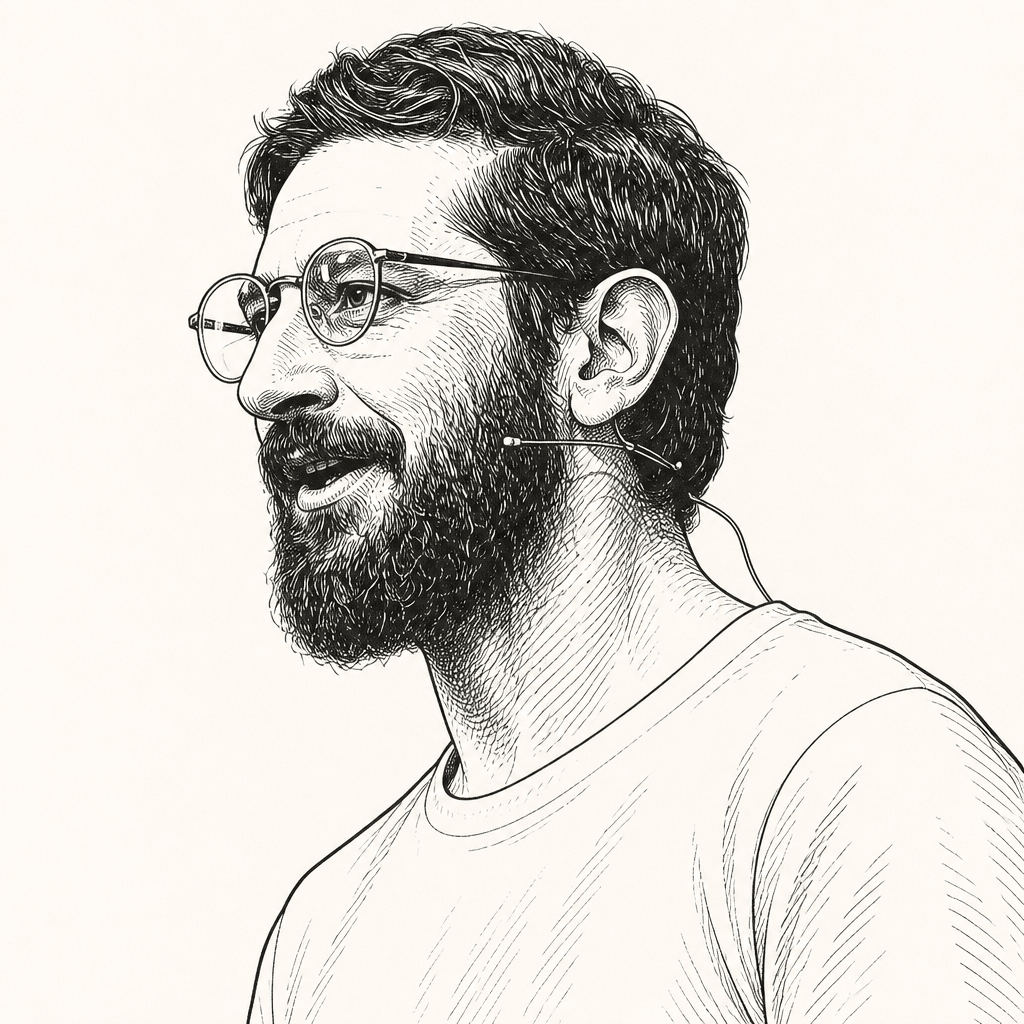
Technologist and comedian Alan Resnick argues that “save it to your desktop” is more than a file-management instruction: it is a way to keep data, memories and physical objects visible rather than letting them disappear into the internet. In his TED talk, he proposes a desktop that holds everything—from family photos and poems to 3D scans of keepsakes—and rejects toolbars and conventional organization in favor of total proximity. The resulting crowded screen tests his claim that what remains in sight can also remain findable.
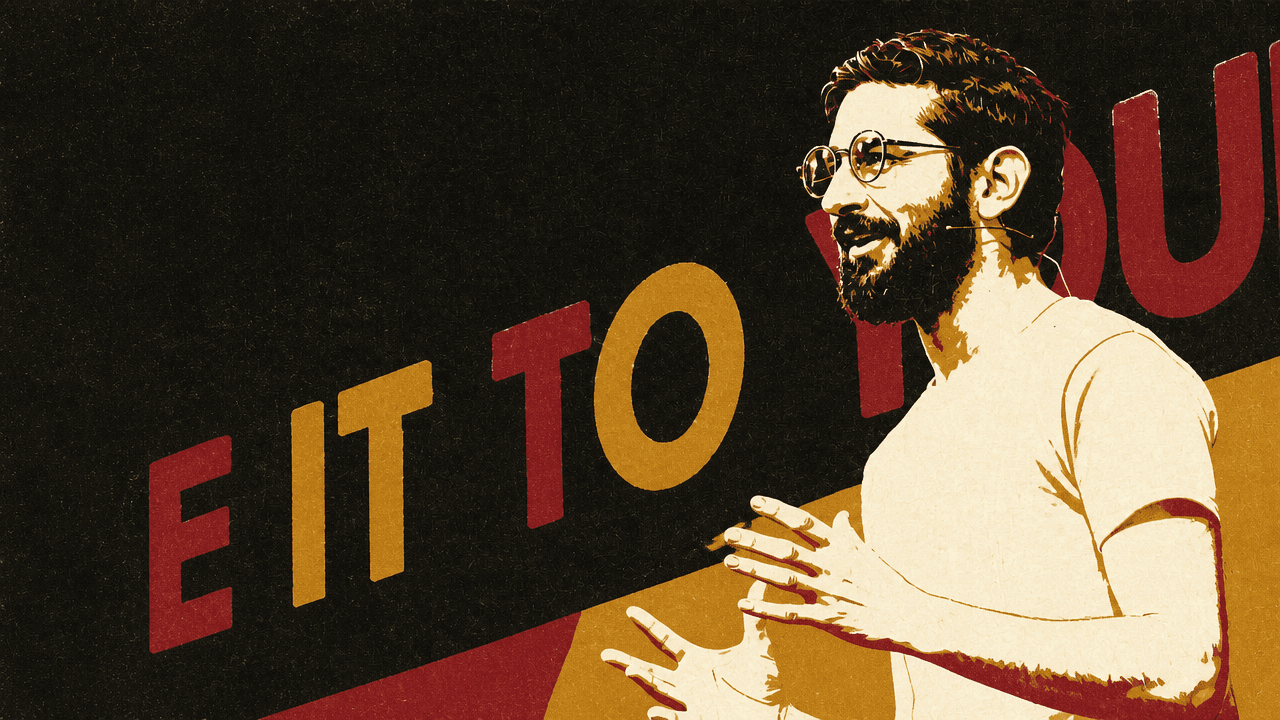
The desktop is offered as a defense against disappearance
Alan Resnick offers “save it to your desktop” as a complete answer to computer anxiety. He presents the instruction not merely as a filing habit but as a way to make life easier, protect one’s data and calm down in the face of an internet he depicts as full of unsettling images, videos and people who possess the audience’s data.
Save it to your desktop.
The promise rests on visibility. Resnick compares the desktop to the top of a physical desk: a surface where useful things remain immediately available. Photos, emails, PDFs, movies, video games, key codes, MP3s and Zip disks can all go there. If something is saved to the desktop, his logic suggests, it has a known place and can be kept close.
But the instruction also becomes a theory of what ought to be preserved. Resnick says computers should not be “used” so much as treated like grandparents: not instrumental objects exactly, but things that can make life easier when handled properly. The desktop is cast as a place for the practical, sentimental and personal at once—not just work files but whatever one wants, needs or loves.
He supports the prescription with a chain of escalating claims about vibration. Skin, he says, vibrates at a rate people cannot see; dogs and pets can hear human skin; computers vibrate at the exact opposite rate. When a person touches a computer, he says, their vibration rate becomes zero—a condition otherwise reached when someone blows out candles on their fifth birthday. The sequence makes working with a computer sound like a route to a peculiar form of bodily and emotional alignment.
Anything worth keeping can enter the system
The desktop’s ambition is to absorb more than ordinary digital material. Resnick illustrates the system with an email from his father containing lawn photographs and a note telling his son that he is “the sun that produces photosynthesis and makes our lawn grow,” and that he will remain part of the family “no matter how far you run.” Resnick saves the photos to the desktop, then prints copies and places them on the physical desk.
When he opens an old poem, “Whisper,” he identifies its desktop location as “C5,” the bottom-right corner of his desk, then retrieves a printed copy from the corresponding area of the real desk.
Why whisper when a yell can travel just as far? A whisper yelled is a whisper heard.
The demonstration treats the crowded screen as a coordinate system rather than a conventional filing structure. The file is findable, in Resnick’s account, because its on-screen position corresponds to a physical position nearby.
That logic extends to an object from his ex-girlfriend that sits on his desk and, he says, makes him happy to look at. It is not yet in the computer, but he insists that literally anything can be saved to the desktop. His procedure involves placing cameras around a bucket, filling it with black water, painting the object white, then submerging and lifting it while filming.
Resnick says this records the object’s “topology through time.” After obtaining and “booleaning” its axis data, he says, the process produces a high-quality OBJ file. Screens of point clouds and 3D-modeling software show the white, lumpy sculpture becoming a gray rendered object, eventually placed amid the desktop’s other files.
There is room for everything you need right here on the desktop.
Total visibility collides with the problem of finding anything
Resnick’s own desktop is the visual test of the doctrine. It is covered edge to edge with overlapping icons and windows: PDFs, WMV files, DVD and RTFD items, screenshots, folders and application shortcuts. A rendered version of the lumpy sculpture floats among them. The background has effectively disappeared. Rather than treat this density as a failure, Resnick presents it as the desirable outcome of saving everything in one place: follow the rule, he says, and one can have “an awesome desktop” and “a wicked awesome life.”
The screen makes the central tension visible. The system promises that nothing will be lost because everything remains before the user, yet accumulation leaves little clear separation between the things being preserved. His retrieval of the poem does not depend on sorting or search; it depends on the claimed map between a screen position and a physical desk position.
His rejection of the toolbar sharpens the proposition. Resnick says his computer has no toolbar or dock because he is not “addicted” to it. In an inflated comparison, he places a national “toolbar problem” alongside obesity and fentanyl. The toolbar represents an unnecessary second place to look; the desktop is supposed to contain everything.
Desktop competence becomes, by the end, a condition of social survival. Without organizational and desktop skills, he warns, a person will not get a job; their data will leak onto the floor for people to slip on; their children will live on their desktops. He forecasts people talking to computers, wearing glasses powerful enough that they never need to come home, and carrying computers small enough to fit on a piece of breakable glass.
The closing image unsettles the promise of permanent storage. The packed desktop suddenly clears as files and folders blow across the screen like leaves, revealing a grassy field beneath a cloudy sky. After insisting that important things can be kept visible and available, the archive scatters.