Cheap Solar Makes Deployment Speed the Decisive Climate Question
Environmental writer Bill McKibben argues that solar and wind have become the cheapest new sources of electricity, making a global shift away from fossil fuels economically likely. The climate question, he says, is whether deployment can move fast enough to limit further warming, rather than arriving decades after the damage is locked in. McKibben contends that permitting barriers, political resistance and fossil-fuel interests—not a lack of technology—now pose the central obstacle.
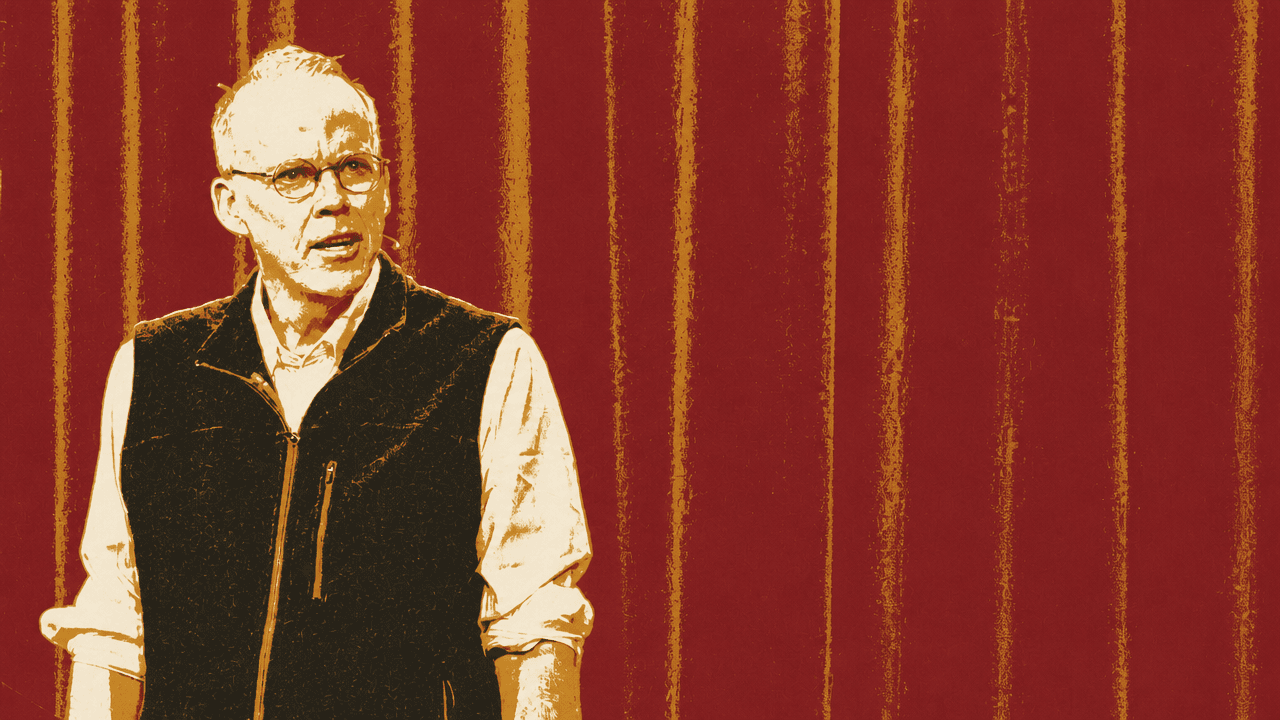
The decisive question is no longer whether clean power wins, but whether it wins in time
Bill McKibben argues that solar and wind are likely to take over the energy system eventually because they have become the cheapest sources of new power. But that economic inevitability is not the same as a climate solution. “In 40 years we will run the planet on sun and wind because it’s cheap,” he says. If the conversion takes anything like that long, however, “the planet we run on sun and wind will be a broken planet.”
That is the distinction carrying McKibben’s case. It is too late, he says, to stop global warming altogether; the remaining objective is to reduce the eventual temperature increase, tenth of a degree by tenth of a degree. The speed at which fossil-fuel combustion is displaced now determines how much warming can still be avoided.
We live on a planet where the cheapest way to make power is to point a sheet of glass at the sun.
Roughly 90 percent of new electricity generation worldwide last year came from solar and wind, McKibben says, after costs crossed an “invisible line” earlier this decade. The Earth is producing about a third more solar power this spring than last spring. Australia will soon offer three free hours of afternoon electricity, an outcome he treats as remarkable after millennia in which people had to gather fuel or pay for power.
The market shift is visible at very different scales. California, he says, produces more than 100 percent of its electricity from renewable sources on most days, with large grid batteries carrying daytime generation into the night. In Pakistan, farmers who relied on costly diesel irrigation pumps have cut diesel use by 30 percent over two years by importing inexpensive Chinese panels and learning to connect them through YouTube. Some, lacking money for the steel structures familiar from solar farms, simply lay panels on the ground and point them toward the sun. China, meanwhile, is building solar and wind farms faster than any other country, McKibben says; most cars sold there now come with a plug.
| Place | Example McKibben cites | What it illustrates |
|---|---|---|
| California | More than 100% renewable electricity on most days; batteries supply power after sunset | Grid storage can carry abundant daytime generation into the night |
| Pakistan | Farmers cut diesel use by 30% in two years with imported Chinese panels | Cheap solar can spread through improvised, small-scale installations |
| China | Most cars sold come with a plug; solar and wind farms are expanding rapidly | Deployment can occur at national industrial scale |
For McKibben, these are distinct parts of the buildout rather than evidence that every system has already completed a transition: utility-scale generation can expand rapidly, batteries can make solar useful after dark, and low-cost panels can displace fuel use at the farm level.
Delay compounds the damage from combustion
Bill McKibben calls the energy transition the only real chance to begin catching up with the physics of climate change. Each additional tenth of a degree of warming, he says, moves 100 million people out of a safe climate zone and into a more perilous one.
He also connects the pace of transition to the immediate health burden of fossil fuels. Eight or nine million people a year die from breathing combustion byproducts, he says—about one death in five worldwide. Sustained growth in solar and wind would therefore matter not only for the planet’s eventual temperature, but for the air people breathe while that transition unfolds.
The stakes, in his account, are geopolitical as well as climatic. Oil, gas, and coal are concentrated in particular places; sunlight is available everywhere. McKibben contrasts conflict over Venezuelan oil and the use of gas supplies to pressure Europe over Ukraine with an energy system in which hydrocarbons no longer carry the same wealth and leverage.
Sunlight travels 93 million miles to reach the Earth, but none of those miles go through the Strait of Hormuz.
He does not suggest that a solar-powered world would end war. Humans remain capable of starting wars, he says. But reducing the strategic value of hydrocarbons could remove a recurring incentive for wars, coups, and terrorist plots. “Figuring out how to fight one over sunshine,” he says, “will be tricky.”
Cheap equipment still needs permission to be built and connected
Bill McKibben argues that the economics making solar attractive also make it an extraordinary threat to owners of oil wells and coal mines, giving those interests reason to resist the transition. He cites the United States, where candidate Trump told the oil industry that large donations would earn his support. In Trump’s first year in office, McKibben says, major wind farms off the Eastern Seaboard were shut down and solar projects around the country were stopped.
Trump cannot halt clean energy single-handedly, McKibben argues. Most new U.S. electric generation last year still came from solar and wind, and Texas saw the largest growth. But he contends that the United States, Russia, Saudi Arabia, and a handful of other powers may still slow the shift. His concern is not that the underlying economics will reverse, but that political obstruction can consume the limited time in which faster deployment would matter most.
McKibben criticizes the U.S. energy secretary for denying both the climate crisis and the energy transition while subsidizing coal. In his view, that choice means declining clean generation that could support needed data centers quickly and cheaply; he points to solar fields that can sprout in a matter of weeks.
The constraints he identifies are also local. Americans pay three times what Europeans or Australians pay for solar power, McKibben says, largely because of unnecessary state and local bureaucracy. His “Free the Rooftop” campaign treats small plug-in solar as a cross-partisan permitting issue. Utah became the first U.S. state to legalize such systems last year, he says, opening the door to installations like those now found on millions of European apartment balconies. Maine and Virginia joined Utah the previous week.
McKibben presents organizing as a means of changing those decisions. Sun Day held 500 U.S. events on the previous autumnal equinox, from solar-powered concerts to installations on Habitat for Humanity homes. He says it will return globally on the 2027 summer solstice to build political power for faster clean-power deployment.
Energy from heaven, not from hell.
The phrase supplies McKibben’s moral contrast with combustion. Fire made cooking, migration, social life, and eventually industrial modernity possible, he says. But he argues that the accumulated cost of burning coal, oil, and gas is now overwhelming the climate on which human life depends. The available alternative is not an abstract future technology, in his telling, but energy from a source that already provides light, warmth, and, through photosynthesis, food.