Miura-Ori Folds Can Make Paper Hold 10,000 Times Its Weight
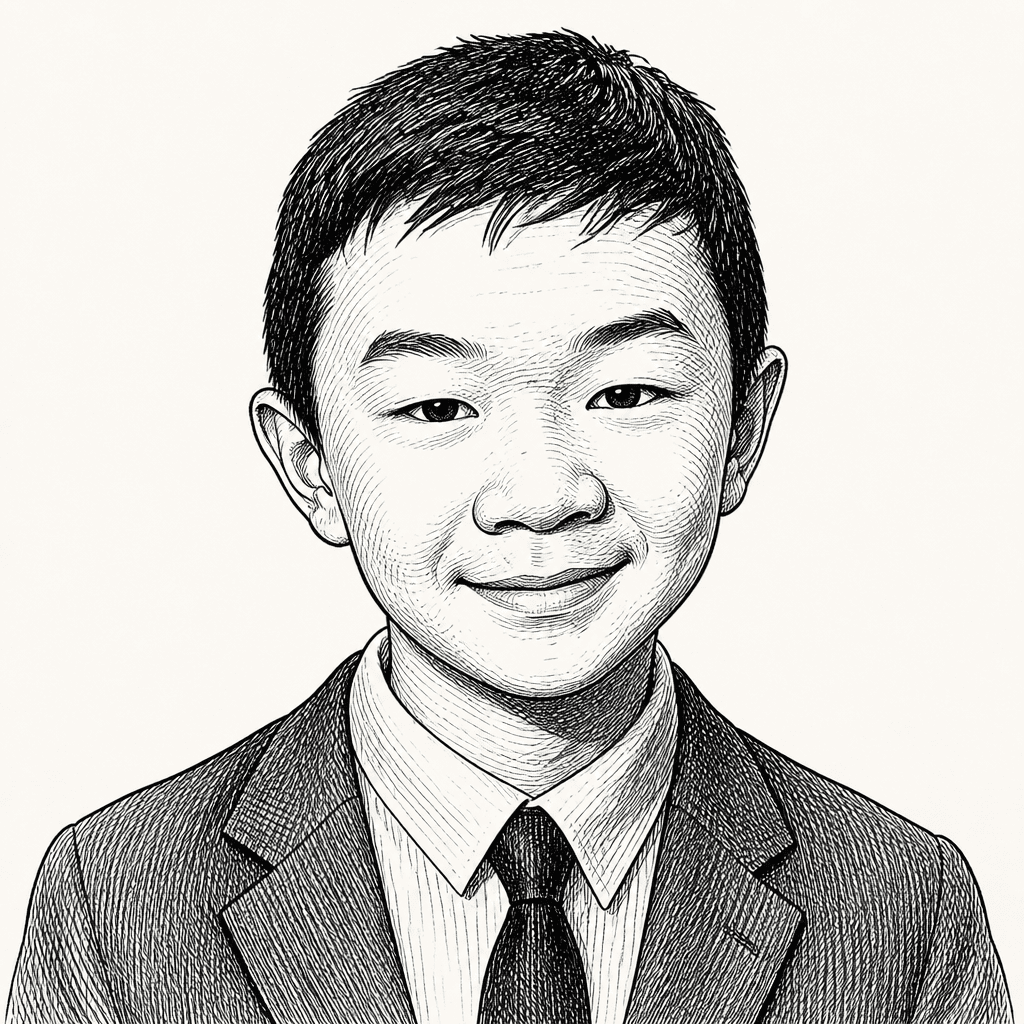
In a TED talk, 14-year-old New York student Miles Wu argues that origami is more than decorative paper craft: it is a way to test how geometry can change what a material can do. Wu traces that claim from childhood folding projects to a Miura-ori science experiment in which compact paper structures held extraordinary loads, including one version that supported more than 10,000 times its own weight.
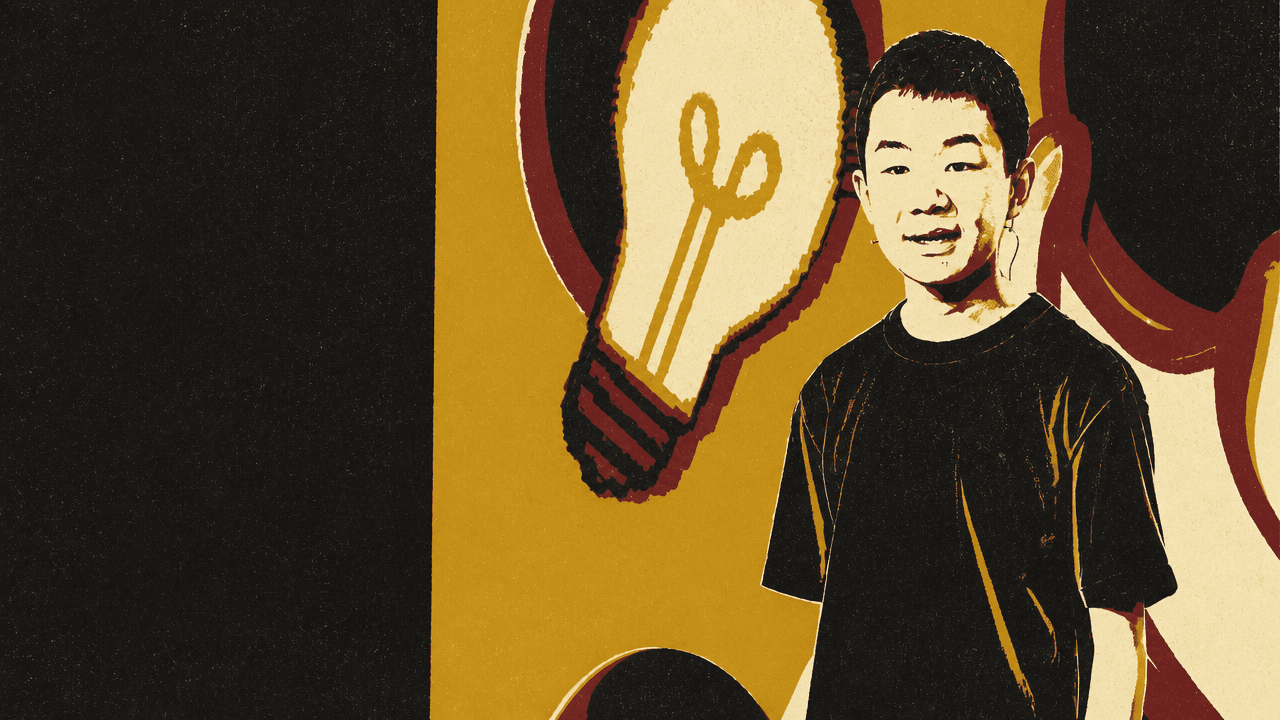
A fold can be a toy, a model, or a test
Miles Wu treats origami first as transformation: a plain square of paper can become a wheel bug, two grandparents sitting together, or a labeled neuron cell with soma, dendrites, axon, myelin sheath, and axon terminals. That range is part of the point. In his account, origami is not only an art form or pastime; it is a way to see what a material can become under constraint.
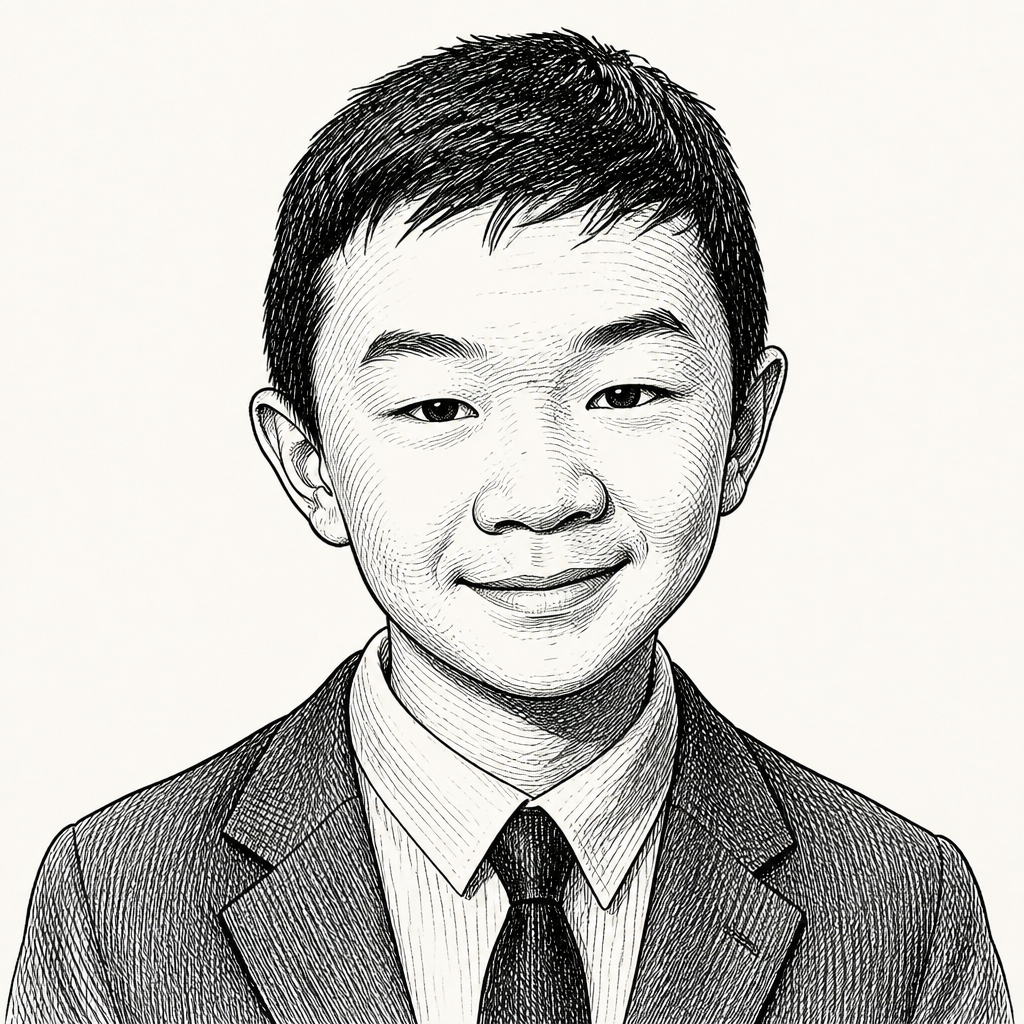
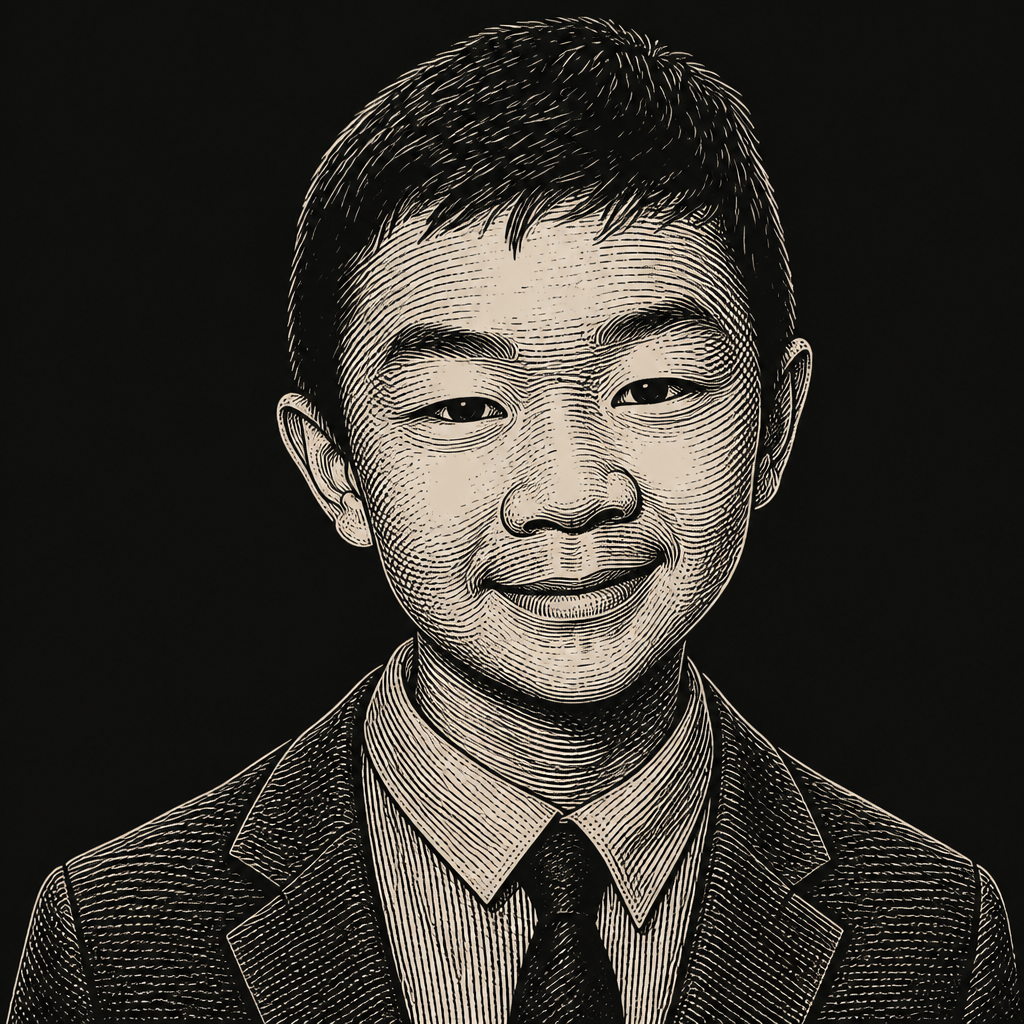
Wu is 14, in ninth grade in New York City, and says he began folding more than seven years ago. The early work was familiar childhood improvisation: ornaments for his family’s small Christmas tree, worksheets turned into ninja stars and paper claws, and the kind of classroom trouble that came with turning school paper into what he jokingly called “academic weapons.”
The habit became more ambitious over time. Wu began folding more complex models and designing his own. He describes a standing challenge to himself: give him any scrap and he will try to turn it into something. In the examples he shows, a Trader Joe’s sample cup becomes a crane, a long CVS receipt becomes a detailed centipede, and a page of the New York Times becomes a lizard. The attraction, he says, is “turning nothing into something.”
That same practice also became a way to make work for other people. During the pandemic, when he was eight, Wu wrote cards and mailed origami birds to seniors at a local nursing home. One handwritten note shown with a folded bird reads, in part: “It must be hard inside all the time, but I hope this note made you smile!”
More recently, he folded birds as a fundraising project. He made 200 origami pigeons, calling pigeons his favorite birds, then made 100 sparrows the following year. He sold the sparrows alongside the pigeons and raised more than $4,000 for a local soup kitchen and a New York City nonprofit that rehabilitates injured and orphaned birds.
For Wu, that project demonstrated “the power of the most humble material, a simple piece of paper,” to help his community. It also set up the larger claim: the same folding logic that can produce ornaments, jokes, animals, gifts, and fundraisers can become a way of thinking about engineering problems.
Miura-ori turned folding into an engineering problem
Wu’s scientific interest came from looking into how researchers and engineers use origami folds in fields such as space technology and medicine. He shows an “Origami flasher” beside NASA’s Starshade, and a “waterbomb tessellation” beside a cardiac stent, the latter visual credited to the Japanese American National Museum. Wu uses them as examples of origami folds in space technology and medicine, where compact deployment and structural form are part of the problem.
The fold that captured Wu’s attention was Miura-ori. He describes it as a tessellation: a repeating pattern of parallelograms. Invented in the 1970s by Japanese astrophysicist Koryo Miura, the pattern can fold down into a highly compact form in one smooth motion. That makes it useful as a deployable structure, and Wu notes that Miura-ori has been used to fold a solar array that was sent into space.
The pattern is not a decorative surface. Its arrangement lets a sheet collapse and expand efficiently while retaining a structured geometry. Wu’s question was whether that geometry could be optimized for strength as well as compactness.
The practical trigger was news about natural disasters, including Hurricane Helene. Wu says he saw many people displaced and began wondering whether Miura-ori could improve emergency deployable shelters by making them stronger and lighter. For his eighth-grade science fair project, he decided to study the fold’s strength-to-weight ratio.
That choice narrowed the problem. He was not simply asking which folded paper structure could hold the most weight. He wanted to know which version held the most weight relative to its own mass — the question that matters if the imagined use case is something portable, deployable, and light.
The experiment tested geometry, paper weight, and repeatability
Wu designed 18 different Miura-ori folding patterns. The variables were the heights, widths, and angles of the parallelograms in the tessellation. He then tested those 18 geometries across three different paper weights, with each variation tested twice. In total, he folded and tested 108 Miura-ori structures.
| Experimental factor | Variation |
|---|---|
| Folding patterns | 18 designs |
| Pattern variables | Different heights, widths, and parallelogram angles |
| Paper weights | 3 |
| Trials per variation | 2 |
| Total structures folded and tested | 108 |
The testing setup was improvised but organized around a clear measurement problem. For two months, Wu says, his family’s small New York City apartment became a lab, with Miura-ori models “all over the place.” At first he used heavy books and household items, stacking them on top of the folded structures to see what they could support. He soon found that he did not have enough weight to test the stronger models accurately, so he asked his parents to buy heavy exercise weights.
A diagram he shows labels the arrangement: lighter weights and heavy weights applied above an acetate sheet, a Miura-ori structure, guardrails, and a table. Next to it is a bar chart titled “Strength-to-weight ratio of Miura-ori variants,” credited as a graphic Wu created using Illustrator in 2025. The visual makes the experiment concrete: folded paper was being loaded under a defined setup, not merely admired as a shape.
The process took 250 hours, according to Wu. It also involved “a lot of heavy lifting,” a phrase that is literal in the footage: books, objects, and weights are stacked onto small folded paper structures until their load-bearing capacity can be measured.
The strongest results came from compact patterns with small, less acute panels
Wu’s main finding was specific: the Miura-ori structures with the smallest and least acutely angled panels, made from the lightest paper, had the greatest strength-to-weight ratio. The strongest pattern held almost 200 pounds. A lighter version held more than 10,000 times its own weight.
He attributes the performance to two structural features. The stronger patterns were more compact, and they created truss-like structures that distributed pressure evenly. The claim is not that paper itself is unusually strong in every form; it is that a particular fold geometry can organize a light material into a surprisingly load-bearing structure.
It’s amazing that something can be so strong and yet so lightweight at the same time.
Wu frames the result as a small discovery with possible applications rather than a finished shelter design. He connects it back to his original question about emergency deployable shelters, saying it is exciting to imagine what applications a fold like this could have — “maybe even helping to imagine a better emergency shelter one day.”
The home experiment later received the top prize at a national STEM competition. Wu says he was shocked to receive such a large prize for “simply playing with paper.” His account holds together two modes: origami as play and origami as investigation. The discovery did not arrive by abandoning play for science, in his telling. It came from continuing to play carefully enough that a structural question could be asked, tested, and answered.