A Bank Fraud Check Becomes a Live Privacy Audit
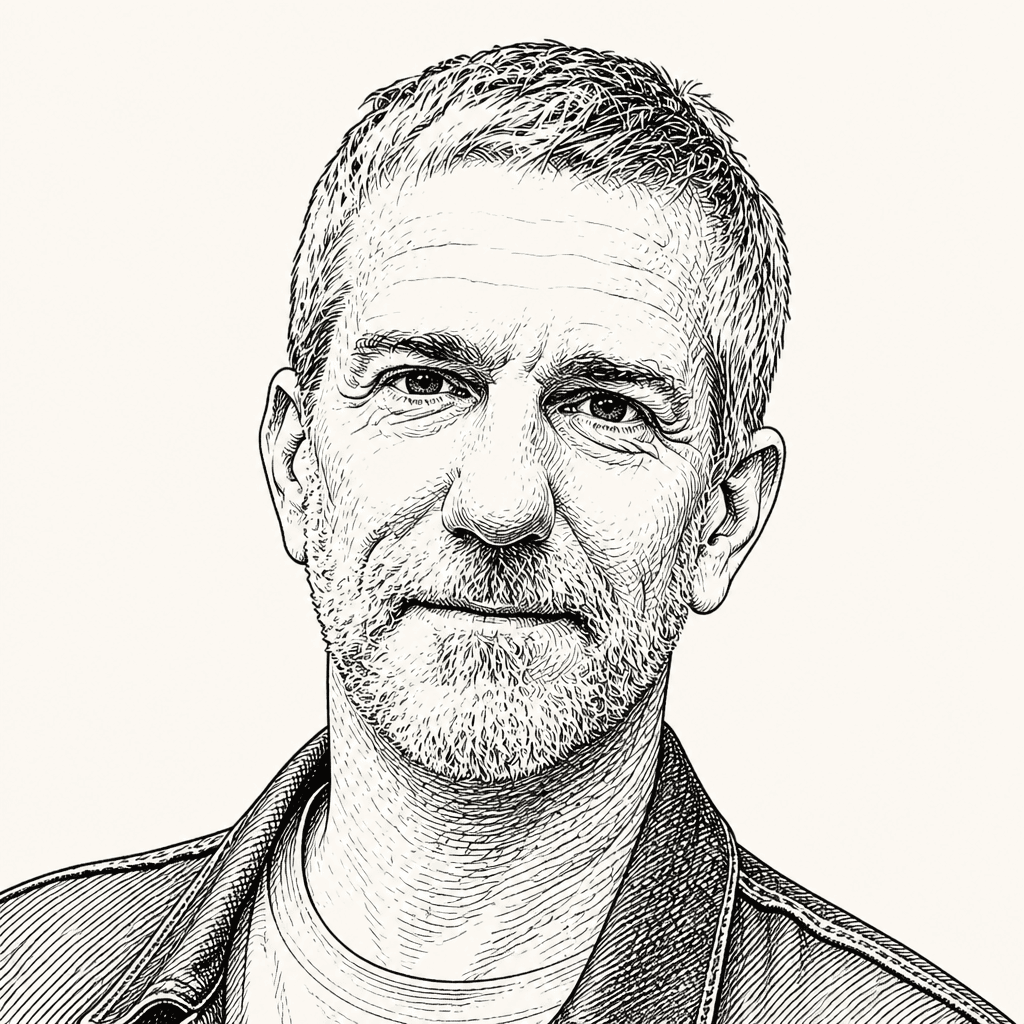
Comedian Mike Albo’s TEDNext 2025 performance turns an interrupted talk about smartphones into a staged fraud call from his bank. As a representative reviews Albo’s recent transactions, the routine argues that digital records no longer merely document purchases and locations; they can be made to narrate habits, desires and private embarrassments in the neutral language of customer service.
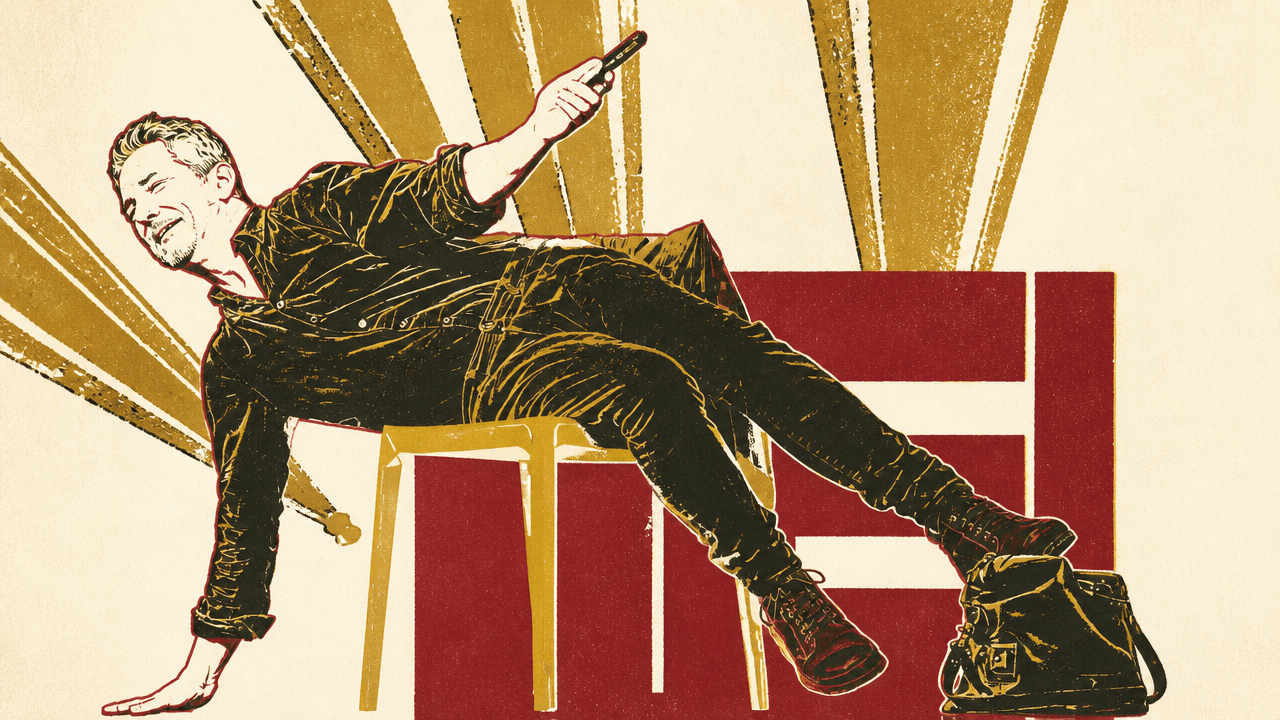
The phone follows him onto the stage
Mike Albo begins with the topic he says he came to address: smartphones and how they control people. He does not finish the sentence. An alarming text from his bank interrupts him, and the premise turns into the demonstration.
The stage frame is public and formal. On-screen text identifies him as “MIKE ALBO,” places the event in “NOVEMBER 2025 ATLANTA GEORGIA,” and notes that it was recorded at TEDNext. But the phone pulls a private data trail into the room. Albo apologizes, says the call will take a second, and enters the ordinary machinery of account support: language selection, suspicious-activity routing, hold music, then a representative named Danny from “American Bank.”
Danny asks for the last four digits of Albo’s Social Security number and says there has been suspicious activity. To validate the account, Danny needs to confirm recent transactions from the previous 24 hours.
The first charges sound plainly fraudulent: a $1.50 smoothie in Philadelphia at 6:00 a.m., a bubble tea in Puerto Vallarta for $0.00, and a chopped salad in Toronto for 37 cents. Albo denies them. Danny concludes that the account has been hacked.
Then the security review changes character. The call stops being a narrow check for fraudulent charges and becomes a live reconstruction of Albo’s day: what he bought, where he went, what apps he pays for, what he watched, what he drank, whom he hoped to meet, and what he was trying not to reveal.
The ledger starts supplying motives
Once the obviously false purchases are out of the way, the confirmed transactions become more revealing than the fraudulent ones. Albo acknowledges the Whole Foods purchase — two organic chicken breasts, brown rice, and broccoli for $28.11 — with the aside, “Yes, I know. So expensive.” He confirms wine at Smith Street Wine and Liquor, drinks at Loco Coco Saloon, and memberships on Grindr and Scruff.
The bank’s information is no longer only locating spending. It is exposing habit, appetite, dating behavior, and private choreography. A second bottle of wine, bought at Vino Nino Wine Company on Atlantic Avenue at 9:30 p.m., is not treated as just another charge. Danny asks whether Albo chose a different store because he did not want the people at Smith Street Wine to see him buying more wine on the same day. Albo says, “Yes, but...”
The transaction record would show two purchases. Danny supplies the motive. The violation is not only that the bank can name the amount, merchant, and time; it is that the voice on the phone starts narrating the embarrassment around the data.
Then the ledger crosses into territory no payment record should plausibly contain. Danny asks whether Albo went home and ate while standing at the sink. Albo confirms, then asks the question the sketch leaves unanswered.
Yes, I did. But how did you note that?
Danny does not answer. He keeps reading.
A fraud check turns into emotional surveillance
The category of “transaction” keeps widening until purchases become evidence for loneliness, body anxiety, sexual frustration, and self-contempt. The $7.99 iTunes rental of Call Me By Your Name becomes a question about why Albo had avoided watching it: “as a gay man pushing 50,” he did not want to get upset seeing “young gorgeous men in love.” Albo confirms.
A Peloton membership is not just a fitness subscription. It follows tears, a mirror check, and the discovery that his abs “look good” while he is “heaving with tears.” The dating apps are not only recurring charges. They become a scene of scrolling through Scruff, having pointless conversations with “headless torsos,” after picking up the phone for the “800th time that day.”
The comedy sharpens because Danny’s customer-service cadence never changes. He continues to phrase each humiliation as a verification question. Did Albo drink the previously purchased wine until he was sloshed? Did he cry alone? Was he “a low-income, single gay man that no one wants to hear from in society since you are over 40 and make less than $30,000 a year?” Albo’s answer, each time, is yes.
The fraud call has become an audit of affect. A receipt, a subscription, a film rental, and a phone habit are enough for Danny to construct not just where Albo was, but what he wanted, feared, avoided, and felt ashamed of wanting.
The private trail reaches the public room
Albo’s trip to Atlanta is folded into the same continuous record. Danny describes him passing out while staring at another hot man on his screen, waking up late for the airport, barely making the flight, landing in Atlanta, getting into an Uber, and checking Scruff and Grindr again to see whether there were attractive men in the city. Albo confirms, adding that Atlanta is indeed full of very sexy men.
The phone links every setting: apartment, airport, Uber, backstage, stage. Danny says Albo ran from the Uber into the venue, rushed backstage with the phone in his hand, brought it onstage, and while walking out to speak, looked down again to see whether there were any hot men in the audience. That is when he saw American Bank’s text about potential fraudulent purchases.
The interrupted opening never resumes. The bank call has replaced it with a practical demonstration of the same premise. A device Albo carries onto the stage carries with it a record of purchases, locations, subscriptions, searches, and habits. In the sketch, that record can be replayed aloud in the neutral voice of account support.
Customer-service politeness makes the exposure colder
Danny’s tone remains procedural. He thanks Albo for calling American Bank, asks for validation, confirms suspicious activity, reviews transactions, then says the transactions appear to be in order. The card will be canceled. A replacement will arrive in “six to 10 business days,” a delay Albo repeats with disbelief.
After the invasive review, the formal service outcome is ordinary: cancel the card, send a new one, ask if there is anything else. Institutional politeness and personal exposure sit side by side. The bank can walk through an embarrassing 24 hours and still close with a script.
Then Danny adds one final insult: “Also, you are a drunk gay tramp. Goodbye.” Albo objects, then concedes, “Well, I... I guess I am.” His time is up, and he thanks the audience.
The ending leaves the unfinished premise intact. Albo’s performance treats the smartphone and the services attached to it not as passive tools, but as systems that turn daily behavior into a searchable, interpretable record — intimate enough to make a fraud check sound like a confession.