Agency Lies in Choosing the Next Track
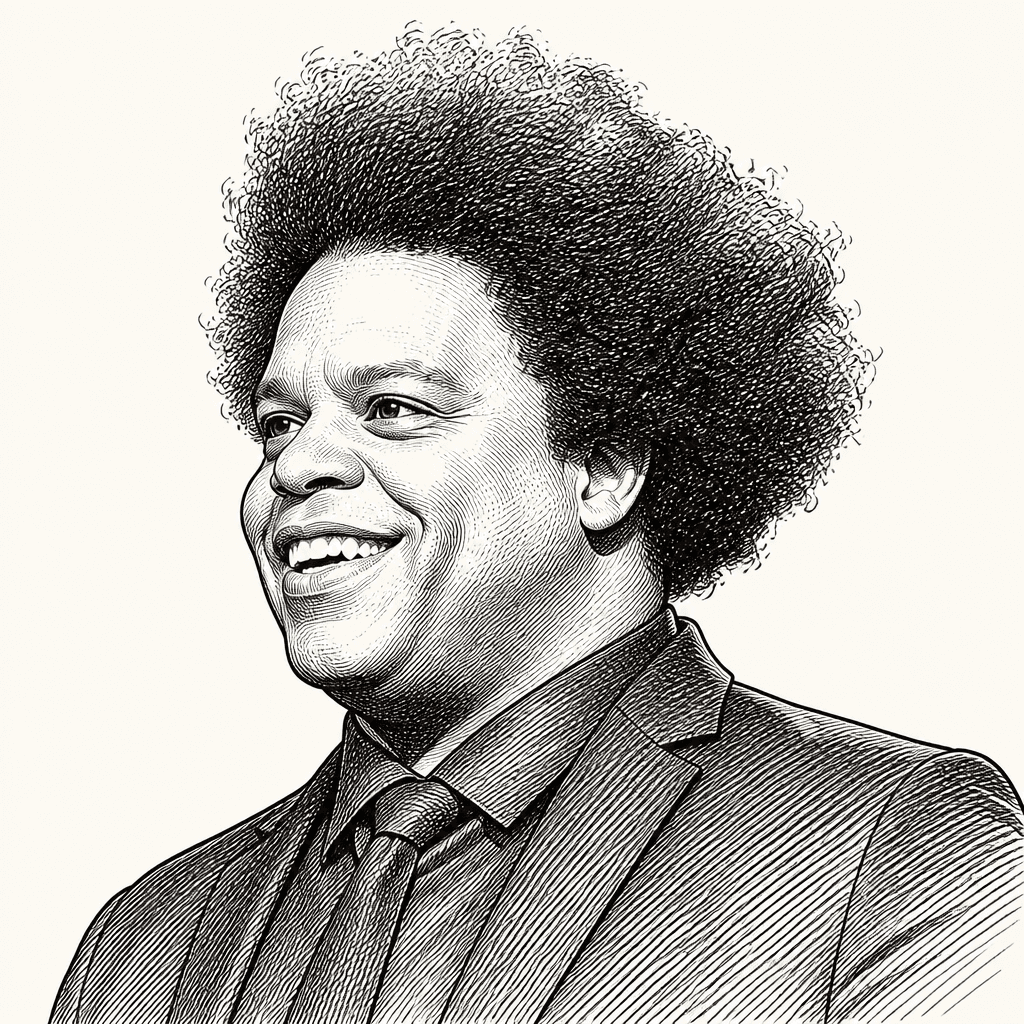
Musician ELEW argues that life resembles DJing in “Club Reality”: disruptions cannot be prevented, but people remain responsible for choosing what comes next. Drawing on his move from jazz piano to DJing, he says the work is less about technical virtuosity than preparation, empathy and reading the room rather than imposing a preselected plan. He extends the metaphor to mental health, arguing that choices shape the atmosphere of one’s mind even when circumstances do not cooperate.
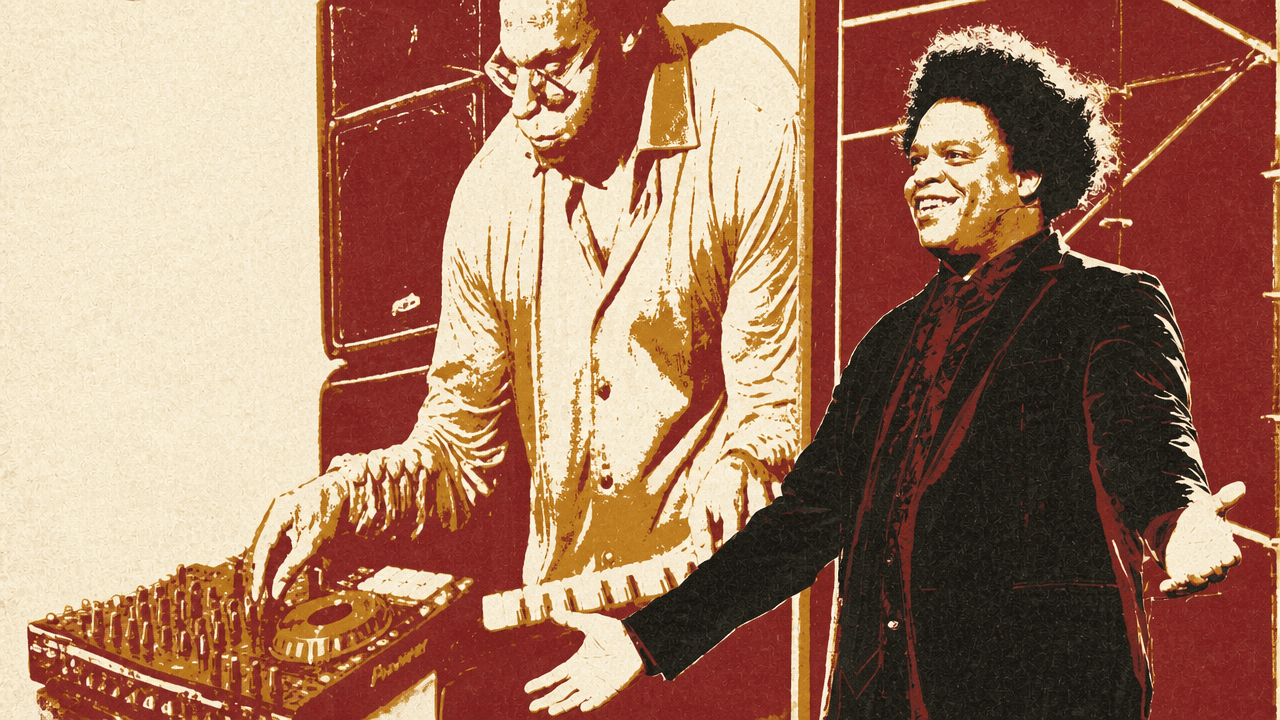
Life is a set that does not pause for your plan
Eric Lewis, performing as ELEW, offers a metaphor for ordinary responsibility: everyone is a DJ in “Club Reality.” The tracks are the choices people make, and the DJ is the person making them.
People begin the day with a plan—a calendar, a task list, some idea of what they will get done. Then Club Reality intervenes. Flights go wrong; other disruptions can, as ELEW puts it, “set everything on fire.” His point is not that anyone controls those interruptions. It is that obligations do not disappear when the plan does.
He compares the load to Atlas carrying the world. There is no clean pause button for the responsibilities already in front of you: the dog still needs feeding, the deal still needs closing. One image makes the pressure concrete: hands on a steering wheel covered in sticky notes for a teacher-appreciation gift, a parent-teacher conference, soccer practice, dry cleaning and dinner.
ELEW’s instruction is to keep the tracks spinning—to continue making choices amid conditions that may be improbable, absurd or plainly inconvenient. The relevant agency lies not in preventing disruption but in deciding what comes next.
DJing taught him to play for the room, not for himself
ELEW’s route to DJing began at the piano. When he was about two, he says, his great-grandmother put him at one and told him it was time to become the family’s fourth-generation piano player. His mother later introduced him to jazz, which he loved. But he felt out of sync with the jazz industry; he says that experience led to panic attacks and eventually to his own cathartic rock-jazz style.
New York nightclubs changed the direction of his musical life. At 1 OAK, he watched hip-hop DJs whose speed and coordination made them seem to have multiple arms. At Finale, EDM DJs struck him as something more mythic: people who could fill a room with overwhelming, strange sound. He came to see both as extensions of Franz Liszt and Fats Waller—virtuosic performers whose energy could organize a crowd.
That fascination did not make him immediately competent. ELEW thought piano would make DJing easy, then found that it did not.
I thought it would be easy given my piano background, and, of course, I was dead wrong.
After what he calls an embarrassing learning curve, he came to regard DJing as work that requires empathy, sensitivity and rigorous preparation, not merely fast hands or musical knowledge. It also, he says, improved his common sense.
The practical test is whether the music fits the people and place in front of you. A huge Avicii-style EDM track does not belong at a lunchtime café. An obscure but excellent B-side does not belong in the middle of bottle service during a nightclub’s peak hours. The song may be good; the choice is still wrong for the room.
Preparation matters, but it cannot substitute for judgment. A DJ has to read the particular room rather than impose a preselected track on it. That is the working discipline inside ELEW’s broader metaphor: choices are made under real conditions, and their value depends on whether they sustain or disrupt the atmosphere.
The mixer became a way to think about the mind
ELEW carried the analogy into neuroscience. He says he studied the subject and noticed that the brain could be pictured like a mixer: a right hemisphere and left hemisphere, with the corpus callosum—the strip between them—keeping them in sync. The accompanying image overlays the labeled hemispheres and corpus callosum on a DJ mixer. For ELEW, that arrangement makes people “DJs organically.”
The idea also changed his piano playing. He developed an approach he calls “piano turntablism.” He says Sting heard it, which led to an opening gig.
For ELEW, the metaphor is not only musical. He says it has helped him get control of the panic attacks and depressions he mentioned from his earlier career. His mantra turns the club image into a personal discipline:
My mind is the club, I am the DJ, my choices affect the atmosphere.
Club Reality still supplies delays, demands and absurd loads. But ELEW locates agency in the choice of the next track: preparing for what is ahead, recognizing the conditions actually present, and choosing in a way that shapes the atmosphere rather than ignoring it.