Venezuela’s Transition Depends on Economic Recovery and Institutional Change
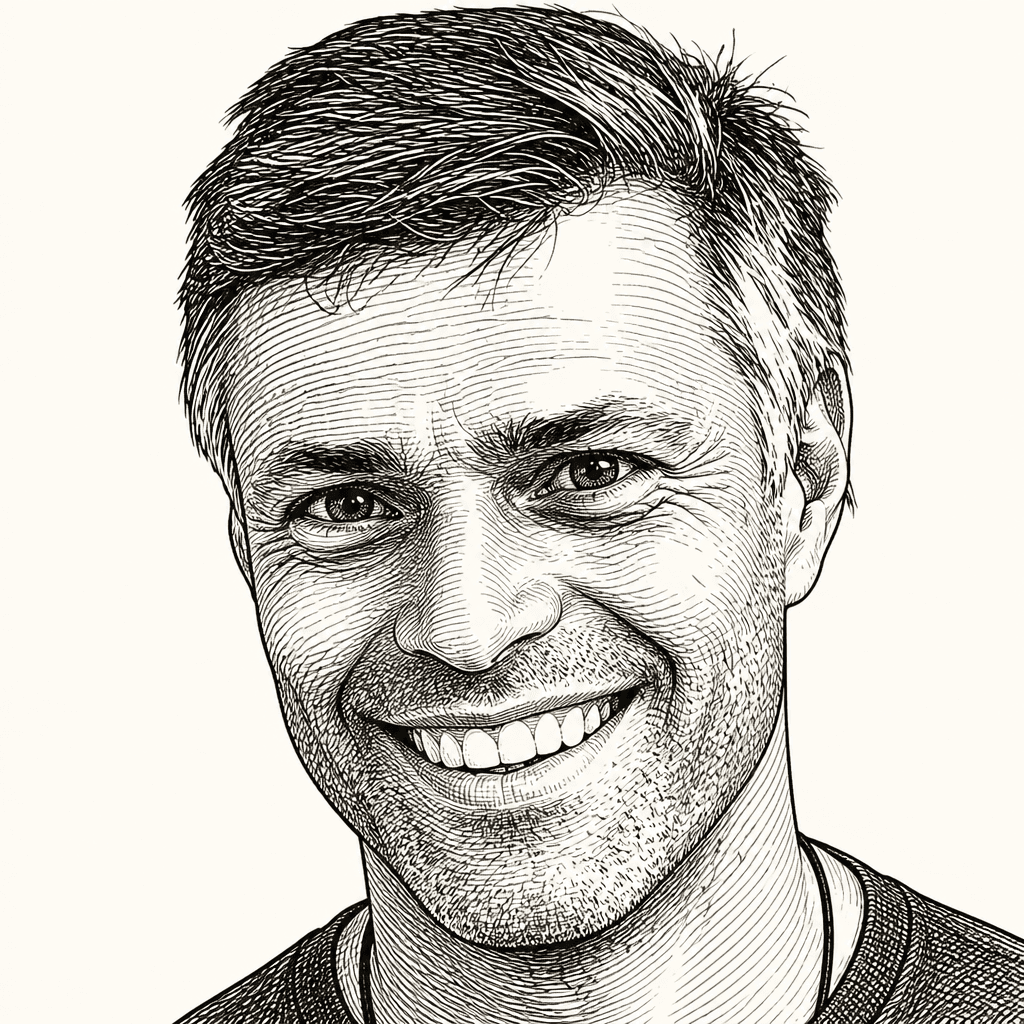
Leopoldo López argues that freedom depends on more than a change of government: Venezuela’s transition will require economic gains for ordinary people and changes to the institutions that sustain authoritarian rule. He extends that argument to the digital systems people rely on for money, communication and information, saying freedom also depends on who controls them and whether people can retain access and privacy.
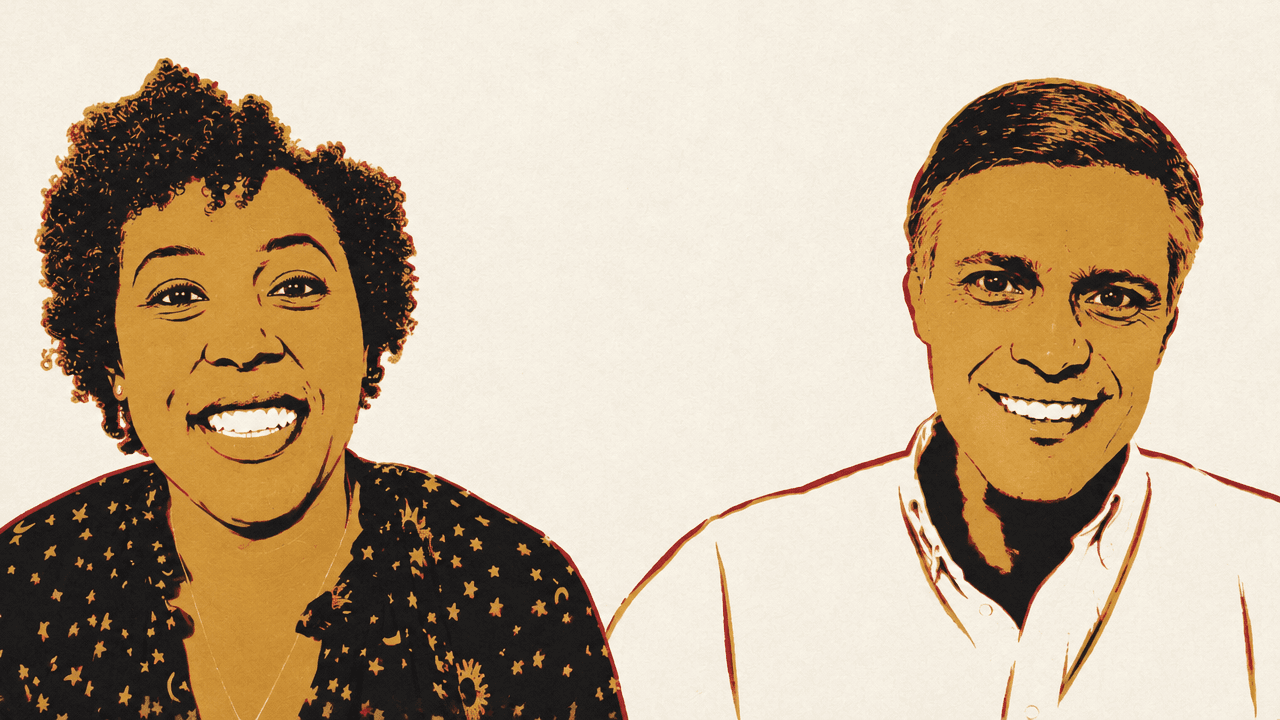
Digital freedom depends on who holds the keys
For Leopoldo López political freedom increasingly has a digital counterpart: control over the systems people rely on for money, communication, connectivity and artificial intelligence. Technology can help people organize under authoritarian rule, he told Whitney Rogers, but it can also be used to control access and expose people’s information. The question is not simply whether a technology is useful. It is who controls it—and whether that control can be withdrawn.
López said activists have used technology to mobilize even during internet shutdowns and to move resources into countries where authorities control the financial system. Those examples are part of why he sees technology as a source of autonomy for people living under autocratic governments. But access is vulnerable: a government or company can block connectivity, and losing internet access can also mean losing access to AI tools. López described internet access as one of the most important human rights today, while emphasizing that connectivity alone is not the same as freedom. He pointed to China as a place with advanced connectivity where, in his view, internet access is not free.
He named Starlink as one way to provide an alternative to centralized control over connectivity, while noting that other technologies are also emerging. His concern is the possibility that someone else can decide whether people have access at all. In his account, the issue extends beyond governments: corporations and other gatekeepers can also hold power over systems people depend on. The aim, he said, is to give people more autonomy over the infrastructure they use.
That concern shapes López’s work on what he calls “sovereign AI.” He said activists and human-rights defenders have become more interested in how to use AI safely after cases in which people’s conversations with AI were exposed and later used in legal proceedings. Organizers thinking through how to resist an autocracy or build a movement may have reasons not to share sensitive information with a corporation. López said his organization is working to help movement leaders run AI on servers they control, choose which language model to use and keep the basic elements of the system within their own infrastructure. They are holding workshops to spread access to these tools, starting with movement leaders.
Open-source tools are part of the answer López favors because, in his view, they can reduce dependence on a single gatekeeper. He also framed the policy question as a tension between two approaches, not as a settled choice. Some people look to regulation to address the risks of technology. Another approach is to develop systems people can own and control. López said both approaches are relevant, but his talk focused on alternatives to technologies with gatekeepers.
He argued that the issue applies in democratic countries as well as autocracies. People in democracies can also find private interactions with AI exposed or scrutinized, and he said individuals should consider how much they disclose to the companies that provide those systems. Privacy, he said, is an individual decision about how much of oneself to share. For López, people now live in both physical and digital dimensions, and freedom in the digital one depends partly on who holds the keys to personal information and essential services.
Democratic movements are trying to organize against a shared adversary
López described authoritarian cooperation as pragmatic rather than ideological. China’s Communist Party, Russia’s nationalists, Iran’s theocrats and Venezuela’s kleptocrats may have different doctrines, he said, but share an interest in holding power, protecting corrupt networks and opposing democracy. He cited a document signed by Xi Jinping and Vladimir Putin shortly before Russia’s invasion of Ukraine, which identified “color revolutions”—popular movements against authoritarian governments—as a common enemy. López said this concern about popular movements is not limited to one region; he pointed to recent movements in Nepal and Madagascar, as well as earlier struggles in Bolivia, Venezuela and Nicaragua.
Pro-democracy activists, by contrast, have often treated their struggles as national problems. López said it took time for movements to see the value of connecting across borders, including within Latin America. The World Liberty Congress, which he co-founded in 2022 with Iranian activist Masih Alinejad and Russian political figure Garry Kasparov, was created to build those links. Its first gathering was in Vilnius, Lithuania, with participants from 40 countries; López said the following year’s gathering included almost 60 countries, and that the network now includes leaders from 65.
He said the need for cooperation has grown as authoritarian rule has expanded. Citing figures he attributed to Freedom House, the Economist Intelligence Unit and V-Dem, López said that 15 years ago, 42 percent of the world’s population lived under some form of autocratic regime; he put the current figure at 75 percent.
López contrasted that figure with global polling he said he had seen, in which more than 80 percent of people said they would prefer to live under democratic conditions. For him, that gap points to a problem as well as an opportunity. People may want the freedoms associated with democracy, but democratic systems have to deliver on everyday needs: economic security, justice and opportunity. López said polling he had seen showed that young people, in particular, were willing to sacrifice democracy for effectiveness. If democratic governments fail to improve people’s lives, he argued, public support for democracy will weaken.
He identified obstacles to international cooperation at several levels. Activists themselves, he said, have had to learn that movements in different countries can share interests and experience. Governments often give priority to geopolitical and economic interests over democracy in their foreign policy, leaving what López called value-based diplomacy with little influence. Philanthropy is another constraint: he said that nearly $400 billion goes to philanthropy in the United States each year, and that about 1 percent is directed to democracy-related work, with only a fraction of that supporting democracy outside the country.
Still, López finds hope in activists willing to take risks, train and organize—and in their ability to learn from one another. The conflicts are not identical, he said, but movements can share experience across regions. Technology allows people in Africa, Asia, Eastern Europe and Latin America to communicate regularly, he said, and the World Liberty Congress brings people together to think about how to help one another. The value of that connection, in his account, is practical as well as symbolic: movements can learn from each other without assuming that one country’s struggle is identical to another’s.
Venezuela’s transition has begun, but its foundations are unsettled
López described Venezuela as better off than it was before Nicolás Maduro’s capture by the United States on January 3, 2026, but not yet where it needs to be. More than 130 political prisoners had been released, according to the question put to him, while the country remained in transition. He framed that transition as several processes moving at different speeds, rather than a single change of government. Venezuela, he said, was not the same as it had been before January 3, but the eventual destination was still uncertain.
The geopolitical transition has moved quickly. Before January 3, López said, Venezuela was under the influence of China, Russia, Iran, Cuba, drug traffickers from Mexico and Colombia, and organized crime networks worldwide. He said the United States now has the greatest influence over events in the country. He acknowledged that this is not full sovereignty, but said he would prefer US influence to that of the actors he listed. That shift, in his account, is one layer of the transition—not a completed democratic change.
Economic recovery is another, and López said it remains largely unrealized for ordinary Venezuelans. The oil sector is opening to investment, but commitments have not yet translated into improvements felt by most people. He summarized the economic priorities as “megawatts, dollars, and barrels.” He said the deployment of investment and capital had not yet reached the majority of Venezuelans, and that people were growing impatient. If recovery benefits only oil companies, a few people in government or the United States, he warned, it could undermine the transition.
López described the plan laid out by Secretary of State Marco Rubio as having three stages: stabilization, economic recovery and transition. He presented the political transition as requiring institutional changes before elections. Negotiations between the 2015 National Assembly, controlled by the democratic opposition, and the regime are focused in part on replacing the Supreme Court and electoral board. López said a second round of negotiations was beginning and hoped the new institutions would be in place by the end of the year.
A new electoral board would need to establish a timetable for local, regional, National Assembly and presidential elections. The test is not simply whether people are allowed to vote, López said, but whether results are respected and the transfer of power can be sustained. In his view, institutional changes are part of building the conditions for an election whose result carries legitimacy.
The military transition is a separate and, he said, under-discussed challenge. López described Venezuela’s military organization as having been shaped by Cuban influence since the early 2000s and later by Russia, while becoming entangled in the country’s kleptocratic economy. He cited Nicaragua as a warning: its military was not incorporated into the transition of the 1990s, he said, and Daniel Ortega later returned to power. For López, the military’s place in a transition matters because changes to electoral institutions alone may not remove the structures that sustain the old order.
He also called for dismantling what he described as the repressive state. Its components include institutions such as the Supreme Court, attorney general’s office, police and military; laws that support repression; and impunity among judges, prosecutors and police. Without changes across those areas, he said, people may not be able to participate freely.
Transitions are fragile, López warned, and can revert to authoritarian rule. Strong institutions matter, but so does whether people experience the change as real. He said Venezuelans need to feel the effects of economic recovery, benefit from stability and have a role in the political transformation. If recovery reaches only a narrow set of interests, or if people are excluded from the process, he said, the transition could fail. In his account, the political and economic foundations have to advance together for a democratic transition to hold.
The earthquake response exposed both state failure and civic capacity
López said a double earthquake on June 24 caused more than 10,000 victims and left more than 20,000 families displaced, with millions affected directly or indirectly. He described the state as absent during the first 72 hours, which he called a crucial window for survival after an earthquake. Volunteers from Mexico, the United States, El Salvador and other Latin American countries, along with civil-society groups, provided the immediate response, he said.
He estimated the recovery cost at about $30 billion, compared with a Venezuelan GDP of $80 billion. He put national debt between $150 billion and $250 billion, while stressing that the lack of transparency made the figure uncertain. The scale of the recovery, in López’s account, adds another burden to an economy already under pressure.
The response also showed how Venezuelans and diaspora communities could organize in the absence of an effective state response. López said people took pride in the way organizations and Venezuelans abroad brought substantial help into the country. That solidarity did not erase the devastation or the frustration at the state’s absence, but he described it as a counterweight to the tragedy.
López learned what freedom meant when it was taken away
Asked what people in stable democracies take for granted, López recalled dismissing warnings during the early years of Hugo Chávez’s government that Venezuela was moving toward Cuba’s system. Venezuela had decades of democracy, a strong civil society and universities, he remembered thinking; comparisons to Cuba seemed exaggerated. Two decades into what Chávez called “socialism of the 21st century,” López said, he believed Venezuela had become worse than Cuba.
He described the consequences as devastating: almost a third of the population—nearly 10 million people—had left the country. He said many young people, professionals and entrepreneurs were among those who had gone, and that every Venezuelan family had a close relative living abroad. He also recalled political imprisonment, economic collapse and censorship, conditions he said Venezuelans had not expected to face.
López said he understood the meaning of freedom most clearly in prison, during solitary confinement:
I learned what freedom was when I was in prison. I learned what freedom was when I was in a solitary confinement cell. When it was real for me that someone else was deciding what I was going to eat, when I was going to eat, if I was going to eat at all, when I was going to see the sunlight, when I was going to see and talk to another human being.
The experience made freedom concrete not through political theory, he said, but through the loss of control over ordinary decisions. López argued that people in democratic countries should not assume their freedoms are secure. Venezuelans had not expected to face the conditions that followed, he said, and that experience could help people elsewhere recognize how fragile democracy can be. Freedom, in this account, is not an abstraction but the sum of choices and conditions people may not notice until they lose them.
For people who want to help freedom movements, López recommended first learning about the problems people face worldwide and identifying leaders and organizations to connect with. He said the World Liberty Congress is looking for partners who can contribute knowledge, ideas, connections or funding.
But he put awareness and compassion ahead of any specific form of support. Compassion, he said, does not mean pity; it means trying to understand the world from another person’s perspective. He sees that as the first step toward helping people fighting for freedom.