Across Hundreds of Workshops, Residents Imagine Cities Built Around People
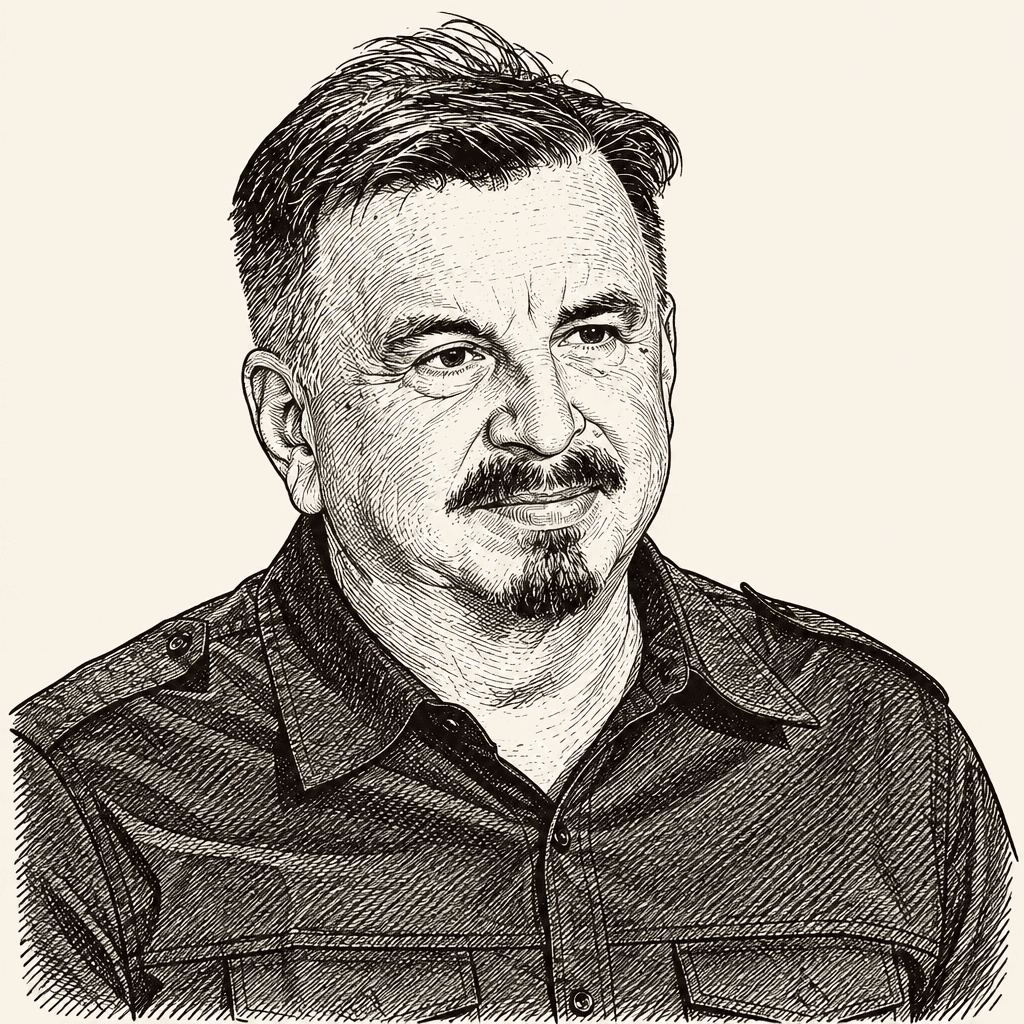
Urban planner James Rojas argues that city planning should begin with what people value in a place, not only with maps, data and land-use rules. In workshops across hundreds of communities, he asks residents to use small objects to build memories and imagine ideal neighborhoods; he says their models repeatedly emphasize relationships, nature and walkable public spaces over car-oriented development. Rojas contends that this kind of play can help residents find shared priorities and turn them into plans and advocacy.
Play exposes what conventional planning misses
A planning meeting can start with a memory rather than a map. James Rojas asks participants to build a favorite childhood memory in five minutes using small objects, without talking first. The exercise gives people a way to express what they value before they have to negotiate what a community should look like.
The method grew out of Rojas’s own childhood. He wanted a dollhouse, but boys did not play with dolls, and his family could not afford building blocks. He used pieces of popsicle sticks and a shoebox to make a miniature house, then kept building streets, neighborhoods and cities—work that led him to city planning.
In that profession, he came to see how formal planning tools can miss what residents value. Plans rely on technical language, maps people may not be able to read, data and surveys that go unanswered. Public meetings, he says, are often either empty or dominated by a few forceful voices, leaving others silent. Planners can get the land use right and the feeling wrong, designing streets for cars rather than people.
We get the land use right, but the feeling wrong.
Rojas wanted residents to express the city as a place of memories and sensory experience without first translating those qualities into planning language or public-speaking confidence. Planners initially worried that his object-based approach lacked measurement and data, or that people might propose things cities could not deliver, such as a launching pad to the moon. He tried it anyway, setting out thousands of recycled objects in an art gallery and asking people to build their ideal city.
Participants stayed for five minutes or several hours. Rojas says he saw a happier, more social side of people than he usually saw at community meetings. Over time, planners began embracing the approach.
Shared memories give collaboration a starting point
The memory prompt begins with making, not explanation. Hair rollers, Rojas says, can remind African American women of the importance of doing hair with elders; an orange maple leaf can bring fall to mind for someone from New England. The objects’ colors and shapes help participants connect an image to a place or activity they love.
After participants share their memories, Rojas asks what they have in common. He says many involve family and friends, outdoor settings, nature, sensory experience and physical activity. People do not build memories around owning wealth or getting to school on time. For Rojas, the significance is not simply that participants discover similar preferences: they begin to recognize one another’s values before they start arguing over plans.
That recognition can change the character of a meeting. Rojas says a room can shift from competing individual opinions toward listening, empathy and shared values. He argues that planning should begin with this feeling of belonging, before people lay out the “brick and mortar.” Participants then build ideal communities in teams, using the objects to combine ideas as they move pieces around an imagined landscape. They can collaborate, negotiate and compromise through the models—work Rojas says would be difficult to do through words, languages or maps alone.
The models favor relationships over car-oriented development
Across hundreds of workshops, Rojas says he has seen people of different ages, incomes, races and geographies imagine similar kinds of cities: places organized around relationships with other people and with nature. Their models tend to include walkable and bikeable communities focused on family and friends, with public spaces, plazas, public transportation and gardens. Parks, trees, water and physical activity take prominent roles; in some models, freeways become gardens. One model shown in the talk labels a “Residential Area,” “Garden,” “Community Park,” “fountain” and “Center of Knowledge.”
The contrast is with what Rojas calls transactional cities: office parks, freeways and parking lots, or a large suburban house paired with a commute. He says participants do not build gated communities or jails either. They are planning from joy, he argues, rather than reproducing the car-oriented and exclusionary forms they already know.
In Camino Verde, an informal settlement in Tijuana that lacked basic infrastructure and public spaces, Rojas facilitated a grassroots meeting to design a community center. The community’s ideas were gathered in ten pages of notes. Camino Verde later got a community center and Casa de las Ideas, or “House of Ideas,” an indoor-outdoor public space and library where people can read and give talks.
A workshop can turn access needs into advocacy
Rojas’s Phoenix example concerns the 50th Street light-rail station and the Ability360 recreation and community center, which serves hundreds of people with disabilities daily. The station site was across the street from the center; at the time, the nearest stations were a mile away in either direction. Rojas says that, under the hot Phoenix sun, a mile walk could be life-threatening for a person with a disability.
In a workshop, participants first built ideal stations around what would work for them individually, then combined their ideas in teams. Rojas says the designs helped address mobility challenges. Participants then became advocates for a potential infill station, making calls, writing letters and emailing their mayor and council member over a period of years. A station was built in 2019; Rojas does not present the workshop designs alone as the cause, but says participants saw elements of their proposals in the finished station.
Those elements included painted crosswalks, low-grade sidewalks, artwork, shade and landscape buffers to protect people from the street. For Rojas, play makes planning “human again”: residents do not only describe what they need; they show it, feel it and take ownership of the proposal. They can become designers and advocates for their communities, imagining places beyond what already exists.