Decentralized Tools Can Keep People Connected When Governments Shut Them Out
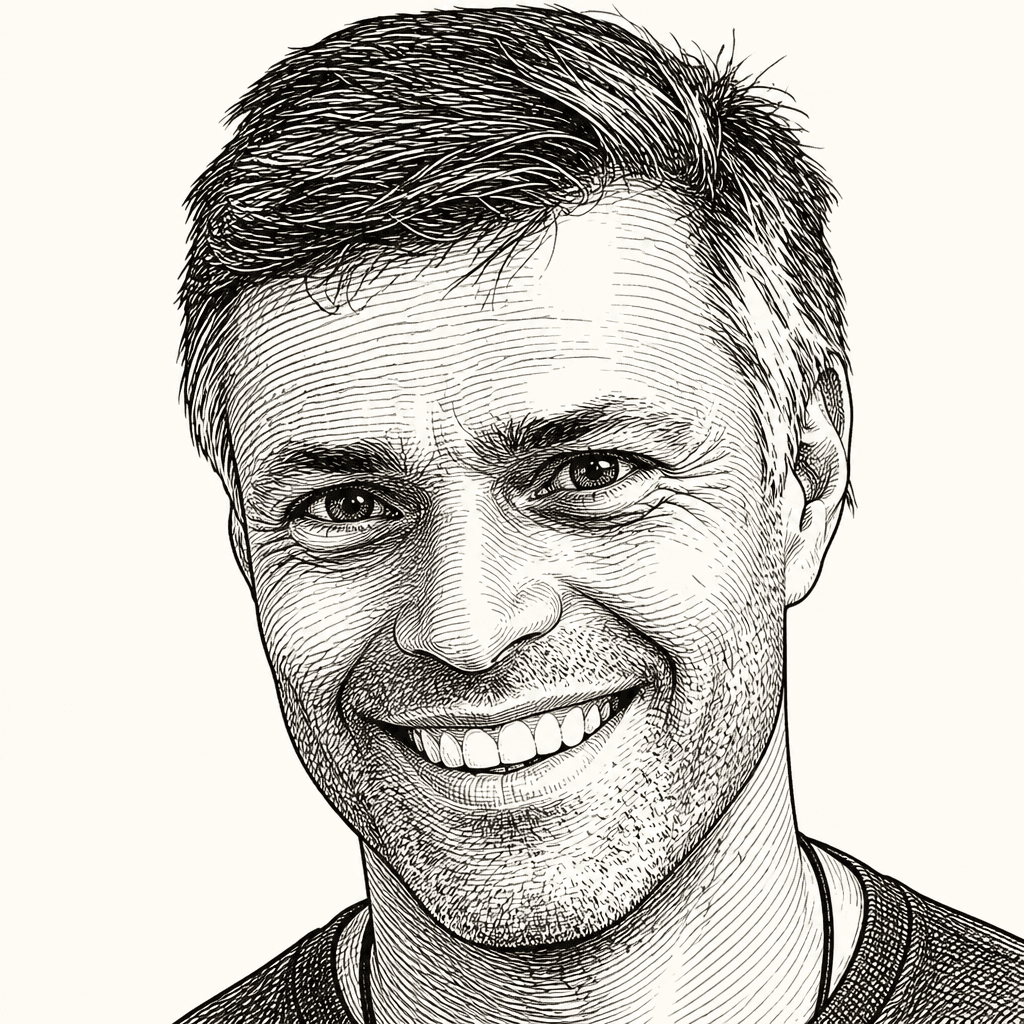
Venezuelan activist Leopoldo López argues that open-source, decentralized technology can give people more control over money, communication and information when governments or companies can restrict access. Drawing on his seven years as a political prisoner, he asks who holds the keys to the systems people rely on, citing examples from payments, journalism, internet access and AI.

The locks gave López a way to think about freedom
In solitary confinement, Leopoldo López remembers the locks more vividly than the shouting: one, then another, until there were nine. They became his way of understanding what imprisonment had taken from him. Speech, movement, a free and fair trial, his home, and eventually his Venezuelan nationality each had, in his framing, a lock placed on them. Freedom meant finding the keys.
That framework reaches beyond prison. López said Venezuelan agents raided his house, destroying its walls and ceilings and killing his dogs. The regime then took away his nationality, which he said the Venezuelan constitution prohibits. He connected the retaliation to a public statement he made supporting the law-enforcement and military buildup that led to Nicolás Maduro’s capture on January 3. He also noted that his home was only blocks from Delcy Rodríguez’s. A photograph shown during this account depicts two boys seated on concrete steps beside a white Labrador.
The raid was the latest episode in a long confrontation with the regime. López said he had served eight years as mayor in Caracas before being barred from running for office and surviving three assassination attempts. In 2014, after what he called Maduro’s stolen first election, López and others called for peaceful protests. Maduro called for his arrest. López went into hiding, then chose to surrender rather than remain hidden or leave the country. He spent seven years as a political prisoner.
The locks frame López’s central question about technology: who controls the means to speak, move, transact, preserve information, and maintain an identity? When those means depend on someone who can revoke access, that person or institution holds the key. His argument is that control over the tools matters: who can use them, who can restrict them, and who gets to decide what happens to the information or resources they carry.
A prison protocol made coordination possible under constraint
Prison did not remove every opportunity for collective action. Leopoldo López said he could see other prisoners only at Mass. During the sign of peace, when prisoners stood to embrace, he used a brief phrase to pass a message: “Peace be with you, my brother. Please tell your wife to find my wife.”
That phrase became part of a communication protocol. It took repeated attempts and six months to work out. About a year after they began, a spark activated the system; López said the prisoners took complete control of the prison for 12 hours. He did not describe how they did so. He described the limited opportunity for contact, the time spent developing a way to communicate, and the outcome.
Afterward, López said, prison became lonelier and more difficult. He went on a 28-day hunger strike, lost 14 kilograms, and the authorities took everything from him, including his books. In that isolation, he concluded that they could not take his heart and soul: his capacity to feel and think. He called that an internal key to freedom.
By the end of 2020, López escaped Venezuela, crossing checkpoints and a river into Colombia. Exile, he said, was another form of imprisonment. It also brought him into a changed technological landscape. He had entered prison with a BlackBerry and emerged to smartphones, voice notes, video calls, and cryptocurrency. The difference was startling to him: these were not part of the world he had known before prison.
At Stanford, a friend pointed him toward Bitcoin and AI as the major technological developments he had missed. The friend described Bitcoin as open-source, decentralized money that a person could hold with their own keys, and AI as a technology that would change how people use and process information. López said he was not drawn to these technologies as a programmer—he had never written a line of code—but to their possible connection with freedom.
Alternative systems mattered when the usual channels were controlled
López’s account of technology is grounded in people facing specific restrictions, not in the novelty of the tools. After exile, he met former political prisoners, protest leaders, and others forced from their countries. Their backgrounds differed in skin color, religion, and language, but López saw a common struggle for freedom. They created the World Liberty Congress, which he described as a global alliance of freedom fighters and democracy defenders, with representatives from 60 countries. Photographs shown during this part of the talk depict delegates seated in a circular assembly hall, including a closer view of people raising their hands or holding small devices. López said the network gave him the chance to hear how people in different countries were using technology in their struggles.
One example came from a Venezuelan nurse, Maria. During COVID, López said, she earned three dollars a month. He described a program set up to provide doctors and nurses with $100 per month in support. The obstacle was the financial system, which López said was controlled and surveilled by the regime. The organizers turned to stablecoins and Bitcoin to send support without the regime’s intermediation.
López said the program reached more than 70,000 medical doctors and nurses. He called it not just technology, but “a life support”—a way for them to survive during a crisis. In a photograph accompanying the example, protesters in medical uniforms hold a green banner reading “Enfermería Lucha!”
A second example concerns journalists. López described Anjan, a journalist who had followed conflict zones from Congo to Rwanda to Mexico and built a network of more than a thousand journalists. Their problem was how to keep their information if someone could switch off the service or delete their work. They turned to Nostr, which López called “to communication what Bitcoin is to money.” He described it as an open-source protocol that no one owns, where users can hold their own information and followers and publish without someone being able to delete that information.
The nurses’ program used stablecoins and Bitcoin to send support outside the financial system López described as controlled by the regime; the journalists used Nostr to retain and publish information. In both cases, he emphasized control over a channel that users feared could be monitored, restricted, or switched off.
Uganda showed that a technology can still have a gatekeeper
Leopoldo López said that ahead of a January election in Uganda, his friend Bobi Wine was going to win and that there was no doubt the regime would steal the election. López said one part of the anticipated effort would be shutting down the internet. He urged Wine to use Bitchat, an open-source protocol that connects phones without internet service or cell towers, using a Bluetooth mesh network.
Wine posted about Bitchat for 21 days. By election day, López said, 1.8 million people in Uganda had downloaded it. He described the protocol as becoming “their internet”—a way for people to communicate. A photograph shown alongside the Uganda account depicts supporters carrying a man on their shoulders beside a poster of him and the Ugandan flag.
López also described a backup plan: he said they had helped smuggle more than 30 Starlink terminals into Uganda. According to López, the regime asked Starlink to block the service, and it was blocked and could not be used. In the same week, he said, Starlink was open to protesters in Iran, as it had been in Ukraine.
The contrast led López to argue that the technology itself was not necessarily the obstacle. Bitchat connected phones without internet service or cell towers; access to Starlink, in his account, depended on a decision that could block the service.
Whenever there is a gatekeeper, there is a problem. It doesn't matter if the gatekeeper is a government, if it's a bank, if it's a company, the problem is the gate itself.
For López, the gatekeeper could be a government, a bank, or a company. His question is who holds the power to decide whether people can use a system at all.
For AI, the question is who holds the information
Leopoldo López applies the same question to artificial intelligence: who holds the keys to a person’s information—the person or a corporation? He pointed to what he called “sovereign AI”: AI that a person can hold on their own machine, manage with their own privacy, and decide how to use. He said he holds his own sovereign agent and is working with people in autocratic countries so they can have agents of their own.
He linked that idea to his other examples: Bitcoin for money, Nostr for communication, Bitchat for connectivity, and sovereign AI for information and its use. In each case, López’s emphasis is on whether people can hold control themselves rather than rely entirely on an intermediary.
But, he said, keys are hard to master. His account of learning self-control begins with repeated prison raids. He recalled waking to an assault rifle pointed at his head as agents tore apart his cell. When they returned week after week, he decided to train himself to control his physical response. He would do push-ups, burpees, and jumping jacks until his heart rate reached 80 or 90 percent, then sit still, breathe, and try to bring it down as quickly as possible.
The drills did not prevent the raids. López said that when the agents returned, he felt in control because he had found an internal key to self-control. He connects that practice to digital sovereignty: people, too, have a choice about whether to hold their own keys in the digital age. For him, those keys serve a purpose. He said he holds them closely in service of the freedom of Venezuela and of every country living under autocratic regimes.