Make Attention Capture Harder and Connection Easier

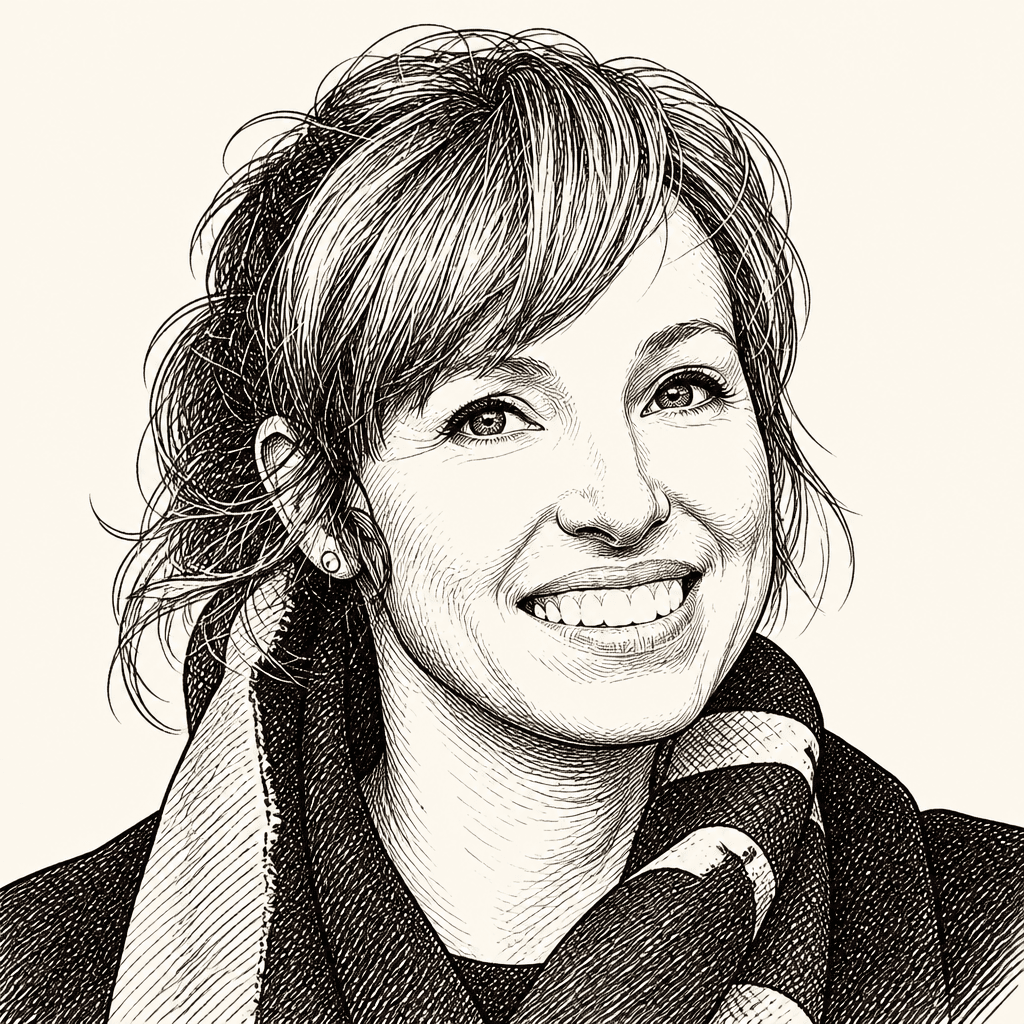
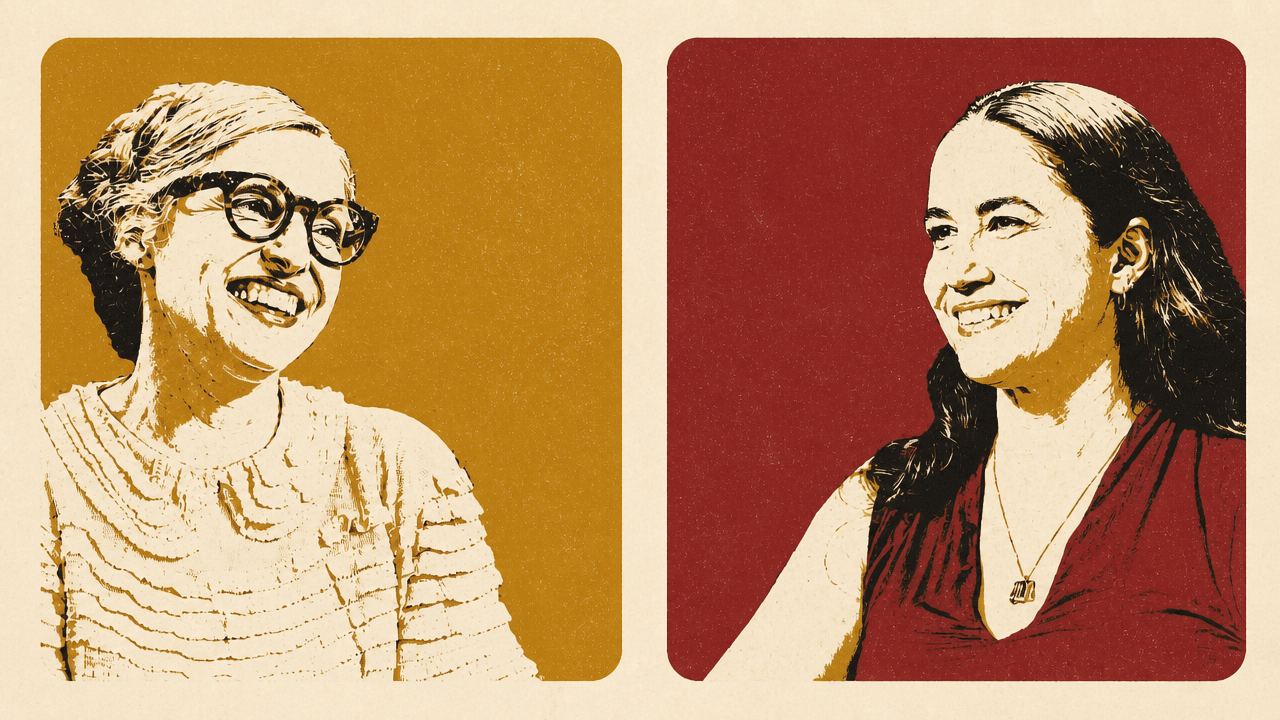
Author Catherine Price and horticulturist Rebecca McMackin argue that the obsession with productivity reflects a culture that makes attention capture and measurable output the default while treating play, friendship and contact with nature as indulgences. Price recommends changing those defaults by adding friction to compulsive phone use and protecting activities that need not produce anything, while McMackin makes the case for gardens and less-managed lawns as ways to relinquish control and make room for other life.
The easiest defaults are often the ones that capture the most attention
Catherine Price pushes back on the premise that contemporary life is designed to make everything easy. Plenty of important things are difficult: arranging time with friends, allowing children to play without adult supervision, or making space for an absorbing hobby. What is easy, she says, is using products whose designers profit when people spend more time with them.


Scrolling social media and consuming a continuous stream of news require little effort. Reading, gardening, or seeing friends often require more intention. Rebecca McMackin describes a different kind of friction in daily life: added fees, steps, and demands in travel, shopping, and other basic tasks. Price’s distinction is between those frustrations and the deliberate removal of friction from attention-capturing products.
Her practical rule is straightforward: add friction to habits you want to reduce, and remove friction from the ones you want to build. Her example is the bedroom phone. People often say they want to read more, yet use their phone as an alarm clock, keep it within reach at night, and scroll before bed. Taking the phone out of the bedroom makes late-night scrolling less automatic because it requires getting out of bed. Replacing it with an alarm clock and leaving a book—or another activity someone wants to return to—on the bedside table makes the alternative easier.
Price says people who have made that change have told her it changed their lives. They began reading more and returning to hobbies they believed they lacked time for. In her account, the time had not disappeared; reaching for the phone had simply become the easiest available use of it.
Reduce friction for the things you want to spend time on and add friction for the things you’re trying to cut back on.
That framework also explains why fun, friendship, and time outdoors can be difficult to protect. Their value may be substantial, but they usually require scheduling, presence, and a willingness to choose them over the low-effort defaults built into a phone, a news feed, or an overfilled calendar.
A valuable use of time does not need a deliverable
Catherine Price argues that the usual idea of productivity is far narrower than people admit. Time is often treated as worthwhile only when it produces a measurable output—frequently a financial one. By that standard, a good conversation with a friend can appear unproductive, even though it may be one of the more consequential uses of an afternoon.
Price is not rejecting purposeful activity so much as challenging the assumption that every activity needs a defensible deliverable. She points to the Latin root of “productive,” produco, or “to lead forth,” as a reminder that the contemporary equation between value and monetizable output is a choice, not a definition built into life.
That equation reshapes leisure. People may begin an activity because they enjoy it, then feel pressure to turn it into a side business, a performance, or a project. Price gives music as an example: she likes playing without wanting an audience, yet adults can find it hard to gather simply to play together. The immediate question becomes what the group will make, accomplish, or present.
Rebecca McMackin sees gardening as one place where people already seek relief from that pressure. Some gardeners pursue maximum yields or record-sized pumpkins, she says, but most garden as a break from the culture of output: a practice akin to self-care, yoga, or meditation. Gardening can reconnect people with the earth, themselves, and the other organisms around them. In that sense, it can help people survive and thrive inside a world that asks for constant productivity.
Price does not portray this kind of leisure as effortless. Adults are overscheduled, and the drive to make every hour efficient runs deep. But she argues that people often underestimate what simple, repeatable rituals can hold.
She recalls a woman who described a long-running Taco Tuesday with friends. The gathering sounded trivial until the woman recognized it as something closer to a sacred ritual: a dependable time to let down their guard, catch up, and reconnect. Its value did not come from the sophistication of the event. It came from treating time together as worth protecting.
For Price, fun is a feeling rather than a particular activity. It arises from the confluence of playfulness, connection, and flow; each matters on its own, but together they create what she calls the “magical state” of fun. She suggests identifying the people, places, and activities that reliably generate that feeling—her “fun magnets”—and making room for them. But she also urges people to look for smaller openings already available: a little more connection, levity, delight, or absorption in an ordinary moment.
Her enduring image is of a man who spent 45 minutes on a park bench with his nephew trying to catch falling leaves. Nothing had to be bought, documented, or improved. They were simply together and absorbed in something playful.
Fun can restore capacity without becoming another obligation
Catherine Price argues that fun can look frivolous precisely when people most need it. In a world full of serious problems, prioritizing enjoyment may seem irresponsible. But Price’s view is that people who are depleted by constant pressure and overwhelming information have less capacity to deal with hard things in their own lives, support others, or take action in the wider world.
She contrasts nourishing activity with doomscrolling. Staying informed can matter, she says, but there is a point at which repeatedly consuming distressing information one cannot control becomes obsession rather than engagement. Someone immobilized on the couch by the news is unlikely to plant a garden, spend time with friends, or take another concrete step.
The alternative, in Price’s formulation, is to ask what will “fill me up” or “light me up,” then create better boundaries with material that drains attention. The aim is not to ignore the world but to preserve enough energy to participate in it.
Rebecca McMackin offers plants as one concrete answer. Her recommendation for a healthier life is direct: grow tomatoes and milkweed. Tomatoes offer something especially good to eat and share with family or friends. Milkweed, by contrast, is an offering to other organisms in the surrounding environment.
McMackin frames that gesture as a gentle form of activism. People who feel isolated or alienated from nature can take part in creating a future they want to see, then watch the consequences unfold: eating tomatoes they grew, seeing what visits milkweed flowers, and recognizing that a small patch of land can support other life.
Planting a garden means believing in tomorrow.
McMackin calls the phrase cheesy but true. Gardening asks someone to invest in a future that may feel uncertain or frightening. At a time when many struggle to imagine that future at all, she sees value in the simple act of helping grow it.
Giving up control can begin with a sense of scale
Catherine Price treats control not only as a virtue but as a burden. Her starting point is that people are part of a larger ecosystem and ultimately less central than they often imagine. Clinging to control, she says, is unlikely to help others or oneself.
Her practical advice is to distinguish what is within one’s control from what is not, then seek situations in which it is possible to stop being conscientious, responsible, and in charge. The moments when she has the most fun are often the ones in which she is not organizing others or monitoring the outcome. That temporary freedom can be energizing.
Rebecca McMackin finds a similar lesson in encounters with very old trees. She describes a 400-year-old white oak in a Bronx cemetery, so massive that its visitor is left with little doubt about “who the superior being is.” Looking at such a tree can create the smallness people may also feel before mountains, canyons, or the sky. For McMackin, that insignificance is not humiliating. It is a relief.
The shared point is not that people should become passive. It is that encounters with a world larger than one’s own plans can loosen the obligation to manage everything. McMackin describes the relief of recognizing that one does not have to be in charge; Price describes the freedom of not always being the organizer or caretaker of everyone else’s experience.
Play needs enough structure to make freedom safe
Catherine Price defines play less as a category of activity than as doing enjoyable things for their own sake, without needing the outcome to take a particular form. For adults who find “play” difficult to imagine, she finds “playfulness” more useful: a lighthearted attitude, a willingness not to take everything too seriously, and situations in which the inner critic can become quiet.
That does not mean play is formless. Price notes that sports, games, and theater are all play spaces governed by recognizable rules. Participants can let go in part because they know how they are meant to behave and what others are permitted to do. Structure, in this account, does not necessarily constrain play; it can make relaxation possible.
Rebecca McMackin sees that principle in children’s roughhousing. Watching her child and other children wrestle initially worried her. But they developed a word for stopping when the activity became too intense, and they checked that the other person remained comfortable. Once those parameters were in place, the children had more freedom to play in the wild way they were drawn to. If someone went too far, both speakers agree, it would no longer be play.
Their exchange extends the point beyond childhood. Price says her research found observations of play-like behavior across the animal kingdom. McMackin describes bumblebees—especially younger ones—leaving a direct route to sugar water to manipulate wooden balls for no apparent instrumental reason. She connects that curiosity to the bees’ ability to solve the “lock and key” puzzles of flowers, reaching pollen and nectar that less specialized visitors cannot access.
For McMackin, curiosity and problem-solving are not opposed to play. The bees’ apparent interest in both balls and floral puzzles suggests a more expansive picture of living things than one organized only around efficient purpose.
Less lawn can mean more room for life
Rebecca McMackin advises people seeking more wildness to grow plants. Houseplants count. So do milkweed and goldenrod on a windowsill, stoop, or any accessible outdoor space. Plants offer a reason to sit and stare at a flower, but their importance is not merely therapeutic. They are, in her formulation, gifts to the other “earthlings” sharing one’s environment.
That relationship can ease isolation. McMackin describes learning the calls of birds, recognizing particular trees, butterflies, and flowers, and greeting familiar species as if they were neighbors. Seeing a rare flower, she says, can feel like encountering a celebrity. She wonders whether some human loneliness is also environmental isolation: a break from the natural world and from the creatures already living nearby.
Catherine Price describes wildness less literally but in a compatible way: as playful rebellion against the rules of “responsible adulthood.” When she asked people about their deepest fun experiences, she found not just lighthearted amusement but joy, connection, and a recurring element of rule-breaking. Wildness might mean taking a different route home, leaving the phone behind to notice butterflies, or listening to a song from adolescence and singing loudly during a commute rather than consuming more news or educational content.
The shared aim is aliveness: making room for one’s own vitality while recognizing that other creatures have lives of their own.
For McMackin, lawns are the clearest concrete site for that shift. A lawn is fundamentally an expression of control, she says: “a crew cut” repeatedly imposed on the earth. She does not argue that lawns have no use. Lawns can be habitat for people, a clear space in a park where people understand they are welcome to picnic, play flag football, do cartwheels, or simply gather.
But lawn need not be the default for every landscape. Her preferred metaphor is not wall-to-wall carpet but an area rug: retain the portion people actually need, then cede more of the space to flowers and wildlife. The proposal is deliberately modest. A person can begin with a corner of a yard—and make room for both people and other organisms without treating total control as the only form of care.