Fascination, Not Passion, Drives Career Excellence
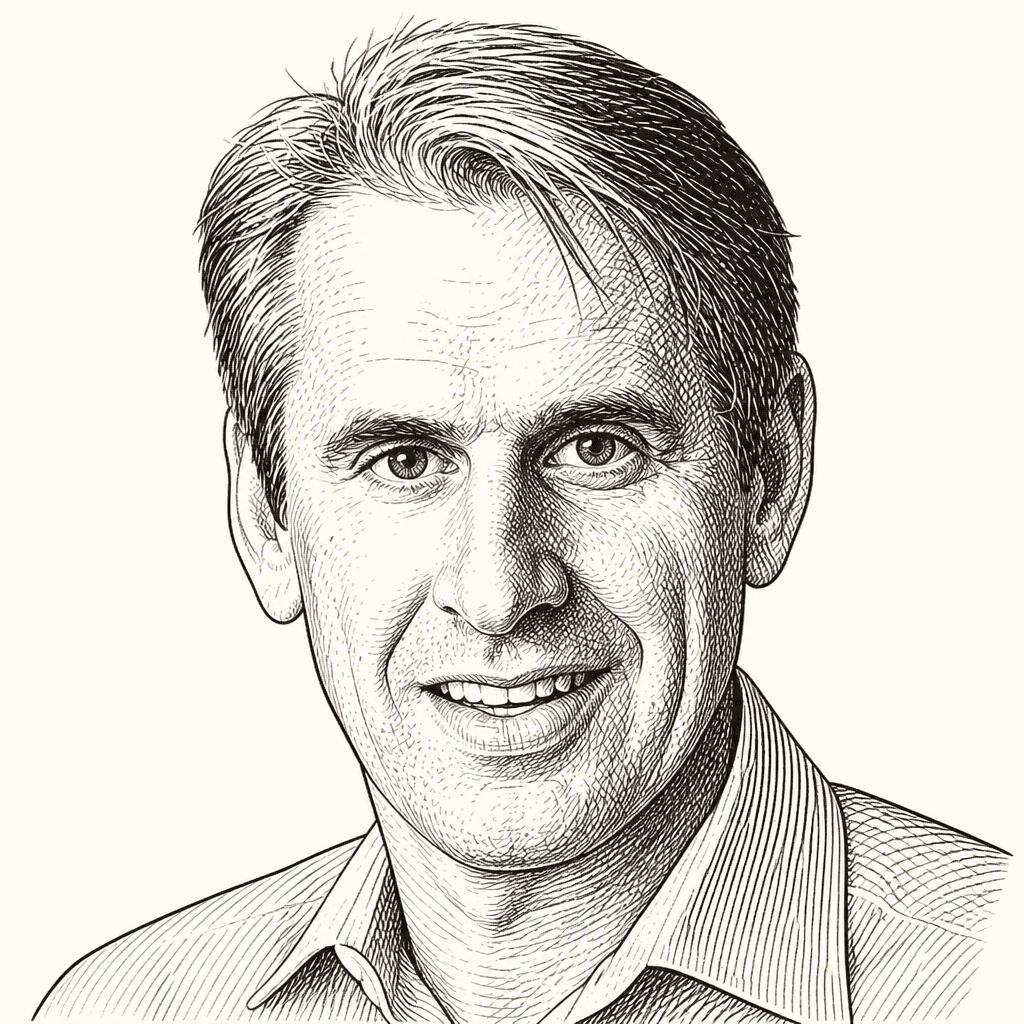
In a TED talk, venture capitalist Bill Gurley argues that exceptional careers are built on fascination rather than passion. Drawing on six years of research into high achievers, he says the decisive trait is “continuous and obsessive learning” — but that such learning is an effect, not a cause. The cause, in Gurley’s telling, is finding the field that makes a person study without being pushed, then building a career around it.

Career excellence starts with fascination, not passion
Bill Gurley argues that the durable engine of career excellence is not passion in the vague motivational sense, but fascination: the kind of interest that makes a person study without needing to be pushed.
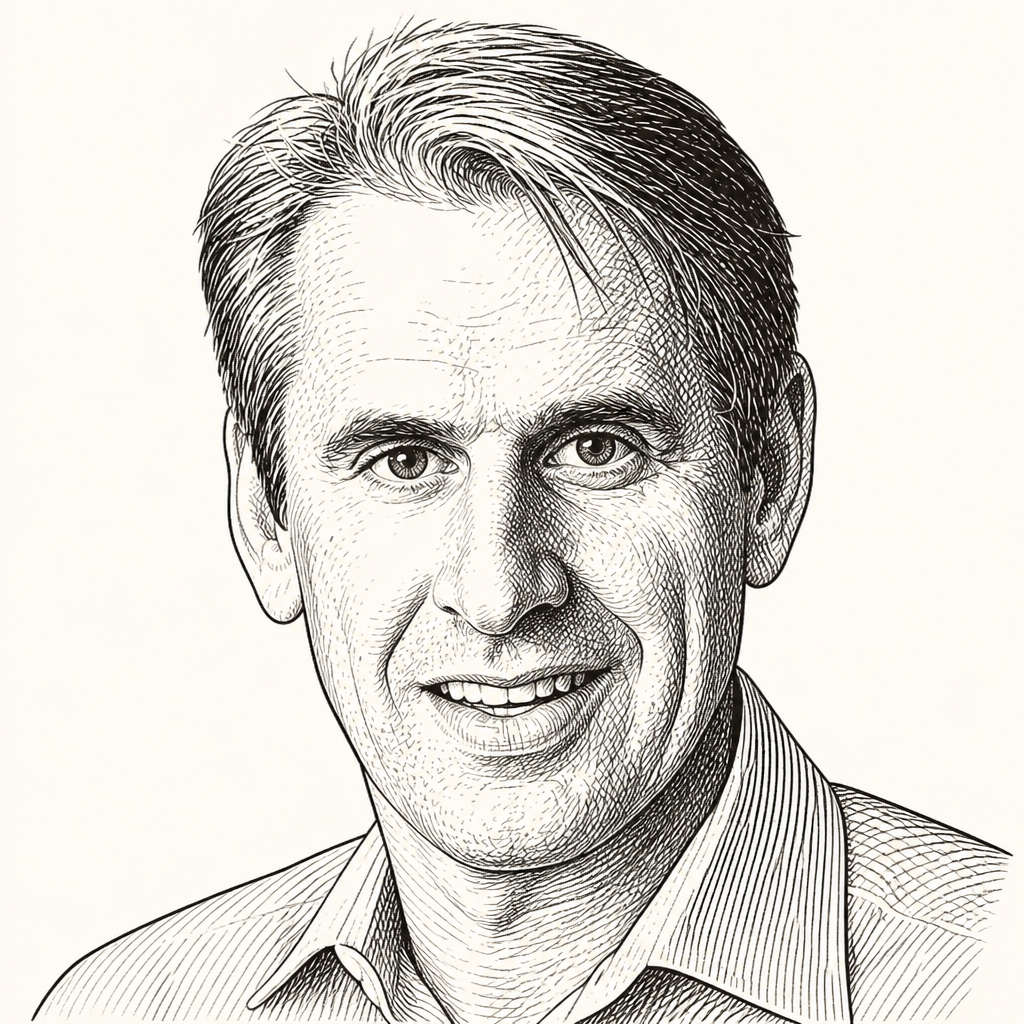
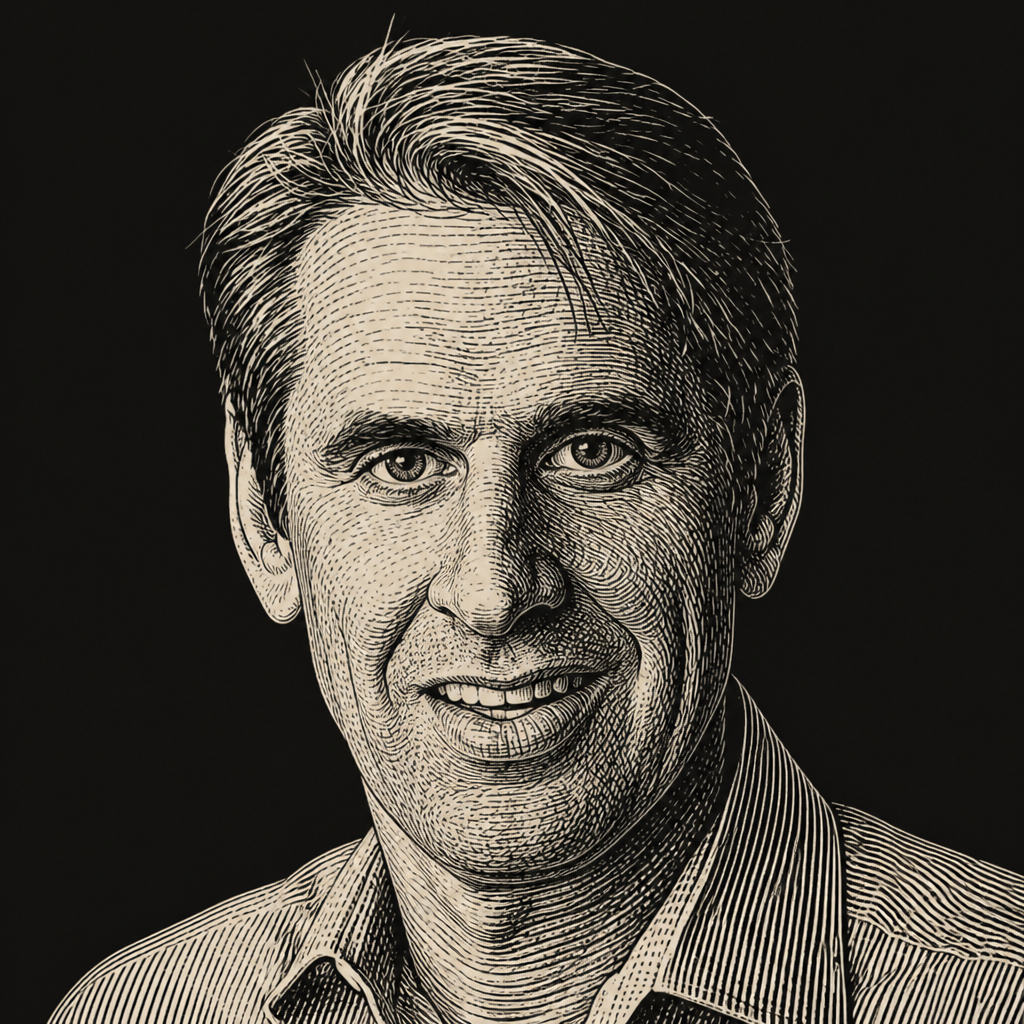
Gurley says he spent six years studying what drives outstanding careers, working with a co-writer and a researcher to examine more than 100 biographies, speak with academics in the field, review their research, and conduct a survey with Wharton. Across the lives they studied, many common traits appeared, but one stood out: “continuous and obsessive learning.” The people who became exceptional were, in his description, lifelong students. They knew the history of their fields, understood the nuance that separates good from great, recognized the edge where innovation happens, and kept studying through the beginning, middle, and end of their careers.
But the learning itself is not the original cause.
Obsessive and continuous learning is not an input. It's an output. It's not the cause, it's the effect.
The cause is fascination. Gurley borrows the distinction from Jerry Seinfeld’s 2024 Duke commencement speech, where Seinfeld mocked the phrase “follow your passion” and proposed “follow your fascination” instead. Gurley likes the precision of the substitution. Passion can be passive: someone can be passionate about the Cincinnati Reds and spend three and a half hours sitting in a chair drinking beer. Fascination, by contrast, has a mechanism. “When you're fascinated,” he says, “you study automagically.”
His chess example is Magnus Carlsen. At the 2015 annual chess competition in Iceland, organizers held a history trivia contest, and Carlsen won. The point is not simply that the world champion knew chess history. It is that Carlsen likely did not arrive at the top and then decide, instrumentally, that history would be useful. The knowledge came from the deeper pattern: fascination produces study as a byproduct.
Danny’s career turned on someone naming what he already cared about
Gurley’s main story is about Danny, who before opening Union Square Cafe was 25, a Trinity College graduate with a political science degree, and making good money in sales selling anti-theft tags for clothing in department stores. He had long assumed the next step was law school. The night before the LSAT, over dinner with his Uncle Richard at Elio’s on the Upper East Side, Danny admitted he did not really want to take the test.
Uncle Richard pressed him: if food and restaurants were what Danny had talked about his whole life, why not open a restaurant?
Danny still took the LSAT the next morning, but he never enrolled in law school. Instead, he found a $300 restaurant management course in a magazine, took a 90 percent pay cut to enter a local restaurant and rotate through different jobs, and planned a learning trip to Europe where he would stage across countries and cuisines. Gurley pauses on the word “stage”: “a fancy French word that means work for free.” Danny returned to New York, studied locations and buildings, and in 1985 opened Union Square Cafe.
Union Square Cafe was named New York’s favorite restaurant by Zagat eight times. Danny went on to launch more than a dozen high-end restaurants in New York, including Eleven Madison, Gramercy Tavern, and The Modern, and later founded Shake Shack, which Gurley says has 400 locations worldwide and a $4 billion market cap.
The learning pattern did not end with early ambition. Every time Danny developed a new concept, he spent a year studying before launch. When Gurley spoke with him the prior fall, Danny had just returned from another learning tour in Europe, more than 40 years after the dinner with Uncle Richard. For Gurley, Uncle Richard did not implant an ambition. He reflected one back.
Fascination changes the economics of effort
When fascination and career align, the obvious first result is greater fulfillment. The second is more important to Gurley’s argument: “the learning comes for free.”
By “free,” he means not that it requires no time, but that it requires no conscious forcing. Learning something one does not care about drains energy; learning something one is fascinated by creates energy. That contrast, he says, is “massive.” It explains why Danny knew what to do next when he chose restaurants, and why Carlsen knew chess history without treating it as an assigned syllabus.
The third effect is social and professional. People notice enthusiasm paired with unusual knowledge. That combination improves performance in interviews, helps people get promoted, attracts mentors, and draws opportunity toward them. His example is informal but recognizable: if someone is known to be obsessed with documentaries, others start making introductions — “you have to talk to Sally.”
The fourth effect is impact. Fascinated people “leave big footprints.” Uncle Richard did not only affect Danny. Gurley asks the audience to consider the thousands of people who worked and learned in Danny’s restaurants, the millions of customers who experienced his hospitality, and the restaurant and small-business owners who read his book, “Setting the Table.”
This is where the argument moves beyond personal satisfaction. A career built around fascination compounds because the person keeps learning, keeps transmitting knowledge, and creates institutions or work that others can participate in.
The institutions are poorly designed for finding what fascinates people
Gurley does not claim most people reach this state. He cites a 2023 Gallup poll reporting that only 23 percent of people were thriving and engaged in their job. He says Gallup put 59 percent in a category it called quiet quitters: people who were ambivalent about their jobs and emotionally disconnected. In Gurley’s own survey, respondents were asked whether they were in their dream job and whether they wanted a do-over. Only 20 percent said they were in their dream job and did not need one.
| Measure | Share |
|---|---|
| Thriving and engaged in their job, in Gallup poll cited by Gurley | 23% |
| Quiet quitters: ambivalent and emotionally disconnected, in Gallup category cited by Gurley | 59% |
| In dream job and not wanting a do-over, in Gurley’s survey | 20% |
He attributes the low share partly to the path into and through college. Schools have become so hard to get into, he says, that children enter what Jonathan Haidt has called the “resume arms race” as early as sixth grade: Mandarin lessons, lacrosse, cello, volunteering. The point is not that any one activity is bad, but that the system creates pressure for children and parents alike.
The timing of career choice has also shifted earlier. When Gurley was young, students often could not declare a major until the end of sophomore year. Today, at many schools, applicants must apply directly into a major. In his framing, a life decision that once happened around age 20 has been pushed to age 17, when most people do not know what they want to do for the rest of their lives.
The third problem is advice toward “safe” fields: medicine, law, finance, computer science. Gurley stresses that parents and advisors pushing those options are often well-intentioned. His challenge is whether those jobs are still safe in an AI environment. The formulas and algorithms people learned in school to pass tests, he says, are now “in the model.” If workers are not advancing their learning after college, AI is catching up.
The jobs most under threat, in his view, are not the ones people love. They are the jobs people were already ambivalent about — the 59 percent. He sharpens the claim further: perhaps what is really under threat is “the static mindset.”
AI raises the premium on people who keep learning
Bill Gurley relays a line from Mark Cuban: there are two kinds of people in the world, “those that use LLMs to learn faster than ever, and those that use LLMs to skip learning altogether.”
For the “fascinated artisans” in Gurley’s framework, AI accelerates the same behavior they were already inclined toward. It is “a jetpack”: they learn faster and “soar higher.” The risk is not simply choosing the wrong college major or entering the wrong profession. It is building a career around knowledge that stops compounding after graduation.
Gurley is skeptical that existing institutions are built to help people discover individualized fascination. He describes them as designed for “high volume mass manufacturing,” not “bespoke, individualized, customized fascination discovery.” That leaves the work to individuals around the person: parents, counselors, friends, and family.
His closing examples mirror the Danny story. Matthew McConaughey, Gurley says, was good at winning arguments as a young person, so his family told him he should become a lawyer. In college, he became close with film school friends, loved the field, and wanted to switch, but feared his stern father’s reaction. When McConaughey finally explained the logic, his father paused and said, “Don’t half-ass it.” Gurley says that response “unleashed another artisan, an Oscar-winning one.”
The second example is a friend’s son, Jackson, a Wake Forest senior on a finance track who spends spare time studying basketball analytics. On a family trip, Jackson woke at 7 a.m. to study basketball before the day’s activities. He took a basketball internship rather than a finance internship. His father described his own progression from awareness to acceptance to enthusiasm to full support, and said he could see Jackson’s confidence grow at each stage.
The prescription is modest but demanding: notice what someone is already drawn to, name it, and support it seriously. “It doesn’t take much,” Gurley says — a comment, a nudge, a mirror. Danny had Uncle Richard. McConaughey had his father’s permission. Jackson had a parent who moved from tolerance to active support.