Survival Skills Can Become a Trap After the Crisis Ends
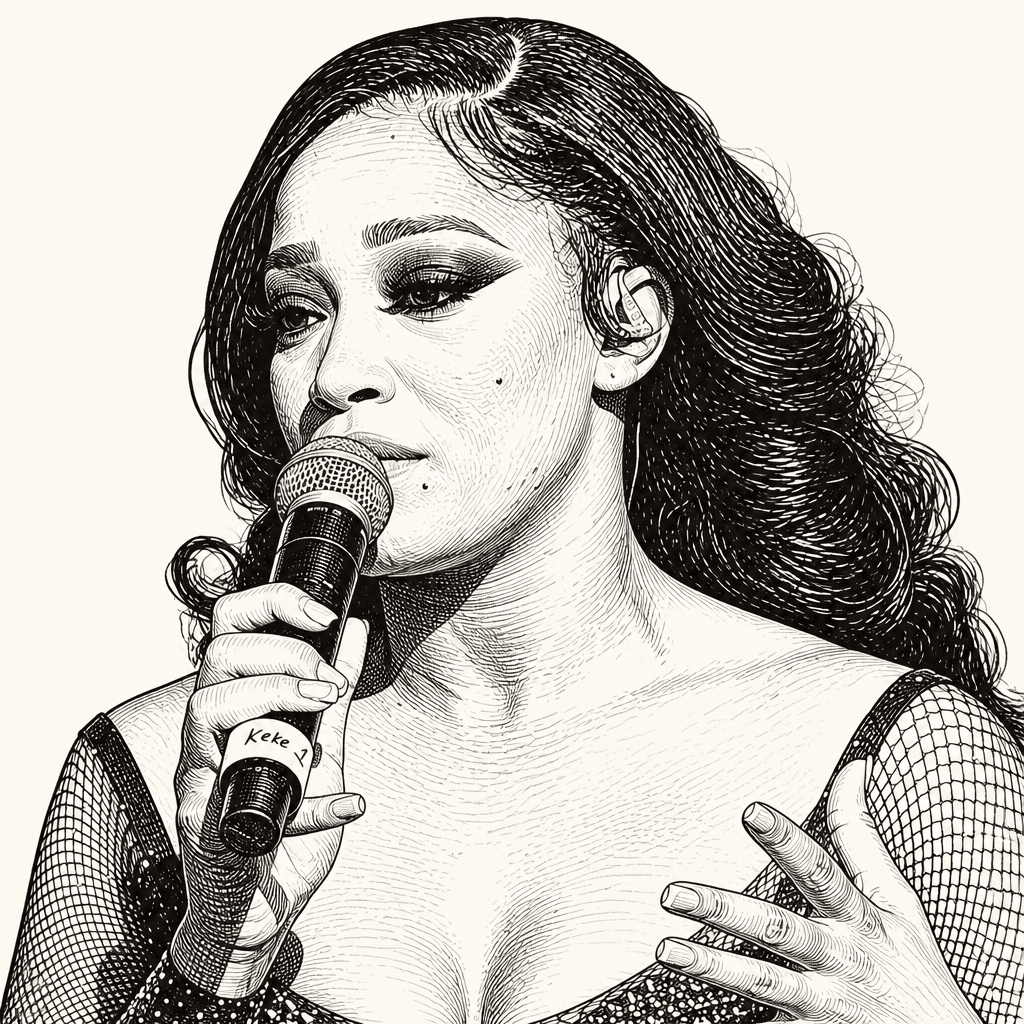
In a TED talk, Keke Palmer argues that the performance skills that carried her family out of poverty also became a form of confinement. Recounting her childhood in Robbins, Illinois, her rise as her family’s breadwinner, and the public persona she built to manage pressure, Palmer says survival habits can keep running after the emergency has passed. Her case is not against work or ambition, but against mistaking constant usefulness for freedom.

Survival worked so well it became the trap
Keke Palmer frames her career not as a simple ascent from childhood talent to adult success, but as an adaptation that kept functioning after the original emergency had passed. Her central claim is precise: survival can become so effective that a person may not notice when it is no longer serving them.
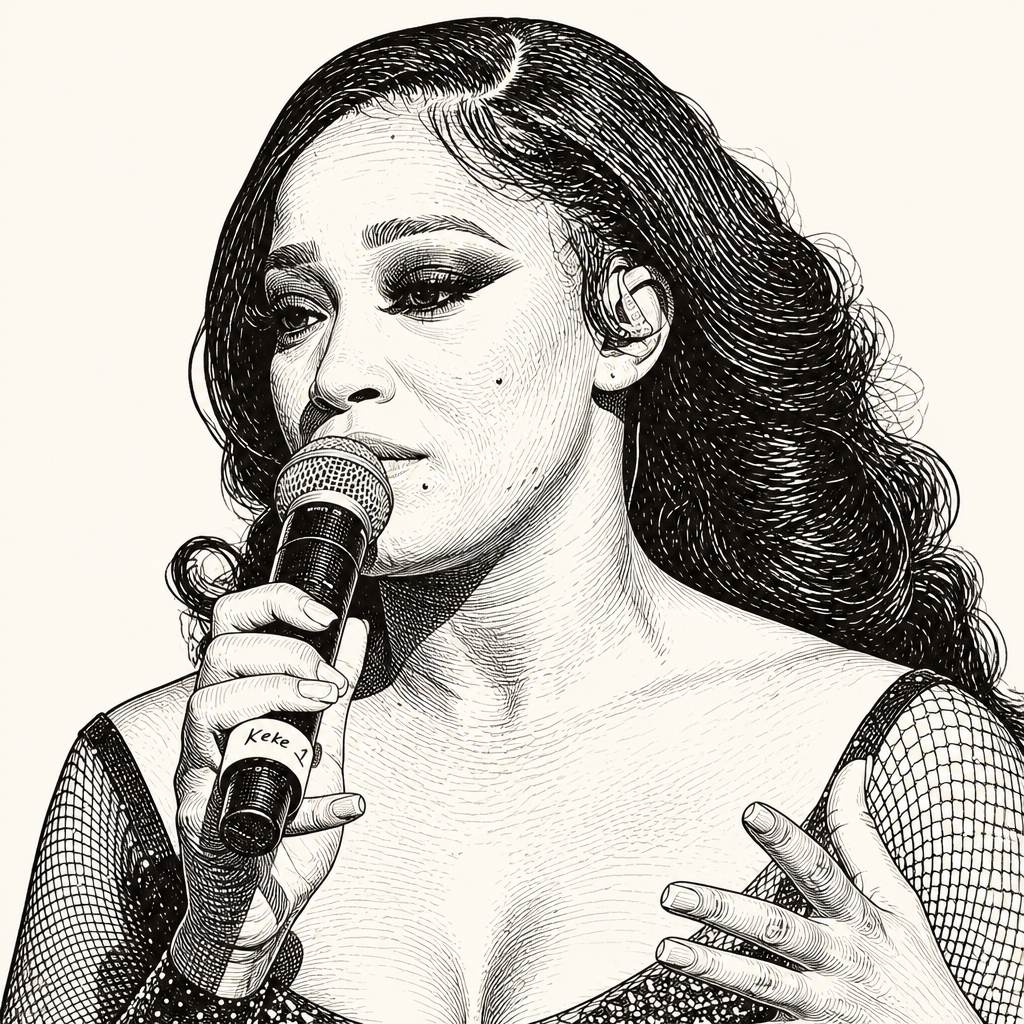

Palmer locates that pattern in Robbins, Illinois, where she grew up in what she describes as a food desert. Lunch before school often came from the liquor store: Flaming Hot Cheetos and a pop. Her family, she says, was “cash-poor, but rich in culture and pride.” Her mother worked as a substitute teacher for disabled children and sang in churches and as a backup singer for extra money. Her father worked in a polyurethane factory. Both parents had loved speech, interpretation, and theater, but circumstance “slowly made no space for” those parts of them.
The material insecurity was not abstract. When Palmer was eight, her family moved somewhere “a little nicer” and qualified for Section 8 housing support. She remembers being told not to mention her father when the assessor came by, because acknowledging his presence would reduce the support the family needed. She did not understand the system, but she understood the stakes: stability was fragile, survival was urgent, and protecting the whole could mean shrinking parts of the self.
Performing began as play, “hamming it up” in a place where access was limited. Then it became a gate. Only a child could fit through the gatekeepers’ gates, Palmer says, especially a child eager to please. Once she began auditioning and booking jobs, the family saw that her talent could relieve pressure on her parents. They moved to Los Angeles for her career, driving four days and three nights from Illinois to California. Her father withdrew his pension; the church and extended family contributed what they could.
The move quickly appeared to work. In her first year, Palmer starred in a movie with William H. Macy and received a SAG nomination. She then got a self-titled Disney Channel pilot and starred in her own movie. The family’s life changed: they no longer shared rooms, had a working car, and her parents were not constantly stressed about bills or whether Palmer and her three siblings could get a better education.
That is where the meaning of performance changed. Her career became “the center of our orbit,” not because the family was chasing success, but because it bought freedom. Messing it up would not have cost only Palmer. In her account, it would have put the family’s freedom at risk.
The public character solved one problem and created another
By the time Keke Palmer landed her own television show, she was “undoubtedly the breadwinner,” and the job was simply that: a job. There was no time for outside activities, vacations, or pause. As pressure increased, the stage became the safest place for her to feel free.
Performance gave her room to feel. In roles, she could embody joy, sadness, frustration, and humor. As True Jackson, VP, she could sing about working at a grown-up job and not knowing she could work this hard — a theme song she wrote before she understood what she was “transmuting.” Palmer’s point is that performance gave those feelings a safe container: it did not make people feel guilty about watching her carry adult weight too early.
That distinction matters to Palmer’s argument. She was not only performing on screen. She began performing off screen, too, designing a survivable version of herself.
I began designing a character to survive my life. That character is Keke Palmer. Approachable, capable, funny. A small container my full range could exist inside of without overwhelming anyone.
The character worked. It carried her through 23 years in the industry: childhood fame, the transition into adulthood, and success beyond what she had imagined. She notes that she even wrote a New York Times bestselling book, Master of Me, about how she became “a master of me.” The stage image of the book cover showed Palmer manipulating a smaller puppet version of herself in a tuxedo.
By external measures, she had made the system work. The tension is that success did not mean the system was healthy. It meant the adaptation was efficient. Palmer describes herself as “a billboard for hyperfunctioning,” someone who stayed alert, useful, and “on.” She became so disembodied, so accustomed to running on autopilot, that there were “huge gaps” in her life where she lacked recall. During Cinderella on Broadway, she remembers being on stage and not knowing how she had gotten there.
Her metaphor is mechanical: a computer that works well enough that no one turns it off, not even to restart for updates. The machine keeps running, but its owner never discovers how much better it might function if it were allowed to stop.
Her son made rest visible as a need, not a failure
The pattern broke, Keke Palmer says, in a small moment with her son, Leodis. Their annual Halloween costumes had become elaborate productions, a way to share her work with him. He performs, she says, and he commits. But after one recent Halloween production, she noticed that he was exhausted — not the kind of tired that leads quickly to sleep, but the kind that keeps a child running, yelling, and screaming.
She expected him to fall asleep in the car. He could not. Palmer pulled over, took him out of his seat, and held him tightly while he fought her. She kept telling him, “It’s okay to rest. You can rest. I’ve got you.” After one last slap to her face, he fell asleep.
The episode mattered because Palmer recognized herself in him. When she returned home, she had one free hour before more work. She lay down and closed her eyes, but did not sleep; her mind kept running. When her mother came in and said it was time to go, Palmer got angry and began crying. She describes it as a delayed grief: she was acting like her son and expecting her mother to do what her mother had never been able to do.
Palmer is careful not to cast that as a failure of love. Her mother loved her, but survival had taught her to value propulsion. Moving forward mattered more than being held. Her mother feared Palmer would not survive, so she gave her the skills she knew. Even when her mother offered, when Palmer was young, that they could go back to Chicago, going back did not feel like rest. It felt like erasure. Stopping was available only as an ultimatum: stop, and return to the instability they had escaped.
So she did not stop. She was not trying to be exceptional; she was trying to be reliable. She carried the load not simply because she had to, but because she could not “un-know what was at stake.” Once she had seen life on the other side of poverty, she could not unsee the contrast. The problem was not that she failed. It was that she “didn't know when it was complete.”
The task became checking the old operating system
Keke Palmer shifts the language from achievement to systems. Somewhere along the way, she says, she began believing she was “the thing that saved us.” She built an entire way of moving through the world around alertness, usefulness, and constant motion. That way of operating had intelligence inside it. It was not irrational; it had been built for real conditions.
The danger is what happens when the conditions change and the adaptation does not.
When adaptive intelligence outlives the conditions it was built for, it turns into compulsion. Productivity without presence.
Palmer does not reject work, performance, or success. She argues for checking whether the functions that once saved a person are now keeping them from the self they were trying to save. A person may believe they need one more achievement, one more opportunity, one more accolade, or simply enough motion to finally feel safe. Palmer’s counterclaim is that the need may be simpler and more difficult: a break long enough to look around, take stock, and feel gratitude for what has already been built.
She ties that shift back to her parents. They survived inside systems that did not fully see them. Learning to live rather than merely survive became, for Palmer, a way of returning some of that visibility. During a trip to Bali, she says, she finally spent one-on-one time with “that little girl who left Robbins, Illinois.”
Her reintroduction is deliberate. She names herself as Lauren Keyana Palmer, CEO of the Keke Palmer Company — a company she created from nothing with her mother, father, and three siblings. She describes herself not as someone chasing exceptionalism, but as “just a girl” who wanted herself and her family out of poverty. Once they were out, she says, she forgot to set herself free.
The line she leaves is intergenerational rather than individual: her parents showed her how to survive, she showed them how to dream, and her son is showing her how to live.