The Universe Will End, and Meaning Must Exist Now


Cosmologist Katie Mack argues that the universe’s eventual end offers no final accounting that can make human life meaningful in retrospect. In conversation with designer and podcaster Debbie Millman, Mack describes five broad cosmic fates physicists have modeled—from collapse and heat death to vacuum decay and cyclic rebirth—while explaining how the cosmic microwave background preserves a direct trace of the early universe. Her conclusion is personal as well as scientific: for temporary beings in a changing cosmos, meaning must exist in the present rather than await a cosmic resolution.

The universe’s ending does not supply a final meaning
Katie Mack studies the end of the universe as part of its full physical story. Her work has included the early universe, cosmic inflation, dark matter, the formation of the first stars and the evolution of galaxies. If the universe began in conditions unlike those of today and has continued to change, she says, its distant future belongs to the question too.

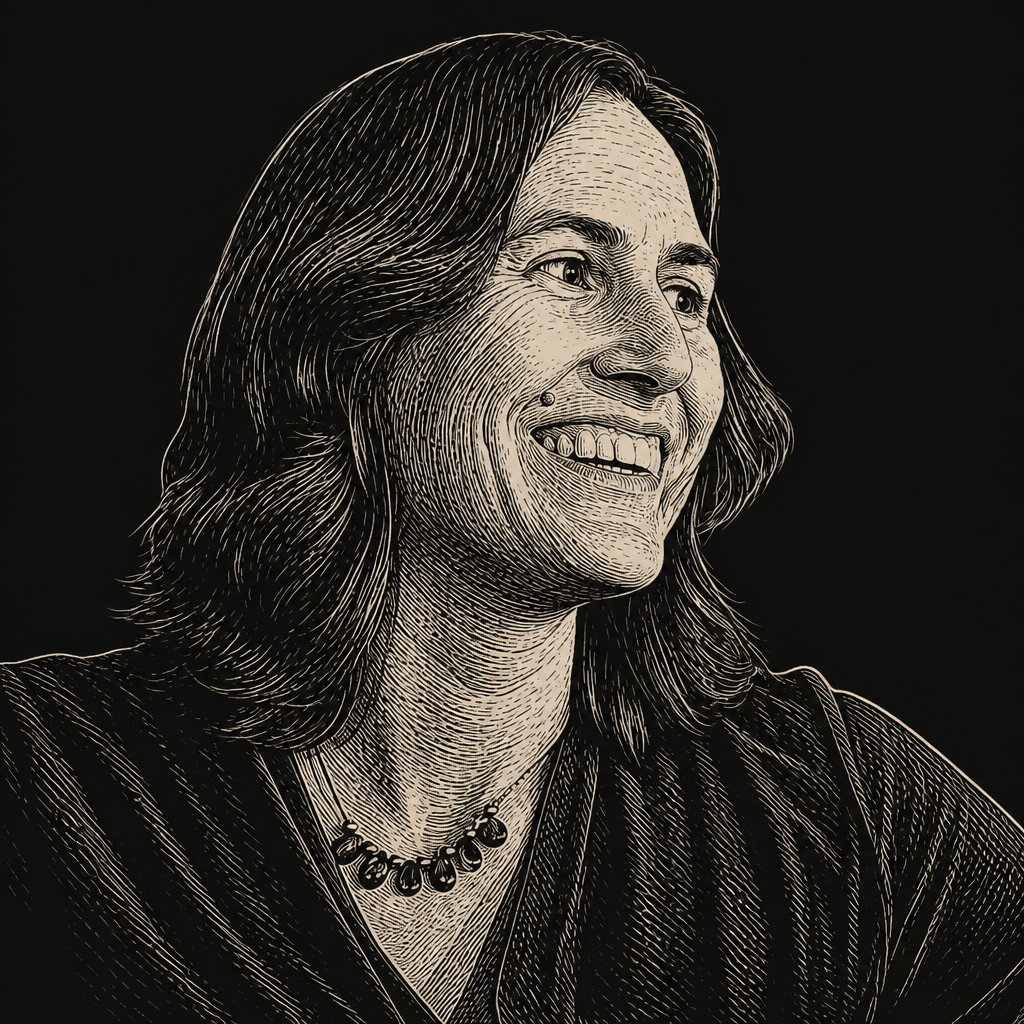
Writing about that future changed Mack’s relationship to time. Humanity occupies an extremely small interval in the universe’s history, with time before it and potentially far more after it. In cosmological terms, she says, humanity is insignificant. Yet she also finds it remarkable that such a small and temporary species can know as much as it does about the universe.
It’s impressive that we know so much even though we are so insignificant.
For Mack, the prospect that everything ends removes the expectation that life will later be justified by some final resolution. There may be no ultimate moment that ties history into a tidy bow and establishes that it all mattered. Meaning therefore has to be self-contained: something found in the world and in life as it exists now, rather than something deferred to a cosmic conclusion.
When we think about how to find meaning and purpose, it has to be something that’s self-contained, something that exists in the universe now.
That perspective has affected what Mack considers worth being upset about. Human lives are temporary, she says, and people are doing the best they can while they are here. Without a final cosmic accounting to confer meaning after the fact, what matters is what can be found and made in the present.
Five endings describe a universe that cannot remain unchanged
Mack organizes possible cosmic endings into five broad categories: the Big Crunch, Heat Death, the Big Rip, Vacuum Decay and Bounce. They are not, she says, invented thought experiments. Each is a type of ending discussed in the physics literature, with models that work through what the relevant physics might look like.
| Possible ending | Description in this discussion |
|---|---|
| Big Crunch | A named category; Mack describes collapse as one broad cosmic fate. |
| Heat Death | A named category without a distinct mechanism described here. |
| Big Rip | A named category without a distinct mechanism described here. |
| Vacuum Decay | A bubble of a new kind of space spreads through the universe and destroys everything. |
| Bounce | A cyclic possibility in which an end may become another beginning. |
The point of the categories is not to name a settled forecast. They describe the main families of futures physicists have modeled: a universe that collapses; one that continues evolving; a transition in which a bubble of a new kind of space spreads across and destroys the existing universe; or cyclic possibilities in which an ending becomes another beginning.
The Big Crunch belongs to the possibility of collapse. Vacuum Decay is the more radical transition, in Mack’s description: a new kind of space propagates through the universe and destroys what it reaches. The Bounce includes models in which the universe ends and begins again, or in which this universe’s beginning could in some sense be the end of a previous one.
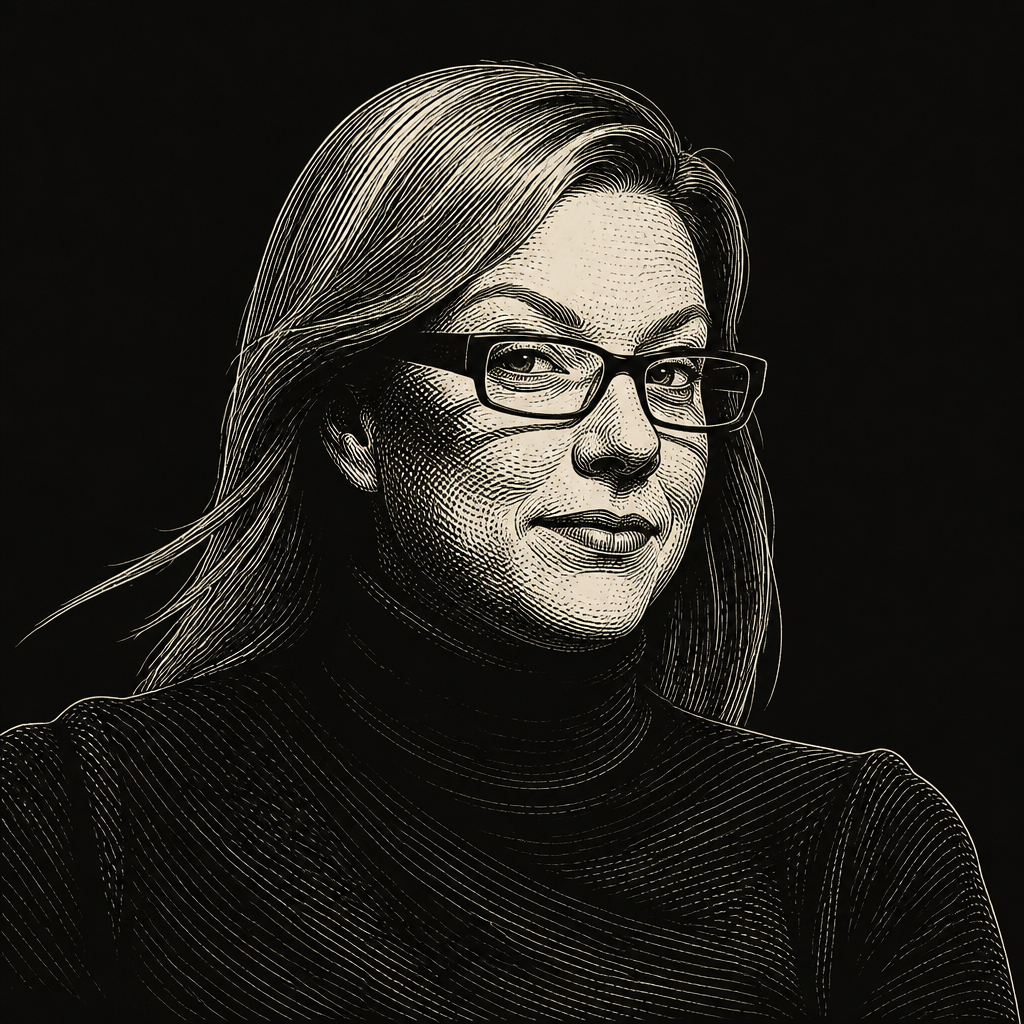
Debbie Millman says the cyclic possibilities feel like the most hopeful. Mack does not present hope as a scientific criterion. Her interest is in the premise that the universe will not remain as it is indefinitely, and in the physical possibilities for what change might ultimately mean.

The ancient universe is still arriving as light
The most direct trace of the early universe, Katie Mack explains, is the cosmic microwave background: a glow of microwave radiation present throughout space. Microwaves are electromagnetic radiation, and a receiver tuned to the relevant frequencies can detect this background in every direction.
Its spectrum is central to Mack’s account of what it represents. The distribution of energy across frequencies matches the spectrum produced by something hot and glowing. She compares it to a poker heated in a fire: it glows red with a characteristic distribution of light because of the motion of particles in hot material. The background radiation has that same thermal signature, except that it fills the universe.
The reason it can be seen is also a consequence of light’s finite travel time. Even nearby vision is delayed: someone six feet away is seen roughly six nanoseconds in the past. At cosmological distances, the delay becomes billions of years. Looking far enough into space means looking far enough back in time to observe the universe as it was about 13.8 billion years ago, when the universe was hot and dense enough to glow throughout.
If you look so far away that you’re looking 13.8 billion years ago, you’re looking at the time when the whole universe was glowing with heat because it was in this hot, dense phase of the very early universe.
The light did not originate at a fixed edge and stop. It traveled in all directions while the universe cooled. Some radiation is heading away from Earth; the portion traveling toward us is what instruments detect as the cosmic microwave background. For Mack, that makes it more than evidence inferred from a later record: it is a direct view of the very early universe.
The scale is difficult even for a cosmologist to picture. Mack says she cannot genuinely conceptualize billions of light-years any more than anyone else can. She can write down the numbers and work with the distinctions among million, billion and trillion, but does not claim an intuitive image of that much distance or duration.
Cosmology depends on imagination disciplined by data
Katie Mack describes theoretical physics as an attempt to construct a “mathematical cartoon” of the world. Researchers begin with observations and data, then develop a mathematical mechanism that connects those observations to possible inputs and causes.
That requires creative work: asking what possibilities a system allows, what symmetries it contains and how one phenomenon may resemble another. Equations are not detached symbols in this account. They are candidate structures for making data intelligible.
The process is also collective. Mack rejects the image of theorists working alone and silently producing equations. Theoretical physics, she says, is highly collaborative: people gather around chalkboards, argue about equations, give talks at conferences and test their models with data. The models emerge from human imagination, while researchers continue trying to better understand the universe they describe.
That framing helps explain why cosmology can remain human even when its objects of study render individual galaxies—and certainly individual people—professionally negligible. The mathematical models are made by people making choices about how to understand the universe, then testing those choices against observation.
Mack’s path into that work began with curiosity rather than early mastery. At 10, she read Stephen Hawking’s A Brief History of Time without understanding much of it. What mattered was discovering that “cosmologist” named a kind of work: studying the Big Bang, black holes and spacetime. She wanted to keep studying until she could understand it and perhaps do that work herself.
Her grandfather offered an earlier model of science as a lived practice of expertise and enthusiasm. She knew him as a meteorologist who could talk about weather and sea animals, and as someone excited by the work of science. His role in Apollo 11 was classified until she was an adolescent. Mack later learned that he had used access to a secret weather satellite to identify a dangerous storm near the planned splashdown site. Unable to disclose the source to NASA, he relied on his expertise and reputation to press for a move 72 hours before splashdown. Planes sent to the original site encountered the storm, she says, while the astronauts landed safely at the alternative location.
Flying offers a place for complete attention
Katie Mack’s aerobatic training is not, by her account, another expression of cosmology. It is a place where she can stop thinking about work.
Aerobatics means flying beyond ordinary straight-and-level operation: loops, rolls, spins and other maneuvers that require a pilot to control the airplane across more of its operating envelope. Mack compares it to creating a roller coaster in the sky. It can be frightening, she says, but she does not describe herself as a daredevil or an adrenaline seeker.
The appeal is challenge, skill and safety. Learning how a plane behaves in unusual attitudes can help a pilot recover when something goes wrong during ordinary flight. Flying also requires complete attention. A pilot cannot let the mind wander without consequences.
Mack values that absorption: being in the plane, focused on the task, temporarily beyond the reach of ordinary demands and thoughts. The experience gives her a literal setting in which, as she puts it, nothing else can touch her. It sits alongside her reflections on deep time without requiring that flying itself supply a cosmological lesson.
The arrangement is part of what a thing is
Mack closes with “Constructs,” a poem written for a graphic-design company’s demonstration reel. It begins with the apparent variety of the physical world—objects, colors, textures, weights, flavors, people and animals—and then turns to the roughly 90 chemical elements naturally found on Earth.
Hydrogen, oxygen and carbon are distinct elements, but each is made from the same basic kinds of constituent particles: protons, neutrons and electrons. The difference is not wholly different material ingredients, Mack writes, but a different recipe.
We are not essentially our constituent parts. We are the knowledge that unites them.
The poem leaves a compact image of composition and relation. Physical things share basic ingredients, but their particular arrangement makes them distinct. That concern with patterns and structures echoes Mack’s description of cosmology as an effort to build mathematical accounts of the world from observed traces.