Self-Control Starts With the Next Decision Within Reach

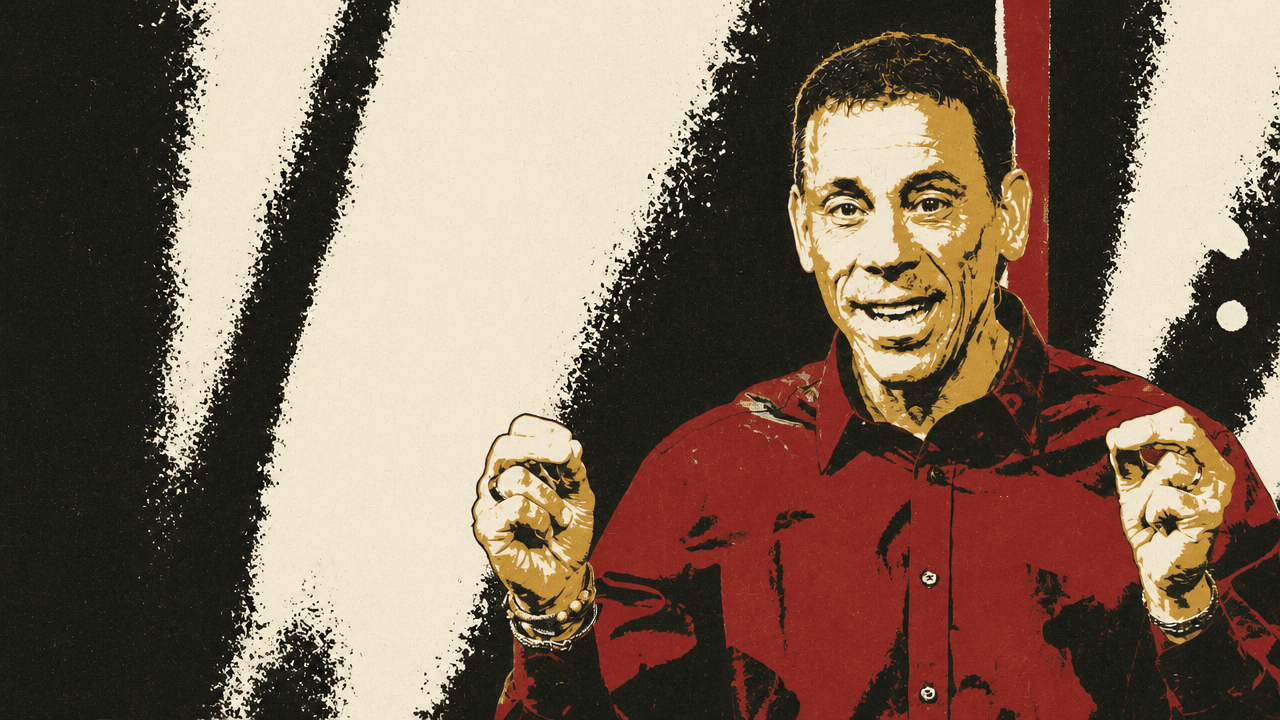
Axios chief executive Jim VandeHei uses a TED talk to argue that people should stop organizing their lives around forces they cannot control and instead practice control over smaller, repeatable choices. Drawing on his own path from a struggling college student to co-founder of Politico and Axios, VandeHei says a better life is built through daily decisions, disciplined reactions, chosen information inputs, awareness of how others experience you, and a clearly specified direction.
The useful focus is what a person can actually practice
Jim VandeHei asks people to stop spending attention on what they cannot control — AI, politics, parents, social feeds, dating alerts — and to spend it instead on themselves. His central claim is that a better life is built by moving attention away from uncontrollable circumstances and toward choices a person can make repeatedly.

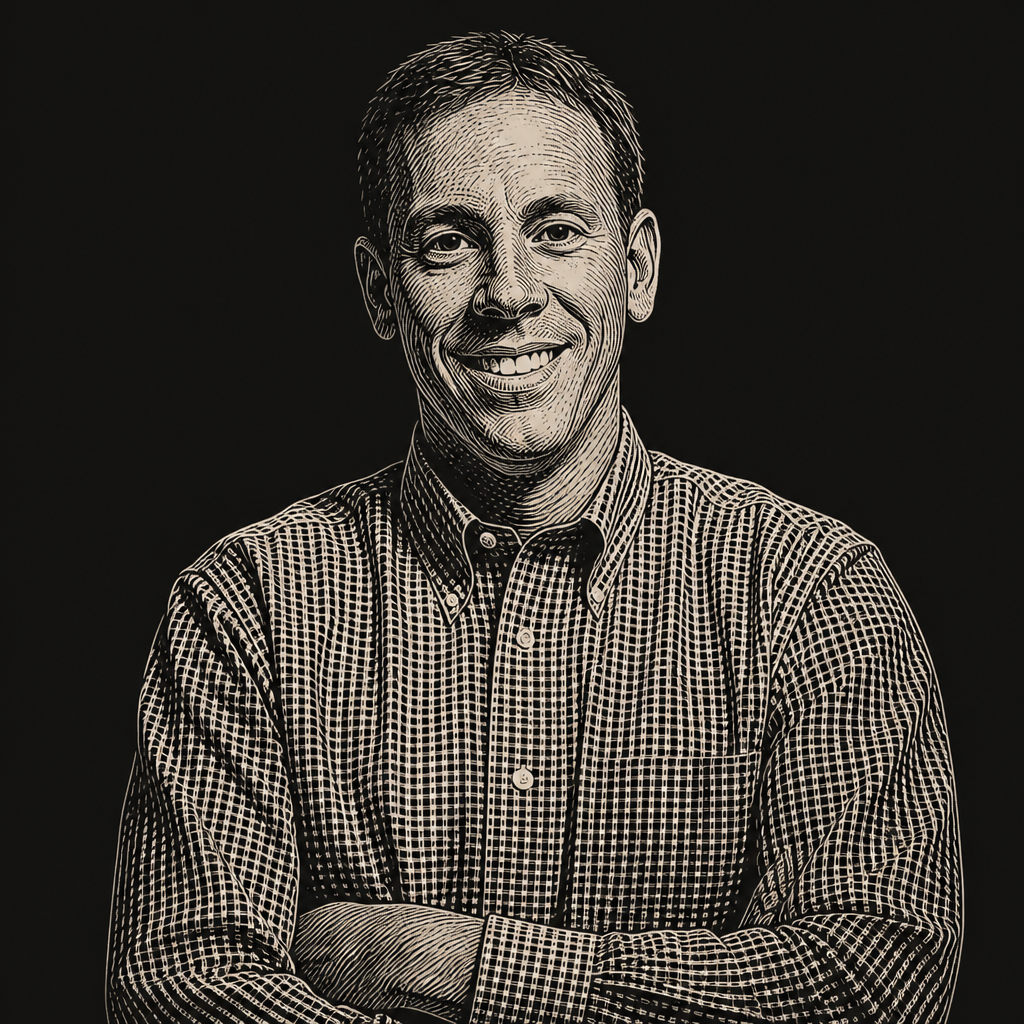
He grounds the point in his own before-and-after. At 20, VandeHei says he had a 1.491 college GPA, smoked a pack of Camel Lights a day, drank heavily, delivered pizzas at night in a diesel VW Rabbit, and considered himself “remarkably unhealthy” and “remarkably unremarkable.” Within a decade, he says, he was interviewing presidents and covering the White House for The Wall Street Journal and The Washington Post; later, he helped start and run Politico and Axios.
The point is not that the trajectory was inevitable. VandeHei says the people he came to regard as successful shared a habit: they “maniacally” focused on the parts of life they could shape. He says he saw this across teachers, doctors, entrepreneurs, and others — people who built success “piece by piece, day by day, on their terms.”
You control you. That became my mantra, and that became my map for life.
He contrasts that mantra with explanations that hand control to circumstance: parents, childhood, DNA, bad luck, or general unfairness. His argument is that treating those forces as determinative is “just not a good way to live.” The practical claim is simple: if the thing to control is too large, people drift or blame; if it is small enough, they can act.
The day is the first unit of control
For VandeHei, the most immediate place to take control is the day itself. From waking until sleep, he says, a person makes repeated decisions that no one else can make for them: doom-scroll or meditate; eat Lucky Charms or a healthier breakfast; snap back when someone snaps, or show grace; drink heavily at night, or sleep.
The cumulative effect matters more than any single choice. Each decision, in his telling, points either toward happiness and self-respect or toward feeling worse. His language is deliberately blunt: “Nobody wants to feel like crap.”
VandeHei describes his own early improvement as a process of copying people who were ahead of him. He studied people who were smarter, better read, more talented, more knowledgeable, or healthier. If they had read a book he had not read, he read it. If they used a word he had never heard growing up in Oshkosh, he wrote it down and worked it into his vocabulary. If they were fitter, he copied their habits.
The lesson he draws is modest but demanding: improvement often starts by noticing better inputs, better habits, and better standards, then imitating them until they become one’s own. “Today” is not just a calendar unit. It is the smallest repeatable place where a person can stop admiring better behavior from a distance and begin practicing it.
Character gets built one reaction at a time
Jim VandeHei says the best advice he ever received was five words: “Do the next right thing.” He treats the phrase as a way to make morality usable. Being a good person, being moral, and getting everything right can feel difficult in the abstract. Doing the next right thing is smaller and more available.
If repeated, he argues, those actions compound into character. If done under pressure, they can become a test of greatness. His personal motto for the past 15 years has been, “When shit happens, shine” — meaning the worst moments are exactly when he most wants to make the next right choice.
When shit happens, shine.
He applies this to his departure from Politico, which he describes as one of the hardest periods of his professional life. Politico was “my baby,” he says, and like many startups it had become a success before turmoil arose. He felt he had to leave. In that emotional period, he says, he could have said or done things that would later haunt him. Instead, he kept returning to the same rule: do the next right thing, minute by minute, and avoid choices that would injure him later.
The rule does not remove difficulty. It gives difficulty a decision procedure.
Inputs are not background noise
VandeHei’s third controllable area is “your reality.” By that he means the media, conversations, and information streams that shape what a person perceives as normal, important, threatening, or possible.
He names podcasts, YouTube channels, newsletters, friends, reading, watching, and listening as parts of a “reality-shaping machine.” The premise is simple: inputs affect outputs. If a person takes in mostly misery, doom, gloom, and triviality, VandeHei says, they may become more gloomy and trivial themselves.
The force of the point is that information is not neutral scenery. What someone repeatedly consumes becomes part of the emotional and intellectual material they later bring to work, family, and judgment. A person who wants different outputs has to intervene before the output stage.
His alternative is not withdrawal from information but deliberate substitution. He argues that there is more free, high-quality information available than at any previous point in human history. If someone is curious about a subject, they can search for it through Google or ChatGPT. If they want to understand how a public figure thinks or advises — he names Elon Musk, Mel Robbins, and Taylor Swift as examples — there is probably a podcast, video, or interview available.
The practical instruction is to change the inputs: put more “healthy, edifying content” into the mind, and the reality one carries into relationships and work changes with it.
Other people experience your self-control before you do
The fourth point appeared behind VandeHei as a blunt on-screen statement: “YOU CONTROL HOW YOU ARE SEEN.” He acknowledges that this may sound excessively self-involved, but he calls it a “magic trick” because it changes behavior in real time.
His technique is to imagine watching himself through other people’s eyes, especially in group settings that are tense or emotional. He says people’s own eyes “deceive” and “lie”; the more useful question is how others are experiencing them. That perspective helps a person understand the impression they are leaving — and whether that impression matches the person they want to be.
VandeHei connects this to his family life. About seven years earlier, he says, he and his wife adopted a teenage boy who had lost his parents. They already had two teenagers at home. The new son was going through a rough period, and VandeHei says he became acutely aware that his adopted son, his other children, and his wife would be watching how he behaved.
If he showed love, forgiveness, persistence, and grit, he believed that would shape how the family experienced the difficulty. If he became rattled or pessimistic, it would have the opposite effect. He says he believes that process played a small part in helping his son become “this amazing, thriving, grateful college athlete today.”
The broader point is that self-command is not purely internal. Other people experience it, learn from it, and sometimes organize themselves around it.
Direction becomes real when it is specified
VandeHei’s final claim is the largest: “You control your destiny.” He rejects the image of a person as “a bobber or a log on a river” forced to drift with the current. In his view, people can choose where they are going, including whether to push against the current or go upstream.
He turns that claim into a writing exercise. Imagine yourself on your deathbed, looking back, and ask whether you lived a life you were proud of — a life you could say you lived your way and the right way. Then write down the three things that would have to be true for the answer to be yes. After that, write down the three things you would need to do between now and then to make that life real.
The exercise matters because “destiny” is otherwise too large a word to guide behavior. VandeHei’s move is to convert it into criteria and actions: what would have to be true, and what would have to be done. He calls that list a North Star, and says it puts a person ahead of “95% on earth” in taking ownership of what they want to do with their life.
He closes by presenting the advice as something inherited rather than self-generated. He credits grandparents in his hometown, living parents, his wife, three children, and friends and colleagues who poured knowledge and love into his life. Quoting Richard Powers’s Bewilderment, he says perhaps life is about “leaving little pieces of ourselves behind in others.” His hope is that some of what was poured into him can be passed on, and that others can do the same.