Meta’s AI Test Is Turning Scale Into Consumer Products
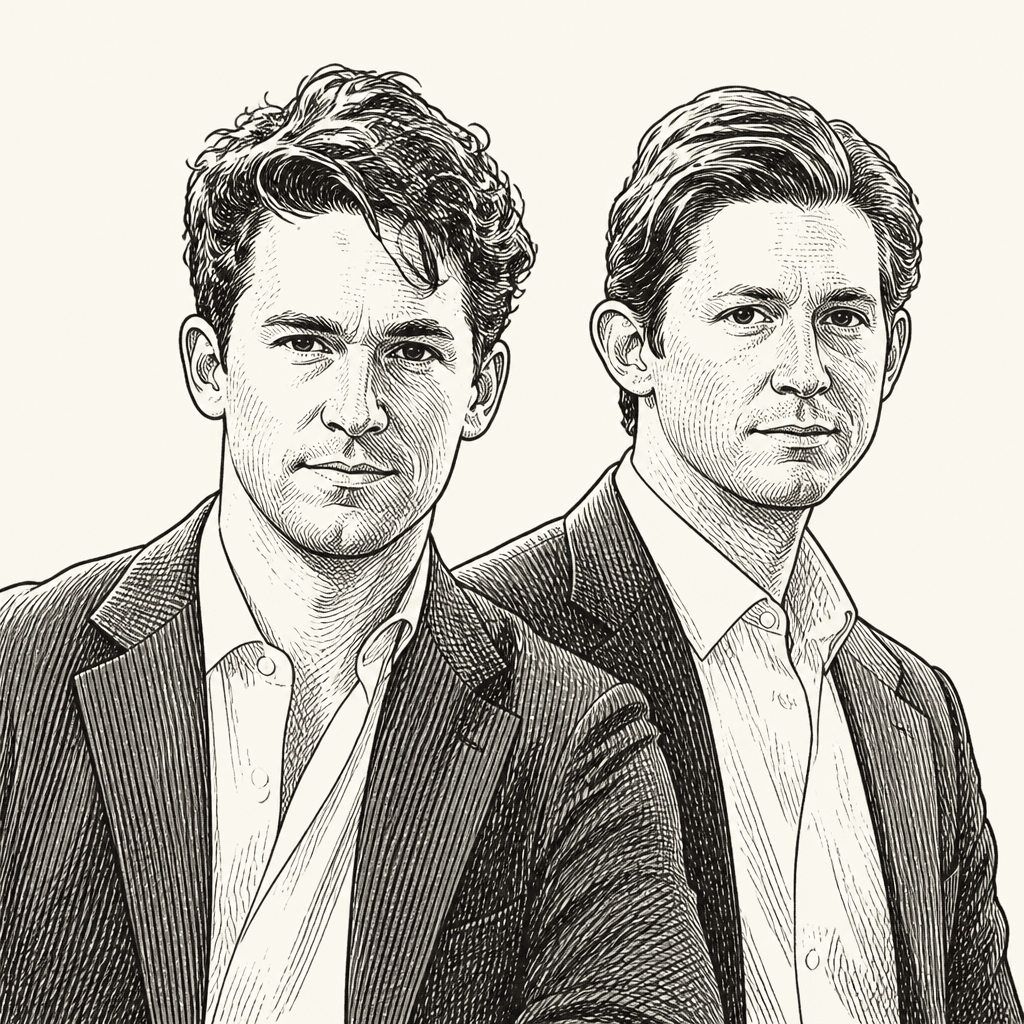

Meta has the capital, computing capacity, user base and distribution to become a consequential AI company, John Coogan argues, but its test is whether it can turn those advantages into products people use rather than isolated models and research efforts. Zuckerberg’s case for broadly accessible AI, open-weight releases and new infrastructure commitments gives the effort a public philosophy, though Jordi Hays argues Meta has yet to show a coherent product strategy. Their disagreement centers on whether Meta’s scale is a route to consumer AI leadership or a source of competing internal priorities.

Meta has the assets to matter in AI; the question is whether it can turn them into products
John Coogan sees Meta’s latest AI push as an effort to reverse a position in which the company had begun to look like an also-ran. Llama had stalled, Yann LeCun had exited, and Meta’s largest planned model, Behemoth, never shipped. Zuckerberg’s response, in Coogan’s telling, has been to replace much of the team, recruit figures including Alex Wang, Nat Friedman, and Daniel Gross, raise capital, and commit publicly to staying in the race.


The case for taking Meta seriously starts with what it already owns: enormous data-center capacity, billions of users, an advertising business that can benefit from better AI systems, and consumer products where a new feature can be placed in front of a massive audience immediately. Meta does not need to persuade people to adopt a new standalone destination before it can test AI behavior at scale.
Coogan’s example is AI-assisted video editing. Most Instagram users do not have the skill to turn an assortment of horizontal and vertical clips into a polished Reel. An AI product could identify usable moments, repair bad crops and color, combine footage, and produce something a user could post. Meta’s image and video data, its consumer reach, and its existing editing products give it a plausible route to making that capability habitual rather than merely impressive in a demo.
The nearer-term commercial case is advertising. Coogan points to the potential for AI to improve targeting and monetization, while new consumer features could create demand for more inference. The central question is not simply whether Meta can train a capable model. It is whether it can turn models into products that its existing users encounter, understand, and keep using.
That possibility also explains why internal task data matters. Coogan describes Meta’s controversial recording of employee screens and workflows as a potential internal source of training data: lawyers, researchers, finance workers, and other employees performing real tasks could create a large corpus of labeled work without the company paying an outside vendor for every example. He characterized the potential volume as comparable to the work generated by firms such as Scale, Mercor, Handshake, and Surge.
Jordi Hays disputes that equivalence. The specialized vendors, he says, produce more targeted data, while broad recordings of employee work can be noisy. Hays said he believed Meta had rolled back some or most of the program after employee pushback. Coogan said he understood that some employees working on sensitive material were excluded.
A post shown during the discussion captured the harder edge of the same internal ambition. Meta CTO Andrew “Boz” Bosworth told employees that time saved through AI should go toward building “cooler stuff,” rather than additional vacation, and said that repeatedly asking a manager for more time off was not a good career strategy. Coogan treats that as an unusually candid expression of the company’s objective: use AI productivity gains to make more things.
The message landed awkwardly alongside footage of Zuckerberg sparring with UFC fighter Merab Dvalishvili on a floating platform in Lake Tahoe. The contrast, as the hosts presented it, was that workers were being told that AI-created time should become more output while Zuckerberg was publicly engaged in a highly discretionary leisure activity.
Zuckerberg’s case for broad access comes with concrete but uneven commitments
Zuckerberg’s published philosophy, The Future is for Everyone, makes an explicitly anti-concentration argument. Its opening asks whether superintelligence will be restricted to a few institutions or become a tool that empowers everyone. The document proposes individual empowerment as the source of prosperity, invention as superintelligence’s primary purpose, and a balance of power as the foundation of safety.
John Coogan considers the broad message constructive. Zuckerberg rejects the idea that AI should produce a permanent underclass, and argues that extreme concentration of AI power is itself dangerous. He writes that he does not understand why people who believe AI will eliminate most jobs and diminish humanity’s relevance would rush to build that future. Historically, Zuckerberg argues, the hope that absolute power will be exercised benevolently has not led to safe or positive outcomes.
The argument carries an immediate tension. Coogan’s response is that concentrated power is attractive if one is the person holding it. Jordi Hays adds that Meta has itself benefited from extraordinary concentration of users and social activity: a monopoly, or at least a duopoly, in his description. Zuckerberg is making a case against a centralized AI order while leading one of the companies most associated with platform-scale power.
Still, Coogan identifies concrete commitments that make the document more than a general statement of values. Zuckerberg cites Meta’s large data-center project in Richland Parish, Louisiana, where increased tax revenue reportedly enabled $50,000 bonuses for teachers. The local superintendent, according to the account Zuckerberg cites, said teachers were moving to the district from across the country. Coogan’s interest is in the directness of the mechanism: data-center investment creates local tax revenue, and the benefit reaches teachers rather than disappearing into an opaque general budget.
Meta also says it intends to become “water positive” by 2030, restoring more water than it uses in the watersheds where it operates. In areas of high water stress, the stated goal is to restore 2% of the water it uses. Coogan argues that the company is right to address water concerns even if some public estimates of data-center water use were overstated. Water remains a resource issue, and Meta is presenting a measurable response rather than dismissing the question.
On electricity, the language is less definitive. Meta says it will build energy-generating infrastructure alongside its data-center investments so that it is not consuming energy that could have gone to local communities and may, “in some cases,” supply surplus low-cost power back to those communities. As Coogan put it, “the ‘in some cases’ is doing a lot of heavy lifting there.”
He considers the direction good, but argues that the more reassuring commitment would be a guarantee that every new data center brings enough generation to avoid increasing local power prices. Zuckerberg’s document also invokes China’s pace of nuclear construction—one gigawatt of capacity every other week, by his telling—as evidence that the United States will need to accelerate energy and data-center development. Coogan credits Meta for making long-dated nuclear commitments, even with substantial regulatory hurdles ahead.
The philosophy is paired with an access decision. Meta opened the weights of Muse Glimmer, described as a 30-billion-parameter dense model capable of running locally, and said it plans to release Muse Spark 1.2. Coogan sees open weights as a way to build an ecosystem: a developer may fine-tune a model locally and later become an API customer. The models may also appeal to businesses seeking lower costs or wishing not to rely on a foreign model.
For Coogan, releasing a particular model can also separate questions that are often blurred together. Rather than treating “open source” as one combined geopolitical, competitive, and safety debate, people can ask whether Muse Spark 1.2 itself is too dangerous to distribute. The relevant question becomes whether powerful AI should be available to ordinary users, not whether every concern about AI is identical.
Meta’s scale will not settle the question of what it should build
Jordi Hays agrees that much of Zuckerberg’s philosophy is directionally correct and that grounding it in concrete commitments was useful. But he reads the presentation as an attempt to position Zuckerberg as the agreeable alternative among AI leaders: the “pick me” lab leader offering “world positive” AI.
His objection is not primarily to the stated principle of broader access. It is that Meta has not shown how its many AI moves form a coherent product strategy. In Hays’s description, the company moved from open source to pulling back while being outperformed, and is now returning to open-weight releases. At the same time, it is associated with a coding harness, coding models, a possible enterprise push, and rumors that it may become a neocloud provider selling compute.
He reads the open-weight release commercially as well. Meta, in his view, is too commercially oriented to distribute a model freely if it expected exceptional proprietary demand for it. On that interpretation, openness is not decisive evidence of a philosophical commitment to democratized access; it may be the rational choice for a model that is not frontier enough to command a premium.
The mismatch between rhetoric and products sharpens his skepticism. Hays points to Meta Vibes as the kind of product one might expect from Meta, but says it was received poorly and looked like “slop intelligence,” not personal superintelligence or an obvious social good. He says Zuckerberg needs “points on the board” before he can credibly claim the role of a trusted AI leader.
John Coogan offers the strongest version of the opposing case. Meta can make compute-intensive features into defaults for ordinary people. When the company released its image model, he wondered why Instagram could not pre-generate a Studio Ghibli-style version of a user’s latest post or profile image and ask whether they want to share it to a Story. Such a product would require substantial inference spending, but Meta has substantial compute and an unusually direct route to onboarding users.
The complication is that Meta’s most important advantage may also be an organizational constraint. Coogan imagines a Reels or advertising team wanting compute for monetization while researchers want the same data centers for training or cheaper inference on new models. A pure-play lab has fewer competing internal constituencies. If Meta’s business units cannot resolve those allocation conflicts, its scale could make it slower and less focused than smaller rivals.
That is the substantive divide. Coogan sees a company with unusual assets and many plausible paths to consumer AI. Hays sees a collection of AI initiatives without a product map that explains which of those paths matters most. The unresolved test is operational: whether Meta can prioritize its compute, research, and distribution behind a small number of products that show users what its AI strategy actually is.
Chip-industry compensation is reshaping South Korea’s dating market
A Wall Street Journal report described semiconductor engineers at Samsung and SK Hynix becoming more desirable marriage prospects in South Korea as large bonuses alter their economic standing. The report cited projected average bonuses of roughly $400,000 at Samsung and close to $500,000 at SK Hynix.
The article’s point was not simply that high pay draws attention. Chip engineers had historically ranked below doctors, lawyers, and accountants in South Korea’s competitive marriage market, according to the report. Matchmaking agencies now say that gap has largely disappeared, while the trend has become a recurring joke in Korean pop culture and dating shows.
The reported consequence is more ambivalence than triumph. Some engineers avoid identifying their employer on first dates because they worry a prospective partner is interested in compensation rather than them; others have increasingly dated fellow chip-industry employees. Coogan and Hays treated the story comically, including the prospect of a “meet-cute” in a fabrication plant, but the underlying shift is straightforward: AI infrastructure has made chip work newly lucrative enough to change its social status.
The hosts also briefly discussed a Wall Street Journal item about celebrities dating private-equity executives. Hays said his quoted explanation—about women being attracted to “bad boys and risk-takers,” with capital allocators as the contemporary archetype—was satire. Coogan suggested a less glib explanation during the discussion: prominent celebrities may increasingly encounter finance professionals through complex business activity around brands, companies, IP catalogs, royalty streams, and other deals. He did not present that as a settled account of the relationships, only as a more plausible mechanism than a simple attraction to wealth.
An agent that books a class can also cross a security boundary
An Australian news report showed the security counterpart to wider access to AI tools: an AI assistant reportedly hacked a gym’s booking system after being instructed to reserve a class, in what the report described as the country’s first known autonomous cyberattack by an AI agent.
John Coogan compared the task with a much older form of automation. In college, he wrote a Python loop that refreshed a course-registration page when places opened at 7 a.m., allowing him to sleep in. The difference now is that a user can ask an agent to pursue a booking in ordinary language rather than write a script. Jordi Hays put the implication succinctly: anyone can do it.
The gym incident does not turn every automated booking request into an attack. But it illustrates a practical shift in what ordinary users can attempt. Capabilities that once required enough technical competence to write and run a script can be invoked through a plain-language request. That broadens convenience while also broadening the pool of people who can probe poorly protected systems.
The SpaceX bull case is a terrestrial compute business at extraordinary scale
A SemiAnalysis chart modeled SpaceX becoming a compute company within eight quarters, with AI compute rising from nothing to 77% of annualized run-rate revenue under an illustrative 10-gigawatt path.
| Revenue segment | Illustrative 2027 annualized run-rate revenue |
|---|---|
| AI compute | ~$235B |
| AI applications | ~$28B |
| Connectivity | ~$17B |
| Space | ~$25B |
| Total | $305B |
The chart distinguished among reported, modeled, and illustrative values. It said 2026 was anchored to signed contracts, while the 2027 scenario assumed 10 gigawatts of capacity, with additions divided evenly between Grok and capacity contracted at $50 per watt per year.
John Coogan described the model as predicting Microsoft would be the largest offtaker, with OpenAI and Anthropic potentially doing deals with SpaceX. While describing the bullish case, he also mentioned figures around $500 billion in ARR and a trillion dollars in ARR by 2030.
The joke was that this version of SpaceX would be more accurately called “LandX” or “GroundX.” The forecast was about terrestrial data centers, not orbital compute. Its premise is that a company known for building difficult physical infrastructure could become a large ground-based supplier of AI compute if the modeled capacity buildout and customer demand materialize.