YouTube-Native Filmmakers Are Turning Viral Proof Into Box-Office Hits

John Coogan and Jordi Hays use the box-office success of YouTube-native filmmakers to argue that Hollywood is beginning to treat creators as a source of proven taste and new IP, not merely as marketing channels. Their broader read is that proof of demand is moving earlier across markets: viral film concepts can become theatrical bets, AI labs are preparing for public ownership, and even Bernie Sanders’s proposed public stake in AI companies assumes the sector’s equity will be enormously valuable. The hosts are skeptical, however, that attention or ownership alone solves the harder questions of execution, cash flow, or public benefit.
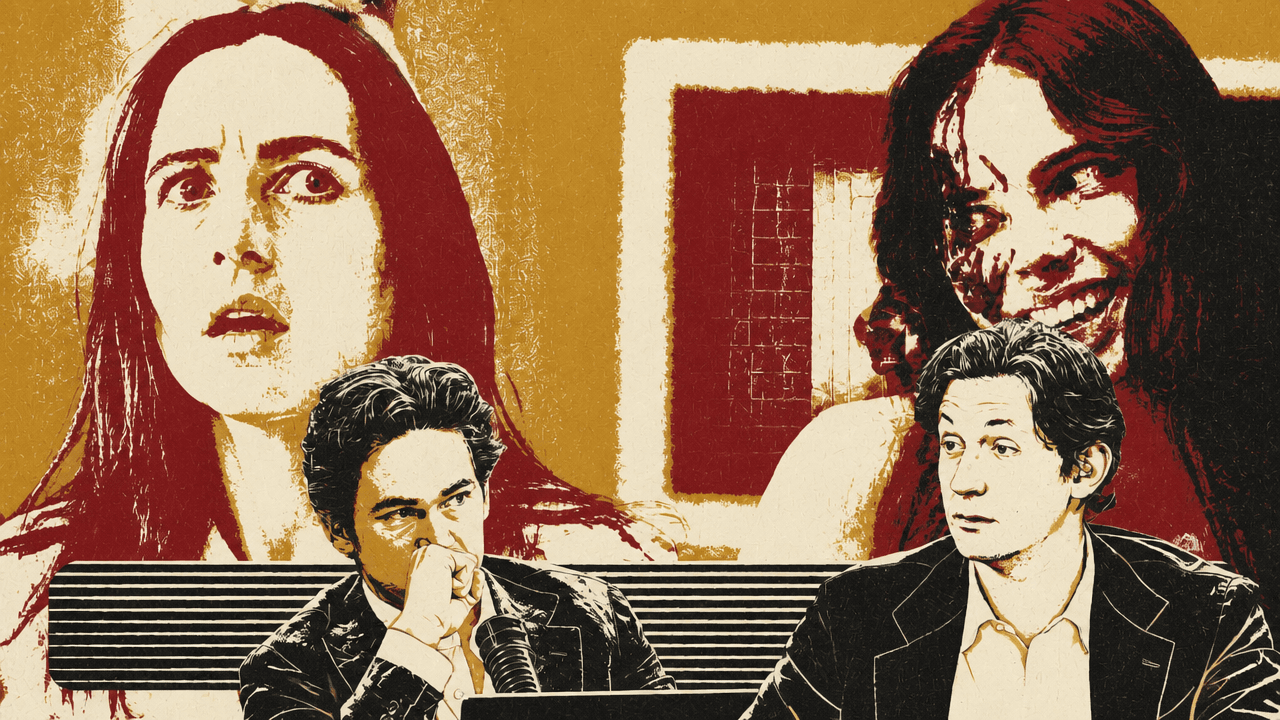
YouTube is becoming a Hollywood talent market, not just a marketing channel
John Coogan framed the box-office breakout of creator-led films as a long-delayed convergence between YouTube and Hollywood. His claim was not that Hollywood has been fully disrupted by creators, but that 2026 looks like the year the two systems began working together in a more productive way: creators bring proof of taste, audience feedback, and new intellectual property; studios bring theatrical distribution, financing, sets, marketing, and production scale.

The immediate evidence was a cluster of films from YouTube-native filmmakers. Coogan cited Kane Parsons’s Backrooms, which he said opened to roughly $81.5 million in North America and $115 million worldwide on a reported $10 million budget. He cited Curry Barker’s Obsession, which he said had reached $104.7 million domestic in its third weekend, becoming Focus Features’ highest-grossing domestic release from a film widely reported to have cost around $1 million. He also put Markiplier’s Iron Lung in the same pattern: reportedly self-financed with a $3 million production budget, opening to $18.2 million domestically and grossing $41.1 million domestic and $51.2 million worldwide.
| Film | Creator | Reported budget | Box-office figure cited |
|---|---|---|---|
| Backrooms | Kane Parsons / Kane Pixels | $10 million | $81.5 million North America opening; $115 million worldwide |
| Obsession | Curry Barker | Around $1 million | $104.7 million domestic by its third weekend |
| Iron Lung | Markiplier | $3 million | $41.1 million domestic; $51.2 million worldwide |
Jordi Hays argued that the business story around Obsession had become almost the whole story. He noted that on X, posts about the film’s return on budget were going viral repeatedly: the narrative of a low-cost film producing more than $100 million had become part of the movie’s public momentum.
Coogan resisted the simplest explanation: that large subscriber counts automatically turn into ticket sales. He gave Ryan’s World as the counterexample. Ryan’s World, a massive children’s YouTube channel built around toy unboxing, had a feature film, Ryan’s World the Movie: Titan Universe Adventure, that Coogan said grossed only $624,000 on something like a $10 million budget. Hays added that children’s media has a structural conversion problem: the audience may be eight-year-olds, but the buyer is the parent. There is “a translation step” between attention and purchasing power.
That distinction matters for the broader claim. Coogan said the success of Backrooms, Obsession, and Iron Lung is not reducible to creators dragging their subscribers into theaters. Parsons and Barker have audiences, but not audiences large enough to mechanically explain $100 million box office. If a creator has roughly a million subscribers, he said, the math does not work unless every subscriber sees the movie multiple times at a high ticket price. The better explanation is that these creators had already demonstrated artistic vision, speed, taste, and the ability to make material that travels beyond their base.
The relevant phrase was “full-stack filmmaker.” Coogan argued that the older Hollywood model — show up with a manuscript or script and expect the studio apparatus to do the rest — is less viable for risky new IP. Traditional production structures, with separate writers, cinematographers, sound designers, and other dedicated departments, are too expensive to deploy freely on unproven material. They make sense for a Star Wars project, because a base level of demand is assumed. For a new creator and new IP, the creator needs to be able to drive the work across the stack and leave fingerprints on every part of the production.
The new audition tape is the thing itself
Coogan’s reading of the creator-film boom was sharpened by Ben Thompson’s 2017 argument about internet distribution and gatekeepers. Coogan summarized Thompson’s “victory lap” as a prediction that Hollywood’s gatekeeping power would eventually be weakened by the same internet dynamics that had already transformed newspapers, text, music, and short-form video.
The point was not merely that YouTube offers a new place to discover personalities. It is that falling production costs let creators prove the product before a studio makes a large bet. Coogan compared the change to the effect of AWS on venture capital. Cloud computing, in Thompson’s analogy as quoted and paraphrased by Coogan, reduced the cost of starting a software company enough that investors no longer needed to fund a PowerPoint and a rack of Sun servers. They could evaluate actual products, early customers, distribution, and revenue signals.
Coogan applied the same logic to film. A creator’s YouTube series, short film, or viral body of work becomes the audition tape — not a pitch deck. He cited Backrooms as an example: a YouTube series with tens of millions of views gave Hollywood something to evaluate. A studio was not just betting on an idea; it was seeing a working proof of concept with audience response.
That also changes what counts as IP. Coogan described the origin of Backrooms as unusually internet-native: it began with a single image of what he described as a furniture store under renovation. The image circulated, accumulated lore, became a creepypasta-like mythos, then became Kane Parsons’s YouTube series built with Blender and After Effects, and eventually a feature film. Coogan emphasized how strange that path would have seemed in the older system: a random viral image turning into a successful movie.
The source also showed a post from Pop Crave stating that the top two movies at the box office that weekend, Backrooms and Obsession, were directed by Gen Z YouTubers Kane Parsons and Curry Barker. Another post shown from Dan Shipper quoted an article saying studio executives and producers were racing to find material in corners of the internet they had once dismissed as threats, including YouTube, anime, and video games. Shipper’s comment was that “this will happen with AI too in about a decade.”
Coogan took that seriously enough to extend the joke into simulator culture: if Hollywood is now mining YouTube and internet-native lore, then maybe “Data Center Simulator,” “Coconut Simulator,” or “Capybara Simulator” becomes the next unlikely adaptation. Hays mentioned Subway Surfers as an adaptation candidate, then noted that Angry Birds had already become a repeat film property. The humor carried a real point: Hollywood’s source-material map is expanding from novels, comics, and existing franchises into algorithmically proven niches.
Low-budget film portfolios may look more like venture funds
Hays pushed the business logic further by comparing studio film slates to early-stage venture investing. If movies are a hits-driven business, he asked, why not behave more like a fund: make 20 or 30 smaller bets rather than concentrating $100 million or $200 million into a single blockbuster? One breakout can return the fund.
Coogan said that more $10 million films are already happening and expected more low-budget films to follow. He also distinguished between two executive skill sets. One Hollywood track is built around putting $100 million or $200 million to work and trying to guarantee a return — the world of Avatar, Marvel, DC, Harry Potter, and other known franchises. Another track is better suited to lower-budget, higher-variance bets on new creators and new IP.
Horror was central to the current examples. Coogan noted that both Obsession and Backrooms are horror films, a genre notorious for relatively low production costs and potentially high returns. He cited Wesley Wang as a non-horror example in the pipeline: Wang went viral for a YouTube short called Nothing, Except Everything, which TriStar picked up with Darren Aronofsky’s Protozoa producing and Wang set to adapt as writer-director.
The sillier but commercially serious example was Skibidi Toilet, created by Alexey Gerasimov in 2023. Coogan said the project had gone back and forth, with Michael Bay reportedly attached at one point and a possible TV or movie adaptation discussed. He treated it as ridiculous in tone but not unserious as IP: it built lore and captured attention at enormous scale.
There is a complication, though. Coogan said Skibidi Toilet was made in Source Filmmaker, using assets associated with Half-Life 2 or Counter-Strike: Source. That means a faithful screen adaptation could involve negotiations with Valve, a private company owned by Gabe Newell, because the underlying assets and toolchain raise IP questions. Coogan described prior back-and-forth around takedown notices and said that if the project reaches theaters, that negotiation becomes materially different from adapting a Blender-made original.
The underlying forecast was modest but important: Hollywood executives will spend more time combing through obscure YouTube playlists for new gems. Not every viral creator will convert. Not every meme has theatrical shape. But the discovery surface has changed.
Audience proof does not guarantee a finished film
The production team’s informal reviews of Backrooms and Obsession introduced a useful constraint on the argument. Two staffers, Ben and Scott, both preferred Obsession. Ben said Obsession worked partly because it walked back from the current wave of extremely punishing prestige horror. He described recent horror filmmakers as sometimes “too good” at making audiences feel bad, citing the lingering gross feeling he had after Midsommar. Obsession, by contrast, had comedy and meme energy, which made it more fun.
On Backrooms, Ben admired the production design but felt something was missing. Coogan added that the film reportedly built 30,000 square feet of actual set. That choice struck him as notable because the original source material was digital: the easy path would have been to keep using CGI or the creator’s Blender-derived visual language. Building physical sets was, in one sense, less literal to the source material, but it produced a look that the team admired.
The source also showed a compilation titled “LIMINAL SPACES IN MOVIES,” listing Backrooms alongside The Truman Show, Exit 8, Blade Runner 2049, Kontroll, Vivarium, Us, Edward Scissorhands, Toys, and The Cat in the Hat. The visual placed Backrooms within a larger aesthetic tradition of empty, eerie, transitional spaces rather than treating it as a purely internet-born novelty.
This is where the creator thesis becomes less simplistic. A viral object can open the door. Internet lore can supply atmosphere. A YouTube series can demonstrate taste and demand. But the finished theatrical film still has to work as a film. The comments from Ben and Scott suggested that Obsession may have translated better as a full experience, while Backrooms retained a remarkable visual world but did not fully satisfy everyone who saw it.
Sanders’s AI wealth-fund proposal treats frontier labs as both risk and prize
The second major thread shifted from Hollywood to AI ownership. Coogan introduced Senator Bernie Sanders’s proposal through Sanders’s own framing: “AI is built on humanity’s collective knowledge,” and therefore the wealth it generates should benefit humanity rather than only Elon Musk, Sam Altman, and other “AI oligarchs.” The source showed Sanders’s post announcing the American AI Sovereign Wealth Fund Act and a New York Times op-ed titled “A.I. Belongs to the People, Not to Billionaires.”
Coogan summarized the proposal as a one-time 50% tax taken directly in stock from AI labs, funding an American AI sovereign wealth fund. As described in the source, the fund would give the government voting rights and board seats, then pay a dividend to American citizens.
Coogan’s immediate question was practical: when would these companies produce dividends? Many tech companies take decades to return cash to shareholders, and frontier AI labs are not obviously near cash-distribution mode. Hays joked that maybe Sanders would fire-sell the shares after IPOs, turning the dividend into proceeds from stock sales rather than operating cash.
The hosts were also skeptical of the proposal’s moral premise. Coogan asked what is not built on humanity’s collective knowledge. TBPN itself, he joked, depends on humanity having invented wheels, roads, and combustion engines. Hays warned that such logic could lead to the public owning 50% of TBPN.
The sharper tension came from Sanders’s broader AI stance. Coogan said Sanders was also trying to ban data centers through a Data Center Moratorium Act, while now proposing that the public take half of the upside from AI labs. Hays quoted Dean Ball’s critique: is AI an existential risk that needs to be banned, or a public good that should be redistributed? Ball’s conclusion, as read by Hays, was that Sanders “wants to have it both ways,” suggesting the AI-safety framing was “mostly for show” and that “this is about capital.”
Coogan offered the strongest version of the opposing view. If one genuinely believes AI is an existential risk, then taking board seats and voting rights across major AI labs could be a mechanism for slowing them down simultaneously. A government with 50% control in all the labs would have an easier time coordinating restraint than a regulator trying to influence each company from outside.
An unidentified speaker pushed back that an “AI FDA” could do that without taking equity. But the same speaker also called the Sanders proposal “extremely bullish.” Even though Sanders is not usually understood as a classically capitalist figure, the proposal implicitly assumes these companies will become among the largest in the world and that AI will be disruptive enough to justify public ownership. Hays put it more bluntly: Sanders is effectively saying the stocks are underrated.
AI companies are racing public markets while incumbents try to reprice themselves
Coogan connected the Sanders proposal to a live market question: if public ownership or public participation in AI wealth is the issue, more AI exposure is about to enter public markets anyway. He said Anthropic had confidentially filed for an IPO, SpaceX was going public, Google was already public, and there were rumors of an OpenAI IPO filing.
The source showed Anthropic’s own post announcing that it had confidentially submitted a draft S-1 registration statement to the Securities and Exchange Commission. The language was careful: pending SEC review, the filing gives Anthropic the option to pursue an initial public offering.
Coogan described a race among SpaceX, OpenAI, and Anthropic to “hoover up” public-market dollars. Hays then raised the definitional problem that would confront any AI-specific ownership or taxation regime. If Google is the leading lab, is Google covered? Is Salesforce an AI company? Is Meta? Coogan said Meta certainly presents itself as one. Hays imagined Mark Zuckerberg arguing the opposite if necessary: that Meta is not an AI lab but merely running experiments with GPUs to recommend better videos.
That ambiguity matters because AI has become both a product category and a valuation story for incumbents. Coogan said the “SaaSpocalypse” might be canceled: software companies that had been written off in the face of AI were rising again, some because of Anthropic holdings and others because of traction in their core businesses.
Salesforce was the main example. Hays said Marc Benioff had invested $50 million into Anthropic in 2023 or 2024, calling the possible return a “cheeky 100x.” The source then showed Benioff announcing that Salesforce would invest €2 billion to accelerate AI transformation across France, with 1,800 employees in the country. Hays treated the accompanying selfie with Emmanuel Macron as the new model of executive communications: take a selfie with a business partner, post it, and skip the elaborate corporate montage.
Coogan then read Benioff’s Salesforce performance claims: Q1 FY27 revenue of $11.13 billion, up 13% year over year; operating cash flow of $6.7 billion; Agentforce crossing $1 billion in ARR; and AI plus Data ARR of $3.4 billion when combined with Data 360 and Informatica. Coogan emphasized that Salesforce is a mature company still growing quickly, which he called very good news.
The segment’s market mood culminated in Nvidia. Coogan summarized Brandon Gorrell’s takeaways from Jensen Huang’s Computex 2026 keynote: Nvidia introduced the RTX Spark superchip, an ARM-based chip for PCs designed to process AI workloads locally; announced that the enterprise Vera Rubin CPU was in full production; and announced several foundation models, including a world model, an open-weight flagship AI model, and a model designed for humanoid robots.
The open-weight model was the piece Coogan found especially interesting. He said closed-source American models had been at the frontier, while a chart he had seen showed open-source models from China decelerating or growing more linearly than American closed-source models. The question, in his view, is where Nvidia fits if it releases an open-weight model that can benchmark against frontier models from Anthropic, Google, and others.
Coogan also described RTX Spark as drawing attention because it was being viewed as Microsoft’s attempt to create its own Apple Silicon moment, with Microsoft coordinating announcements around a new Surface Laptop Ultra optimized for RTX Spark and planned for release in the fall.
The bullish mood ended with an analog counterweight
The market section ended with a post from Will Manidis: “I don't think any of you understand what is about to happen in the market. We are about to live through the craziest five year run in technocapital history. God help us all. I pray that when Judgement comes He can see all that we did to ensure efficient price discovery.”
Coogan said Manidis had recently flipped extremely bullish, then immediately undercut any attempt to read that as investment advice. If Manidis being bearish is bullish, perhaps him being bullish is bearish; “be bullish when other people are bearish, be fearful when other people are greedy”; in any case, do your own research and make your own decisions.
The final note was deliberately lower-tech. Coogan highlighted Adam Faze’s birthday-party experiment: Faze said he was tired of life experiences being taken over by phones and content, so he asked friends to leave their phones at home and hired a sketch artist to capture the night instead. The source showed a colorful hand-drawn party scene credited to Madeline Goddard.
Coogan liked the idea because it produced physical, frameable artifacts and because it sat on the opposite end of the same cultural barbell as AI slop: mass-produced content on one side, artisanal analog memory on the other. He connected it to the demand for vinyl records. Even in a segment dominated by creator films, sovereign wealth funds, IPOs, GPUs, and foundation models, the closing example was a hand-made sketch of people at a party with no phones.