Tech’s Hard Problems Are Moving From Demos to Deployment
 Jordi Hays
 John Coogan
 Tyler Hogge
 Pete Florence
 Will Marshall
 Dambisa Moyo
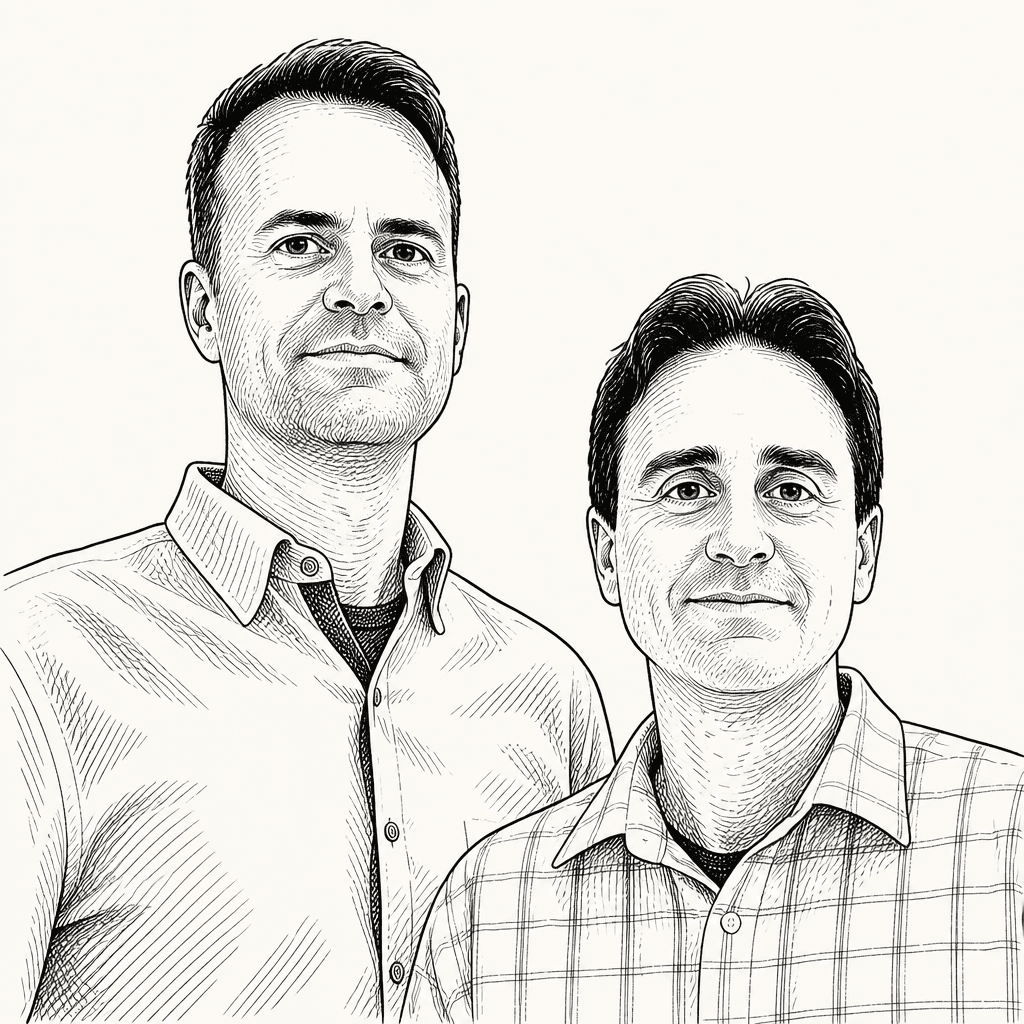 David Kirtley
 Samuel Hume
 Jordan BrambleTBPNMonday, June 8, 202630 min read
TBPN’s Jordi Hays and John Coogan use Apple’s WWDC, the jobs report, venture-capital disputes, and interviews with operators in satellites, biotech, fusion, robotics and nuclear power to frame a recurring divide between demonstration and deployment. Their argument is that AI features, reactors, robots, medicines and market stories are now being judged less by whether they can be shown than by whether they can be operated at scale, with infrastructure, regulation, capital and user trust doing much of the hard work.

Apple’s AI problem is no longer whether the features exist
Jordi Hays framed Apple’s WWDC expectations as both high and limited. The company was not being asked to invent a new computing category or produce an Apple Vision Pro–style breakthrough. The demand was more prosaic: bring into iOS the AI patterns that users already understand from ChatGPT, Gemini, Claude, Grok, Google’s AI Overviews, and even enterprise products like Ramp’s chat interface.


That matters because, in Hays’s view, the bar has shifted. Users no longer need to be taught that a model can summarize, answer, retrieve, or act as a natural-language interface. They already use those capabilities elsewhere. Apple’s burden is to make those capabilities feel native, reliable enough, and accessible “at the click of a button,” ideally through Siri, which Hays said has been “completely nerfed” and has never received the kind of product affection many other Apple products have.
John Coogan argued that Apple helped itself this time by allowing interest to build more organically. A year or two earlier, he said, Apple was running billboards for Apple Intelligence and Genmoji, overhyping features that were not ready. Hays agreed that the prior rollout had been overhyped, but said the current moment looks more favorable because “models are good now” and because Apple appears to have a better product and partnership strategy.


The unresolved question is cultural as much as technical. Hays pointed to Google’s AI Overviews as evidence that LLM-generated text can be shipped into mainstream products without destroying usage, even when viral hallucinations appear. He cited small failures — such as a model confusing the word “disregard” as an instruction rather than a query — as the sort of thing that will inevitably become internet comedy. Apple, he said, does not like that kind of non-deterministic embarrassment. But he doubted it would materially show up in user metrics.
Users, he said, may leave flawed summaries on because they are sometimes useful and sometimes amusing. The real adjustment is inside Apple: “your PR team will have many heart attacks” when outputs are no longer deterministic. For a company built around polish and controlled reveals, stochastic product behavior is a significant cultural shift.
The WWDC details raised a second issue: what Apple means by “private” AI. A team member watching the livestream said Apple repeatedly emphasized that AI features were handled through a “Private Cloud” and were “extremely secure.” Coogan pressed on the phrase. If a feature is purely on-device, he said, Apple would say on-device. Cloud means not on the device.
That distinction led him to the infrastructure question: if Apple is routing Siri-scale AI inference through a privacy-preserving cloud, who is actually running the inference? Apple has more than a billion iPhone users. If a meaningful share begin pressing the Siri button for near-frontier responses, the inference load becomes large. Coogan asked whether Apple had built a secret data-center footprint, whether “Private Cloud” was effectively a corner of Google Cloud, or whether the company had assembled something more exotic out of its own hardware. Even if that capacity did not appear clearly in capital-expenditure disclosures, he argued, it should eventually show up somewhere — emissions data, ESG reporting, or other operational signals — unless it is powered in some unusual way.
Hays also put Apple’s AI choices in the context of ecosystem control. He asked whether Apple would embrace the open-source Mac mini boom, whether it would support agentic tooling more directly, and whether the App Store would have to adapt to vibe-coded apps. He also raised the coming permissions problem for AI apps: today, apps ask for access to camera rolls, sometimes temporarily and sometimes permanently. The AI version may involve access to messages, email, calendars, and other private context. The product question is how deep those hooks can go; the policy question is how often Apple forces users to approve access.
Apple’s privacy posture also intersects with the ad ecosystem. Coogan noted Mark Gurman’s expectation that WWDC would emphasize privacy and safety features, and interpreted Eric Seufert’s interest in that thread as straightforward: more privacy and safety controls often mean less available data for ad monetization.
Design, meanwhile, showed Apple’s familiar tradeoff between aesthetic ambition and usability. A Jane Manchun Wong post shown on screen said Apple had “concedes on Liquid Glass design, compromising for usability.” The hosts interpreted that as Apple pulling back from a more aggressive design treatment after contrast or brightness complaints. Coogan liked the new Apple Maps icon as a design element, but the broader point was that Apple’s AI rollout is not happening in isolation. The company is trying to update the operating system, repair Siri’s relevance, protect its privacy brand, and avoid turning the phone into a confusing permission surface for every AI lab.
A strong jobs report cuts against the AI-layoff narrative but pressures tech valuations
Friday’s labor report complicated the market’s preferred story. Coogan said the Labor Department reported 172,000 seasonally adjusted jobs added in May, with unemployment unchanged at 4.3%. The Wall Street Journal front page shown on screen carried the headline “U.S. Hiring Gathers Steam,” with a subhead noting a third straight monthly increase.
Coogan treated the report as both economically encouraging and awkward for the most aggressive AI-displacement claims. “The AI job apocalypse is canceled at least for the month of May,” he said. He explicitly said he believed the jobs report and did not expect it to be massively revised downward, saying it tracked with ADP and other numbers. He acknowledged nuance — the jobs are not necessarily in the most critical industries, and the trend may not continue — but his baseline was that the economy looked healthy.
The market reaction, however, was not simply positive. Coogan said Friday had been the worst day for the Nasdaq in more than a year, down 4.2%, though it had rebounded about 1.5% by the time they discussed it. His explanation was rates. A stronger labor market, combined with inflation running hotter than the Federal Reserve would like, reduces the likelihood of rate cuts and may push the conversation toward rate hikes. He also tied inflation pressure to the closing of the Strait of Hormuz, which he said had spiked gas prices, while Hays added that inflation had been above the Fed’s 2% target for essentially his whole adult life.
Higher rates hit tech companies particularly hard because so much of their valuation depends on earnings far into the future. Coogan’s “copium” was that high rates at least give the Fed room to cut if the economy weakens. During COVID, he said, rates were already low, leaving policymakers to rely heavily on stimulus checks and spending. In the current environment, if unemployment rises or markets sell off, the Fed has more room to move rates down.
Hays observed that there was a time when this level of speculation in markets would have seemed impossible at current rate levels. Coogan agreed, saying the current speculative activity itself could be an argument for raising rates. Both hosts contrasted the assumption that the end of ZIRP would end froth with what actually happened: another wave of speculative intensity arrived anyway.
VC pitch horror stories are not the same as boardroom abuse
The weekend’s venture-capital discourse, in Coogan’s telling, mixed trivial pitch-meeting indignities with more serious governance questions. Greg Isenberg had posted that he once pitched a $15 million Series A at a “top 3 VC firm” with 12 people in the room, while one GP fell asleep for more than 30 minutes and everyone continued as if it were normal. Dylan Field responded, in a tweet shown on screen, that Figma’s 2013 seed fundraising involved many investors who “didn’t get it” but were still “super nice,” helped by warm intros and meeting founder-friendly people.
Coogan’s reaction was not that VCs should be excused for rudeness. Falling asleep in a pitch is disrespectful. But he drew a distinction between VC pitch horror stories and VC board horror stories, saying he had much less sympathy for the former. A founder pitching investors is selling equity. Some buyers will be rude, unprepared, absent, or indifferent. Customers and candidates do this too. A bad pitch meeting, Hays added, generally does not kill a company.
The underlying reason venture is usually tolerable, Coogan argued, is that Silicon Valley remains an iterated, high-growth, positive-sum game. Even if a startup fails, investors may want to back the founder’s next company, help with an acquihire, give a reference, or maintain the relationship. That does not eliminate bad behavior, but it creates incentives for relatively good behavior.
The more substantive dispute involved structured financings. Brendan Foody of Mercor criticized what he called the “Sequoia scam,” saying he had seen several recent rounds where Sequoia invested in two tranches and “everyone pretends they only did the higher valuation,” leaving founders to misrepresent the deal to employees and angels. Coogan explained the issue: a firm might invest part of a round at one valuation and part at another, producing a blended price lower than the headline valuation. He said such structures are not illegal and can make sense for both sides, but misrepresenting them to other investors can become securities fraud.
Hays thought “Sequoia scam” was unnecessarily aggressive, especially because Foody later replied that, in fairness to Sequoia, this was common practice across top firms. Coogan said the practice was not unique to Sequoia and was not new; he mentioned Sequoia’s original YouTube investment memo as an example of structured investment having existed for decades. Still, both hosts recognized that employees receiving stock options and journalists covering rounds may not understand the structure, placing responsibility on founders and investors to be clear.
The Matthew Prince–Vinod Khosla exchange was more personal. The hosts said Prince accused Khosla of offering to invest in Cloudflare’s Series C only if certain people in the meeting were fired. Khosla said Khosla Ventures had not given an offer to invest based on its assessment of the team. Prince then posted what appeared to be a term sheet. The document shown on screen listed Cloudflare’s Series C preferred stock financing, “up to $100 million,” with $50 million from Khosla Ventures III, LP, at a $700 million pre-money valuation. Hays called the posting of the term sheet “actually crazy,” the kind of move available to a post-IPO founder with little to lose.
The segment’s comic excess — an air horn as a tool to keep sleepy investors awake, a fake study about older men falling asleep during Cloudflare’s S-1, Tyler Hogge’s SoftBank pitch story involving Rajeev Misra, Masa, vaping, coughing, assistants whispering, and a 10-minute Tokyo meeting after a 20-hour flight — did not erase the core point. Pitch meetings can be absurd. Structured financings can be misunderstood. But the real ethical line is not whether a VC is pleasant in the room; it is whether investors and founders accurately represent deal economics to employees, angels, and the market.
Planet wants to make the Earth searchable, not just photograph it
Will Marshall described Planet as a company that makes “change visible, accessible, and actionable.” Its fleet of more than 200 satellites images the entire Earth landmass every day at about three-meter resolution. Marshall compared the ambition to Google indexing the internet: Planet is “indexing the Earth to make it searchable.”


The operational stack is unusually physical for a data company. Marshall said Planet is vertically integrated: it builds radios, computers, custom boards, custom telescopes, and the systems that allow the satellites to work together. The company has launched over 600 or 700 satellites across roughly 40 rockets, usually as a secondary payload riding with larger satellites. A few times, it bought its own rocket, but “roughly speaking,” Marshall said, Planet is hitchhiking to orbit.
The satellites sit as low as possible without re-entering the atmosphere. Lower altitude improves resolution because the cameras are closer to Earth. Marshall said some of Planet’s small Dove satellites weigh about seven kilograms and are roughly the size of a loaf of bread, yet can see things about three meters across from roughly 500 miles away. Larger satellites can see objects about 30 centimeters across. Across the fleet, he said, Planet takes four million 47-megapixel images per day, with each satellite taking eight pictures per second.
The real value is not the imagery alone but the analytics layered on top. Marshall gave several examples. Planet uses a hyperspectral camera with 400 spectral bands to detect methane leaks, because methane absorbs at particular spectral lines. The company can identify leaks along gas pipelines or oil and gas facilities, estimate the amount of methane, notify operators, and help them shut leaks down. He said Planet has detected “thousands and thousands” of such leaks.
In Brazil, Marshall said Planet tracks deforestation across the entire Amazon — about 8 million square kilometers, nearly the size of the United States — every day. It looks for cut trees, illegal mining, and illegal narcotics operations, then sends GPS alerts to Brazil’s Federal Police. He attributed a 60% reduction in deforestation rates over three years to that AI-enabled satellite-data work.
In security, Planet has helped Ukraine track Russian movements and worked with U.S. Indo-Pacific Command to monitor China and the South China Sea. The distinction from government spy satellites, Marshall said, is coverage. Government systems may have much higher resolution and see much smaller objects, but they cover far less area. Planet’s advantage is daily global landmass coverage.
The company’s largest current customer segment is defense and intelligence. Marshall said customers include the U.S. government, European countries, Japan, and others trying to monitor threats. Planet has also begun offering dedicated satellites to countries, with three deals in the “couple hundred million dollars” range, where a country can direct satellites over its area of interest.
But Marshall sees the future as more commercial and civil-government oriented. Disaster response is one use case: after the Palisades fire, he said Planet could identify which houses were damaged and help the American Red Cross plan relief operations. Agriculture is another: Planet announced work with John Deere to help tractors slow down or speed up based on crop conditions in each three-by-three-meter box. Hedge funds are a quieter category. Marshall said Planet has “more alpha than any other company on the planet” in principle, because it can track crop yields, mine output, shipping networks, and economic activity globally; some hedge-fund clients use the data but do not want to be named.
Planet had recently reported earnings and, according to Marshall, had over $700 million on the balance sheet with 42% growth. The company decided to raise additional capital through an at-the-market program, not because of an immediate need but to strengthen the balance sheet, preserve dry powder for M&A, potentially acquire new data sets or capabilities, and shore up supply-chain risks.
On launch competition, Marshall said the recent Blue Origin explosion was tragic for the industry and could affect later Artemis lunar plans that need Blue Origin’s vehicle. He expected Blue Origin to return to launch sites by the end of the year, consistent with historical timelines, and said Planet is cheering on more launch competition over the next few years.
Dambisa Moyo’s boardroom rule is that anything can happen
Dambisa Moyo introduced herself through overlapping roles: member of the House of Lords, board member at Chevron, Starbucks, Condé Nast, and the Oxford University Endowment, and co-principal of a family office built from the proceeds of a SaaS company sale. Her corporate-governance framework began with a deceptively simple lesson from board service: “anything can happen.”


She grounded that lesson in long-lived companies. Barclays, the longest-standing company board she had served on, was more than 360 years old. Such companies have lived through pandemics, recessions, crashes, leadership deaths, and strategic surprises. Moyo mentioned a company whose shares fell from nearly $60 to $7, a CEO dying in office, and SABMiller being acquired by Anheuser-Busch despite widespread confidence that the number-one player would never buy the number-two player. The practical implication is that boards cannot treat strategy as a stable forecast. They are taking bets while trying to ensure companies last for centuries.
Moyo broke the board’s role into three functions. First is strategic oversight: the board meets regularly, thinks through longer-term risks, and adds to management’s perspective. Second is hiring and, where necessary, firing the CEO. The CEO assembles the team and executes against both risks and opportunities. Third is the company’s partnership with communities, society, and government. She said that third role is often discounted but becomes central with technologies such as AI.
Asked what AI companies can learn from oil companies, Moyo warned against dismissing governance as legacy bureaucracy. Audit committees, strategic meetings, clear separation between management tactics and board oversight, and a board’s accountability to shareholders are not accidental relics; they are institutional muscles developed over centuries. Even the shareholder frame has broadened, she said, to include stakeholders, regulators, and society.
Coogan contrasted AI executives with earlier industries such as oil, tobacco, and pharma. In his telling, those industries often denied negative externalities until regulators forced admissions in hearings. AI leaders are doing the opposite: they go on podcasts warning that AI could kill everyone or destroy jobs, sometimes before regulators have even formed the question. Moyo viewed government partnership as essential but not a reason to freeze technology. In the House of Lords, she said, AI is actively debated. Her own view is that societies need to lean into AI’s productivity potential while acknowledging job dislocations and other second-order effects.
She described AI as the first major positive growth supercycle since globalization and women entering the workforce. Growth has been flatlining, she said, and public policy needs to change the narrative about AI’s upside. But she also acknowledged that youth unemployment in the U.K. is a serious problem, with permanent structural unemployment in some places. Technology will dislocate, as all technologies do.
Energy costs, in her view, are one of the U.K.’s binding constraints. She said U.K. electricity averages about 40 cents per kilowatt-hour, compared with roughly 12 to 16 cents in the U.S. depending on state, and estimates of 8 to 9 cents in China. No country, she said, has achieved high per-capita income without cheap energy. She did not dismiss carbon concerns, but argued that banning energy sources can strangle growth.
On China’s optimism toward AI, Moyo added a third explanation to Coogan’s suggestions of lower growth baseline and state job guarantees. In China, she said, AI is visibly entering public goods such as healthcare and education. That lets people see direct benefits. In the United States, AI still often appears through consumer apps or social media, making it feel less connected to everyday public services. She saw that as an opportunity for the West: use AI to reduce social costs and improve public goods, not just to enrich a handful of companies.
Her market outlook was cautiously U.S.-centric. To double per-capita incomes in a generation, she said, countries need to grow about 3% annually, and most are not. Europe is weak, many large emerging markets are stalling, and debt, demographics, and inflation remain structural challenges. AI could change the productivity story — she cited PwC’s estimate that AI could add about $16 trillion to GDP by 2030 — but she said the opportunity is highly skewed toward the United States. China has debt and demographic drag, including forecasts that its population could fall to 800 million by the end of the century. Europe, she said, tends to approach big themes with a “glass half empty” regulatory reflex, while the United States is more “glass half full.”
Still, she rejected a purely bearish world picture. India looked dramatically changed from 15 years earlier; Peru had growth concerns but also opportunities; Silicon Valley made pessimism difficult. History, in her telling, also moves in cycles: protectionism, tariffs, and larger government can be followed by renewed cooperation and globalization.
Biotech’s trillion-dollar upside runs into the patent cliff
Samuel Hume joined from the frontier of medicine and science, having recently attended ASCO, the major cancer conference in Chicago. He had seen a pancreatic-cancer study receive a standing ovation — a meaningful detail, he said, because oncologists and scientists are not easy to excite.


Before the cancer result, Coogan asked about the idea circulating among investors that biotech might produce a $10 trillion or even $100 trillion company. Hume’s answer was that pharma faces a structural constraint big tech does not: the patent cliff. Drugs can command high prices for about 20 years, then go off patent and see generics push prices down by 90% to 95%. Lilly may be about a trillion-dollar company today, and Hume said tirzepatide had already done about $51 billion in sales this year, more than the big AI labs. But when a drug goes off patent, the revenue stream erodes. That makes a $100 trillion pharma company difficult to imagine.
The cost of development is a moat but also a drag. Hume said randomized clinical trials cost roughly $50,000 per patient, and large trials can exceed $100 million. Drug development remains slow: from target identification to phase three takes about nine or ten years, and adoption in clinical practice can take longer. AI can speed up many steps, including paperwork, but the system is still slow.
China, he said, is becoming important not only because trials are cheaper there, but because some of the most innovative cancer work is coming out of Chinese biotech. At ASCO, he saw notable bispecific antibodies and new mechanisms of action. China is fast-following, he said, but also innovating. Some in U.S. biotech worry about large pharma companies doing deals with Chinese biotech, but Hume’s patient-centered view was that more competition between China and the U.S. is good for medicines.
Hume’s own company, Stematic Labs, is aimed at speeding drug development by automating systematic reviews — large literature reviews that are essential in regulatory processes and currently done manually over very long timelines. He said his team uses AI to automate many steps and reduce work that can take two years into something closer to four hours. The company is early, pre-seed, has a product on the market used by thousands of people, and has customers in big pharma, academia, and biotech.
Coogan’s idealized version of regulatory acceleration was an FDA API: submit materials, get programmatic checks, receive red/yellow/green flags for missing documents or issues, and reserve scarce human scientific review for submissions that pass automated screens. Hume was unsure about selling into the FDA but pointed to the agency’s recent discussion of real-time trials. Instead of locking and blinding data until the end, a real-time trial could detect efficacy or safety signals earlier, stop a trial if it is working or not, and move drugs faster toward patients or termination.
The pancreatic-cancer result was not a cure. Hume was careful on that point. Pancreatic cancer has miserable survival rates: he said five-year survival is about 3% for metastatic disease, and most disease is metastatic at diagnosis. The number has not improved much in decades. The disease is largely driven by KRAS, a protein long considered undruggable because it is small and compact, without an obvious pocket for a drug.
Revolution Medicines, he said, used a creative approach involving a molecular glue to drug the molecule. In second-line metastatic pancreatic cancer, the drug doubled median overall survival versus standard-of-care chemotherapy and improved quality of life, with fewer serious adverse events than chemotherapy. Coogan clarified that this meant survival moving from roughly seven months on chemotherapy to about 13 months on the drug. Significant, but not a cure.
Hume’s excitement was about opening the path. The new drug, divarasib, may become a new baseline therapy on top of which other drugs can be added. He said a same-day update from Tango Therapeutics showed a drug added on top of divarasib improving survival further. The standing ovation, then, was not for solving pancreatic cancer outright, but for making an “undruggable” target tractable and creating a new therapeutic platform to build on.
Helion’s fusion bet is direct electricity, modular manufacturing, and a 2028 power plant
David Kirtley said Helion had raised a $465 million Series G to keep building fusion systems, expand manufacturing, and begin construction of its eighth-generation system: a power plant for Microsoft. Its seventh-generation system, Polaris, is running in Washington state and is designed to show that Helion can make electricity from fusion.
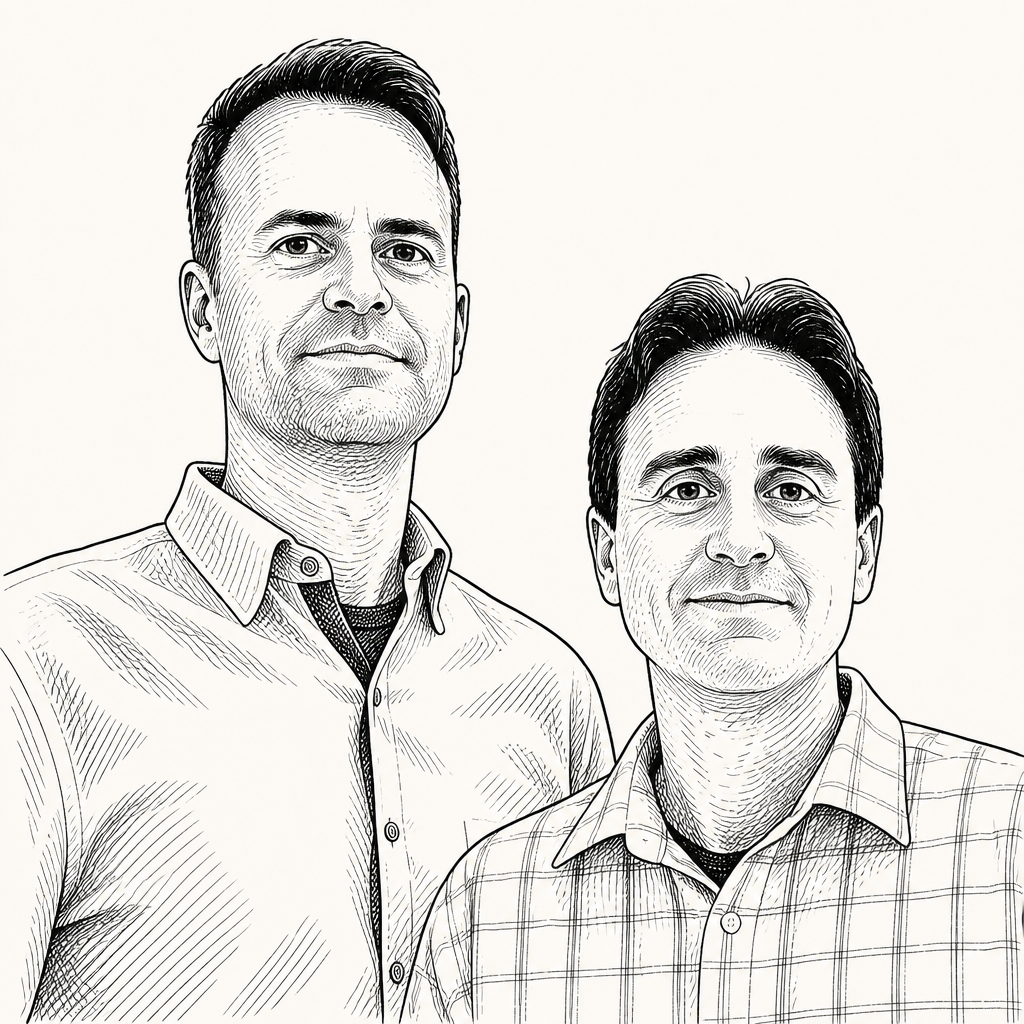
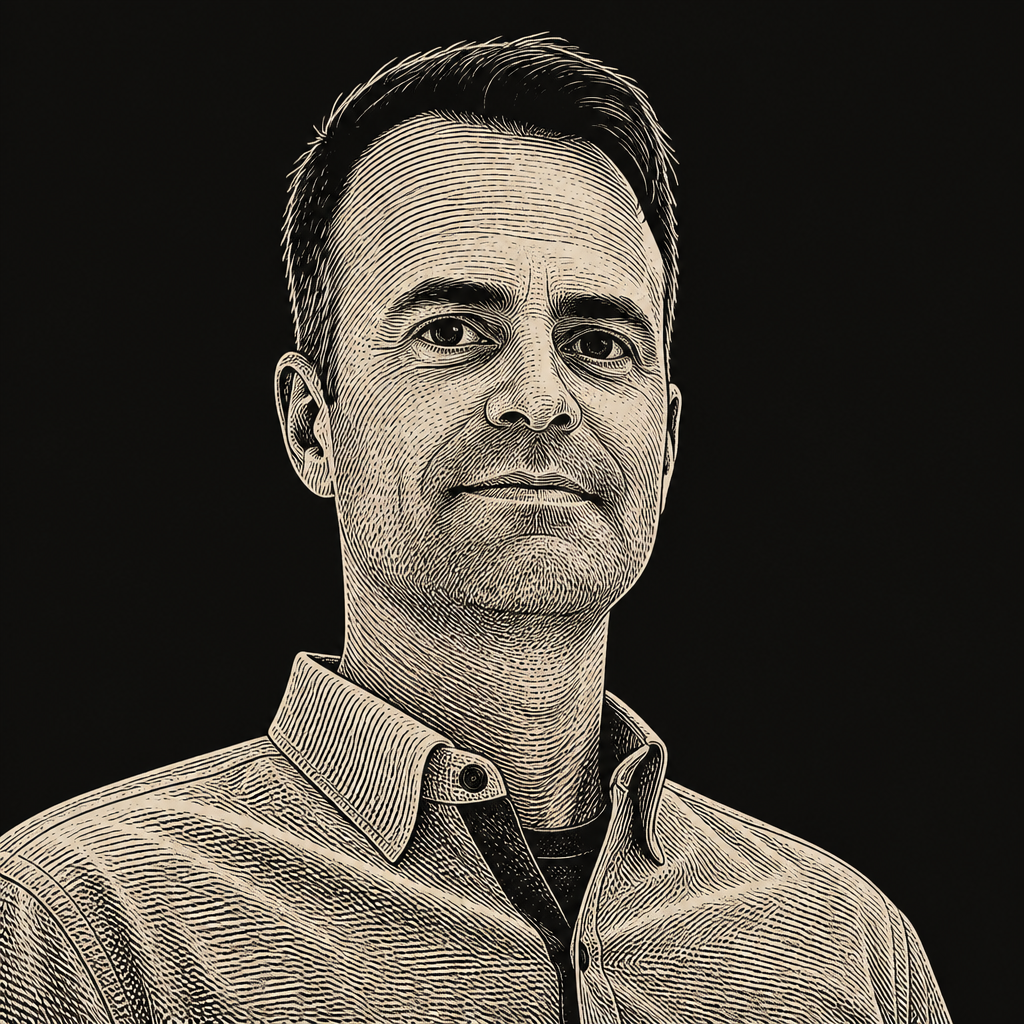
Helion’s technical distinction is that it is not trying to generate heat, run steam turbines, and use conventional cooling cycles. Kirtley described fusion as taking lightweight isotopes — hydrogen and helium — and forcing them together under extreme conditions: thousands of atmospheres and hundreds of millions of degrees. Most fusion efforts, in his telling, use the reaction to create heat. Helion’s goal is to directly harness the magnetic and electric energy from the reaction at high efficiency.
That changes the business threshold. Coogan asked about the familiar Q greater than 1 milestone, where energy output exceeds energy input. Kirtley said there is room to talk about the “ground truth” differently because Helion’s goal is not just scientific break-even, but electricity generation in a commercially useful form. If electricity can be extracted at very high efficiency — Kirtley used 95% as the relevant idea — the fusion side needs to do less, allowing smaller, faster, easier systems.
Helion has built seven generations of machines and, according to Kirtley, set world records for plasma temperature, pressure, and energy while also demonstrating pieces of electricity extraction. Polaris is meant to prove fusion electricity and support power-plant deployment.
The Microsoft power purchase agreement is for a 50-megawatt facility. That is industrial-scale power, Kirtley said, though not a large-scale data center. The company’s manufacturing vision is modular: build 50-megawatt generators in fusion gigafactories, put them on trucks, deliver them to sites, plug them in, and combine them for larger demand. A 500-megawatt facility would use 10 or 12 units, with redundancy.
He said Helion applies that philosophy even to prototypes. The seventh-generation system was built in parts in the factory, put on a truck, driven through the parking lot, and plugged in for assembly. The point is to force the company to learn mass production, reliability, and deployment early, not after the science works.
The Microsoft timeline is aggressive by nuclear-industry standards. Kirtley said Helion’s goal is to have the power plant built in 2028, begin early operations, and scale from there. The company has already been working on the facility for a couple of years, received environmental permits last year, broke ground last year, built two buildings, and is building a third while starting on power infrastructure.
Fusion’s regulatory path is central to that speed. When Helion was founded, Kirtley said, there was no clear regulatory framework. About a year and a half ago, the Advanced Act established that the Nuclear Regulatory Commission does not need to regulate fusion; instead, fusion is regulated by states and departments of health, more like a hospital particle accelerator. That does not make it casual — Kirtley emphasized licensing and safety work — but it moves timelines from a decade to roughly a year or less.
Helion does not use plutonium or uranium, and its systems cannot melt down or go critical in the fission-reactor sense. But Kirtley said it is still an atomic process that creates some radioactive materials, as hospital particle accelerators do. The company has state licenses and a team handling those materials safely.
Generalist is betting that robotics needs lived experience, not just humanoid bodies
Pete Florence resisted defining Generalist around humanoids. He said humanoids are important and many people on his team have worked on them for more than a decade, including through the era of the DARPA Grand Challenge. But the company’s thesis is broader: build general intelligence for the physical world that can power many robot form factors.

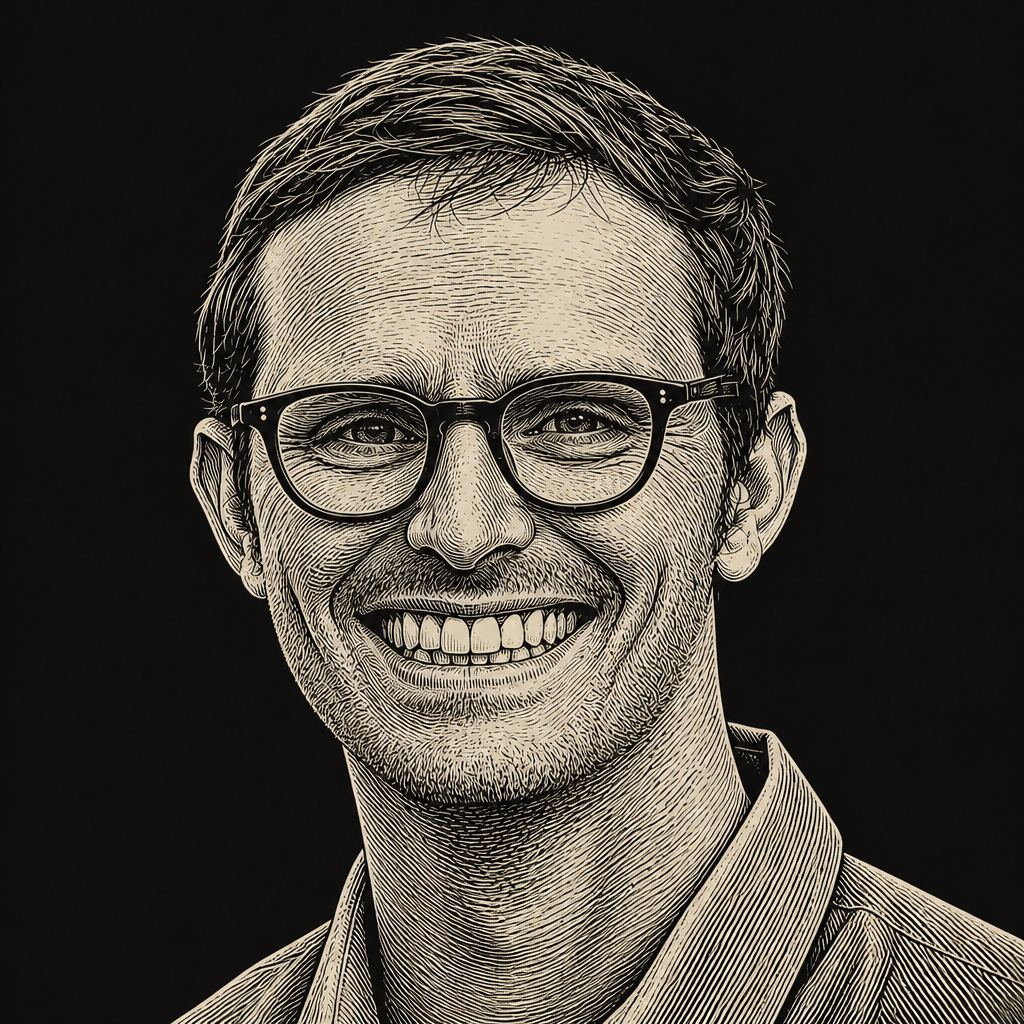
Florence compared Generalist not to a car or motorcycle company, but to fundamental engine technology that could be used in cars, planes, or other machines. That distinction matters because a large amount of economic robotic activity already happens outside humanoid form factors. Hays pointed to Amazon’s Kiva-style warehouse robots: not humanoid, but economically valuable at scale. Florence agreed that the company is focused on applications previous robotics and automation have not solved, especially in logistics, manufacturing, and supply chains.
Hays posed the central objection to AI robotics: if a deterministic robot arm already places windshields on cars, why replace it with a stochastic AI-driven system? Florence’s answer was that many industrial tasks remain unsolved precisely because they are not rigid, repeatable, or easy to program. His simplest automotive example was wire harnessing. Wires and other finicky objects are easy for humans but difficult for traditional programmed robots. Generalist focuses especially on dexterity, which Florence called the robotics bottleneck and “holy grail.”
The opportunity is not mostly adding AI to a robot that already does a task 80% of the time. It is unlocking tasks where robots were not previously in the loop at all. Florence said early interest in Generalist’s models has come from people realizing they never considered using a robot for a given application until they saw a general model handling dexterous tasks quickly, reliably, and with the necessary improvisation.
Industrial use will likely ramp before consumer or home robotics, in his view. Consumer robots will come, but commercial scaling is more likely first in industrial settings. That may make progress less visible to social media, because the users seeing the biggest gains are not necessarily posting “this model changes everything” on X. But Florence said industrial deployment is where he expects early scale.
On scaling laws, Florence said Generalist’s Gen 0 model, announced in November, was the first time robotics showed general scaling laws: predictable performance improvement with more compute and data. Gen 1, announced five months later, crossed into performance levels that the company believes are commercially viable for some applications. He compared the moment to moving from GPT-2 to GPT-3, when certain early commercial applications such as AI copywriting became viable before the broader model economy matured.
The most revealing exchange concerned data. Hays asked Florence to rank possible sources for robot learning. Internet video, such as YouTube, was useful but not top tier — Florence gave it around a B. World models as a data source were not even clearly on the list; he said synthetic data in robotics remains promising but lacks many proof points. Motion-capture data was a C for his purposes because it captures whole-body motion more than dexterity. Instagram “gloving” videos, where people perform intricate finger movements with LED gloves, were potentially B or A if they contained useful sensor data, because dexterity matters. General internet text was helpful but not sufficient; Florence likened learning from text to learning to ski by reading about skiing.
Simulation, even with a one-to-one robot representation in Unreal Engine and varied terrain, he put around C. The best data, he said, is not defined merely by capture method but by what people or robots are actually doing and the quality of the physical interaction. Hays summarized the answer as lived experience being S tier. Florence accepted it: “Lived experience of the physical world is S tier.”
Antares turned on a microreactor and says the hard part starts with operating
Jordan Bramble came to the studio with hats marked “53,” referring to Idaho National Laboratory’s 53rd reactor. Antares had just built and turned it on. Bramble said an executive order had called for three reactors to be turned on on American soil by America’s 250th birthday, July 4; Antares turned on the first about a month ahead of schedule.


The event itself was not visually dramatic. Going critical is intentionally slow and controlled, Bramble said — more a number on a screen than a rocket launch. But the significance was that the United States had not done something like this with a new non-light-water-cooled design in roughly 40 years. Antares’s reactor is privately developed and aimed at microreactor applications.
The company focuses on reactors around one megawatt and below, with a sweet spot from roughly 100 kilowatts to a megawatt, and potentially a little higher. The systems can be strung together for larger loads. Unlike light-water reactors, which require large water resources and often sit near oceans or rivers, Antares uses liquid metal heat pipes as the primary coolant. Small amounts of sodium vaporize inside a pipe, condense on the cooler end into a wick-like structure, and return through surface tension. The cooling process is passive and operates near atmospheric pressure.
That low-pressure design is a safety advantage, Bramble said. With pressurized water, losing coolant can allow vapor to travel long distances and carry fission products. With Antares’s design, there is not a pressurized coolant that vaporizes and transports material the same way.
The test did not produce electricity. Antares’s path is “neutrons 26, electrons 27, dollars 28”: demonstrate nuclear operation in 2026, generate electricity in 2027, and get to customer sites in 2028. Electricity will come through a nitrogen closed Brayton cycle. A heat exchanger removes heat from the condenser section of the heat pipe; gaseous nitrogen turns a turbomachine, similar to an automotive turbocharger, which turns an alternator.
Bramble emphasized how much of the company’s progress rests on prior public investment. The regulatory process used DOE authorization and was informed by Project Pele, a Department of Defense program begun roughly eight years earlier. The TRISO fuel Antares used came from a supply chain developed and funded under Project Pele and built by BWXT, itself based on about 20 years of DOE work through the Advanced Gas Reactor program. That fuel qualification data allowed Antares to point regulators to evidence that fission products would be retained even at high temperatures, reducing the need for extra safety systems and analysis.
There was also institutional memory in the room. Bramble said a DOE regulator came out of retirement for the effort, and an Idaho National Lab operations representative had known that regulator since 1979. They had not done a reactor together since before then.
The biggest learning came not from design or regulation, but from operating an actual nuclear facility. Bramble said the last two weeks were the hardest. There were no safety “oh shit” moments, because safety is designed up front. But integration exposed real issues. When actuator motors for rotating drums with boron carbide absorber inserts operated, they caused electromagnetic interference with neutron detectors. The team spent five or six days troubleshooting. That kind of incremental integration, he said, is how technology matures quickly.
Antares will reuse the same fuel and facility to scale toward electricity production. Before that, it tests subsystems, runs electrically heated integrated tests using cartridge heaters instead of nuclear fuel, and has already tested its system at full thermal power for six months. It will repeat that with design iterations, test the power-conversion system, then assemble the nuclear version.
Bramble said fuel is the largest single line item in a microreactor’s bill of materials, costing millions. Nuclear instrumentation is also expensive because the supply base is thin: some neutron-counting hardware may contain relatively modest underlying hardware costs but is made by one company and priced high because the industry builds reactors so infrequently. Operating the test exercised the supply chain and gave Antares real cost, lead-time, tolerance, and quality data.
The first customer focus is military. Bramble said the Army alone has a $2 billion Janus program budget to buy microreactors for military installations between now and 2030. Hyperscalers may sign MOUs or make small equity investments, but they are not yet spending the major dollars until the technology is mature. The military, by contrast, has a mission need: resilient power for command and control, satellite communications, cyber warfare, nuclear-weapons assets, and space-superiority systems increasingly run from U.S. installations that could be exposed to grid disruption. Nuclear fission offers high uptime and high capacity factor without reliance on liquid-fuel supply chains.
Bramble’s advice to other nuclear startups was blunt: stop making excuses and start operating a nuclear facility as quickly as possible, because that is when the real challenges begin.
The remaining market debates were about access, attention, and taste
The show’s later market and culture threads returned to a common question: who gets access to scarce things, and how do markets react when the scarce thing becomes visible?
SpaceX’s potential IPO was discussed through Matthew Zeitlin’s argument that the idea of SpaceX being “dumped on retail” is silly because retail would likely want far more shares than available. Hays was skeptical of the scale implied. If the retail allocation were $10 billion, he doubted there was automatically $100 billion in retail demand, simply because SpaceX is such a large company. But he also saw a scenario where index funds, employee lockups, and Elon Musk not selling make the effective float low enough that retail becomes the marginal buyer. That, he said, would be a major win for SpaceX, because retail holders might focus on Mars, the moon, and long-term ambition rather than short-term quarterly performance.
Coogan noted that it is hard to find a bear willing to short SpaceX. Hays also speculated that SpaceX could meet profitability requirements for index inclusion quickly because of a Google deal, an Anthropic deal, and lower burn, though Coogan pushed back on how quickly that could happen. Hays acknowledged it likely would not be immediate, but said first-year inclusion could be possible if profitability arrives.
There was also a quick detour into Leopold Aschenbrenner’s hedge fund after The Wall Street Journal included a TBPN clip in a profile. Coogan said the highlighted figures were remarkable: 24 years old, $20 billion under management, up 270% after fees this year, and about 200% in 2025. Early backers named in the article included the Collison brothers, Daniel Gross, Nat Friedman, and Dwarkesh Patel; Jane Street’s investment was notable because it rarely allocates to outside money managers.
Design taste closed the day. The hosts discussed a tweet noting that both the Jaguar 00 and Audi Nuvolari had been designed under the same design director, Massimo Frascella, at different points. Coogan thought the similarity mattered because people were beginning to accept a futuristic, sharply geometric style. The Jaguar’s pink and light-blue launch colors may have been too bold, but in black, white, gray, or dark green, he thought the design would likely be well received. The Audi Nuvolari, shown in matte gray, received a better reaction partly because the color was more conventional.
The conversation broadened into halo cars. Coogan explained the classic logic: an Audi R8 makes the brand feel more desirable, helping sell A4s, Q5s, and RS6 Avants by association. Ferrari’s most elite cars do something similar for less rare models. He then proposed an “anti-halo car” effect, using Ferrari’s electric “Luche” as the example. Once people started dunking on the Luche, he said, they seemed to feel more positive about the SF90 and Purosangue. The electric car made the hybrid SF90 look more acceptable and the V12 Purosangue look like a steal. Hays called this the new “horn car” meta: not a halo, but a devil-horn car that makes the rest of the portfolio look better.
The lightest final thread was also about logistics as luxury: “Air Horse One,” a photo of horses lined up in stalls inside a cargo plane. Coogan said horses do fly this way for elite equestrian competitions, including Olympic events, and that flying horses around the world is one of the most expensive parts of becoming a serious showjumper. It was a comic endpoint, but it matched the day’s larger pattern: whether satellites, reactors, fusion generators, AI inference, biotech trials, robots, or horses, the serious story kept returning to physical systems, scarce capacity, and the cost of moving from impressive demonstration to reliable deployment.