AI Compute Remains Supply Constrained as Infrastructure Stocks Pull Ahead

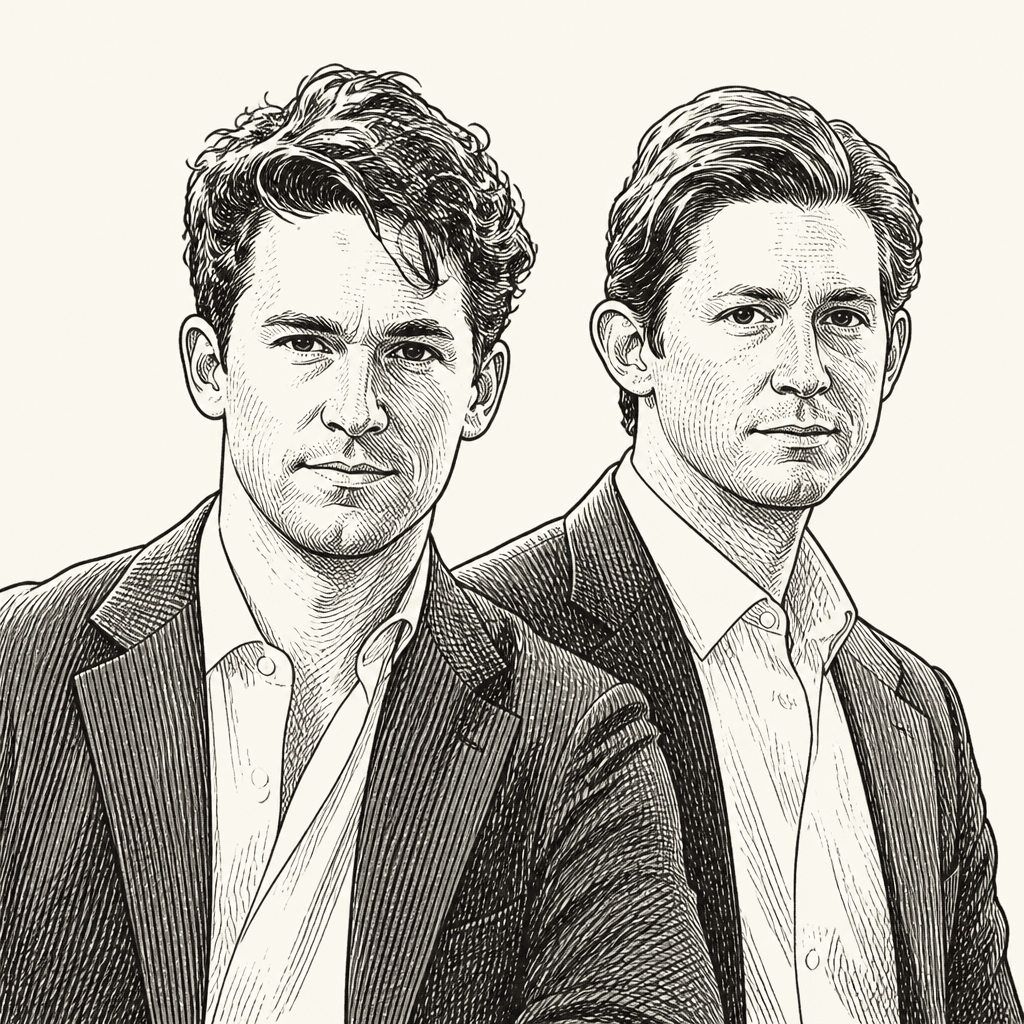

Altimeter founder Brad Gerstner argues that the AI boom remains constrained by compute supply rather than exhausted demand, and says that view explains the firm’s large bets on OpenAI, Anthropic, Nvidia, Snowflake and related infrastructure. In a live TBPN conversation, he ties the investment case to a broader political one: the US must keep building data centers and compute capacity to compete with China, while using initiatives such as Trump Accounts to give more Americans a direct ownership stake in the wealth AI may create.

The AI trade, in Gerstner’s view, is still supply constrained rather than demand exhausted
Brad Gerstner frames the current AI market as a boom repeatedly interrupted by “mini corrections,” not as a straight-line mania. These are his market views and portfolio claims, grounded in what he says Altimeter is seeing in usage, revenue, and public-market pricing. The wall of worry, as he described it, has been consistent: whether AI revenue would show up, whether gross margins would hold, whether customers would see ROI, whether infrastructure was being overbuilt, and whether every supply constraint would eventually turn into a glut.

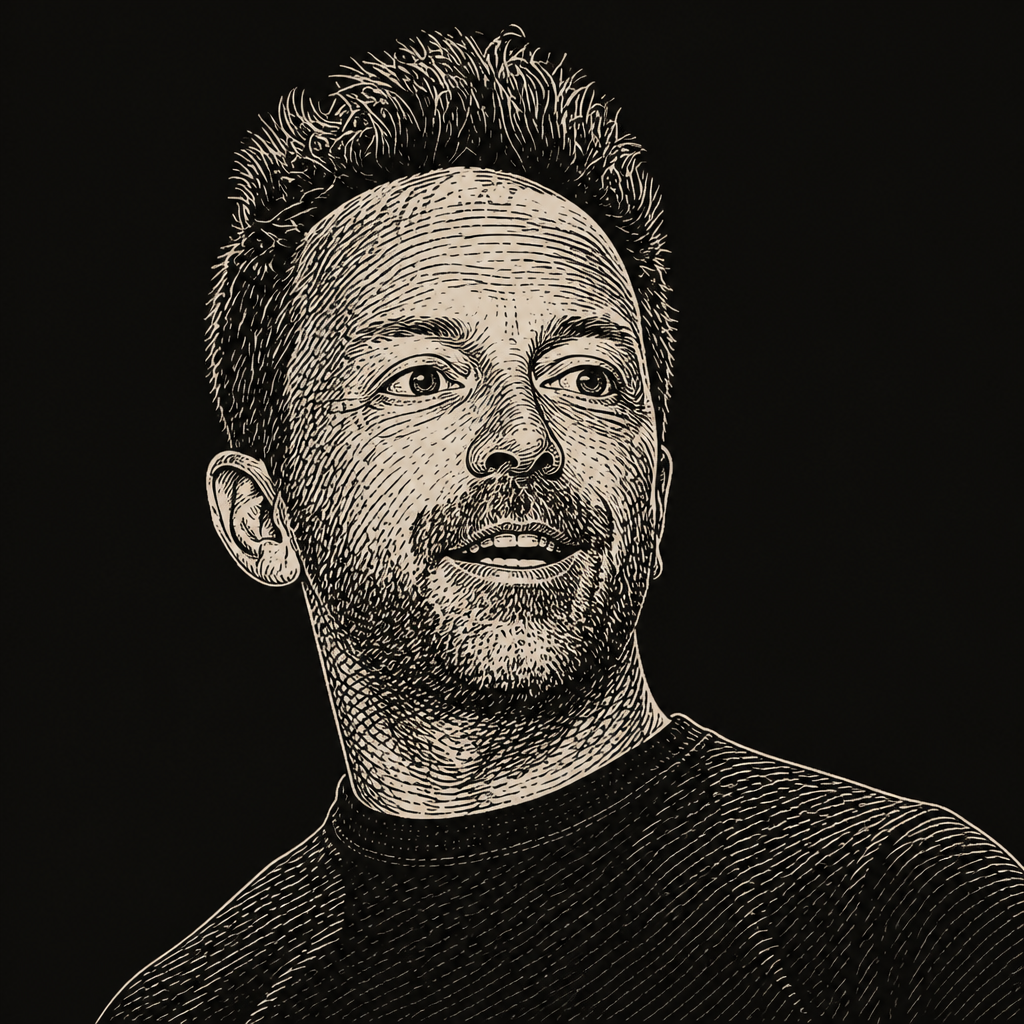
His answer is that the market changed once inference-time reasoning opened “a whole other vector of scaling intelligence.” Gerstner said Jensen Huang told him that inference would not rise 100x or 1,000x, but “one billion x,” because “agents are going to be talking to agents.” That line explains why Gerstner became more aggressive rather than less: he sees agents and reasoning models as expanding the amount of useful inference the world can consume.
The decisive commercial signal, in Gerstner’s account, came from Anthropic. He argued that if Anthropic had not delivered the revenues it has delivered this year, “the stock market would be down 10 or 15 percent.” OpenAI and Google, he said, have had good numbers, but have not “blown away” expectations in the same way. Anthropic, by contrast, is, in his words, “the fastest-growing company in the history of capitalism,” and its reported high gross margins and potential for positive free cash flow changed investor perception of the entire AI segment.
Had Anthropic not delivered its revenues that it's delivered this year, I think the stock market would be down 10 or 15 percent.
That does not make Gerstner dismissive of pullbacks. He said semiconductor stocks could see ordinary 10% to 20% consolidations after extraordinary moves. Micron, according to Gerstner, has gone from “a couple hundred bucks to a thousand bucks,” while Dell has moved from roughly $80 or $90 a year ago to $400. Dell’s AI server revenues, he said, grew 750% year over year, from a $1 billion business to a $16 billion business. For him, that is evidence that “this stuff is real,” but not evidence that every monthly or quarterly revenue trajectory will be smooth.
The market’s skepticism has also shifted. Early bears said the revenue would not arrive. Once revenue arrived, Gerstner said, the objection became that the revenue was “all token maxing” with no ROI. On the other side, he argued, AI maximalists can be equally unrealistic, acting as if every dollar of token spend is perfectly allocated. He placed himself between those poles: enterprises are experimenting, some token spend will be wasteful, and optimization will happen, but the adoption curve is still early enough that spend can keep growing through optimization.
To support that view, he pointed to Altimeter research surveying 300 enterprises about AI API token usage and optimization. The on-screen chart separated respondents by whether they were already optimizing, planning to optimize, evaluating optimization, or not prioritizing it. Even among those already optimizing, expected forward raw API growth remained positive.
| Enterprise optimization posture | Trailing 12-month spend growth | Forward 12-month expected raw API growth |
|---|---|---|
| Already optimized / actively optimizing | +87% | +58% |
| Planning to optimize within 6 months | +68% | +90% |
| Maybe / evaluating but no plans | +42% | +23% |
| Not a priority right now | +145% | +91% |
Gerstner’s interpretation was straightforward: customers will optimize, but they are still very early in using AI for coding, earlier still in applying it broadly to knowledge work, and most enterprises globally are not yet heavy users at all. In that setting, optimization does not necessarily mean falling revenue for model providers. It can coincide with expanding use cases and more customers coming online.
Software has split into companies inside the token flow and companies exposed to it
Gerstner rejected a single answer for whether every dollar spent on tokens comes out of SaaS, because he thinks “software” has already bifurcated. The relevant distinction is not whether a company is labeled software, but whether rising AI usage mechanically pulls its business forward or makes its product more substitutable.
Some software companies, he said, are “in the token flow.” He named Databricks, Snowflake, and ClickHouse — all companies in which Altimeter is invested — as examples. The logic is mechanical: as token consumption rises, database queries rise. At Altimeter itself, Gerstner said database queries are growing faster than token usage. That makes data infrastructure an enabler of model usage rather than merely another line item competing for enterprise budgets.
Snowflake’s recent stock move was his example of the market beginning to recognize that distinction. He said the stock had risen about 35% the previous day, though he noted it was still only up about 10% for the year, compared with companies such as Micron and Arm, which he described as up about 200% for the year. The point was not that all software had recovered, but that AI-leveraged infrastructure can earn a different multiple from front-office application software.
Salesforce sits on the other side of Gerstner’s distinction. He said he likes Marc Benioff and believes that if anyone can get Salesforce “in the token flow,” it would be him. But he argued that Salesforce’s front-facing applications compete more directly with models, while Snowflake enables them. That makes Salesforce’s position more difficult.
The broader SaaS reset, in Gerstner’s view, is often misdescribed. He recalled Satya Nadella causing a stir by saying software is “a thin user interface on top of a CRUD database,” and noted that the “Is Software Dead?” debate predates the latest market anxiety. What changed in December, he said, was not that software suddenly became worthless; it was that multiples reset from an above-market belief in impenetrable software revenue to something closer to the overall market.
The on-screen table Gerstner presented made that point by comparing revenue multiples, P/E multiples, and free-cash-flow multiples across large software names and infrastructure names. Its subtitle stated the argument directly: “Large-cap apps now trade in line with the S&P 500 (~20x), only AI-leveraged infrastructure still carries a meaningful premium.” Gerstner emphasized that Salesforce was shown at 14x non-GAAP CY25 P/E, while the large-cap app median was 20x and the SMID-cap app median was 17x; infrastructure still carried much higher multiples, with Snowflake shown at 139x GAAP CY25 P/E and the infrastructure median at 139x non-GAAP CY25 P/E.
| Group or company | CY25 P/E non-GAAP | CY26 FCF non-GAAP |
|---|---|---|
| Salesforce | 14x | 17x |
| Large-cap app median | 20x | 23x |
| SMID-cap app median | 17x | 22x |
| Snowflake | (86x) | (126x) |
| Infrastructure median | 139x | 68x |
Gerstner’s conclusion was not that the correction is over. It was that software investors may be underestimating how much further multiples could fall for companies whose businesses get worse as computational intelligence improves.
If you get on the AI train, if you get in the token flow, you're going to get an above-market multiple.
The inverse mattered more for his investing posture. If a company slows down and each improvement in computational intelligence appears to weaken the business, Gerstner said, he expects it to trade below the market multiple. That is why he described software, broadly, as sitting in the “too hard basket.”
In earlier growth investing, Gerstner said, a Series A software company with a couple million dollars in revenue that reached $20 million by Series B would have had “a line out the door” of investors. Today, he said, “you wouldn’t have a single taker.” The reason is not just slower growth; it is uncertainty about which software revenue streams will be steamrolled by models and which will be pulled forward by token usage.
His portfolio posture follows from that. Altimeter’s early-stage investing, he said, is focused on companies either in the token flow or benefiting from it: semiconductors, compute, data centers, and AI-adjacent military modernization. In growth investing, he said the firm is doing less at the $5 billion to $15 billion “inflection stage” and has instead made the largest bets in Altimeter’s history in OpenAI and Anthropic. In public markets, he said Altimeter has been effectively 100% in AI and compute for three years.
Gerstner also argued that public-market AI winners have delivered venture-like returns while multiples have fallen rather than expanded. Nvidia, in his telling, is trading at about 13 times earnings while growing about 70%, and is at its cheapest multiple in a decade despite being up 15x over three years. He argued Nvidia’s return of free cash flow to shareholders could become even more important, suggesting Jensen Huang should raise the portion returned through dividends or buybacks from 50% to 70% or 75%. He compared that threshold to Apple’s buyback commitment before Warren Buffett’s investment.
The data center fight is a national-security problem disguised as a local land-use fight
Asked about a possible data center moratorium, Gerstner’s response was unequivocal: it would be “bad for everybody” and “horrific for America.” He did not treat the issue as a narrow question of whether constrained capacity would increase pricing power for companies with tokens to sell. He treated it as an existential strategic risk.
His historical analogies were pointed. A small group of activists, he said, shut down supersonic technology. A small group of activists shut down nuclear clean energy in the United States. China, according to Gerstner, has 100 fission reactors being built, while the United States has one. For him, data centers risk becoming another example of American self-sabotage if political opposition stops the infrastructure required for AI.
The economic argument was equally direct. Gerstner argued that “all of our GDP growth” is coming from building data centers, driving AI, and improving productivity. A data center moratorium, in his view, would push the country “straight into a recession and high unemployment.” Strategically, he said it would cede the AI race to China “overnight,” with implications for economic security, jobs, and national security.
But Gerstner did not dismiss local opposition as irrational. He described visiting rural Indiana for his mother’s 90th birthday and thinking about places such as Mishawaka, where data centers are being built. Residents worry about jobs, their children’s futures, water, and electricity bills. Activists tell them they will lose water and see power costs rise. Gerstner’s view is that local communities need tangible benefits if the country expects them to host nationally important infrastructure.
He said he is working on an initiative, not yet ready to announce, involving “everybody in the value chain”: cloud companies, Nvidia, AMD, off-takers, and the White House. The goal is to deliver a “tangible and profound dividend” to the communities where data centers are built.
The political time horizon he described is three years. By then, he thinks the benefits of AI will be obvious to consumers and enterprises: every person will have a personal assistant in their pocket for nearly nothing, capable of handling calendars, ordering food, buying clothing, and sending gifts; every enterprise will have tools that raise human productivity. Until those benefits are widely felt, the disruption and uncertainty are real. Gerstner said the country needs a “sociopolitical bridge” to get through that interval.
We have to build the sociopolitical bridge for the next three years.
His optimism about AI does not rest on unconstrained growth. In fact, he emphasized physical constraints: there are only so many memory wafers, logic wafers, and powered shells, which means only so many tokens can be produced. He compared the moment to the internet buildout around 1999 and 2000, when there were only about 35 million people connected to broadband. Investors could see what Amazon might become, but the infrastructure and user base were not there yet.
Today, he said, the world has 3 billion to 4 billion connected people, and the diffusion rate is radically different. The analogy to the dot-com fiber buildout breaks down for him because fiber in 2000 was “dark” — installed before demand existed. AI compute, by contrast, is being consumed immediately.
There is not a dark GPU in the world today. There’s not a dark token in the world today.
He cited Google, Amazon, Microsoft, OpenAI, and Anthropic as all reporting token constraints: if they had more tokens, they could generate more revenue. His premise is that “the world demands more intelligence,” intelligence is produced with tokens, and token supply has physical limits.
That supply expansion is still accelerating. Gerstner said OpenAI and Anthropic combined began the year with about three gigawatts of compute, would end the year closer to 10, and would end next year closer to 20. At the same time, algorithmic improvements continue. He expects the next nine months of model progress to be surprising, and said people at Cursor, Anthropic, and OpenAI give off an “Oppenheimer look” that says, “we’re here.”
Big consumer platforms may be forced into enterprise AI by the economics of compute
Consumer platforms entering enterprise AI are, in Gerstner’s view, responding to the economics of massive compute buildouts rather than simply chasing a new market. Once a company is spending $100 billion a year on capex, he said, it runs into what he called the “AWS problem.”
The original AWS logic, as Gerstner described it, was that Amazon had to build enough capacity for Black Friday and the Christmas peak. The rest of the year, much of that capacity was underutilized. Renting it to others turned an expensive seasonal requirement into a major business, and it made the core retail business stronger because Amazon could build to peak demand.
He sees the same logic in AI compute. He referred to Elon Musk launching “EWS,” or “Elon Web Services,” to monetize xAI compute, and said Musk had signed Anthropic as a major first customer. Gerstner’s description of Musk’s advantage was vivid: “nobody on earth is better at turning electrons into tokens than Elon.” He expects more data centers from Musk, first on Earth and eventually in space. He also argued that the Cursor deal and Anthropic deal changed the tenor of the xAI IPO from mild concern to excitement.
For Meta, he said CFO Susan Li and Mark Zuckerberg are likely looking at the same strategic problem. Zuckerberg, in Gerstner’s view, will not give up the race to frontier AI. If Meta wants to build more compute, it has to find ways to monetize it. That could mean something like AWS, enterprise agents, or other services that move beyond Meta’s historical consumer orientation.
Gerstner acknowledged the difficulty. Taking a business that has been “120% consumer” and pushing it into AWS-like infrastructure or enterprise agents is hard. But he also accepted Jordi Hays’s point that the boundary between consumer and enterprise is blurrier in AI coding. Product-led growth and coding agents can look more like consumer adoption than traditional enterprise software sales. John Coogan added that Meta already has relationships with hundreds of thousands of businesses through its advertising platform, so it is not entering the business market from zero.
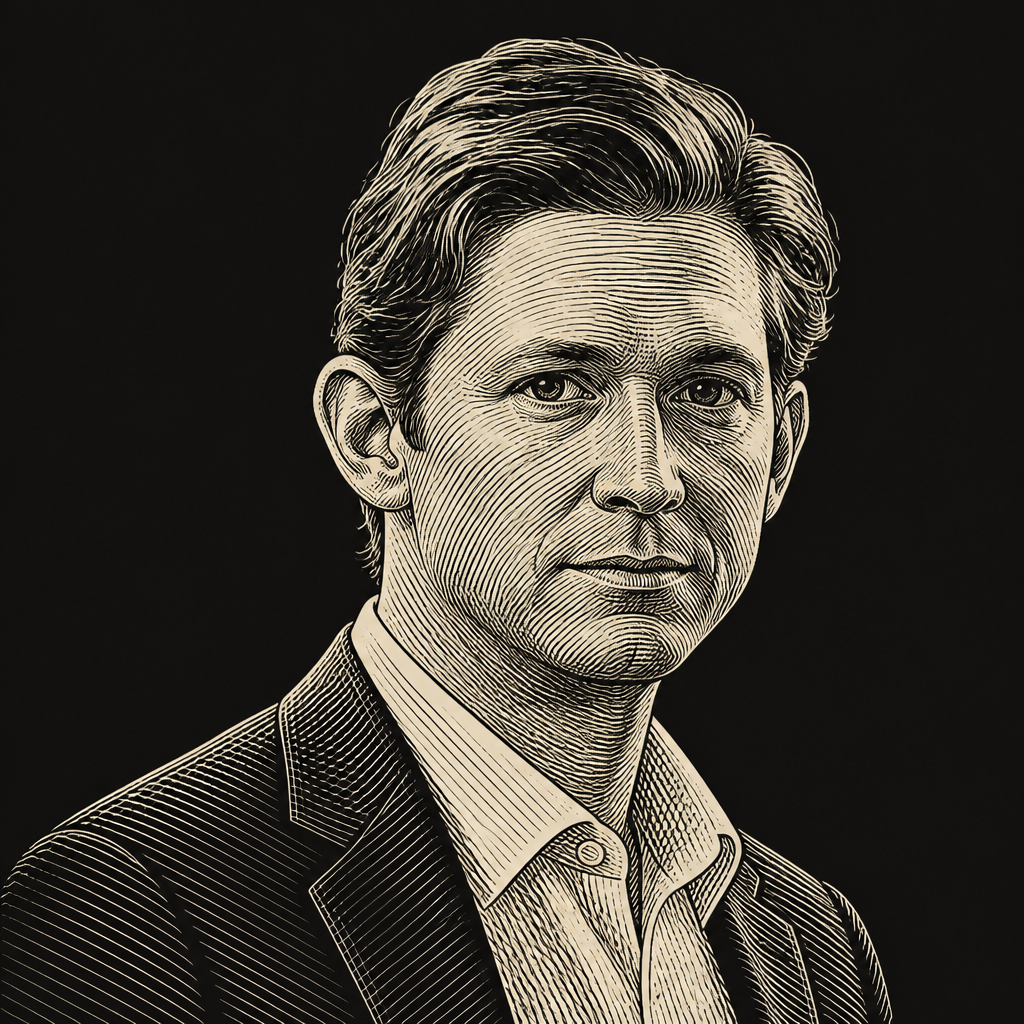


The same question — whether non-software institutions can build AI software for themselves — came up through Kirkland & Ellis’s reported plan to invest half a billion dollars in internal software. Gerstner was skeptical. He understood why a law firm would announce a major AI effort: “what else are they going to do?” The competition is coming directly at professional services firms, so inaction is not a credible strategy.
But he does not think a law firm that wakes up every day thinking about legal briefs is likely to build “killer legal software” that competes with OpenAI and Anthropic. A more plausible route, in his view, is the Thrive Holdings model: buying services firms such as accounting companies and applying elite engineering, deep AI partnerships, and operational focus to drive productivity gains. He expects more of that from private equity firms and vehicles like Thrive Holdings, including take-privates designed to AI-turbocharge individual companies.
Trump Accounts are Gerstner’s ownership answer to AI-era abundance
Gerstner’s most expansive non-market argument centered on Trump Accounts, the child investment accounts created through the Invest in America Act. He said the effort took four years, passed into law on July 4 of the previous year as part of the “Big Beautiful Bill,” and was set to launch and be funded on the coming July 4. The app had launched the day before the conversation, and Gerstner said it had reached number three in the United States, behind only ChatGPT and Claude.
The structure he described is simple: children receive money into accounts invested in the S&P 500. Parents do not need to know anything about investing. According to Gerstner, children born after January 1, 2025 — whom he characterized as roughly under two — receive $1,000 in the S&P 500. Children between two and 10 receive at least $250. He said there are 35 million children in America under age 10 who get at least $250.
Additional funding comes from philanthropists, states, employers, and local initiatives. Gerstner said most eligible children would receive $250 from Michael and Susan Dell. Children in Indiana would receive an extra $250 from him; children in Connecticut would receive an extra $250 from Ray Dalio; children in Oklahoma would receive $250 from the state. He said thousands of companies are involved or could become involved, and he described the effort as “the giving pledge 2.0.”
His philanthropic argument is that the accounts send “a hundred cents on the dollar” to the child, compound for 18 years and beyond, and make the child “a capitalist and an owner.” He claimed children with assets are more likely to graduate from high school and college, start a business, and buy a home. The societal return, he said, is “off the charts.”
He credited Vlad Tenev and Robinhood, BNY, Joe Gebbia’s National Design Studio, and Treasury officials including Luke Pettit and the Treasury Secretary for building the launch. His governance point was that this is how government should work: a citizen has an idea, gets a law passed, and then experienced builders assemble a working product that citizens adopt.
The accounts also fit Gerstner’s larger theory of AI-era politics. If AI and compute create enormous national wealth, he argues the country has to “raise the floor” and give people ownership of that abundance. He repeatedly contrasted Trump Accounts with 529 accounts, which he said serve the top 10% of Americans who can afford to save. Trump Accounts, in his telling, are for everyone.
The most concrete example came from a school in Durham. Gerstner said he adopted a school with 700 children, giving $250 to each child. The math, as he described it, was direct: $250 times 700 children, a Google spreadsheet, $150,000 to the principal, and QR-coded deposits into each account. The school, he said, served a student body that was 75% Black and Latino and included rural poor families. He described a mother crying because she never thought her children would “own anything,” and teachers excited to teach children what ownership means.
For Gerstner, the psychological move from no assets to some assets is the central act. He tied it to his own background in rural Indiana, saying that when you are at zero, “it’s a despondent place to be” because “you don’t know how to get to one.” The accounts are meant to get children from zero to one.
The hardest move in the world is going from zero to one.
He said that if a child starts with $1,000 and saves $50 a month, the account can reach $50,000 by age 18. Starting in 2027, he said, accounts will become automatic for the 3.7 million children born that year: when a child gets a Social Security number, they get a Trump Account. At Altimeter, he said roughly 80 children connected to about 35 employees would each receive $500 at year-end into their accounts.
He also wants companies and wealthy individuals to contribute specific shares. He floated the idea that leaders of major American companies — “the Facebooks, the SpaceXs, the OpenAIs” — could give one share to every child in America. More broadly, he said small businesses, restaurants, realtors, and large companies can all contribute, creating what he called an “open source platform of universal private ownership.”
Michael and Susan Dell, in Gerstner’s telling, helped get the project over “the last one inch line” with the administration and then made what he called “the biggest philanthropic gift in history”: $6.25 billion, or $250 for 25 million children. He argued that the structure is unusually efficient for large-scale philanthropy because it can be targeted by state, county, school, or employer, with 100% going directly to the child rather than through a charity with overhead.
Gerstner said President Trump estimated that over 15 years the program could transfer $3 trillion to $4 trillion of wealth from people who have it to people who would otherwise have zero. He also said the president believes it could be his biggest legacy. Gerstner went further, saying it could become more impactful than Social Security because the recipient actually owns the asset in a private account that compounds over a lifetime.
California is the next test of Gerstner’s ownership politics
Gerstner’s California argument extended the ownership theme into state politics. He presented Trump Accounts and Invest in America Accounts as a counterprogram to a politics that, in his view, attacks accumulated success rather than widening ownership. He said he is working to sign up someone to adopt all the children in Los Angeles, with San Francisco and Oakland already covered, and said major announcements are coming in California.
The target of his criticism was what he called an “unconstitutional taking tax,” also described as a wealth tax or billionaire tax. He framed it as an “attack on success” that divides Americans, in contrast to child investment accounts, which he described as uniting people by raising the floor and getting everyone into the game.
His prediction was that the wealth tax would be defeated and that a “Retirement and Personal Asset Protection Act” referendum would pass in California, prohibiting the taking of retirement money or personal assets. He argued that this would send “a shocking message” to the rest of America because many assume California is uniformly blue. Gerstner described it instead as “pretty purple,” with common-sense initiatives positioned to reassert themselves.
The stakes, for him, are national. California is, in his words, the fourth-largest economy in the world. Some of his friends have left and believe the state deserves what is coming. Gerstner takes the opposite view: “As California goes, so goes the country.” He argued that the country cannot cede California because it is where the fight over ideas consistent with the country’s founding will be fought.