U.S. Data-Center Politics Could Reshape Where AI Capacity Gets Built
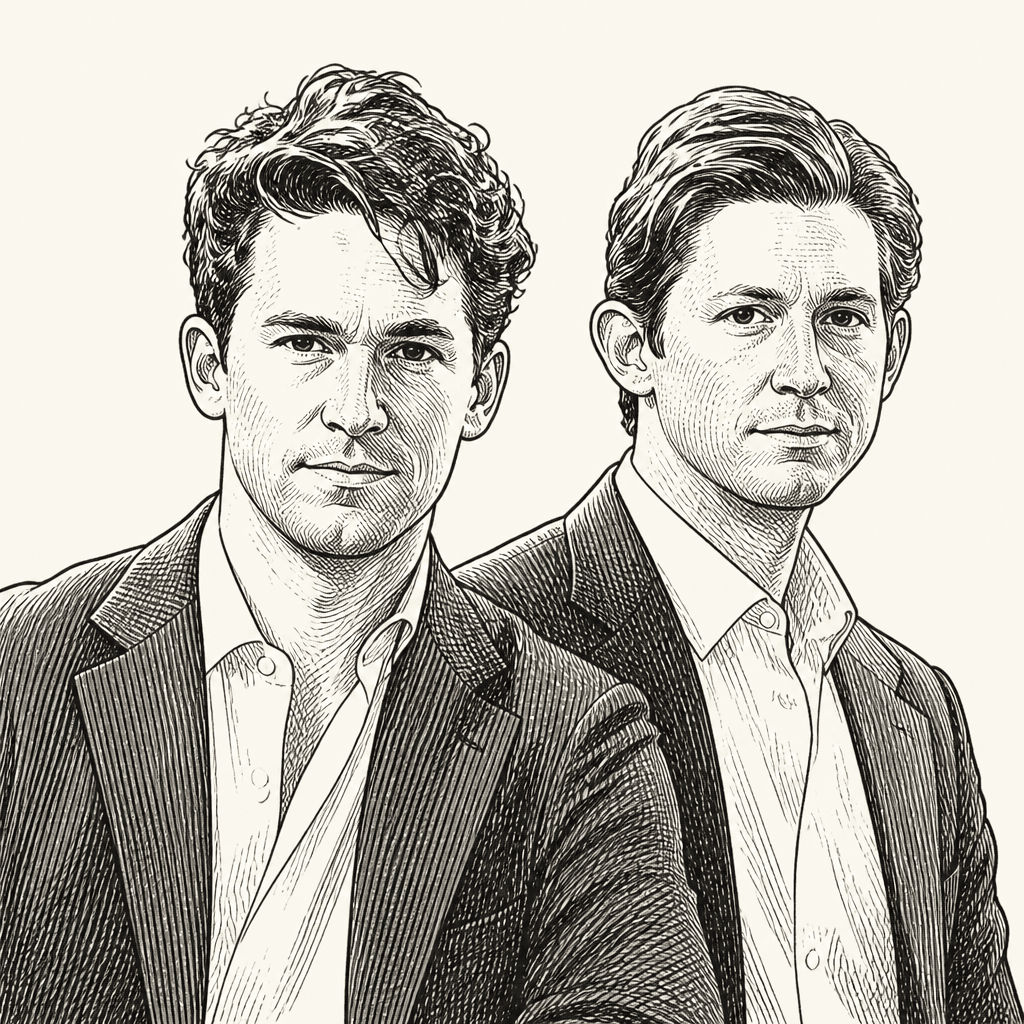

John Coogan and Jordi Hays argue that the midterm results lifted the broader stock market but left the AI trade facing a harder question: where new data centers can be built. They say a wave of local restrictions and permitting hurdles could squeeze smaller cloud providers and strengthen the position of hyperscalers, even as prediction markets’ strong overall election forecasts were tested by a late shift in the Texas race.
Stocks rallied, but the AI trade was still being repriced
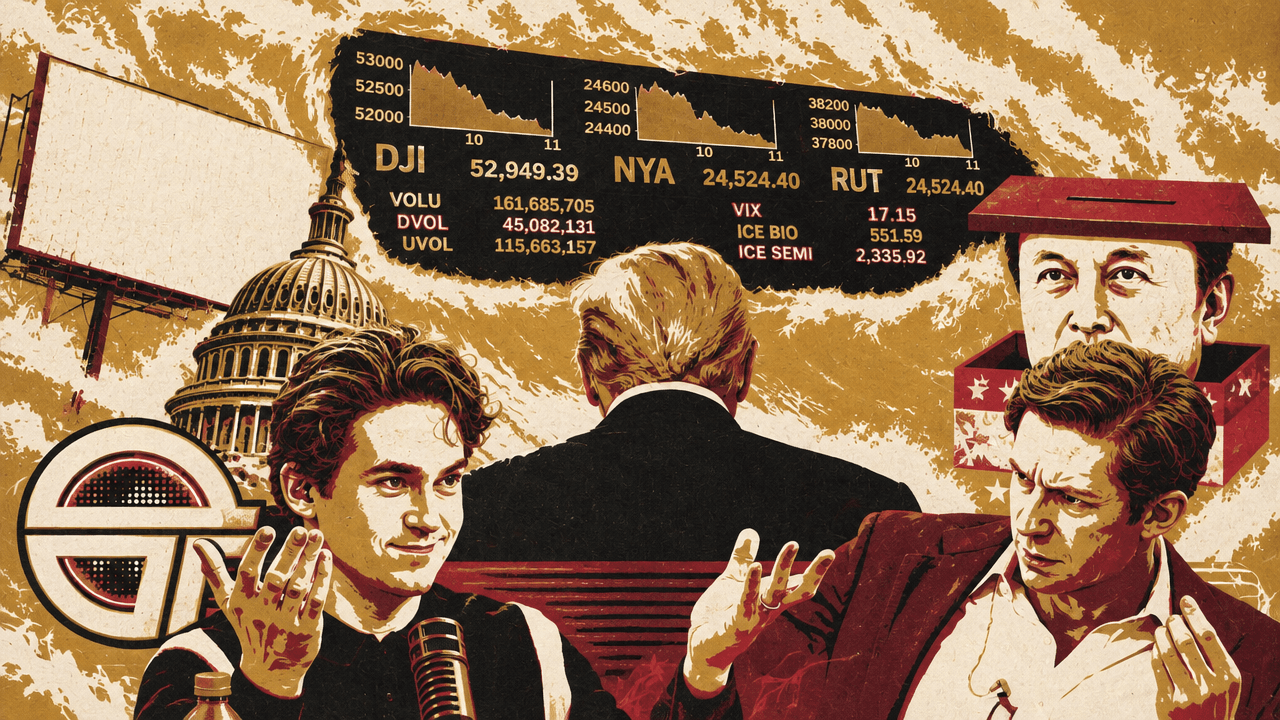
The day after the midterms, the Dow was up 3%, the Nasdaq 1.88%, and the Russell 2000 was also higher, John Coogan reported. He cautioned that the gains did not mean every stock was rising: AI-related shares and data-center builders were still shifting in different directions. The election had lifted the broader market while adding uncertainty about where new computing capacity could be built.
Coogan relayed Ben Thompson’s view that tightening credit markets were the most obvious reason stocks had been rocky in recent weeks. At the same time, he said, markets had entered an “equity funding era.” The election outcome could be bad for the AI trade in the short term, but some of the pain might already have been absorbed. AI stocks and data-center builders had sold off even as GPU-hour prices rose and models improved. Coogan suggested investors might have been anticipating a pullback in new compute capacity, with fewer data centers and GPUs coming online.
The political response to the election was itself a source of relief. Coogan cited Tyler Cowen’s observation that the vote had gone well procedurally, at a moment when people were concerned about cyberattacks and reports of power outages in Florida. Jordi Hays said it seemed like “a functioning democracy”: voters had chosen, the results were being accepted, and people on both sides were expressing satisfaction or disappointment. Coogan also cited investor Ron Albahari, who said equity investors were relieved that the president would accept the results.
Cowen’s post-election roundup, as Coogan summarized it, listed Matt Yglesias, socially moderate Democrats, campaign-finance research, and Nate Silver’s predictions among those “rising in status.” Among the ideas or political forces “falling in status,” Cowen listed tariffs, corruption, war with Iran, wealth taxes after their loss in California, and Republican gerrymandering that had backfired amid a blue wave.
The hosts disagreed about how much of the market’s earlier weakness reflected the election. Coogan thought investors had been anticipating the result and that worries about new data-center capacity had already weighed on AI stocks. Hays pointed out that he could not recall anyone predicting a Democratic victory in the Texas governor’s race before prediction-market odds shifted shortly before the results. Coogan agreed that the Texas race was important, but argued that the roughly 40 data-center bills and measures across the country could matter more in aggregate.
Prediction markets offered a strong forecast, but the Texas shift exposed a limit
Hays said prediction markets had “called almost everything right,” while naming Texas as a surprise. A lower-third graphic on screen said Kalshi claimed 98% midterm accuracy. Coogan also cited two other Kalshi figures: 95% accuracy when polls opened, and 81% three months earlier, compared with a 77% average for VoteHub at that earlier point.
Hays noted that many markets three months before the vote were not priced at 80–20; some were closer to 60–40. In his view, the reported accuracy figures could indicate that markets were useful when a candidate had a clear lead. But he questioned how helpful a market was if its odds stayed in one direction for months and then reversed in the hours before the result. Coogan’s answer was that a 30% chance still means a meaningful possibility—“one in three”—not that an outcome can be dismissed.
The hosts also discussed commentators in technology and adjacent fields who had argued that both polls and prediction markets were wrong. Hays said those commentators had ended up more wrong than he had expected. Coogan, however, recalled feeling that markets had been calling a Democratic wave for months, while Hays said he had not seen anyone predicting a Democratic win in Texas until the odds flipped.
Coogan cited Joe Weisenthal’s argument that prediction markets had done what they were meant to do: provide a confident forecast before the vote and convey incoming information quickly on election night. A post by Weisenthal shown on screen said the odds of a victory on this scale were 28% as of November 2. That was not a prediction that the outcome was certain, but it assigned the result a substantial possibility.
The disagreement was partly about what odds do for an audience. Coogan recalled prediction markets displayed during awards shows, where a 99% chance can drain suspense from a result that is effectively settled before an announcer reads it. Hays contrasted that with football, where the outcome remains undecided as the game unfolds. Coogan said the election markets had felt similarly settled for months; the late Texas shift challenged that impression.
Data-center politics could redirect capacity and reward scale
The election raised questions about where new data centers could be built. Coogan said Texas governor Greg Abbott had enacted a one-month moratorium, while noting that Abbott had not campaigned on a promise to build data centers everywhere. The hosts also cited a tally that data-center moratoria and related ballot measures went “43 to 1,” with Harwood, North Dakota, as the outlier. That figure referred to the measures in the tally, not to a definitive count of every state’s data-center policy.
Coogan described the Harwood result as a reason for construction and real-estate companies to look at North Dakota. The post they discussed identified one precinct and 400 voters, where a proposal requiring review before industrial projects, including data centers, could be approved failed. Coogan joked that hyperscalers should converge on Harwood.
Hays pointed to the policy priorities on the website of Texas candidate Gina Hinojosa. As he summarized them, data centers could be built under her governorship if companies accepted conditions including union jobs, no subsidies, and guarantees that water and electricity costs would not rise while supply was added. The material shown on screen also called for public input on projects, transparency around company agreements, and protections for local water supplies. Hays’s point was that opposition did not necessarily mean construction could not proceed; the terms mattered.
Hays also argued that California’s Prop 40 had received little attention. He said that, as written, it would have threatened the model for building technology companies in California because many founders were “paper billionaires”—their wealth tied to company shares. He noted that the proposal would have faced litigation and said it was written with flaws, including incentives for groups that might ordinarily support such a tax to oppose it. The hosts joked that the measure’s defeat was bad news for people hoping to weaken wealthier rivals.
For companies deciding where to build, the election could offer information about political support, but that would not settle practical questions. Coogan said some places favorable to data centers might still have trouble accessing energy. Hays said natural gas was abundant, but pipelines would need to be built; construction also depended on roads and the ability to move large materials. He pointed to communities where even building a house could be difficult because of dirt roads.
The same constraints could put neo-cloud companies under pressure. Hays relayed Ben Thompson’s view that companies already holding permits might find their facilities more valuable if new capacity became scarcer. But a provider that had sold its existing compute on long-term contracts might not benefit as much from rising spot prices. If it needed another data center to sell capacity at higher rates, it might be unable to finance or permit the next build. Hays described a difficult position for some neo-clouds: talented teams able to build infrastructure, but potentially not enough money or political influence to get new projects across the finish line. He also cautioned that states without data-center bans or ballot measures could be receptive, even if they had not received the same attention as North Dakota.
Hyperscalers could benefit if smaller providers struggled to add capacity. Hays said the large cloud companies might gain share, while investors could welcome limits on their ambitions if those limits reduced borrowing needs or left room to return cash. He also raised the possibility that political opposition could give companies cover to moderate spending, an idea the hosts treated as uncertain.
Nvidia’s prospects looked mixed. Fewer data centers could mean fewer chips in the short term, Coogan said. The longer-term case was that if power and data-center capacity were constrained, operators would have more reason to get the most computing output from a fixed power supply. That could encourage upgrades from older chips to more efficient ones: if a building already had power available, newer chips might yield more tokens within the same power envelope.
The hosts considered where investment might go if U.S. projects faced more resistance. Harley Finkelstein’s post, shown on screen, described Canada as an opportunity, citing clean hydro, open land, and cold winters. Hays also read a post by Matt Spoke calling Canada a possible data-center capital for North America. Coogan said the proposition depended on infrastructure as well as energy and land. He and Hays discussed the roads, pipelines, and construction logistics required to turn favorable geography into working capacity.
China offered a different comparison. Coogan described the country as having power and the ability to build more, but not leading-edge chips, while noting its investment in that area. He said a slower U.S. build-out could sharpen a recurring argument against slowing AI development: that doing so would let China catch up. The hosts left open how much the U.S. build-out would actually slow, or whether projects would instead move to different states and regions. They also mentioned data centers in space, echoing a post by Elon Musk, and Panthalassa’s ocean data-center project, which Coogan described as an ambitious and difficult undertaking powered by tidal energy.
FOGO is a warning about how quickly a bull market could reverse
Elliott Investment Management warned of “FOGO”: fear of getting obliterated. John Coogan described the firm’s October investor letter as a warning that debt-fueled risk-taking and enthusiasm for new technologies had left markets vulnerable to a reversal. Elliott wrote that disruption in one or two factors could turn momentum into a cascading unwind, shifting investors from FOMO to FOGO.
So many factors have lined up to cause this great boom that it might take disruption in only one or two of them to shift this momentum into reverse, leading to a cascading self-reinforcing unwind of this bull market and an abrupt change from FOMO to FOGO, fear of getting obliterated.


Elliott’s caution had a cost in performance. Coogan said the $80 billion firm was flat in the third quarter and had gained less than 2% through September. He contrasted that with a hedge-fund index and the S&P 500, which had returned nearly 13% over the same period, as well as short-term Treasury bills, which had returned 3%. The question for investors was whether Elliott was being too cautious or anticipating a downturn others were not.
Coogan said the letter highlighted U.S. budget deficits, persistent inflation, private-credit portfolios, and AI enthusiasm. Elliott also warned about activity it saw as more akin to gambling than investing, including zero-day options and meme-stock bets. The firm said it was focused on preserving capital so it could buy from forced sellers if markets became dislocated.
Hays called Elliott a “black-pill hedge fund,” referring to its gloomy commentary. Coogan recalled that some people had assumed Elliott would be badly damaged by the GameStop saga, but said the firm had closed its position and gone on to scale. Hays wondered whether Elliott had bought neo-cloud stocks shortly before the election. Coogan did not know, and said he hoped it had not.
Ferrari’s order book reaches into 2028
Coogan reported that Ferrari had lifted its full-year guidance again, attributing the change to stronger-than-expected demand for personalization, lower currency headwinds, and newer, more profitable models. He said the company expected revenue of about €8.56 billion for the year, up from a previous estimate of roughly €7.6 billion, and adjusted earnings of about €2.29 billion. Those were the figures Coogan read from the report; he also said Ferrari’s margins were around 30% and rising.
The company’s order book extended into 2028, even though it shipped 3,368 vehicles in the third quarter, 33 fewer than a year earlier. Coogan speculated that the average price might be up despite the lower delivery count. Ferrari, as quoted by Coogan, said the F80 supercar and personalizations led by the Ferrari 296 Speciale family were supporting growth. The company also said two more launches were still to come.
The contrast between a slightly lower number of quarterly deliveries and a backlog reaching into 2028 made customization a central part of the story. Coogan described demand for Ferrari’s “Taylor-Mades” as strong and joked that the order horizon was competing with the Tesla Roadster’s expected 2028 shipping date. The company’s own explanation, as relayed on air, was stronger personalization and a mix of newer, more profitable models.
The art-market risk downgrade turns on evidence of criminal links
The European Commission was planning to downgrade the art and antiques market’s money-laundering and terrorist-financing risk from high to moderate, despite high-profile museum thefts. An article excerpt shown on screen said Commission experts cited limited EU evidence linking those thefts to criminal networks.
Coogan described the distinction as one between prominent thefts and evidence of systemic financial crime. He said minutes from a January 2026 meeting showed that the forthcoming assessment would lower the risk classification compared with its 2022 assessment. The Commission’s financial-market directorate, as described in the article Coogan read, cited limited evidence connecting the thefts to money laundering or terrorist financing, while acknowledging continuing vulnerabilities from opacity and anonymity in the sector.
The hosts noted that at least one art expert considered even the moderate classification too high. Hays questioned what that expert might be doing in arguing the risk remained elevated. The disagreement highlighted the gap between the Commission’s stated evidentiary basis for downgrading the risk and concerns about the market’s opacity.
Coogan wondered whether criminal activity might be shifting toward cybercrime or cryptocurrency; Hays joked about criminals choosing to “fire off a prompt” rather than plan a museum theft. They offered this as speculation, not as the Commission’s explanation. The reason attributed to the Commission for the planned downgrade was the limited evidence linking high-profile thefts to money laundering or terrorist financing.