U.S. Restricts Chinese Humanoid Robots Before Domestic Demand Emerges

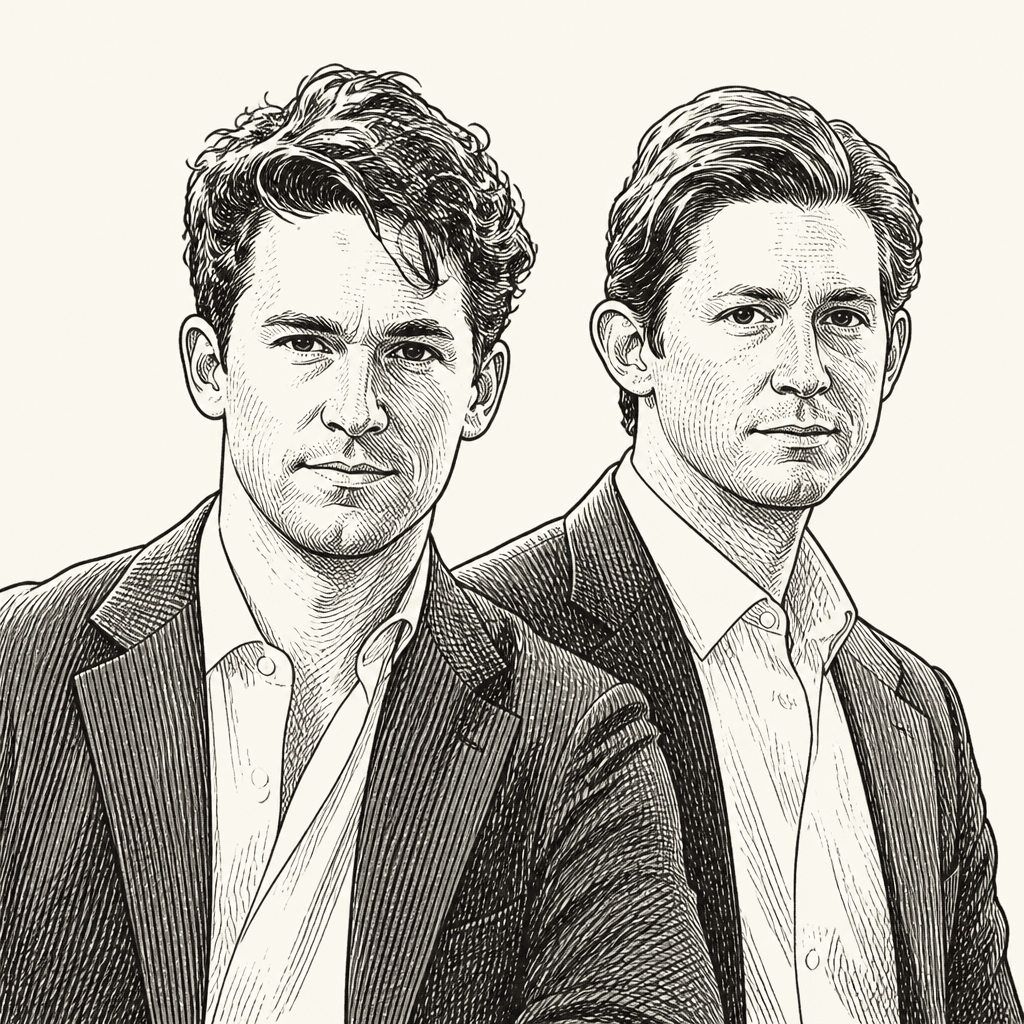
TBPN hosts John Coogan and Jordi Hays argue that the FCC’s restrictions on new Chinese humanoid robots may protect an emerging domestic industry, but cannot create the commercial demand or manufacturing capacity it still lacks. Their broader point is that control produces different trade-offs across the technology stack: hardware restrictions may give domestic producers room to build, while tighter access to frontier AI models can limit the smaller companies that need them even as it helps guard against distillation. eBay’s $56 million settlement over its harassment campaign against the publishers of EcommerceBytes, a blog critical of the company, offers a separate governance example of corporate power used to suppress criticism.

The robot restriction arrives before a domestic market has proved itself
The FCC’s new restrictions on imports of foreign-made humanoid robots, quadrupeds, and robot dogs arrive while China holds what John Coogan described as a commanding lead in the category. He cited estimates that China’s Unitree and Agibot each delivered roughly 5,000 humanoid robots in 2025, out of about 15,000 shipped globally. Tesla and Figure, by comparison, shipped only a few hundred each, if that. China is estimated to control about 85% of the global humanoid-robotics market, alongside much of the underlying supply chain.


The stated rationale, according to FCC Chair Brendan Carr, is to “secure America’s critical supply chains.” China has called the move protectionism. Coogan’s view was that both descriptions can be true: it is explicitly a protective restriction, but connected-device and infrastructure-security concerns are also real. The restrictions apply to new versions of the products.
A Weibo clip of a humanoid robot appearing to collide with or kick a child made the consumer-safety case look immediate, if not especially relevant to the policy itself. The hosts reacted with horror while acknowledging that this was not the FCC’s stated basis for the decision. Coogan said seeing the clip could make someone “up for some protectionism,” but added: “that’s not why this is happening.”
The more consequential point is that robots are being treated as a strategic category before a large installed American customer base has formed to oppose a ban. Coogan contrasted that with Chinese large language models. Companies that expect to reduce inference costs dramatically by using Chinese models have a direct commercial interest in resisting restrictions, as do cloud providers already earning revenue from them. With humanoids, there is no comparable constituency saying its existing business depends on Unitree hardware.
Jordi Hays said he did not want “100 million humanoid robots” operating in the United States if they were not built by an American company or at least a Western ally. He allowed that domestic robotics companies may have pushed for the rule, but argued that the geopolitical concern stands independently of any lobbying.
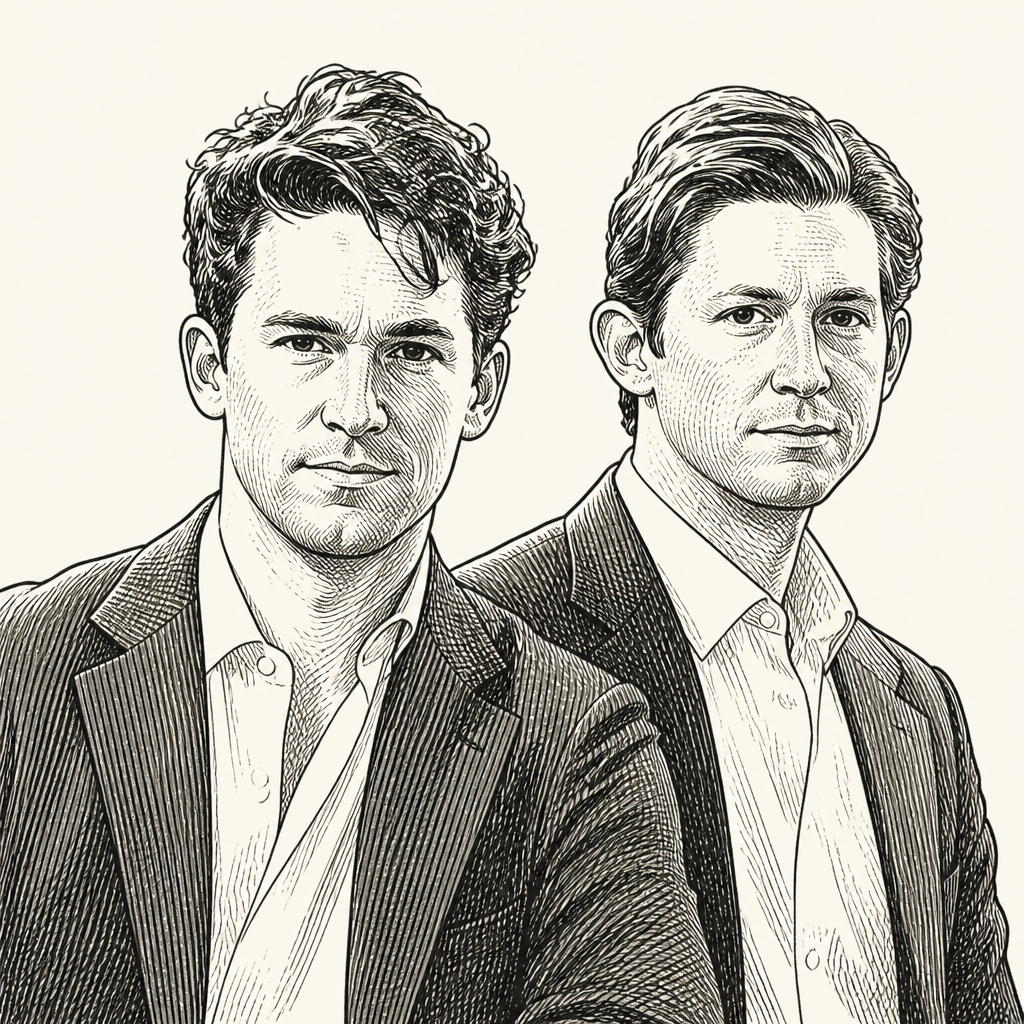

The harder question is where to draw the line. The United States has imposed restrictions around DJI, surveillance technologies, and Huawei’s role in 5G infrastructure, but the electronics supply chain remains deeply international. Home Wi-Fi routers may be Chinese-made, while Chinese suppliers provide motors, actuators, and batteries embedded in products across industries.
Coogan suggested Waymo as a possible model for distinguishing between components and control. He said Waymo sources nearly all the parts for newer vehicles from China while building them in the United States and retaining software control through Google, Alphabet, or Waymo. In that framing, the operative policy question is not whether every component originated domestically. It is whether the integrator can inspect, assemble, secure, and update the system well enough to maintain its own cybersecurity posture.
That distinction leaves several practical questions unresolved for humanoids. A U.S. manufacturer may be permitted to source components globally while retaining domestic software and system control. But researchers and companies will still need access to foreign products for benchmarking, particularly when competing abroad. Coogan imagined Tesla’s Optimus facing a Unitree system in a deployment contest in Germany: even if the Chinese product cannot be sold in the United States, an American company needs a way to understand what it is competing against.
Protection can create runway, but not commercial demand
The restriction may reduce foreign competition in the U.S. market, but Jordi Hays did not treat it as a substitute for a functioning domestic robotics industry. The central need, he argued, is profitable deployment: humanoids must become genuinely valuable in homes, workplaces, factories, and other settings. Tesla, Figure, and other well-regarded teams have already raised substantial sums. In his view, capital is not yet the binding constraint.
“The compelling teams” have raised from roughly $100 million to billions of dollars, Hays said. What they have raised so far are effectively “vibe rounds”—large financings based on conviction in the category. The next funding step depends on deploying that capital, proving commercial use cases, and then raising an order of magnitude more. A policy change may speed the market at the margin, but it cannot answer the fundamental question of what the machines will do well enough for customers to pay for them.
John Coogan worried more about the fragility of the American effort. He pointed to Elon Musk’s discussion of Optimus in a long interview with The Economist, then contrasted humanoids with the AI-model business. If xAI and Grok stopped training, he said, OpenAI, Anthropic, Meta, Google, and other well-financed labs would remain in competition to provide models, answers, and code generation. The capability would not disappear.
Humanoid robotics looks less redundant. Coogan compared the potential role of Musk’s capital and determination to SpaceX and electric vehicles. In his view, America might be materially behind in rockets without SpaceX, and electric vehicles might have been delayed by years without Tesla’s effort to force the industry forward. The same could be true for robots: a national champion may require exceptional capital, supply-chain construction, and organizational force.
The American humanoid robotics industry feels much more fragile in the sense that if you don't have this massive hammer of capital and will coming to bear, you could just wind up with it never happening.
Hays reduced the challenge to industrial scale: America needs to figure out how to make billions of robots itself.
The policy dispute has acquired a second layer: whether restrictions on Chinese robots are analogous to disputes over Chinese models, and whether firms that benefit from protected markets should face public obligations in return.
Dean Ball asked whether Silicon Valley figures who objected to limits on Chinese LLMs would be equally outraged by a ban on advanced foreign robotics. He also asked whether American robotics companies should be nationalized in exchange for what he characterized as a policy favor.
Will Manidis rejected the analogy. In a reply shown on screen, Manidis argued that a published FCC rule issued under statutory authority, with a waiver process and judicial review, differs from what he called an extra-legal regulatory “whisper campaign” meant to protect an employer’s interests. He said robotics companies would not need to be nationalized unless they also sought public infrastructure, preemption, federal debt backstops, and a protected market while calling themselves national institutions.
Ball pressed the distinction. If the United States explicitly banned Chinese LLMs under supply-chain-risk authority, he asked, would nationalization no longer be implicated merely because the action was formal rather than soft law?
Coogan did not settle the argument. He suggested the policy could make firms such as Figure more attractive in secondary markets, while observing that robotics financings have not generally appeared contingent on one regulatory approval or break. The industry’s underlying premise, he said, is that the United States will eventually want an indigenous robotics supply chain.
Zuckerberg’s case is for AI diffusion rather than concentrated caution
Mark Zuckerberg’s stated position is that the United States should accelerate AI development rather than restrict it, and that a fear-driven approach risks concentrating power in the hands of a small number of institutions. As quoted by John Coogan, Zuckerberg said it was surprising that the discourse among many AI builders was “so filled with doom.”
Zuckerberg questioned why anyone who believes AI will eliminate most jobs and much of humanity’s relevance would hurry to build that future. He also opposed the proposition that AI’s risks require an extreme concentration of power in the hands of supposedly responsible actors. Historically, he argued, hoping that absolute power will act benevolently has not produced safer or more positive outcomes.
His alternative was a historical argument about technological progress. Transformative advances repeatedly create fears that people will be left behind, Zuckerberg said, yet societies have emerged with more people sharing greater prosperity, health, and freedom. He said he expects AI’s abundance to be shared broadly as well.
Coogan read the essay as Zuckerberg firmly placing himself on the optimistic, abundance-oriented side of the AI debate. His rough interpretation was that someone who considers AI catastrophic should stop building it, rather than demand that everyone else stop too. Jordi Hays summarized the posture more bluntly: “Let me cook.”
That view runs against the mutual-pause or slowdown position Coogan attributed to an open letter signed by employees across OpenAI, Anthropic, Google, and other firms, including some Meta researchers. The disagreement is not simply over product strategy. It is over whether rapidly advancing capability justifies slowing development, and whether safety requires concentrating control among the institutions already at the frontier.
The contrast with robotics is important. The robot restriction is meant, in the hosts’ framing, to protect an emerging domestic production base and its supply chain. AI controls affect access to an already useful, general-purpose capability. Limiting hardware imports may create more room for domestic manufacturers to build and deploy; limiting model access can determine which companies are able to use frontier intelligence at all.
Distillation turns broad AI access into a control problem
Anthropic’s stated concerns about distillation, cybersecurity, and authoritarian uses of AI became the basis for a narrower disagreement: could a frontier lab simply identify and cut off customers who appear to be extracting its model’s capabilities at scale? John Coogan noted that Anthropic had clarified it was not advocating a complete ban on open source.
Chetan Puttagunta of Benchmark argued that Anthropic’s concern about distillation was puzzling. A company valued at roughly $1 trillion with substantial resources, he wrote, should find attacks at the claimed scale easy to detect. The cost, he suggested, would be giving up the associated API revenue.
Coogan was unsure whether detection is actually easy. Attackers can distribute activity across VPNs, accounts, intermediaries, and services that wrap frontier APIs. A direct API customer may not be the person ultimately generating the prompts. That produces a large, blended stream of ordinary and potentially adversarial activity.
Jordi Hays pushed back on the assumption of simplicity. Detecting distillation, he said, could mean finding a needle in “the biggest haystack of all time.” If it were trivial, his implication was, labs would already have solved it. He also doubted that suspected distillation activity accounted for a meaningful share of a frontier lab’s revenue.
Coogan added that not all useful training material comes from a detectable API attack. People publicly share prompts and outputs; he cited Matt Shumer uploading to GitHub a game made with Opus 3.5 together with the prompt. Any individual example may contain only a small quantity of tokens, but many such artifacts can be collected outside the lab’s visibility. A provider has no straightforward way to know that someone found and trained on a published exchange.
The policy implication cuts in an uncomfortable direction. If a lab adopts an aggressive internal enforcement policy—removing access whenever activity looks suspicious—it may need to make the model less available overall. That revives a complaint Coogan described from smaller companies: they cannot get access to the highest tiers of frontier intelligence and are left competing against major enterprises with privileged access.
The tension is not that broad access is inherently wrong, or that anti-distillation enforcement is impossible. It is that the two goals conflict. A model made widely available is harder to protect from extraction; a model protected through aggressive screening and restricted access becomes less widely available. Coogan’s framing was a whack-a-mole problem rather than a clean technical fix.
eBay’s response to criticism became a $56 million governance failure
eBay agreed to a $56 million resolution of claims arising from its role in a harassment campaign against David and Ina Steiner, whose EcommerceBytes blog had criticized the company. The allocations discussed were $48 million in compensation from eBay and former employees, $6 million to charitable organizations, and $1 million from Wenig to a free-speech charity in Ina Steiner’s name—a stated $55 million in allocations against the $56 million headline figure.
The campaign targeted the Steiners in 2019. Threatening deliveries included a box of live cockroaches, a bloody pig’s-head mask, and a funeral wreath. The Steiners also accused executives of online harassment, including posts inviting strangers to their home for sex and adult magazines sent to neighbors in the husband’s name. Employees traveled to Massachusetts, vandalized the Steiners’ home, and stalked them around their hometown.
The employees involved were fired in September 2019, according to eBay. Criminal charges followed in 2020, and seven employees received prison sentences ranging from one to five years. The civil lawsuit began in 2021.
John Coogan centered his reaction on the disproportion between criticism and response. Companies routinely receive negative coverage; the campaign made a relatively obscure industry publication far more visible than it would otherwise have been. He called it “the ultimate Streisand effect”: without the harassment, he said, he would never have heard of EcommerceBytes or its criticism of eBay.