Good Companies Fail When Governance Rewards Extraction Over Mission

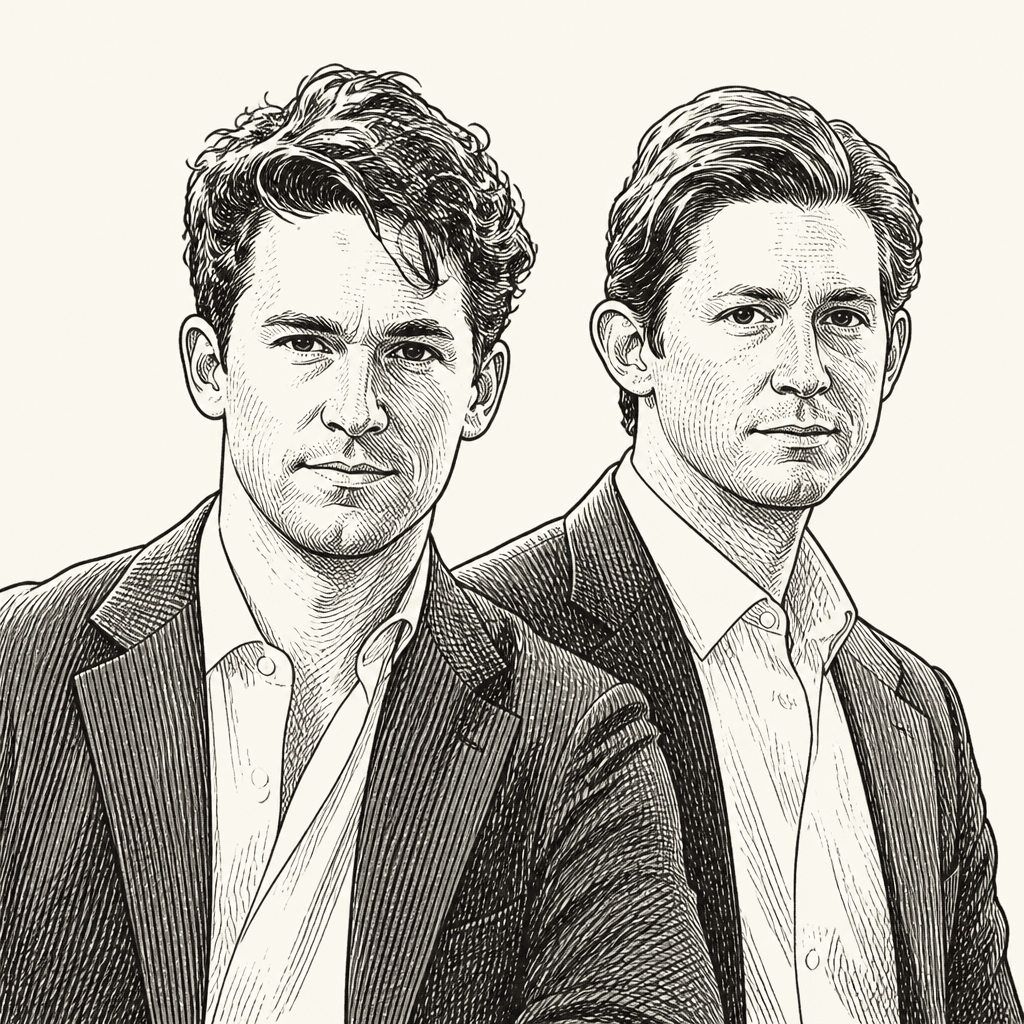

Eric Ries, author of The Lean Startup, argues in a TBPN conversation that strong companies are often undone not by lack of capital or ambition, but by governance, incentives and reporting systems that separate control from the mission that made them valuable. In discussing his new book, Incorruptible, Ries makes the case for mission-protective structures such as public benefit corporations, long-term trusts and employee ownership, saying durable profit depends on companies being built to resist extraction after founders and early cultures are gone.

The danger is not raising too much money. It is losing control of why the company exists
Eric Ries says the specific tactics in The Lean Startup have aged, but the core premise has not: uncertainty keeps rising, forecasting keeps getting harder, and technology keeps making it cheaper for more people to build products. In industries hit by both forces, he argues, the discipline of using resources well still matters.

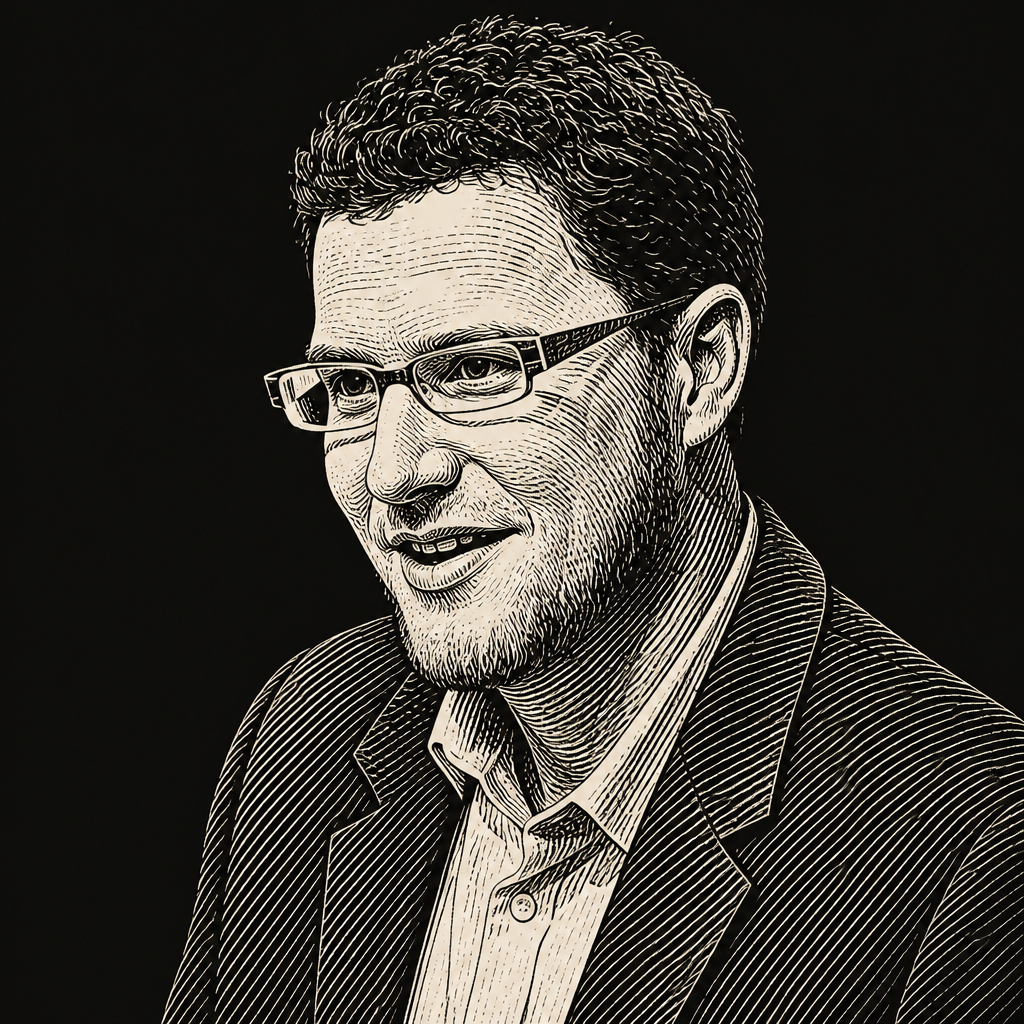
That does not mean every successful startup will look visibly “lean.” John Coogan pressed Ries on the contradiction of the current moment: seed rounds can reach hundreds of millions of dollars, while AI and software also make the mythical one-person billion-dollar company feel more plausible. Ries’s answer was that bubbles make the market “bimodal.” Companies outside the favored category struggle to raise, while money floods into whatever category has investor heat.


His objection is not to large balance sheets as such. He said he knows founders who raised money and then bragged that they never spent it. A fortress balance sheet can be rational. The question is whether the company keeps the ethos that made it worth funding.
Using resources well is an eternal entrepreneurial virtue.
The risk, in Ries’s framing, is that overfunding removes the pressure that forces a company to discover whether it is building something people want. The “reality” of constraint stops barking. It becomes easier to confuse capital availability, media attention, and internal momentum with product-market truth.
Jordi Hays described a newer kind of lean startup: a company that raises a lot of capital precisely because it was scrappy, grew quickly, and built something customers were willing to pay for. The problem, Ries said, is that once the money arrives, the company can lose “the thing that made it worth investing in in the first place.”
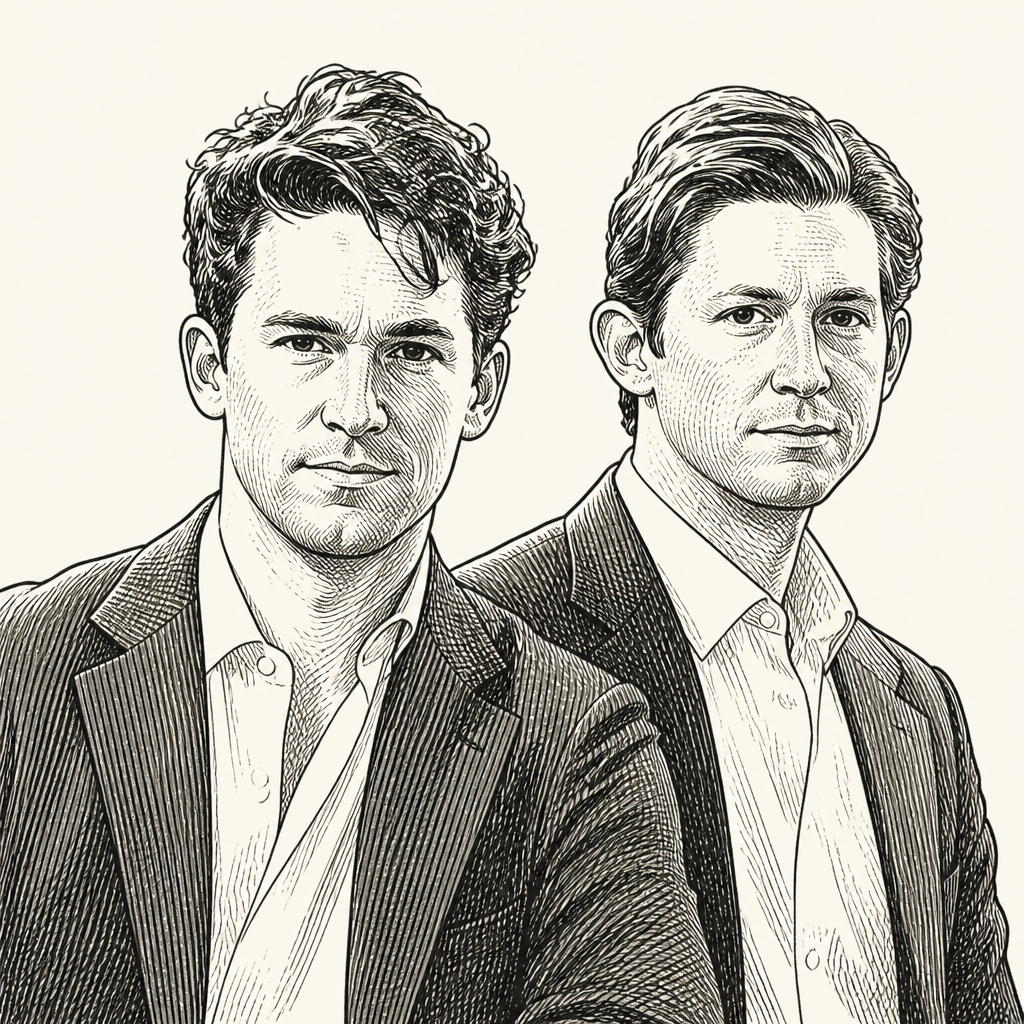
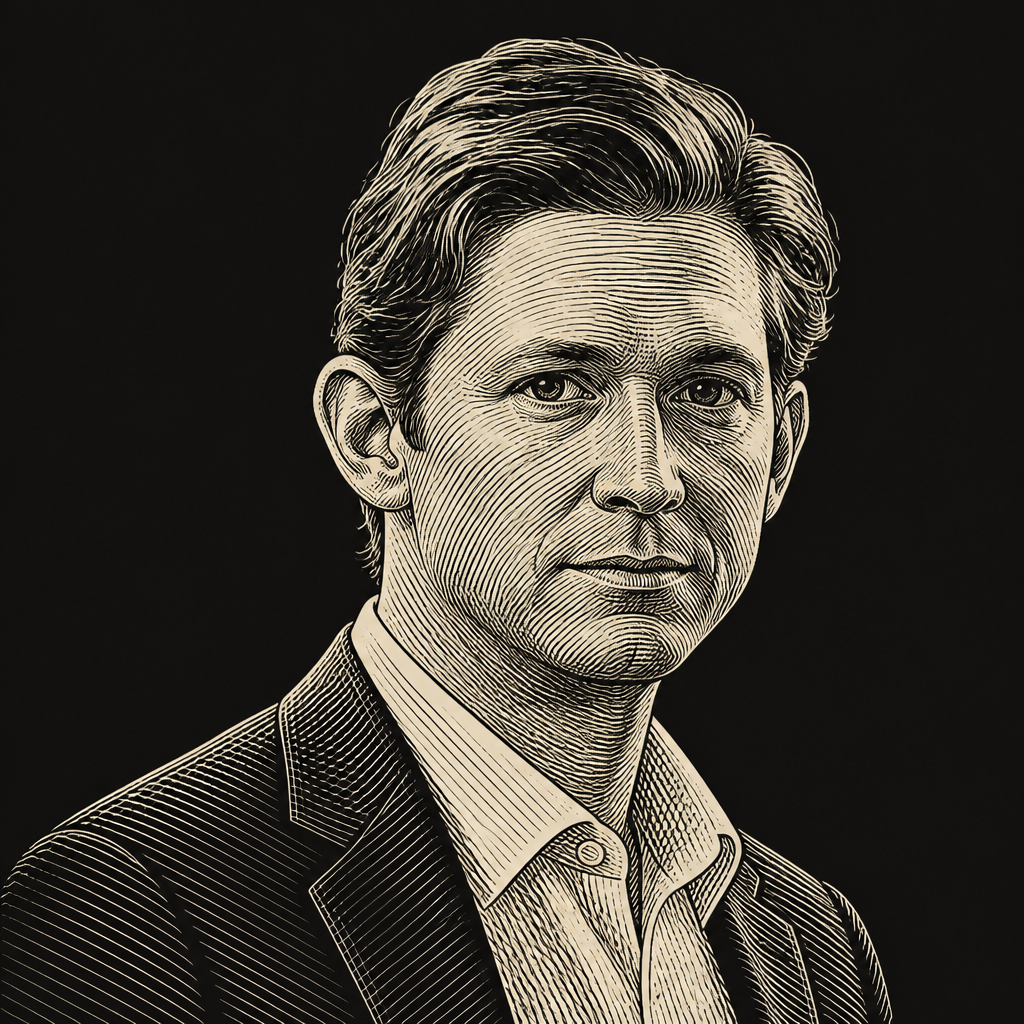
That led to the broader governance argument behind Ries’s new book, Incorruptible. Financial reports can show how much capital was raised, but Coogan noted that they often miss the more important control dynamics: a company that raised little money may have two venture directors and one founder on the board, while another may take $100 million without giving investors board control. Ries’s answer was that the governance question is not secondary paperwork. It determines who will be making the company’s future decisions.
If you don't get the governance of a company right, no other decision you make will matter in the long run. Because you won't be the one making it.
Ries is skeptical of both extremes. Founder control can produce what he called “hubris syndrome.” Investor-dominated control, in his view, produces a different failure: a financial system that exerts a gravitational pull toward mediocrity or worse. He compared the pattern to the parable of the goose that laid the golden egg: investors buy into a company because of what made it special, then pressure the company to remove that very thing.
The example that made the argument concrete was mundane: a beloved hotel that stopped leaving warm chocolate chip cookies and milk for guests after being acquired by private equity. Hays said the cookie barely affected the cost structure, but guests talked about it constantly. Removing it looked immediately positive on a spreadsheet. The brand and quality consequences were downstream, diffuse, and not assigned to the cost-cutter.
Ries expanded the point beyond private equity. The issue, he said, is an economy that rewards visible cost removal without holding decision-makers accountable for downstream brand and quality consequences. “How is it possible that the capital structure of a company has a flavor?” he asked. When someone says private equity bought a favorite restaurant or hotel, he said, the expected response is condolence, not optimism that new resources will improve it.
Quarterly reporting turns the report into the product
Ries’s critique of short-termism is not limited to private companies or acquisitions. Coogan raised the proposal to move public-company reporting from quarterly to semiannual disclosures, while also noting the tension: less frequent reporting may give CEOs more room to think long term, but it can also make the “closet where you hide the bodies” twice as large.
Ries said the tension is real. He also disclosed that the Long-Term Stock Exchange, which he founded, filed the petition to the SEC to switch from quarterly to semiannual reporting. His view is not that public companies should disclose less and call it long-termism. It is that the current quarterly system distorts what companies optimize for.
Ries cited natural experiments in other countries where reporting frequency changed in ways that allowed researchers, in his telling, to compare companies affected by the change with those that were not. His summary of that academic research was that quarterly reporting imposes roughly a 5% loss of total equity value compared with semiannual reporting.
The cost, Ries said, is not mainly the expense and annoyance of preparing quarterly reports, though he said those are real. The larger cost is behavioral. Once a company reports quarterly, leaders start running the company for the report. The quarterly report becomes the product.
In that mode, a company becomes what Ries called a “meme factory”: management asks what it needs to generate the report that will produce the desired market reaction, rather than what it needs to build durable products, customer trust, or long-term value.
But he rejected the idea that simply eliminating quarterly reporting would be enough. He wants quarterly reporting replaced with a “more fulsome disclosure project” that gives long-term investors a clearer view of what is actually happening inside the companies they own. In his telling, the present system does the opposite: companies are incentivized to reveal as little as possible, damaging the partnership between long-term companies and long-term investors.
Mission primacy is meant to replace shareholder primacy, not profit
A public benefit corporation, in Ries’s account, is not a CEO wearing two hats. He rejected the “double bottom line” or “triple bottom line” framing as too confusing. If customers want lower prices and employees want higher wages, he asked, what does a CEO do? In his view, that model leaves leaders compromising among stakeholders without a clear operating principle.
The more important point, he argued, is that corporations were historically incorporated to do specific things. The idea that companies exist only to maximize shareholder value is recent in his telling; he called shareholder primacy a product of the 1980s, not an ancient pillar of capitalism. “You will see trees that are older than this idea,” he said.
Ries’s proposed replacement is “mission primacy.” He was careful not to frame profit as dirty or incompatible with mission. He argued the opposite: profit, properly understood, is a “positive margin transformation,” a sign that a company is creating more value than it consumes. To make a profit, he said, should mean contributing to human flourishing.
A public benefit corporation, then, is not supposed to create two unrelated obligations. Ries described it as a legal tool that lets a CEO and board pursue long-term value creation when hostile investors push for a transaction or policy that may maximize immediate price but violate the company’s purpose. If an acquirer offers one dollar more per share but is plainly wrong for the mission, the PBC structure gives directors cover to say no.
The governance structure matters because, in Ries’s argument, companies that resist corruption are not just led by unusually principled individuals. They are built so the mission can survive pressure, succession, temptation, and capital markets.
The exceptions are evidence, not anomalies
Eric Ries said people often treat corporate decline as inevitable: companies get big, money corrupts, and mission fades. But the same people can usually name companies they still trust. His examples included Costco, Patagonia, Vanguard, the John Lewis Partnership, Hershey, and Novo Nordisk. Some are decades old; some are more than a century old. Costco, he noted, is a roughly $400 billion public company.
His claim is that these are not charming exceptions to ignore. They are a data set. And when viewed that way, he said, they tend to violate many of today’s supposed best practices for structuring and running companies.
The Costco discussion was the sharpest illustration. John Coogan raised the well-known story that Costco co-founder Jim Sinegal told then-CEO Craig Jelinek in 2008, “If you raise the effing hot dog price, I will kill you. Figure it out.” Ries said he had worried the quote might be apocryphal, so he contacted Costco PR, was put on the phone with Sinegal, and Sinegal confirmed it to him personally.
Ries also said Sinegal told him another story: if Costco raised the price of a dollar bottle of ketchup by three cents, it would sell the same number of bottles. Across the whole store, Ries said Sinegal estimated a 3% price increase could raise net income by 50% without losing sales. So why not do it? Sinegal compared that move to heroin: once the company takes the margin, it will take it again and again, until it is no longer the low-price leader.
| Example Ries developed | What Ries said in the source | How it served his argument |
|---|---|---|
| Costco | Ries emphasized its refusal to extract easy margin from customers, including the $1.50 hot dog story and the ketchup-pricing example. | Customer trust can be treated as a long-term competitive asset rather than a margin opportunity. |
| Anthropic | Ries described its public benefit corporation and Long-Term Benefit Trust governance, while stressing he was not taking credit for its success. | In Ries’s account, nonstandard governance can be used to protect mission without making founders the sole permanent guardians. |
| Mondragon | Ries described it as a network of worker cooperatives that appears externally like one large diversified company. | Corporate structure can be much stranger than the standard venture-backed template and still operate at scale. |
| Credit unions | Ries called them the closest large-scale U.S. analogue to member-owned alternatives and said they hold big banks accountable in interesting ways. | Alternative structures are not merely theoretical; they already shape competitive behavior in some markets. |
Ries argued that most people do not ask why the Costco executive wanted to raise the hot dog price, because the impulse feels normal. Business leaders are trained to raise margins wherever they can “get away with it.” Costco represents the opposite philosophy: margins can be a weakness if they signal that a company is extracting too much and inviting competitors. Ries connected that point to Jeff Bezos’s line, “Your margin is my opportunity.”
The broader economic argument is that trustworthiness can be a competitive strategy. Ries said several test readers of his book later told him they had identified business ideas they would not have considered before: categories where customers hate all the vendors because they are extractive, and where a company could compete by being trustworthy.
Nonstandard governance is already visible where the stakes are highest
Anthropic’s structure was not presented as a curiosity, but as part of a wider pattern: companies with unusually consequential missions often decide that standard governance is too dangerous. Eric Ries said he was one of the people Anthropic’s founders consulted when they were setting up the company’s governance after leaving OpenAI. He emphasized that he was not taking credit for Anthropic’s success and was not trying to attack OpenAI. The point, for him, was that Anthropic’s founders were worried about losing control of mission.
He described telling them his usual “litany” of founder loss-of-control horror stories, and said they could see why that risk would matter. Anthropic, in his account, did not want the founders personally to be the permanent guardians of the mission. That responsibility can trap founders in a stressful role. Instead, the company created a Long-Term Benefit Trust.
Ries likened that structure to a multi-branch government: a for-profit public benefit corporation with a board accountable to a second entity, the outside trust. He said the data shows companies with that structure are “something like five times more likely to live to year 50” and have stronger long-term value creation metrics.
He also said the major AI companies he saw represented at a Vatican event on AI governance all had nonstandard governance in some form. His inference was that they consider standard governance too dangerous for the work they are doing. In his vocabulary, these companies need someone or something to play the role of “mission guardian.”
The tension is that founders often do not learn about these options until after control has already been allocated. Ries called this pattern “always too early until it’s too late.” Advisors tell founders not to worry about mission protections yet: get customers, raise the next round, use the standard Delaware C-corp, sign the usual financing documents. Then one day the founder asks whether the mission-protection provision was ever implemented, and the answer is effectively: no, and now it cannot be done.
Corporate structure can be far stranger than founders are taught
Mondragon, the Basque worker-cooperative network, served as Ries’s most elaborate example of an alternative structure operating at scale. He described its origin after the Spanish Civil War, when a Catholic priest arrived in the devastated Basque region and pursued a vision of workers learning trades and controlling their economic destiny.
Mondragon began with industrial equipment and grew into a large diversified enterprise. Ries said he thinks it employs about 90,000 people in Europe and is one of Spain’s largest companies, making elevators, operating a grocery chain, and doing many other things. From the outside, it can look like a diversified industrial conglomerate. From the inside, he said, it does not resemble a typical for-profit corporation.
It is, in his description, a network of roughly 80 or 90 independent worker cooperatives. They share central services, send representatives to a congress, and can leave the network if they no longer benefit from it. Ries calls this kind of arrangement a “mission-locked constellation”: from the outside it appears to be one entity, while internally it is many coordinated entities.
Coogan’s challenge was why, if this is possible and legal, the United States has not produced more Mondragon-style counterparts. Ries did not argue that America needs to copy Mondragon exactly. Instead, he said alternative structures collectively control something like 5% of world GDP, and that the point is to make founders aware that these tools exist.
Ries described credit unions as the closest large-scale U.S. analogue. He said he thinks around 40% of American households have an account at a credit union. They are not-for-profit, member-owned financial institutions, and their existence holds big banks accountable in interesting ways.
The barrier, as Ries sees it, is not formal legality. It is professional pattern-matching. Founders who raise the idea with lawyers, bankers, and advisors are treated as naive: mission is nice, but first use the standard financing structure and focus on customers. Ries’s complaint is that this advice hides the moment when mission protection actually has to be built.
Japanese keiretsu came up as another alternative structure. Ries connected the topic to his original study of Toyota, since The Lean Startup drew from lean manufacturing. Toyota raised an unresolved tension for him: he was telling founders to build venture-backed companies and take them public while borrowing lessons from a company famous for long-term orientation. He said Japan itself has treated some of these structures as legacy institutions rather than something it still reliably creates.
His conclusion was not that all alternative structures are good. They are only good if what they protect is good. Whether the mission is lofty, like climate or multiplanetary life, or simple, like making high-quality products, Ries argues that a company with a real long-term purpose is implicitly revolutionary because the current economic system is designed to extract from such companies until they cannot stand up for themselves.
AI makes employee alignment more urgent, not less
Jordi Hays asked whether AI might force companies to revisit governance or ownership structures, especially as workers demand a greater share of AI-driven gains. Eric Ries answered with two claims.
First, he said the data on employee ownership is stronger than he had realized. Silicon Valley treats employee ownership as normal startup practice, but Ries said a large meta-study of about 55,000 companies found a dose-response relationship: 10% employee ownership is better than zero, 50% better than 10%, and 100% better than 50%. He said the benefits show up not only in employee welfare but in commercial outcomes such as revenue growth.
Second, Ries expects AI to change collective-action problems. He invoked an old Toyota Production System lesson: in a lean transformation, it is neither ethical nor effective to ask workers to help engineer their own firing. They will sabotage it, and they would be right to resist. Savings from productivity improvements should be used to grow the business.
Ries was blunt about CEOs who frame AI primarily as a layoff machine. If they truly believe AI is powerful, he said, they should be using it to gain competitive advantage, not simply to reduce headcount. Companies that see AI as existential will need employees as allies. That alliance, he argued, will be more powerful than the zero-sum leadership model encouraged by shareholder primacy.
He defined shareholder primacy, in practical terms, as the idea that companies should treat employees and customers as resources to be mined. His Costco example returned here: he quoted a Wall Street analyst criticizing Costco for taking money that “rightfully belongs to shareholders” and using it to improve the customer experience. Ries treated the criticism as a sign that the prevailing framework has become incoherent.
Ethos plus integrity is Ries’s formula for an incorruptible company
Jordi Hays raised Everlane’s acquisition by Shein as a case of a mission-driven Silicon Valley brand being swallowed by the kind of company it once seemed to oppose. He asked what a founder should do now if they want mission primacy but do not have a simple, one-click equivalent of Stripe Atlas for alternative governance.
Eric Ries said he is working on practical tools, including implementation guides, term sheets, and legal documents connected to the book. But his deeper advice was that founders should stop personalizing mission failure. He said he has counseled many founders whose companies were destroyed, who were ousted, or who felt betrayed. They often conclude they trusted the wrong people. Ries believes that framing hides the structural cause: the company was not built to withstand the force applied to it.
He reduces the work to two paths.
The first is the “path of ethos”: build the company operationally to stand for something. Ries quoted Sol Price, the retail pioneer behind the lineage that led to Costco, who described being a fiduciary to the customer. The founder has to answer: who would you rather die than betray? That answer should become part of the company’s management structure, business model, and culture.
The second is the “path of integrity”: create a company capable of making and keeping promises. That means structural integrity, not just good intentions. The company should be able to resist internal temptation and external bullying. If a buyer tries to acquire it on terms that violate the mission, it should be able to say no. If investors incentivize bad behavior, it should have the strength to resist.
The tools Ries named include public benefit corporations, board mission pledges, and long-term benefit trusts. They may require rejecting some standard governance practices. But in his view, a company that combines operational ethos with structural integrity is the company that can remain what it set out to be.