Situational Awareness Unwind Shows How Margin Calls Can Outrun a Thesis

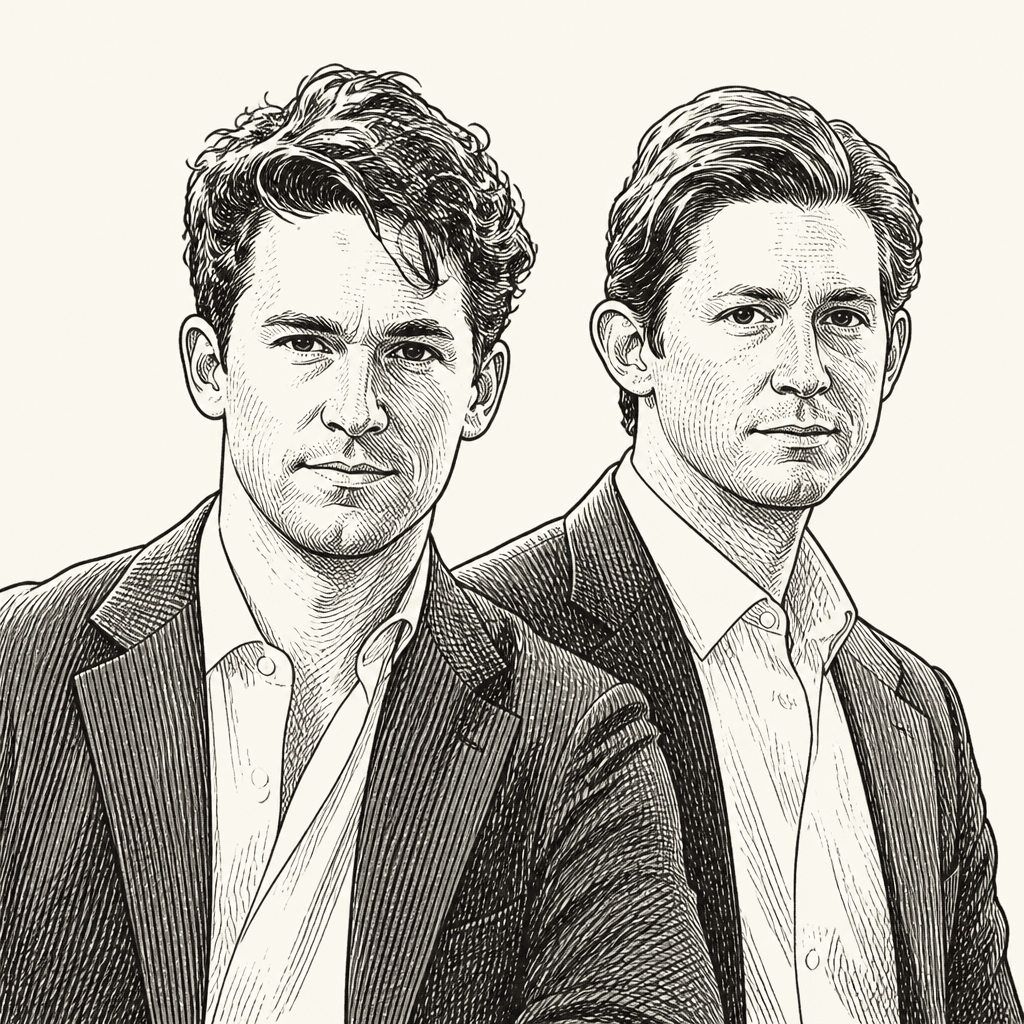
John Coogan and Jordi Hays argue that both a leveraged AI-infrastructure fund and Ferrari’s first electric vehicle must be judged by the structures that carry them to their intended outcomes. Coogan says Situational Awareness’s reported forced unwind does not necessarily invalidate its AI thesis, but shows how leverage and volatility can end a trade before it can play out. On Ferrari’s Luce, Hays questions whether meeting a reported sub-500-unit 2026 target proves commercial success, while Coogan sees its low-volume strangeness as part of its appeal to collectors.
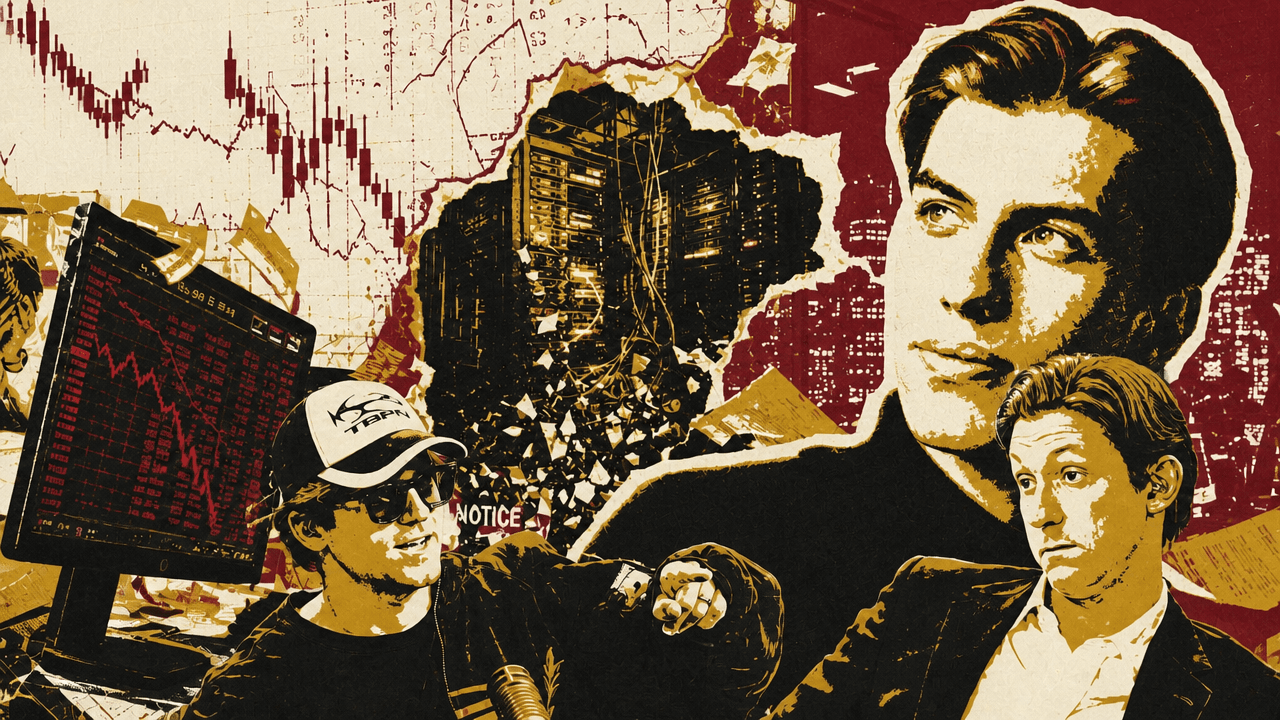
Leverage can end a trade before its thesis has time to play out
John Coogan framed the reported forced unwind of Leopold Aschenbrenner’s Situational Awareness fund as a distinction between having a thematic view and surviving the market path required to realize it. The fund had built concentrated public positions around AI infrastructure—including Nebius, SanDisk, Micron, and CoreWeave—while betting against software companies such as Adobe. Its premise, drawn from Aschenbrenner’s 2024 Situational Awareness essays, was that rapid AI progress would require an enormous buildout of chips, memory, power, compute, and related infrastructure.


Coogan said those positions had been hit as AI-infrastructure stocks fell sharply in recent weeks, before rebounding on Thursday. CNBC, he said, reported that Situational Awareness had been forced to unwind all of its public-stock positions after steep losses, while prime brokers moved to raise cash against margin requirements. The Wall Street Journal, he added, reported that Citadel had agreed to buy the fund’s publicly traded assets.
The hosts did not treat the event as proof that AI infrastructure will not matter. Their point was narrower and more consequential: a concentrated, volatile portfolio financed with leverage can lose the ability to hold a view before the view has had time to be tested. A thesis may remain plausible while the trade built around it becomes unfinanceable.
It really does not feel like, oh, Leopold was wrong about AI and the AI buildout.
Coogan named several possible contributors to the sell-off beyond a reassessment of AI demand: doubts about AI’s ability to create value, open-source competition, oil, inflation, and Federal Reserve policy. He noted that mortgage rates had reached 6.66%, which he described as a more-than-one-year high, even though the Fed left rates unchanged. He also said Citadel had reportedly expected a surprise rate increase and that three Fed governors had favored higher rates.
Those macro explanations did not resolve the immediate problem. For a leveraged fund, a drawdown is not merely a mark-to-market loss; it can produce demands for cash at the point when selling is least attractive. Coogan’s view was that a violent decline in an already crowded AI-infrastructure trade had collided with that constraint.
A capital raise can become a liquidation in hours
Jordi Hays compared the apparent speed of the unwind with FTX and Silicon Valley Bank. In each case, he said, there can be a short period of rumors and public reassurance before a funding or collateral problem becomes decisive. Leverage compresses the process.
Coogan contrasted that dynamic with venture investing. A private company financed with equity rather than comparable leverage can cut costs, shrink operations, extend runway, and attempt successive restructurings or fundraises. A venture portfolio can also absorb losses asynchronously: one company may deteriorate while another gains value, and assets need not all be sold into the same market moment.
The sequence described on air was abrupt:
- 9:25 p.m., WednesdayCoogan said Bloomberg reported that Situational Awareness was seeking to raise capital after the AI-stock rout.
- 6:05 a.m., ThursdayCoogan said CNBC reported that the fund had been forced to unwind all public-stock positions after steep losses.
- 8:39 a.m., ThursdayCoogan said the Wall Street Journal reported that Citadel had stepped in to buy Situational Awareness’s stock portfolio.
Coogan said a Financial Times report described limited partners receiving a message that characterized the sell-off as a buying opportunity and maintained that the investment thesis remained intact. That can be a conventional pitch during a drawdown: buying low is ordinarily the point. But it takes on a different meaning if additional capital is needed to meet margin calls rather than to add exposure at an attractive price.
A post shown from Richard Craib, whom Coogan described as the manager of Numerai, supplied the discussion’s most direct numerical framing. Craib wrote that it was “cool” that funds such as Situational Awareness could exist and find a market, but that the outcome was “never about being right or wrong on AI.” At roughly 150% volatility, he wrote, variance drag alone was about 113% annually and the risk of ruin over the life of the fund was roughly a coin flip.
The force of Craib’s point was that volatility compounds losses asymmetrically: a large decline requires a still larger subsequent gain merely to return to the prior level. At the volatility level he cited, Craib argued, that arithmetic can overwhelm the portfolio’s thesis, timing, and talent. Initial success and a margin call, he wrote, could be draws from the same distribution.
Coogan adopted the basic distinction. Losses severe enough to force liquidation, he argued, could be consistent with a broad AI-infrastructure story that remained credible. The practical difficulty is that first-principles views about model progress, token demand, or compute spending become less sufficient when a trade turns frothy. An investor may have a coherent model of chips, power, and data-center demand while lacking a way to predict whether a particular infrastructure stock will become a retail-driven meme-stock vehicle. Market psychology can become as important to a position’s survival as the original fundamental case.
Hays suggested that some limited partners may have understood Situational Awareness as a deliberately aggressive satellite allocation. He speculated that founders or investors already deeply exposed to AI could have placed 5% of a portfolio—or perhaps less than 1%—into a vehicle intended to be aggressively long AI infrastructure. For a large, diversified investor, he said, that can be a pragmatic choice. It does not protect the fund from the consequences of its own structure.
The terms of Citadel’s reported purchase remained unclear. Coogan pushed back on descriptions of a sale for “pennies on the dollar,” saying that phrase suggests something like a 5% recovery to him. He did not know the price and said it might instead have been closer to 50% or 80% of book value.
Ferrari’s first EV tests whether scarcity is a feature or a commercial shortfall
John Coogan treated Ferrari’s Luce as a different dispute over what a sales target can establish. Ferrari’s first electric vehicle, designed by Jony Ive, had reportedly reached its 2026 target despite a polarizing design and criticism from enthusiasts, investors, and former Ferrari figures.
The disagreement turned on the car’s unusual exterior and its commercial purpose. Hays liked the Luce’s interior but said footage of it on the road made the exterior look even stranger than static images did. Coogan, by contrast, said the design had grown on him, particularly in motion. The interior had always worked for him, but the exterior now looked better than it did in the initial images, he said, while allowing that familiarity might explain some of that shift.
Coogan said a Financial Times report had described Ferrari reaching its sales target on strong demand from China. Ferrari had not publicly disclosed the target, but two people familiar with the matter told the paper that it was just under 500 Luces for 2026. The target was reportedly reached earlier in July, around two months after the controversial launch. Coogan gave the price as €550,000, or roughly $650,000, and said Ferrari’s longer-term plan was to reach 2,500 units by 2030—roughly 500 a year over the following four or five years.
Ferrari had also instructed dealers not to force its traditional petrol-focused collectors to buy a Luce in order to receive allocations for more limited models, Coogan said. His shorthand for the policy was that a customer could buy a Luce if they wanted one, but should not be required to do so to get in line for an SP3, SP4, F80, or another special model.
Jordi Hays did not find the reported sales result especially surprising. Around 500 units, he argued, was closer to a base case than evidence of a major commercial breakthrough, because Ferrari already makes about that many of some particularly special cars. He expected a vehicle so different from Ferrari’s established sports cars to draw not only committed collectors but also incremental buyers seeking an electric daily driver with a Ferrari badge.
Hays also doubted that a Luce purchase could be entirely irrelevant to future collector allocations, whatever Ferrari’s stated guidance. He said collectors already buy cars they do not particularly want in order to demonstrate commitment to a dealership and improve their standing with the brand. Dealers will examine a client’s purchase history, he argued, and whether a client bought the Luce will inevitably carry some weight even without an explicit requirement.
For Hays, that matters because the Luce departs so sharply from Ferrari’s core identity. He argued that a car with potential brand costs should generate enough volume to make the rest of the lineup better, as the Cayenne did for Porsche or the Urus does for Lamborghini. If the Luce is neither a meaningful volume engine nor a source of broad incremental demand, then its distinctiveness does not justify the possible brand damage in his view.
Coogan thought the Urus comparison misunderstood the intended product. He did not see Ferrari trying to create a mass-market daily driver or change the shape of its sales curve. He saw the Luce as an iconoclastic collector object: a deliberately bold and strange Ferrari that happened also to be usable every day.
I think that they were trying to make a very iconic, very iconoclastic, very contrarian car that was bold and weird and different.
That interpretation gives low volume a different commercial logic. Coogan suggested that some buyers may want the Luce because it is Ferrari’s first EV and could become historically singular if the company were to cancel the program or avoid electric cars for decades. Others may want the complete Ferrari experience: SUV, front-engine car, mid-engine car, electric car, vintage car, road car, and track car.
Ferrari is not generally known for cars that are easy to use daily; in Coogan’s view, making a dailyable car is precisely what makes the Luce stranger, rather than more conventional. Hays’s objection was that strangeness can be expensive for a brand unless it opens a meaningfully larger market. Coogan’s answer was that the strangeness itself may be what certain collectors are paying for.