Nvidia’s Jensen Huang Succession Test Is About More Than Its Next CEO

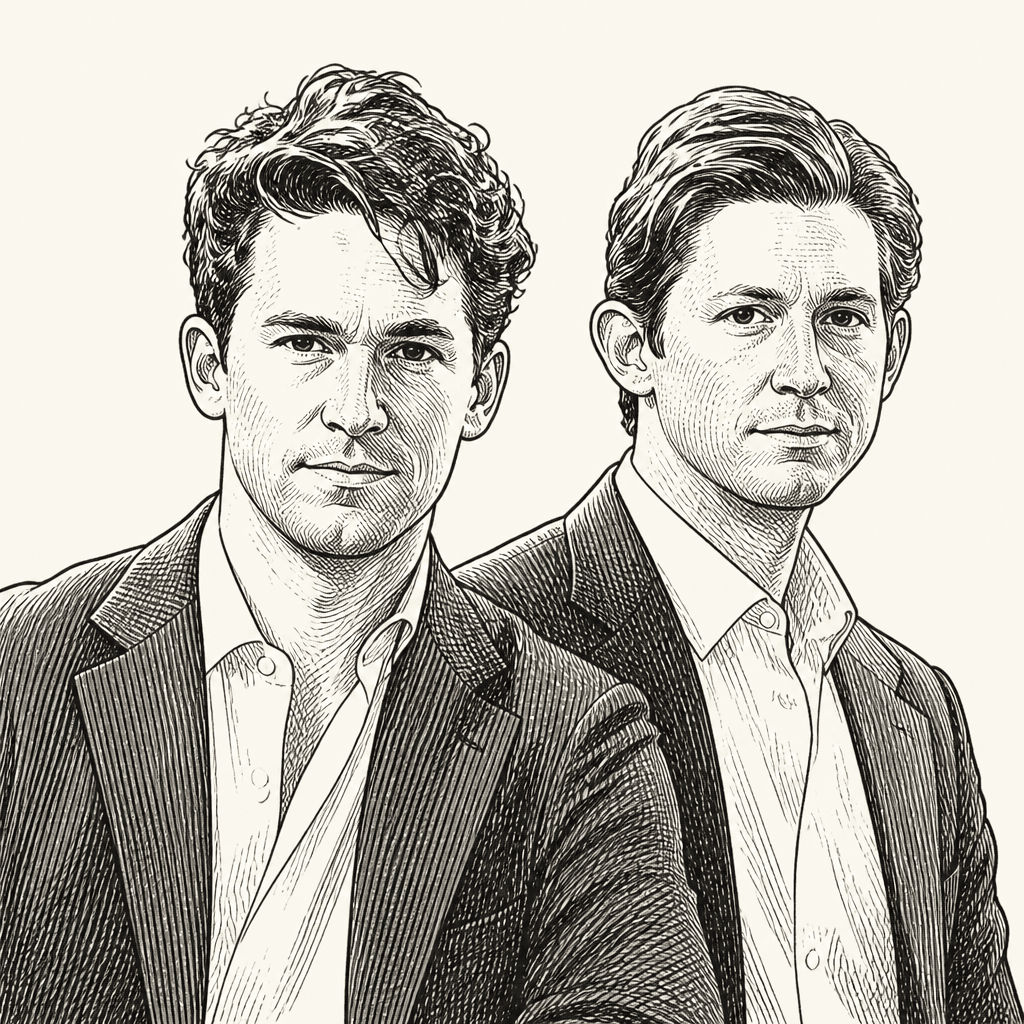
John Coogan argues that Jensen Huang’s reported departure from Nvidia raises a strategic question, not just a succession one: can the company retain its edge without Huang’s combination of technical judgment, dealmaking and authority to break internal deadlocks? Coogan said a more cautious, manager-led Nvidia could still grow quickly and generate strong cash flows, but may struggle to reproduce the founder-led approach he sees as part of its competitive advantage.
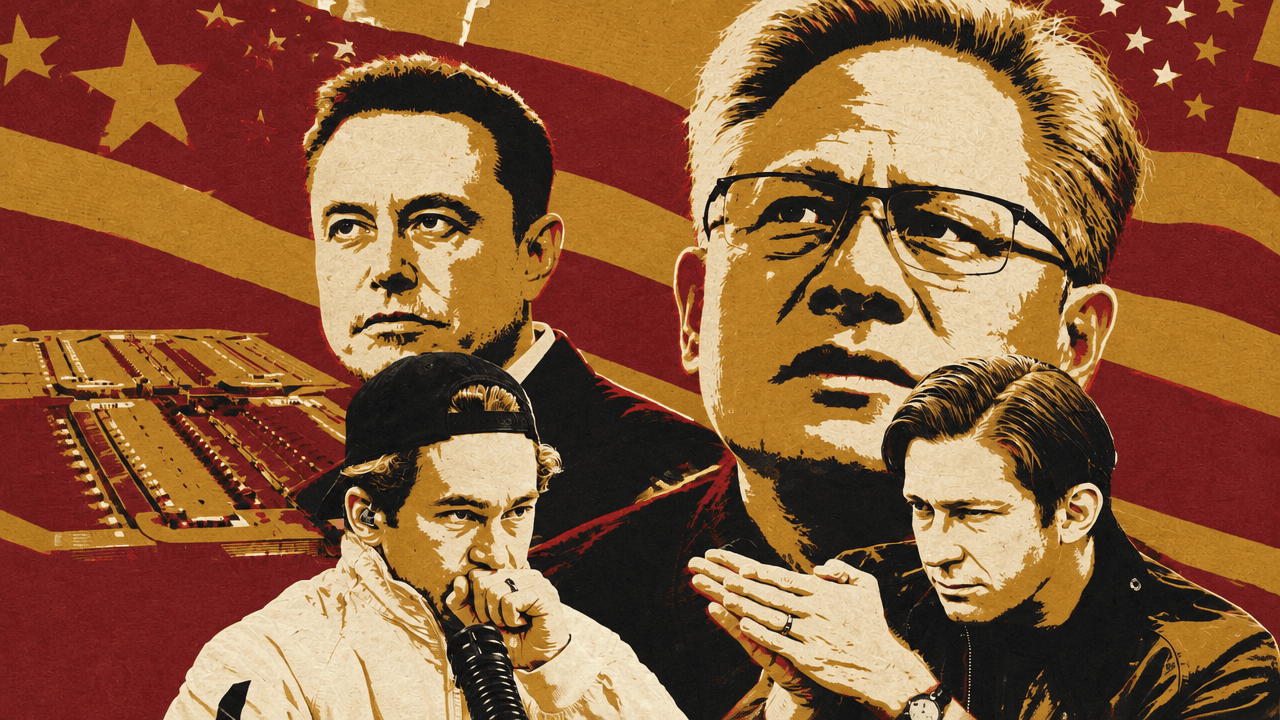
Nvidia’s succession question is about strategy as much as leadership
At a GQ Men of the Year event, John Coogan and Jordi Hays said they heard people in Hollywood treating Jensen Huang’s reported departure as a sign that AI was finished: an affair, in this telling, had brought down the machinery of technological progress. Coogan and Hays pushed back. They argued that the change could instead concentrate power among fewer companies, and that neither model development nor AI diffusion appeared to be slowing.


Coogan described the Huang story as a market-wide shock that had crowded out other technology news. Companies were delaying announcements because launches and funding news would struggle to get attention, he said. Anthropic’s planned model release, for example, had received less discussion than it might have in a quieter week. The story’s significance extended beyond Nvidia: it was affecting what other companies chose to announce and how much attention those announcements received.
The central uncertainty is whether Nvidia can preserve the combination of engineering judgment, aggressive dealmaking and decisive authority that the hosts see as part of its advantage. A Wall Street Journal report, as Coogan summarized it, said interim CEO Colette Kress had questioned some of Huang’s dealmaking. Huang had reportedly called her a “deer in the headlights” and said she was a reporting CFO rather than someone who could help define strategy or make decisions.
Coogan laid out two interpretations of that conflict. Kress may have been too cautious during a period of extraordinary growth, limiting moves that helped Nvidia expand its position. Or her concerns may reflect a more responsible approach to leverage and complex, circular deals—one that better serves shareholders at a highly profitable company. The question is not simply whether Nvidia can find someone to run the business, but whether it should continue running the Jensen playbook.
A more restrained, manager-led company could still grow quickly and deliver strong cash flows, Coogan said. He compared that possibility to Apple under Tim Cook: no longer the Steve Jobs era, but still a company capable of performing well. The alternative is that Nvidia loses capabilities that are difficult to replace. Huang, as Coogan described him, combined technical and product leadership with fast-moving dealmaking. His ability to assess technical teams may also have helped him move quickly on investments.
That combination helps explain the employee and shareholder reaction. Wired reporters Zoe Schiffer and Paresh Dave had reported that an internal suggestion-box post urging Nvidia’s board to consider employee sentiment before taking action had attracted more than 1,600 comments, several asking for Huang’s return. Coogan noted that Nvidia had about 42,000 employees. He also pointed to a public Instagram post from an Nvidia employee calling to “bring him back.” Hays said employees and shareholders could see reasons to want Huang back, including the stock’s performance and the possibility of a substantial discount without him.
The hosts discussed possible paths for Huang without treating a return as certain. Coogan thought returning to Nvidia was more plausible than Huang becoming an employee at SpaceX, but considered both unlikely. A more probable path, in his view, would be for Huang to leave the spotlight—perhaps investing, pursuing philanthropy, or starting something in an area such as robotics or space. He said he could imagine a path back if investigations produced no “smoking gun” and Huang had been selling Nvidia’s products within the letter of the law. A return had seemed difficult to imagine earlier in the week; by the broadcast, Coogan said, he could see a world in which it happened.
A founder can break a deadlock without doing every job
Coogan’s account of founder-led management was less about a CEO personally doing every job than about having the authority to settle disputes. John Coogan described Huang as having an unusually large number of direct reports and no one-on-one meetings, while acknowledging that the scale of Huang’s public appearances and other responsibilities made that picture difficult to take at face value.
The key function, Coogan suggested, is breaking committees. Senior executives make their cases; a founder who knows the people, their track records and their biases can make a call and move the organization forward. The decision need not require days of personal technical research. Even if the founder’s judgment is imperfect, Coogan argued, a quick decision can be valuable because the company stops circling and commits to a plan. The CEO takes responsibility for the outcome, giving the organization permission to proceed.
The benefit of this founder mode aggressive CEO is having that authority in the room to say, the buck stops with me. I’m going to be dragged over the coals if this doesn’t go right. So you take the pressure off, but we’re going with this plan.
That account helps explain the force of comments from other technology leaders. Shopify CEO Tobi Lütke wrote that there was “no replacing a founder like Jensen,” describing a successor-led Nvidia as a company run by custodians trying to preserve the founder’s flame. Other posts invoked the idea that technical organizations suffer when leaders without engineering or product backgrounds take over. Coogan’s qualification was that Huang’s successor would not merely need technical credibility: Nvidia’s dealmaking, which he called a real part of its moat, would also be hard to reproduce.
The counterargument embedded in the Kress reporting is that a company need not replicate its founder’s risk tolerance to succeed. A more restrained strategy might still work. The question is whether Nvidia’s scale and position depend on Huang’s particular combination of technical assessment, dealmaking and decisive authority—or whether the organization can retain its performance under a different operating style.
A story Coogan read from a post about Huang sharpened the dealmaking point. Huang had reportedly told cloud-computing CEOs about a soup vendor in Japan who refused to sell him a second serving because other customers were waiting and supply was limited. Huang’s lesson, as recounted in the post, was that the vendor understood how to preserve value and diversify his customer base rather than sell everything to one or two buyers. Coogan saw the anecdote as a metaphor for Nvidia’s approach: managing scarcity and customer relationships, not just making chips.
The TSMC leak exposed risks beyond production systems
A reported breach involving TSMC showed a different kind of technology risk. Hays said the leaked material came through an outside cloud provider that stored records on current and former employees. Listings on criminal forums offered 6.9 gigabytes of data, with the seller claiming it contained about 46,000 employee records and asking for three bitcoin—roughly $220,000—before threatening to release the data for free if it did not sell.
A sample reportedly listed 19 fields per person, including national identification numbers, addresses, bank details and emergency contacts. A post the hosts discussed said TSMC’s filing found no evidence that its own systems had been breached, and that the data was unrelated to production or customers.
That distinction does not make the leak harmless. Coogan pointed to potential identity theft and fraud, while Hays raised the risk of corporate espionage and the danger of making employees easier to target. The ransom’s relatively low price also makes the company’s position difficult: paying might not prevent another demand, Coogan said, while refusing could leave employees’ sensitive information exposed.
The Outlook outage lasted beyond a day, but its cause was unclear
Microsoft 365 services and consumer products were still reporting degradation during the broadcast, with some users able to log in but not receiving all their email. Hays said the outage had passed 24 hours. Tyler called it the worst Microsoft 365 outage he believed had occurred: a 2023 incident, he recalled, had lasted around five hours in the worst case.
The cause was unknown. Coogan asked whether the disruption might reflect an attack or an accidental production change. Tyler said he did not think it was a cybersecurity breach. Coogan floated increased load as another possibility, including a possible link to agentic software sending large volumes of email.
The practical effect was visible in one example the hosts cited: economist Tyler Cowen had said his university Outlook account was down and directed people to Gmail or Twitter. Microsoft’s status page, Hays said, was still reporting service degradation.
Blackwell claims raised questions about access and compute needs
The final technology thread concerned claims that several Chinese AI labs had trained newer models on Nvidia Blackwell chips, even though the chips in question were described as requiring a U.S. export license for shipment to China. A post by Will DePue presented a table that purported to identify GPUs used by models from DeepSeek, Moonshot AI, MiniMax and Ant Group by reading their published weights. The table listed several newer models as trained on Blackwell variants and said no export license had been reported.
Coogan said Dylan Patel had responded that the evidence was readily visible in public code, particularly for DeepSeek. DePue, Coogan said, was calling for the case to be made more explicitly through further investigation and analysis.
| Lab | Model | GPU listed by DePue |
|---|---|---|
| DeepSeek | DeepSeek-V3 | NVIDIA Hopper |
| DeepSeek | DeepSeek-V4-Flash and V4-Pro | NVIDIA Blackwell B200/B300 and GB200/GB300 |
| Moonshot AI | Kimi K2.5 | NVIDIA Hopper |
| Moonshot AI | Kimi K3 and K3.1-Pro | NVIDIA Blackwell GB200/GB300 |
| MiniMax | MiniMax-M2.7 | NVIDIA Hopper |
| MiniMax | MiniMax-M3 | NVIDIA Blackwell GB200/GB300 |
| Ant Group | Ling-3.0-flash | NVIDIA Hopper |
| Ant Group | Ling-3.1-flash | NVIDIA Blackwell GB200/GB300 |
Coogan’s broader point was that frontier-adjacent models may require less compute than the scale of U.S. labs suggests. U.S. labs need capacity for both training and serving their models, he said; open models may be served by other cloud providers, leaving more of a lab’s GPUs available for training. He also contrasted experimental training runs, which can fail, with distillation approaches that start from a more developed model and may require less compute to approach the frontier. He suggested the number of Blackwell chips involved could be far below hundreds of thousands, though potentially still worth billions of dollars.
That scale matters to two arguments at once. The alleged chip access would be a relatively small revenue issue for Nvidia, Coogan said, but a significant concern for people debating open-source AI and its ability to compete with leading models.