SpaceX, OpenAI, and Anthropic IPOs Could Reshape Public-Market Flows
 John Coogan
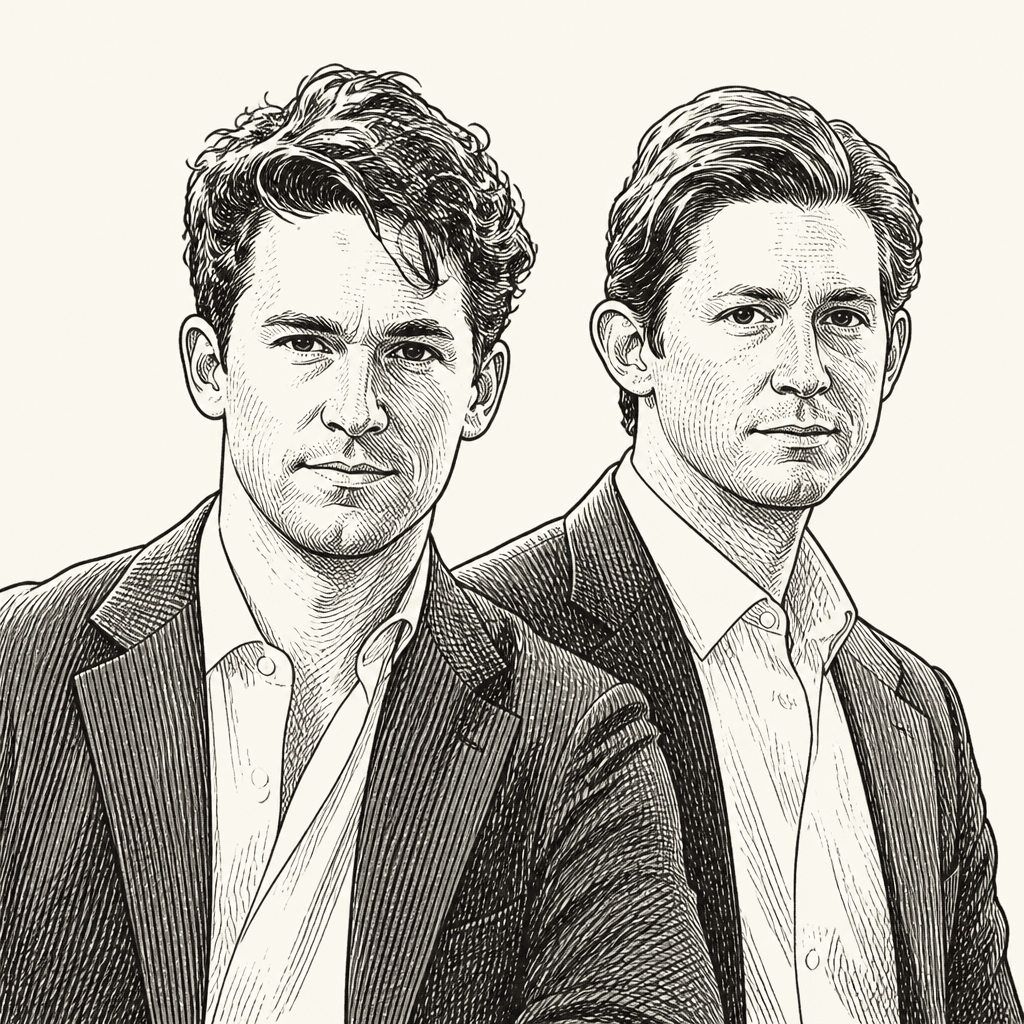 Jordi Hays
 Tyler Cosgrove
 Dan ShipperMatt Grimm
 James RogersTBPNFriday, May 22, 202628 min read
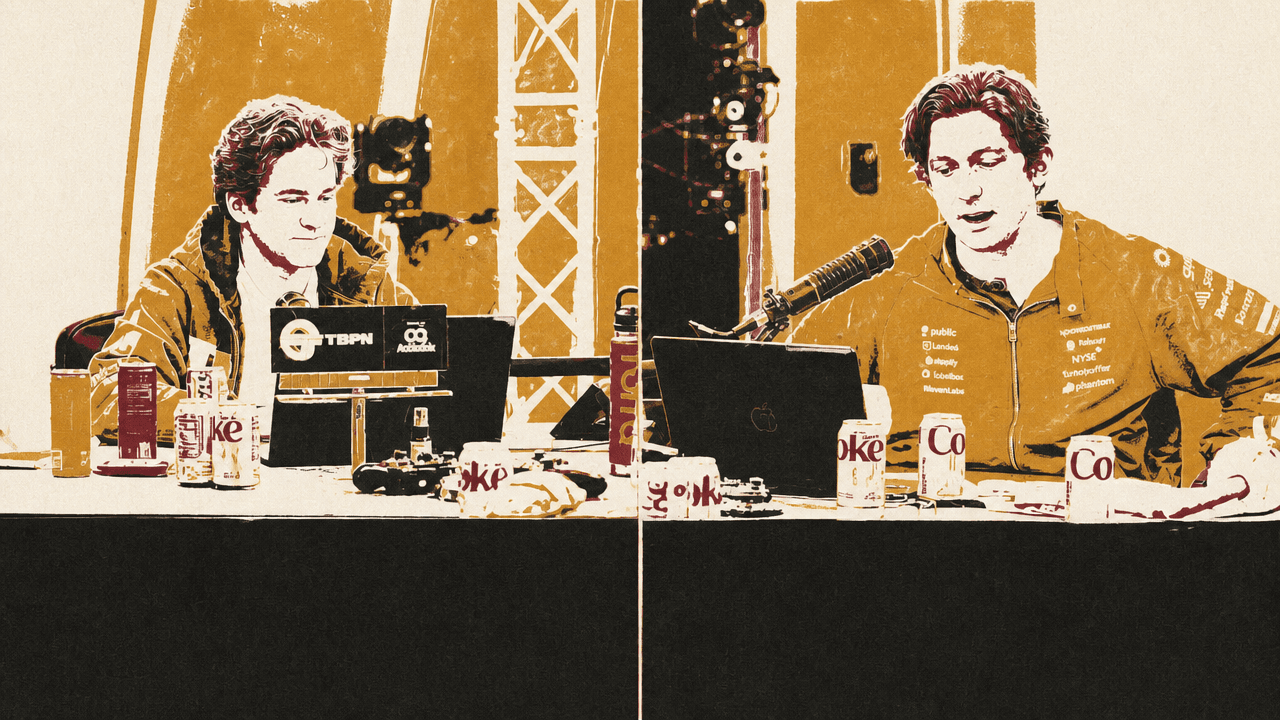
TBPN’s John Coogan and Jordi Hays argue that SpaceX, OpenAI and Anthropic are no longer just IPO candidates, but infrastructure-scale companies whose listings could move index flows while arriving after much of the frontier-technology upside has accrued in private markets. Across the discussion, they frame AI models, memory chips and agentic software as strategic infrastructure forming before public markets, regulation, costs and supply chains have settled around it. Apeel founder James Rogers gives the adoption-side warning: he says a regulated food-preservation product with real retail traction was driven out of U.S. stores by a suspicion campaign that exploited trust gaps in the food system.
The IPO window is reopening around three companies large enough to distort the indices
The week’s capital-markets story was too large for the phrase being used in the Wall Street Journal: an “IPO mini-boom.” The issue was not simply that a few companies were preparing to go public. It was that SpaceX, OpenAI, and Anthropic were being discussed as listings large enough to trigger major index flows, reset public-market language around the largest technology companies, and leave ordinary retail investors arriving after most of the private-market gains had already accrued.
John Coogan quoted the Financial Times’ front-page description of the three listings as “set to prompt an unprecedented wave of buying and selling” because new Nasdaq fast-entry rules would push the companies quickly into Wall Street indices. The effect, as described in the article, would be automatic passive buying into the new issuers and forced selling of rival stocks. SpaceX’s IPO, expected the next month, was described as potentially the largest on record. OpenAI was said to be filing IPO paperwork as soon as that week, with Anthropic also planning to float.

On screen, the Financial Times front page carried the headline: “SpaceX, OpenAI and Anthropic IPOs set to ignite Wall Street trading frenzy.” The Wall Street Journal opinion piece shown alongside it was titled “America’s IPO Mini-Boom,” with the subheadline: “Too bad SpaceX and others didn’t go public sooner, but they are a tribute to the U.S. capitalist system.” The visual contrast mattered: the Financial Times framed the listings as a market-structure event, while the Journal framed them as a vindication of U.S. capitalism.
The scale was the defining point. Tesla was trading around a $1.34 trillion market cap, Coogan said, and he found it hard to imagine SpaceX listing below Tesla. That created an odd taxonomy problem: Musk’s existing “Mag 7” public company could become smaller than his newly public non-Mag 7 company. “We’re going to need new terms,” Coogan said. “We’re going to need a bigger boat.”
The Wall Street Journal’s editorial line, which Coogan quoted, was more ideological. The listings were “a tribute to the U.S. capitalist system.” The Journal compared the current AI euphoria to the dot-com period and argued that the rush by SpaceX, OpenAI, and Anthropic to capitalize on favorable market conditions was evidence of a market dynamism no other country could match.
The counterpoint was that retail investors had missed most of the value creation. Coogan and Jordi Hays looked up Tesla’s market cap at IPO and landed on roughly $1.7 billion. Hays said a day-one IPO investor had effectively been able to get “1,000x” by believing early. That kind of public-market access is not what SpaceX investors are being offered if the company lists at or above $1 trillion.
The Journal’s defense of dual-class structures also became part of the argument. Government pension funds, Coogan said, were objecting that SpaceX’s structure would preserve Musk’s control by giving him more votes per share. The Journal’s answer was that dual-class structures are common enough — it cited Berkshire Hathaway and News Corp — and may encourage founders to go public because they do not have to surrender control. If pension funds dislike the structure, the Journal argued, they do not have to buy the shares.
SpaceX’s business mix complicated the familiar image of the company as principally a launch provider. Coogan said SpaceX foresaw $28.5 trillion in market opportunities, including data centers in space. His joke captured the inversion: “Is anything more bullish than the future just being enterprise software?” Hays extended the point in his own interpretation of the prospectus and coverage: the company’s story could be read as an AI company with a data-center business and telecom business, with launch becoming one line of a broader P&L.
Starship sat uneasily inside that interpretation. Coogan initially argued that Starship was only one piece of the puzzle, and that SpaceX could build a major business with the existing Falcon 9 cadence and Starlink’s run rate. Hays pushed back on optics: with an S-1 and IPO in the market, that day’s Starship launch carried unusual symbolic weight. The prospectus itself, Hays said after quoting coverage, listed Starship first among SpaceX’s risk factors. If SpaceX itself was identifying Starship as the lead risk, then the program was not merely a moonshot appendix to a data-center thesis.
On screen, a black-and-white image showed Starship standing on its launchpad with the Mechazilla catching arms visible, under the headline “SpaceX postpones Starship V3 debut.” Later, slow-motion launch-mount footage showed Starship engines firing, smoke and bright flame filling the frame. Those images carried the point Hays was making: at the moment SpaceX was being evaluated as a trillion-dollar public-market candidate, its most visible technical risk was also becoming a public spectacle.
The Starship V3 test had been postponed the day before because, according to Elon Musk as quoted by Hays, a hydraulic pin on part of the launch tower did not function correctly. SpaceX had fixed the issue overnight and was targeting Friday. The vehicle was described as 400 feet tall, redesigned for bigger satellite deployment and eventually Mars settlement and asteroid mining. Hays emphasized the Mechazilla tower and “chopsticks” as core to reusability and high flight cadence: thousands of flights per year require the ability to catch, restack, and relaunch without rebuilding infrastructure.
SpaceX had estimated in its IPO filing that it spent $15 billion developing Starship, with $3 billion in 2025 expenses. Its space division reported a $662 million loss. For Hays, that raised a comparison question: if SpaceX has launch, Starlink, and a developing data-center story, what do the economics look like for Blue Origin, a company founded in 2000 and pursuing a large rocket without the same apparent revenue base? He did not answer it, but the implication was that SpaceX’s losses only make sense alongside the breadth of its revenue opportunities.
A smaller but revealing debate concerned what counts as “early” in SpaceX. Coogan mentioned a PR firm that wanted to pitch an “early SpaceX investor” who had invested in 2019. Was that early for a company founded in 2002? Hays said yes if it was pre-Starlink as an understood profit center. “Early” in this case was less about calendar date than about return profile: if an investor entered at a decacorn valuation and exited around a trillion, that could still be a 100x.
The IPO mechanics also reached the bankers. An X post from Xtine Fang appeared on screen quoting a report that Goldman Sachs CEO David Solomon worked with staffers to message Musk directly on X while banks jockeyed to be “lead left” on the SpaceX IPO. Fang’s visible comment was: “Wow this is how you work for the bag @GoldmanSachs.” Coogan read the post as evidence that even the highest-status Wall Street roles were being pulled into Musk’s preferred communications layer.
AI is becoming strategic infrastructure before its rules, costs, and hardware constraints have settled
Three AI-adjacent stories pointed to the same tension: AI is increasingly strategic infrastructure, but the rules, costs, and hardware bottlenecks around it remain unsettled.
Politico had reported that David Sacks made an eleventh-hour appeal to President Trump to cancel an executive order that would have created a voluntary program for frontier AI companies to submit models to the government for review 90 days before release. Trump’s explanation, quoted by John Coogan, was that he “didn’t like certain aspects of it” and did not want to do anything that would interfere with the U.S. leading China and everyone else.
Coogan did not treat external model review as obviously foolish. Red-teaming, benchmarking, and outside eyes can be valuable. The harder question was who should do it. When an off-camera participant suggested that for people who are “super AGI pilled” these systems look like nuclear weapons and therefore ultimately require government involvement, Coogan asked whether anyone would seriously argue that nuclear weapons are too important to be regulated by government and should instead be controlled by a favored megacorp. The riff moved into Disney, EPCOT, and corporate trust, but the substantive point remained: if AI is analogized to nuclear weapons, the anti-government safety position becomes harder to sustain.
Another story began with an anonymous post claiming Microsoft had canceled internal Claude Code licenses because token-based billing made costs untenable. Coogan said the post had triggered extensive commentary, including Box CEO Aaron Levie using it to argue that token price optimization would become a prevailing trend for companies reliant on LLMs. But Coogan also pointed to a proposed community note disputing the cost explanation. The alternative explanation was that Microsoft wanted developers to use its own Copilot CLI — an effort to force the company’s engineers to “eat dog food,” as Jordi Hays put it.
Coogan accepted that logic. The reason Claude Code, Codex, Cursor, and similar tools improve is that the engineers building them use them all day. Forcing internal use of a shipped product, he said, is a tried-and-true way to make it better. The unresolved question was what the “dog food” is made of: Microsoft’s own interface could still be powered by GPT tokens, Anthropic tokens, or some internal harness built around frontier models.
Micron supplied the hardware bottleneck. The company had begun U.S. manufacturing of 1-alpha DRAM at its Manassas, Virginia plant. Coogan described it as the most advanced memory yet produced in the United States and placed it directly inside the agent boom: longer context windows and agentic workflows require more memory than back-and-forth chatbot interactions, contributing to an industry-wide memory shortage.
A lower-third graphic put the Micron headline next to public-market tickers: “MICRON STARTS US 1-ALPHA DRAM.” The market reaction was part of the story. Hays cited Micron at nearly an $850 billion market cap. Coogan said it was up 2% that day, 3% over five days, 246% over six months, and nearly 1,000% over the past year. The numbers were not treated as a stock pitch so much as evidence that memory had become one of the most visible bottlenecks in the AI buildout.
World’s Fairs once combined product launch, city strategy, and geopolitical theater
A Wall Street Journal retrospective on U.S.-hosted World’s Fairs raised a practical question about technological spectacle: what has been lost now that demonstration has migrated to company keynotes, CES, theme parks, museums, and the internet? The point was not nostalgia alone. World’s Fairs bundled inventions, consumer products, city branding, industrial policy, and spectacle in a way modern institutions rarely do.
Jordi Hays quoted the Journal’s description of fairs beginning in London in 1851 and giving countries a public platform to showcase technologies, products, and ideas that would reshape daily life. Host cities used them to project power. Paul Greenhalgh, a British historian cited in the Journal piece, said many of the major expos were commemorative, but they also “changed the shape of cities.” Hays compared them to the Olympics in that they were large-scale planning efforts and economic investments, not just cultural events. Chicago’s 1893 exposition, for example, helped redefine the city from a gritty second city into a cultural and architectural hub after it defeated New York for the right to host.
A sequence of historical World’s Fair photographs appeared on screen: a crowd moving toward futuristic structures including a sphere and spire, a huge Ferris wheel looming above fairgoers, an illuminated exposition ground at night, and ornate pavilion buildings packed with visitors. The recurring on-screen line was “World’s Fairs previewed the future.” The visuals made the retrospective’s core claim visible: the fair was a built environment, not merely a conference schedule.
The Philadelphia Centennial International Exhibition in 1876 offered the first major contrast between serious invention and consumer adoption. The two technologies John Coogan and Hays highlighted were the telephone and Heinz tomato ketchup. Coogan said the telephone was initially greeted skeptically before its importance became clear. The fair also showed Thomas Edison’s automatic telegraph and the typewriter. His imagined reaction from the automatic-telegraph inventor — launching just as someone else unveiled the telephone — captured the timing risk of technology: a real invention can be made obsolete at its debut.
Ketchup became a running joke but also revealed something about the fairs. They normalized the idea that private companies, inventors, and governments could present work side by side. Hays liked that model because it treated entrepreneurial culture, state ambition, and consumer products as part of one exhibition system.
Chicago in 1893 produced the Ferris wheel and popularized popcorn. Coogan and Hays found this less obviously transformative than the telephone, though Hays defended popcorn’s staying power. The name “Ferris wheel” also led them to George Washington Gale Ferris Jr., whose invention embedded his surname more successfully than Bell’s telephone or Edison’s lighting.
Buffalo’s Pan-American Exposition in 1901 was one of the more important entries. Though remembered largely because President William McKinley was shot there and died a week later, the fair was intended to showcase American dominance in electrical power and infrastructure. It featured electric lighting and electric streetcars powered by hydroelectricity from Niagara Falls, capturing the moment when electricity was moving from novelty toward utility.
St. Louis in 1904 became, in the hosts’ phrase, a “Cambrian explosion of snacking.” The Louisiana Purchase Exposition nearly obliterated the city’s finances, according to the article Hays quoted, but its pop-culture influence endured through ice cream cones, peanut butter, hot dogs, hamburgers, and cotton candy. The foods were not all invented there, but their widespread availability at the fair helped popularize them. Hays underscored the oddity that visitors also saw early X-ray machines, flying machines, submarines, and automobiles, yet the fair is remembered as a snack-food extravaganza.
Seattle’s Century 21 Exposition in 1962 shifted the frame to the Cold War. Hays said that, after Sputnik, the federal government became deeply involved because America needed to demonstrate technological leadership. The Soviets declined an invitation. The Space Needle was built for the fair, a fact Hays said he had not known. By then, World’s Fairs had become explicit one-upmanship and geopolitical rivalry.
New York’s 1964 fair at Flushing Meadows showed color television, AT&T’s Picturephone, and punch cards. Coogan called the Picturephone an early FaceTime. Hays noted that a three-minute call cost $16, which he translated to about $121 in present-day money, roughly $40 per minute. Coogan jokingly connected it to today’s token-cost debates: perhaps CEOs then were arguing that employees had to spend heavily on Picturephone usage to remain competitive.
The decline was blunt. The last officially sanctioned U.S. World’s Fair, New Orleans in 1984, produced no defining technological debut. Coogan said the functions of the fair had migrated elsewhere, and the concept gradually faded. The Journal’s line was that putting on an expo is a lost art, but when America needed it, no one did it better.
A revival would be difficult. Coogan mentioned a 2023 effort by Zach Dev and a discussion with World’s Fair co-founder Cam Wiese on Walt Disney, EPCOT, Dubai’s Museum of the Future, why the World’s Fair died, and why big in-person events matter. Hays was skeptical that a revival would avoid becoming a tech conference. Coogan agreed that modern technology companies have built narrower World’s Fairs of their own — Meta Connect, for example — but the internet, leaks, journalism, and iterative product release cycles make it unrealistic for an inventor to sit on the next paradigm for a decade waiting for Paris 2046.
The deeper loss, suggested by producer Tyler Cosgrove, was the word “inventor.” He said it was sad that nobody is primarily called an inventor anymore. Hays connected that to patents, disaggregated scientific work, and modern labels like founder or businessperson. Coogan said the term has become associated with scamminess; Tyler noted that a film titled “The Inventor” was about Elizabeth Holmes. The internet, Hays concluded, is now the World’s Fair: what once required traveling to a concentrated audience of people interested in inventions now happens when something goes viral.


Dan Shipper’s case for agents is not that humans vanish, but that work changes shape
Dan Shipper was asked whether he thinks of himself as an inventor. The term appealed to the 11-year-old version of himself, he said, but felt strange to use now because “inventor” still implies a garage workshop, springs, gadgets, and odd noises. His own identity is closer to the nominative determinism of his name: he tries to ship.


Shipper’s substantive update was his essay “After Automation,” written against the backdrop of a model step-change that he dated to Opus 4.5 in November and GPT-5.3 afterward. His claim was that delegation to AI agents is crossing from coders into the broader category of knowledge work. Claude Code, Claude Co-work, and now Codex have made agentic AI legible to people who had not been following the frontier closely.
Codex, Shipper said, had become his daily driver and was “totally changing” how he works. The important shift is not merely that models know more; it is that coding-style agents can use tools, gather data, and verify results in a traceable way. He gave the example of a tricky prompt asking for a Pokémon whose name ends in the two letters “E-R.” Older or cheaper base models can fail because of tokenization, much like the older “how many r’s are in strawberry” failure mode. But a coding agent can go to a Pokémon wiki, download names, put them into a CSV, write Python to check the last two characters, and return the correct answer with a visible trace.
That example mattered because it showed a move from memorization to procedure. Shipper argued that many people have not internalized that this is now possible.
Coogan connected that to recent labor-market comments by Dario Amodei and Ken Griffin. Dario, he said, had warned that AI could wipe out half of entry-level white-collar jobs. Griffin, according to Coogan’s paraphrase, had described extraordinarily high-skilled jobs being automated by agentic AI. Coogan’s own reaction was that even people close to AI still under-route tasks to models. He catches himself thinking he should ask a person for help, then realizes Codex or another model can do the work.
Shipper’s most concrete explanation for why Codex feels different was access. Whether or not one calls it “memory,” Codex is powerful for him because it can reach everything on his computer. When he published “After Automation,” he needed to decide whom to send it to. Instead of manually reviewing texts and emails, he asked Codex to identify people. It surfaced investors, journalists, and founders he had spoken with over the previous three months by searching his messages and email.
That capability complicates the simple automation narrative. Shipper said Every has automated everything it can, gives every employee an agent, and allows them to use as many tokens as possible. Yet the company has grown from four people to almost 30 since GPT-3. For him, that is the central puzzle: if a company is actually on the frontier, there appears to be more human work to do, not less.
As a company, we have automated everything that we can. Every single person has access to an agent, they have access to as many tokens as they possibly can use, and yet we’ve grown from four to almost 30 people since GPT-3.
Hays asked about the current fashion of mentioning AI in layoff announcements while simultaneously saying the business is better than ever. Shipper’s answer was to interrogate the metric. A company may have higher revenue, but that does not mean its valuation is anywhere near where it was one or two years earlier. If the market has massively corrected the company’s value, management will try to free resources, change momentum, or invest in new product areas. “Better than ever” may be true on one axis and misleading on another.
Coogan argued that companies should say that more plainly. Otherwise, AI layoffs become a bad look for technology as a whole. He cited Standard Chartered’s CEO saying AI would allow workforce reductions and using the phrase “low-value human work.” Coogan’s criticism was that the actual projection — a 15% headcount reduction by 2030 — could likely be achieved through normal attrition and slower hiring. In previous eras, companies sometimes froze hiring and grew into valuations without dramatic layoffs. Now, he said, layoffs can be presented as proof that a company is ready for AI, automation, and efficiency.
The job-versus-task distinction sharpened the issue. Hays asked how Shipper thinks about the difference: AI can clearly perform many tasks, but cannot perform most jobs, or cannot perform them reliably enough to replace the whole role. Shipper did not reduce the question to one answer. Instead, he moved to software markets.
Coogan asked about the “YouTubification of software”: if Hollywood declined as content creation democratized and small creators proliferated, could software follow? More niche products, fewer venture-backed companies required, and small teams using AI to build apps? Shipper agreed this is real but rejected the “SaaS-pocalypse.” Most people, he said, will not vibe-code their own apps on an ongoing basis. They may do it once, but maintaining software is hard and requires a skill set most people do not want.
That led to one of Shipper’s more precise predictions. He is “obsessed” with what he calls Codex-native apps. Developer tools like Claude Code desktop and Codex already include a collaboration environment where the agent and the human work together in an in-app browser, looking at localhost and iterating. Shipper thinks this pattern will generalize to knowledge work. He spends all day in Codex, opens a thread, opens a browser tab, enters documents or email, and works back and forth with the agent inside a SaaS app running within the agent environment. He described it as the most powerful thing he has used and predicted it would become a significant user-experience pattern across agent orchestration platforms.
The consumer-app objection — why use a vertical fitness app if ChatGPT can create a bench-press plan and adapt it after each workout? — did not worry him. He sees that behavior as training the customer. Chat is not a great medium for many app interactions, and power users who begin inside general-purpose AI tools will eventually encounter problems they want proper software to solve. His analogy was Excel: you do not get the SaaS boom without Excel teaching people how to use computers for business problems.
Apeel’s founder says the hardest market problem was not proof, but trust
James Rogers described Apeel Sciences as a company born from materials science, food waste, and a simple observation: fruit with a peel lasts longer than fruit without one.

Rogers came to UC Santa Barbara for a PhD in materials science after studying in Pittsburgh. His early research was on “solar paint” — a material that could be mixed in a bucket, applied, and self-assemble into a solar cell. The economics did not work, he said, but the underlying idea stayed with him: a material could be designed to build itself somewhere else.
The food-waste insight came after he learned that hunger was not simply a matter of insufficient food production. Rogers said the world already grows about twice as much food as needed to feed everyone, but throws much of it away because it spoils. His mother’s first response to the Apeel idea was affectionate skepticism: he did not know anything about fruits and vegetables. Rogers’ answer was that he had learned materials science and could learn produce.
He started with a list of fruits and vegetables ranked by how long they last. Raspberries, blackberries, and strawberries were near the short-lived end. Mandarins, oranges, and grapefruits lasted much longer. The obvious difference was a peel. The company name came from putting those words together.
The scientific question was what peels are made of. Rogers said fruit skins are made of plant oils, and the striking discovery was that long-lasting citrus skins and short-lasting strawberry skins contain the same kinds of materials. That led to the central question: if lemons last a long time and strawberries have the same fundamental skin components, can you add more of those components to strengthen the peel?
The company’s earliest funding came from a UCSB new-venture competition, around $10,000. For Rogers, whose graduate-student salary was $24,000 a year, that was meaningful enough to incorporate the business. Its first address was on Del Playa in Isla Vista. He could not prove at the outset that strengthening a peel would work, but he also could not find a reason it would not. The early work was research, measurement, and eventually the need to test.
Even testing was harder than it sounded. If Apeel treated an apple, waiting a month to see whether it lasted longer made iteration painfully slow. The company built time-lapse camera systems to see tiny changes. Rogers also learned that buying two pieces of fruit from the same grocery-store bin is not a controlled experiment: they might come from different countries, orchards, or trees. Eventually, he said, they had to compare fruit from the same tree.
Rogers used apples to illustrate how hidden the supply chain is. The average apple eaten in the United States, he said, is about a year old; if one eats an apple in July, it is effectively near its first birthday. That led to one of his larger critiques: “farm-to-table” hides the “to.” The farm and the restaurant table are visible, but the intervening system may include long refrigerated supply chains, pesticides, fumigation, storage, and a consumer who thinks the produce is fresh off the tree.
The initial business model ran into incentive problems. Rogers thought that if food lasted longer, more of it would reach people. But some supply-chain actors told him, in effect, that they did not want food to last longer. “The garbage can is my best customer,” he recalled as the logic: every piece a consumer throws away is another piece that can be sold.
Apeel’s first customer came through a local farmer growing coffee cherries. Rogers had not known that coffee beans are inside coffee cherries, leaving behind plant material after processing. The farmer asked whether Apeel could help with finger limes, a micro-citrus used in restaurants that looks like caviar inside and lasted only about five days. Apeel extended that to about 20 days, Rogers said, allowing the farmer to ship by truck rather than air freight to places like Chicago and New York.
The path to scale was not smooth. Rogers said a demonstration with a large citrus company appeared successful by Apeel’s internal data, but the company reported back that Apeel’s product did not work. Rogers would not directly say the company lied; he repeated that their data did not match Apeel’s data. The result, he said, was that Apeel was nearly blocked from the U.S. market because the produce industry is small and tightly controlled. The company had to go to Europe first.
Europe wanted the product. Rogers said retailers there were looking for ways to reduce waste and provide healthier produce. Apeel started with avocados because the consumer problem was obvious: “not now, not now, not now, now, too late.” Retailers liked the product because if they bought an avocado and could not sell it, that was waste on their own books. Suppliers disliked it because retailers had to pressure them to adopt a new operational step.
By 2019 and 2020, the model was working. Apeel had raised around $100 million by then. Rogers described an Andreessen Horowitz fundraising demo in which the company used its entire world supply of plant extract to treat a case of avocados sent ahead to the firm. By the time Apeel met with Marc Andreessen, the avocados were intended to show the effect.
Scaling the supply chain required moving from laboratory extraction to industrial processes. In the beginning, Rogers said, it cost roughly $100 to treat an avocado, which obviously could not work commercially. Once the company understood the mixture of plant oils, it could use precision distillation to isolate them efficiently. Rogers described it as the same general principle as separating alcohol: pull a vacuum, heat the material, and separate specific oils. The process became scalable and cheap.
The consumer trust attack came after the product had real distribution. Rogers said that at one point roughly 60% of avocados sold in the United States used Apeel’s product. The company then announced a first-of-its-kind partnership with a lemon supplier who said publicly that the product was amazing and he wanted to treat every lemon in the world with it.
The backlash began with confusion — or, as Rogers later came to believe, deliberate exploitation — around another company with the exact same name that sold a cleaning product in the U.K. Two Facebook posts, he said, went live at the same time calling Apeel toxic and linking to the cleaning-product company. Rogers emphasized that there was no shared ingredient issue: it was a totally separate company and a totally separate product.
Apeel tried to correct the confusion by explaining that the cleaning product and the plant-based food coating were unrelated. Then, Rogers said, the attack morphed. Since critics could not find something wrong with the product itself, the narrative became that Apeel was a Bill Gates company. The basis, according to Rogers, was that Apeel had received a $100,000 grant in 2012 to research cassava root, followed by a $1 million grant for the same project, from a foundation Gates donates to. Rogers said he has never met Gates, Gates has no board seat or involvement, and Apeel has raised about $800 million overall.
The cassava work, Rogers said, was research on a starch source in sub-Saharan Africa, not a commercial product the company sells today. But online, he said, searching Apeel’s name still turns up claims that Bill Gates is Apeel. The company initially thought people were simply confused. Then the posts kept changing slightly, new images appeared, and the allegations evolved. Apeel began mapping accounts, timestamps, and repost patterns. Rogers concluded it was coordinated.
That remains Rogers’ claim, not an independent finding presented by the article. What he described was the company’s own reconstruction of a campaign: account mapping, timing analysis, repost patterns, and a shift in narratives from the cleaning-product confusion to Gates-related allegations.
The business consequences were severe. Real people were activated to call Apeel’s retail customers in the United States. One by one, Rogers said, every U.S. retail partner dropped the company. The “boulder” the company had rolled uphill for a decade rolled back down. He had to lay off hundreds of people. The entire U.S. business went to zero around 2024, after accounts began to fall away in 2023.
A rebrand was unattractive because Rogers believed the attacks were not organic confusion; if the company changed names, attackers would follow and the move would look like running. Removing consumer-facing branding also cut against Apeel’s original ethos: people should know what is on their food, and if they knew, they would prefer Apeel. But the U.S. episode forced a painful recognition that transparency alone does not defeat a coordinated suspicion campaign.
The damning thing about this for innovators is they don’t have to change people’s minds about what your product is. They just have to make them suspicious.
Rogers stressed that Apeel had regulatory support. Coogan noted that the U.S. FDA had given it a clean bill of health. Rogers added that the European Union had also approved it, and described the EU as among the strictest regulatory systems in the world. He said Apeel’s product has no upper daily intake limit and can be eaten as food. It is made of plant oils, with ingredients already found in things like avocado oil and coconut oil. In the avocado case, he noted, consumers are not even eating the skin being treated.
His broader food-system argument went beyond Apeel. Organic certification, he said, is marketing. It does not mean no pesticides, no coatings, or necessarily better for the consumer; if organic marketers said those things explicitly, he argued, it would be false advertising. He also argued that if consumers do not know the person growing their food, the grower has weak incentives to do the right thing. If a pesticide-coated lemon is cheaper and visually indistinguishable from a better one, the market rewards the cheaper product.
Today, Rogers said, Apeel’s business remains strong outside the United States. He called it dystopian to walk into a grocery store in South America and find Apeel products, then walk into a U.S. grocery store and see waxes and pesticides instead. To him, food is the industry where technological progress is being blocked most visibly, even though consumers spend heavily in the category and food is central to daily life.
He is not only waiting for institutions to fix it. Rogers said the internet “kicked our ass,” so he has begun asking the internet for help. He has been offering bounties on Fridays for people to help trace the origins and mechanics of the campaign. He thinks AI and small financial incentives can mobilize thousands of people to investigate accounts, repost patterns, and comment manipulation.
His theory of social-media persuasion is that many users do not form an opinion from the post itself. They scroll, see something, click comments, and read the first few reactions. Whoever controls the early comment layer can hijack perception. Hays connected that to manufactured engagement he had seen in AI discourse, where posts had like ratios and comment patterns that did not look real. Coogan’s summary was simpler: “It’s not real.”
For founders, Rogers’ lesson was not that every attack can be predicted. Apeel began in 2011 and 2012, before today’s social-media dynamics. A trademark search would not have prepared him for claims that Bill Gates owned the company as part of a depopulation agenda. But, he said, it should now be on every founder’s list of possible attack vectors, especially if the company threatens an incumbent industry.
The late notes were smaller, but they pointed back to China, rates, and human augmentation
The final run of items did not carry the weight of the IPO, AI, World’s Fair, Shipper, or Apeel threads, but it supplied context for the title’s “Big China Moves” and for a few live market and hardware obsessions.
Coogan mentioned that “Worsh” had been sworn in that day and said he had seen predictions of both a cut and a hike, though the market appeared to be pricing a rate increase rather than a decrease. His framing was that with the economy heating up, a hike might be in order, and any move would have knock-on effects. The discussion did not develop into a full monetary-policy analysis.
The hardware aside was the Hypershell X Ultra S, an exoskeleton reviewed by the Wall Street Journal. Video showed a woman wearing the device while running uphill on a coastal trail near the Golden Gate Bridge. A WSJ screenshot described motors around the hips powering carbon-fiber arms that push and pull the wearer’s legs, with AI trying to detect movement. Coogan said he had listened to Palmer Luckey talk enough about Iron Man suits potentially ripping people apart that he would be nervous, though he might try it. Hays imagined a darker failure mode: a bad actor taking over the suit and forcing embarrassing movements.
The China notes came through CATL and BYD. Coogan briefly said the Chinese EV battery giant CATL was investing in “deep sea” activity, though the item was not unpacked. The more legible item was BYD. An on-screen Financial Times post said: “BYD is accelerating talks to enter Formula 1 after a meeting with former Red Bull Racing chief Christian Horner in Cannes.” Coogan connected that to AI 2027’s prediction that BYD would get an F1 team, saying that appeared to be happening, at least in talks. He then asked whether BYD had gas-powered internal-combustion engines. Hays answered: “They’re about to. Who knows.”
The segment that could have become a defense-tech discussion never did. Matt Grimm was scheduled to join from the Murph Challenge, and a live remote feed showed him outdoors in a weighted vest, holding a clipboard and microphone, with a lower-third identifying him as Anduril’s co-founder and COO. The hosts could see him, but the audio did not work. Coogan texted him to “rant,” Hays noted that it looked cold and rainy, and the hit was rescheduled. The material fact was the failed remote, not a substantive exchange with Grimm.