Creator Businesses Are Sorting by Cost, Distribution, and Control
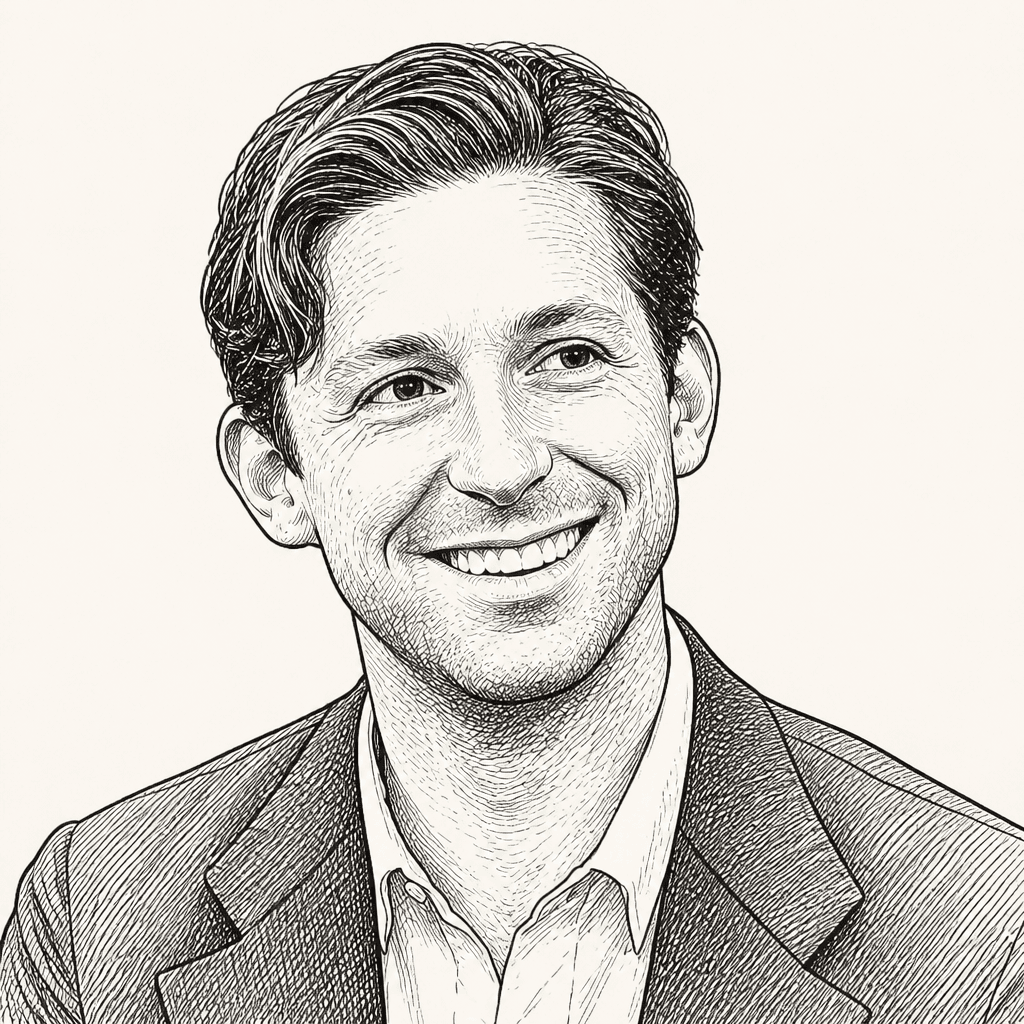

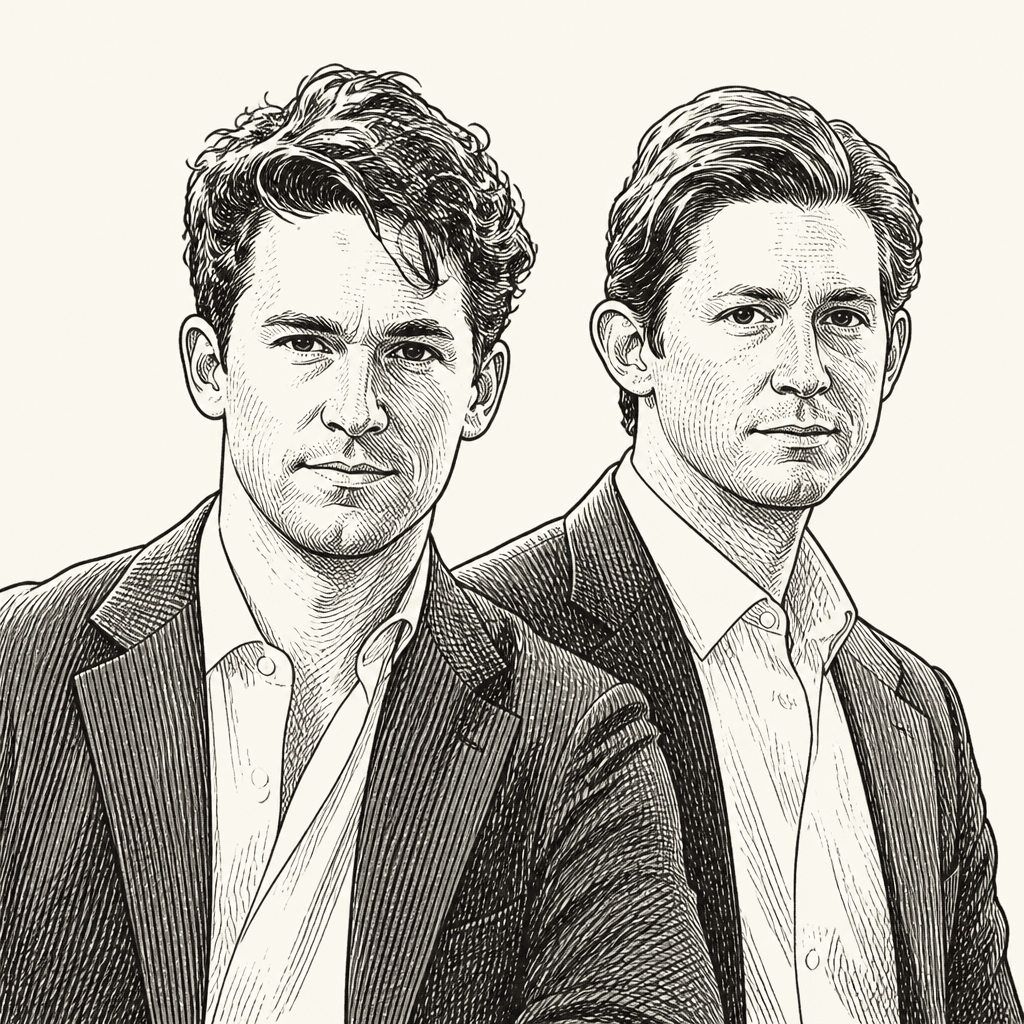
John Coogan and Jordi Hays argue on Diet TBPN that several hyped technology markets are entering a more exacting phase in which distribution, margins and access matter more than slogans. Their discussion frames the creator economy as a sorting of business models, Meta’s smartglasses as a consumer hardware category gaining traction despite weak investor credit, and OpenAI’s limited GPT-5.6 rollout as evidence that frontier AI is now constrained by security policy, infrastructure and control over who gets to use it.
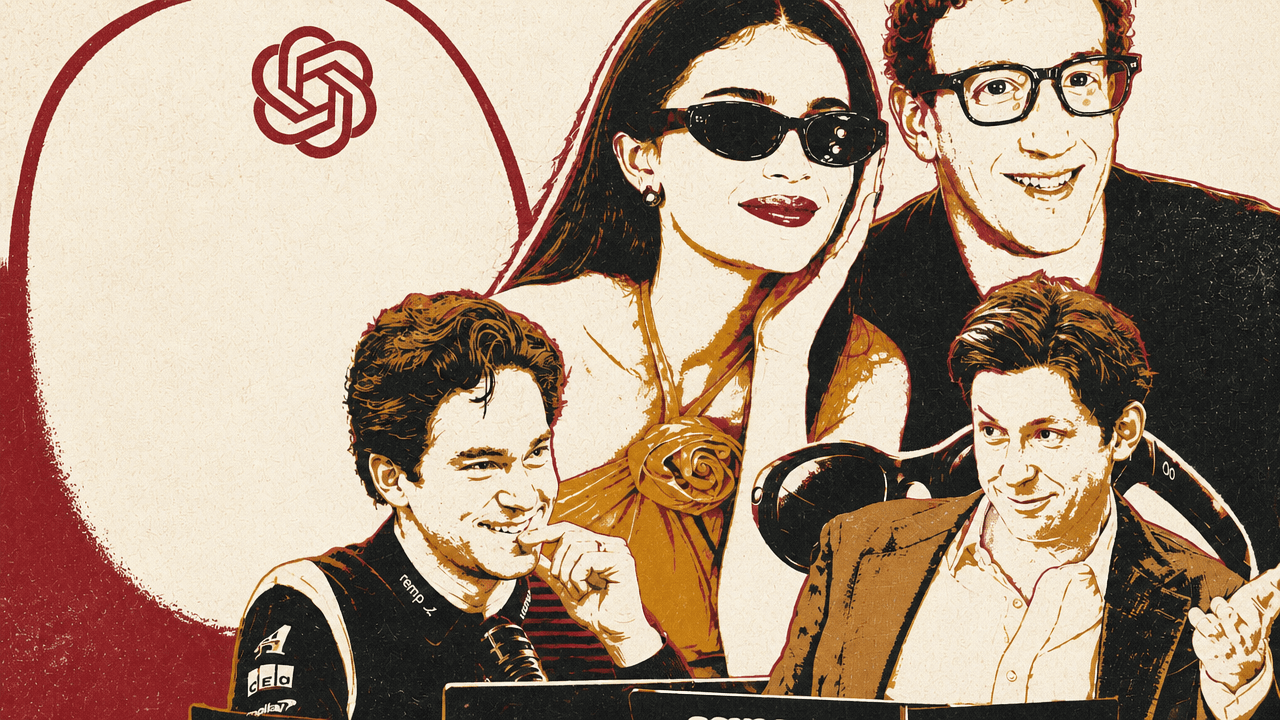
The creator economy is sorting into business models, not slogans
John Coogan came back from Cannes Lions less interested in the familiar claim that “creators are the future” than in a harder question: where the creator economy actually has economies of scale. The event, in his description, was still connected to its historic role as a festival for creative advertising, but the center of gravity had shifted toward creators, social distribution, and the tradeoff between independence and consolidation.
The tension, Coogan said, is no longer simply whether creators should leave institutions or whether institutions should imitate creators. It is whether a given creator business can support the cost structure now required to compete. He said he was struck by successful influencers who appeared, from the outside, to be producing “headline-popping” income, but who said privately that the cost of maintaining their output was eating much more of the economics than outsiders assume.
The shift he identified is from “making content” to “making shows.” SubwayTakes and Keep the Meter Running were his examples: creator-native formats that are more produced, more edited, and more costly than casual social posts. That production quality can create more enduring value, but it creates a monetization problem. A three-minute vertical episode may not yet have a socially accepted mid-roll ad format, even though Coogan argued that a five- to ten-second break in the middle would probably be tolerable. Until that “floodgate” opens, many creators are left with an awkward split: the real show, which audiences want but which is hard to monetize directly, and separate sponsored posts in the same style, which often do not travel as well.
Coogan contrasted that with TBPN’s own structure: the hosts can discuss the news and then deliver an integrated ad read. If every other episode had to be “purely about Cisco,” he said, the economics and audience experience would be different. His point was not that sponsorship cannot work, but that the current ad grammar for short-form creator shows forces creators into a one-for-one tradeoff between organic work and sponsored work.
Jordi Hays pushed on the language used around creator earnings. Forbes had put MrBeast at the top of its creators list with “300 million,” but Hays argued that “earnings” was the wrong word if the figure refers to gross revenue. He said he did not know Jimmy Donaldson’s margins, but given the scale of spending visible in MrBeast’s operation, it appeared he was spending nine figures. Coogan framed MrBeast as an extreme reinvestment case: obsessed with future growth, unlike Joe Rogan, who has large deals but remains content with a small set and comparatively lean production.
The creator side is only half of the sorting process. Legacy media companies, Coogan argued, are becoming better at social-native packaging. He pointed to The New York Times, specifically The Ezra Klein Show and Ross Douthat’s show, as examples of institutional media products that have broken through on YouTube because they understand titles, thumbnails, editing, and production values. The New York Times is not simply uploading legacy content into a creator channel; in Coogan’s view, it has learned enough of the platform’s format to compete.
That creates a two-sided “grass is greener” dynamic. Independent creators look at larger organizations and wonder whether consolidation would give them leverage, infrastructure, or stability. People inside large organizations look at independent creators and imagine they could make more money outside. Coogan’s conclusion was deliberately unsweeping: some creators will still find elegant independent business models with 80% to 90% EBITDA margins, while others will use the credible threat of independence to negotiate better contracts inside traditional media companies.
Hays added that hits-driven categories can still produce strange economics. He pointed to a chart showing the horror movie Obsession reaching $215.8 million in domestic box office, sixth among the highest-grossing U.S. horror films listed, as an example of a low-margin, highly competitive business where one breakout hit can generate extraordinary margin.
| Rank | Film | Domestic total |
|---|---|---|
| 1 | It (2017) | $328.8M |
| 2 | The Sixth Sense (1999) | $293.5M |
| 3 | Sinners (2025) | $279.9M |
| 4 | Jaws (1975) | $279.0M |
| 5 | The Exorcist (1973) | $231.0M |
| 6 | Obsession (2026) | $215.8M |
| 7 | It Chapter Two (2019) | $211.6M |
| 8 | A Quiet Place (2018) | $188.0M |
| 9 | Get Out (2017) | $176.0M |
The broader claim was that “independent creators are the future” no longer explains enough. The market is not moving toward one model. It is sorting creators by format, production cost, margin profile, platform fit, and negotiating leverage.
Meta’s glasses look more successful when treated as a new hardware category
Meta’s smartglasses looked small or meaningful depending on the benchmark. Coogan cited Christopher Mims’s Wall Street Journal framing — “Smartglasses Are Inevitable. But What—or Who—Are They For?” — and questioned whether the category had really become a “deluge.” To him, it felt more like a trickle or a steady stream, though he acknowledged that he may follow the category too closely to judge the mainstream pace.
The early disagreement was about scale. Coogan initially questioned whether Meta had sold “dozens” or “hundreds” of glasses. Hays believed the numbers were already material. Tyler Cosgrove supplied the figure: since 2025, more than 7 million units had been sold across Oakley and Meta, with 2 million units attributed to the Ray-Bans, and estimated gross retail sales of $2.1 billion to $3 billion.

That changed the frame. Hays argued that if the company were not Meta, investors and commentators would treat 7 million units in an emerging hardware category as “insane product-market fit.” Coogan agreed: if Oura or Whoop had sold 7 million units of a new product, the market would be impressed, and the business might be discussed as a stand-alone public company. Because it is Meta, however, the product is judged against Meta’s scale and against more technically ambitious devices like Apple Vision Pro.
The Vision Pro comparison mattered less as a product review than as a contrast in social usability. Hays tried Coogan’s headset on a flight, entered a demo, and was quickly interrupted by a flight attendant tapping him on the shoulder. Coogan noted the irony: part of Apple’s pitch was that a wearer would not need to remove the device to interact with others because it could show the wearer’s eyes. In practice, the device still produced a social interruption.
Meta’s current smartglasses, by contrast, were treated as closer to normal consumer fashion. Coogan said the low-end Meta glasses start at $299 and can work with vision benefit plans; another model, for $100 more, is aimed at fans of Kylie Jenner. The hosts had seen the Kylie model in action and thought it looked good. Hays said that if he had not seen the launch, he would not have noticed they were Meta glasses at all.
That subtlety mattered. Coogan described a small white glint on the frame and said he had initially mistaken it for a recording light, a display, or another functional smart feature because he was thinking like someone who follows the display technology closely. He later realized it was purely aesthetic and said that, for the people actually in the market, that appeared to be part of the appeal. His confusion was “purely a me problem.”
Snap’s competing Specs were described in very different terms. Coogan said Meta’s display glasses are $800 while Snap’s Specs are $2,200, and called the Snap version so chunky that they looked like “something you might see in a Prada ad and never in real life.” The category, in his telling, is no longer only about whether a face-worn computer can work technically. It is about whether it can be worn without turning the wearer into a spectacle.
The hosts also considered why Meta receives little investor credit for dominating the emerging category. Coogan cited the Wall Street Journal article’s claim that Meta had captured more than 80% of the smartglasses market, but that the market was still only 7 million pairs in 2025, compared with more than 100 million smartwatches annually. He interpreted that not as a failure but as a “perfect trajectory” for a young category.
Coogan’s reservation was financial. A billion dollars of hardware revenue is not 100% margin. Threads, by contrast, may be more exciting to Meta’s core business because advertising revenue can be higher margin. Smartglasses may be cool, and Coogan likes hardware, but he said it is hard to underwrite them as a near-term cash-flow engine that can “pay for another data center.” Hays nevertheless said he would expect an ad-supported version eventually, analogizing to the ad-supported Kindle.
The Kylie partnership made more sense than the category’s older tech-first pitch
The Kylie Jenner collaboration became the cleanest example of Meta treating smartglasses as a consumer product rather than a developer gadget. A tweet shown on screen from rosie said, “wow silicon valley finally figured out who controls consumer spending,” in response to Kylie Jenner and Meta Glasses. John Coogan objected to “finally,” arguing that Meta has partnered with celebrities for a long time. But he agreed that Kylie was the right partner.
Jordi Hays found the campaign especially coherent because Kylie Jenner is one of the top influencers on Instagram and therefore has an existing distribution relationship with Meta. He speculated, while stressing that he had no information, that a partnership of that scale might cost something like $50 million. The question for him was simple: how much does it cost to get one of the top influencers in the world to launch a product with you?
The contrast was Snap’s reported pursuit of Robert Downey Jr., as Hays described it. Hays said Alex Heath had reported that Snap was working on a potential $100 million partnership with Downey. Hays found that “deeply confusing” compared with Kylie and Meta: Kylie has native Instagram consumer distribution, while Downey’s fit with Snap Spectacles was not obvious. Coogan joked that a deeper tie-in could exist if a future Iron Man movie revolved around Tony Stark abandoning the suit and using Snap Spectacles, but the joke depended on the same premise Hays was pressing: celebrity alone is not distribution fit.
The privacy and AI-use-case questions remained unresolved. Coogan cited Mims’s framing that face-worn computers have generated skepticism and hostility because people are trying to reduce screen time, not mount screens in front of their eyes, and because internet-connected cameras pointed at everyone feel like an attack on what little privacy remains. Coogan’s substantive skepticism landed on the AI feature set.
Object identification, he said, is not compelling for him. If the glasses identify a building as a building or a tree as a tree, the feature solves little. He mocked the imagined need to identify a rare South African meerkat or a can of Diet Coke. Hays summarized the feature as “hotdog, not hotdog.” The more important use case, Coogan argued, is not seeing what is in front of the wearer but letting a user talk to an AI agent that can look things up and act through the phone and the surrounding digital environment.
The smartglasses argument therefore split into three claims. First, Meta’s current products may be working because they are normal enough to wear. Second, the Kylie campaign fits because it uses Meta’s existing consumer graph rather than trying to sell glasses as a pure technology artifact. Third, the truly useful AI layer is likely to be agentic assistance, not object recognition.
Meta’s AI push looks more like a forced mobilization than a consumer app strategy
Meta’s broader AI strategy appeared, in the material discussed, to be consuming internal engineering capacity. A tweet by Zephyr claimed that Meta seemed focused on coding and might be running “the largest coding training data generation effort in the world.” The tweet and accompanying screenshot alleged that 30% to 50% of engineers on core teams had been reassigned to data labeling and RLHF under an Agent Data Optimization organization.
John Coogan summarized the material: infrastructure and security teams were reportedly hit hard, with three to five people out of a ten-person team moved from building products used by hundreds of millions to giving human feedback on AI-generated GitHub repositories. One engineer quoted in the on-screen text compared the situation to The Hunger Games, except with more people affected and less drastic consequences. Coogan added that the reassigned workers were still in air-conditioned offices with free snacks, which were apparently being improved.
Jordi Hays inferred that “we’re gonna have Meta Code.” Coogan suggested that Meta appeared to be trying to build a model it could sell through an API or similar channel. Hays, however, had expected a different strategy. He thought Mark Zuckerberg would spend aggressively to make Meta AI — a consumer competitor to ChatGPT, Gemini, and Claude — rise to the top of the App Store and stay there, because if users asked it questions all day, Meta could target them much better.
Instead, Hays saw signs of a move toward enterprise-like use cases despite Meta’s limited background there. He said Meta had bought something he called “Manas,” but added that it was unclear what Meta would do with it over time, perhaps integrating it into Ads Manager. The Meta AI app, he noted, was sitting at 17 in the App Store — “not nothing,” but not evidence that the market was excited about Meta spending hundreds of billions to compete against Google, AWS, Microsoft, OpenAI, Anthropic, Chinese labs, and SpaceX.
Coogan agreed that such a comeback would be extraordinary, and said it was reasonable that the market was not pricing it in. The issue is not that Meta cannot spend. It is that investors may see little reason to give Meta credit for an expensive, uncertain AI repositioning when the company’s core economics are elsewhere.
That investor skepticism also framed Meta’s reported interest in prediction markets. Coogan cited a New York Times report, relayed through Aggr News, that Zuckerberg had directed Meta to build a prediction markets app internally called Arena, independent of Facebook and Instagram, potentially competing with Polymarket and Kalshi. He called it a wild shift.
Hays said sentiment around prediction markets was bad even though revenues were exploding and users appeared to like the product. He personally valued prediction markets as a data source. Coogan countered with the analogy that many people have also benefited from sports betting, including a newspaper story he held up about someone who won $6 million on DraftKings and built a mansion with a bowling alley. Hays’s synthesis was that prediction-market users like the product, but broad sentiment is poor — and sentiment around Meta in capital markets is also near a low. Perhaps, he said, Zuckerberg was simply saying “F it.” Coogan replied that he did not think sentiment could get worse.
OpenAI’s limited GPT-5.6 release exposed the policy problem created by fast capability diffusion
OpenAI’s GPT-5.6 release was framed as both a model announcement and a governance test. A tweet shown on screen from OpenAI introduced Sol as the next-generation frontier model, Terra as a balanced model for efficient everyday work, and Luna as a fast, affordable model for high-volume work. Jordi Hays said access was limited, by U.S. government directive, to 20 pre-approved companies. John Coogan reacted that 20 was “so small.”
The restriction was tied, in Coogan’s telling, to the “distill gate” around model outputs. He said Anthropic had alleged that Alibaba had distilled Claude “many many times,” and that he had seen a chart of resold API tokens that was “staggering.” Someone, he said, had described the activity as “professionalized fraud,” which he thought was accurate. In that context, tight control over a frontier model made sense, though he called it unfortunate.
Hays later pressed the same point from the other side. If frontier models are made available through everyday consumer subscriptions, groups can create networks of thousands of accounts and distill them. That, in turn, helps explain why the open-source frontier advances: widely available closed models can leak capability through imitation. Whether that produces doomsday outcomes is unclear, Hays said, but the mechanism is real.
A Wall Street Journal screenshot in the source carried the headline “OpenAI Limits Access to New Model, Citing Government Security Concerns,” with a subheading saying the company believed White House review of AI releases should not become the long-term default and that a ban on Anthropic’s Mythos model remained. Coogan summarized the report as saying OpenAI was limiting access to its newest AI models after discussions with the Trump administration, while warning that case-by-case White House restrictions on national security grounds should not become the norm.
Coogan said he had seen AI safety people call the situation the worst of both worlds: not a clear, broad rule that everyone can comply with, but high-touch government intervention that gives the government more direct power over AI release decisions. He said the safety people he saw discussing it were not fans of that arrangement.
Hays then separated cyber risk from bio risk by focusing on how quickly defensive deployment can follow offensive capability. In cyber, he argued, a model that can find a vulnerability can often patch it much faster than six months — perhaps in an hour. If the same capability that makes a “hack machine 9000” can be used legally and economically to patch systems before similar capabilities diffuse into open source, then the lag can work in favor of defense.
Bio risk, in his account, is different if the defensive side takes longer to build and deploy. A future model might be good at designing dangerous viruses and also good at building early warning systems, medicines, and countermeasures. That is manageable only if the defensive systems roll out before open-source or adversarial actors gain the offensive capability. If manufacturing or deploying the “good version” takes a year while the open-source frontier is six months behind, society could face a gap where making the virus is faster than manufacturing the antivirus.
If manufacturing all of that and actually deploying the biosecurity, the bio risk, the good version takes a year, but the frontier is only six months behind, you could wind up in a situation where manufacturing the virus is much shorter than manufacturing the anti-virus.
Coogan summarized further from the OpenAI report, saying the company had followed a similar process with versions of GPT-5.5, including Cyber, which demonstrated an ability to discover software vulnerabilities that could be used in cyberattacks. He said similar capabilities in Anthropic’s Mythos models prompted the White House to increase oversight and overhaul what he described as its light-touch approach to AI. He also referenced news that, according to his account, the NSA had commented that Mythos was able to hack into a number of its systems during a red-teaming exercise. Anthropic, he said, halted all access to comply with the new rule after previously working with the administration on a limited rollout.
OpenAI’s position, as Coogan presented it, was that the current approval process is a transition period while President Trump’s recent executive order on model oversight is implemented. The company said, in the report he quoted, that it does not believe this kind of government access process should become the long-term default because it keeps tools from users, developers, enterprises, cyber defenders, and global partners who need them. Coogan’s final view was that, as the open-source frontier advances, it feels “less and less reasonable” to keep closed-source models locked away.
Hays complicated that conclusion: the open-source frontier advances partly because closed models become available enough to distill. Coogan then asked whether Meta’s stock would rise if Zuckerberg could obtain a preliminary ban on some of Meta’s new models. Hays treated that as a joke about the “aura” of being restricted: being declared too powerful may itself create market mystique.
AI infrastructure is moving down the stack while public resistance rises around data centers
OpenAI’s hardware announcement showed the AI buildout moving deeper into the supply chain. A tweet shown on screen from OpenAI announced Jalapeño, the company’s first AI chip, designed with Broadcom and built for LLM workloads powering ChatGPT, Codex, the API, and future agentic products. John Coogan called it exciting; Jordi Hays called the timeline “crazy,” meaning unusually fast. Coogan said many people were arguing that it was the first chip designed with AI agents in the loop, potentially allowing the instruction set to be written faster, though he said the exact contribution was unclear. Hays insisted that the humans on both sides still deserved a lot of credit.
The larger point was go-to-market compression. For a long time, Coogan said, chip launches were discussed as five-year projects. Now, in his view, companies are clearly doing them faster. He also said OpenAI had “apparently” made deals to purchase 40% of global raw undiced DRAM wafer output until 2029 — millions of raw wafers that cannot be used until processed. Coogan called it a smart move and an example of the company going deeper into the supply chain, “always interesting moves from the deals guy at the top.”
At the same time, the infrastructure needed for AI is producing more public backlash. Coogan cited Theo Von’s comments, carried in a tweet attributed to Marco Foster, that “nobody wants a data center” and that people who want them seem “kind of evil,” with fears that one company will own all the information and create a social or emotional credit score before AI becomes a new god. Coogan said the data center issue needs to be messaged more clearly.
Hays argued that dismissive counterarguments miss the scale difference between ordinary internet infrastructure and AI buildout. Saying a podcaster should distribute episodes on CDs if he opposes data centers is, in Hays’s view, a bad countertake, because the data centers required to power YouTube and podcast streaming are tiny compared with the construction, power, and water demands of AI. He exaggerated for effect that firing off one AI agent might use the equivalent of YouTube for “10 years probably,” but the underlying point was that AI infrastructure is a different order of demand from the consumer internet services people already use.
The infrastructure thread ended with a more optimistic example: a tweet attributed to Andrew Curran said OpenAI, Anthropic, Stripe, and Bill Gates were putting $500 million into a new organization called Intercept, aimed at preventing the common cold and flu and eventually eliminating respiratory viruses. Coogan called it an “incredibly cool” and tangible project. He said that if Intercept works, people will feel the benefit directly because they will get sick less often.
The hosts did not resolve the tension between industrial acceleration and public resistance. They treated it as a condition of the moment: frontier models, chips, memory supply, data centers, cultural production costs, and practical health interventions are increasingly being discussed as parts of the same buildout, even when the public case for that buildout remains unsettled.