Rocket Lab Buys Iridium to Enter the Space Applications Market
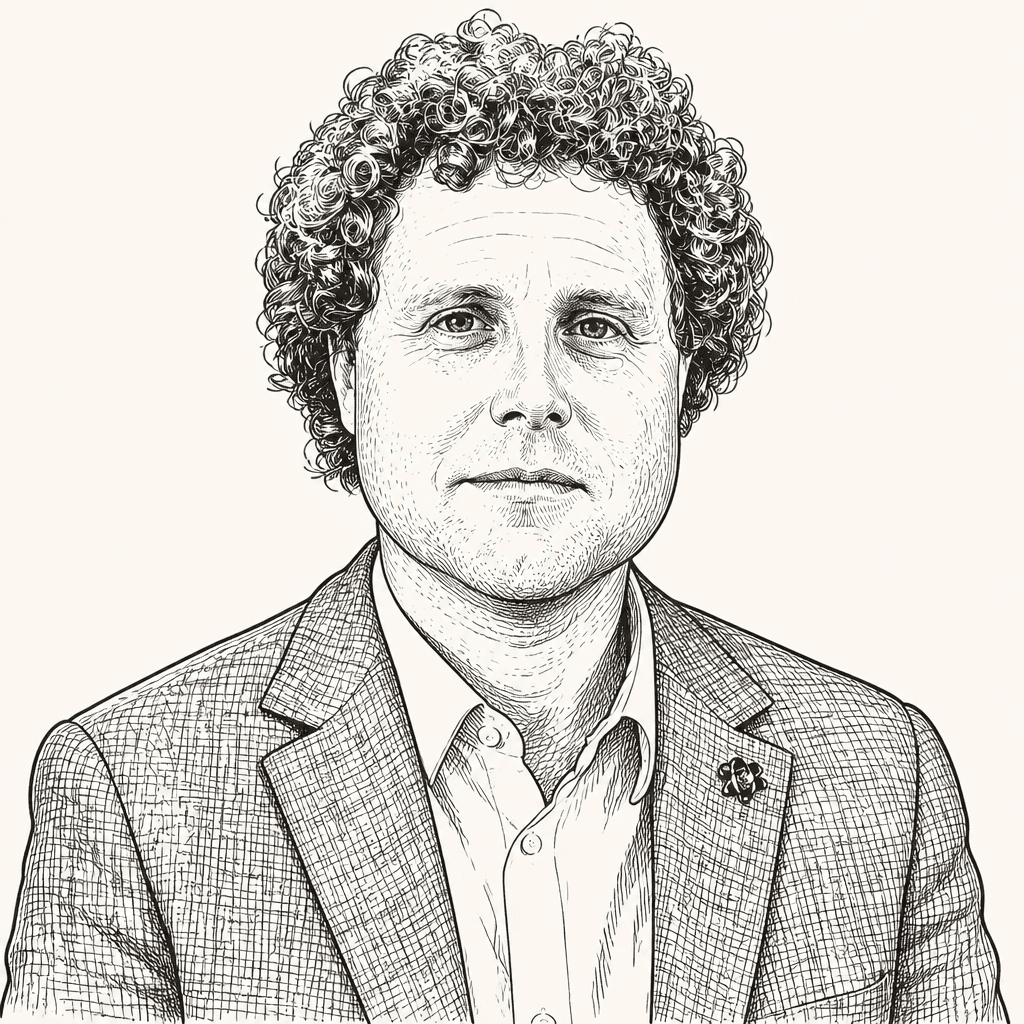
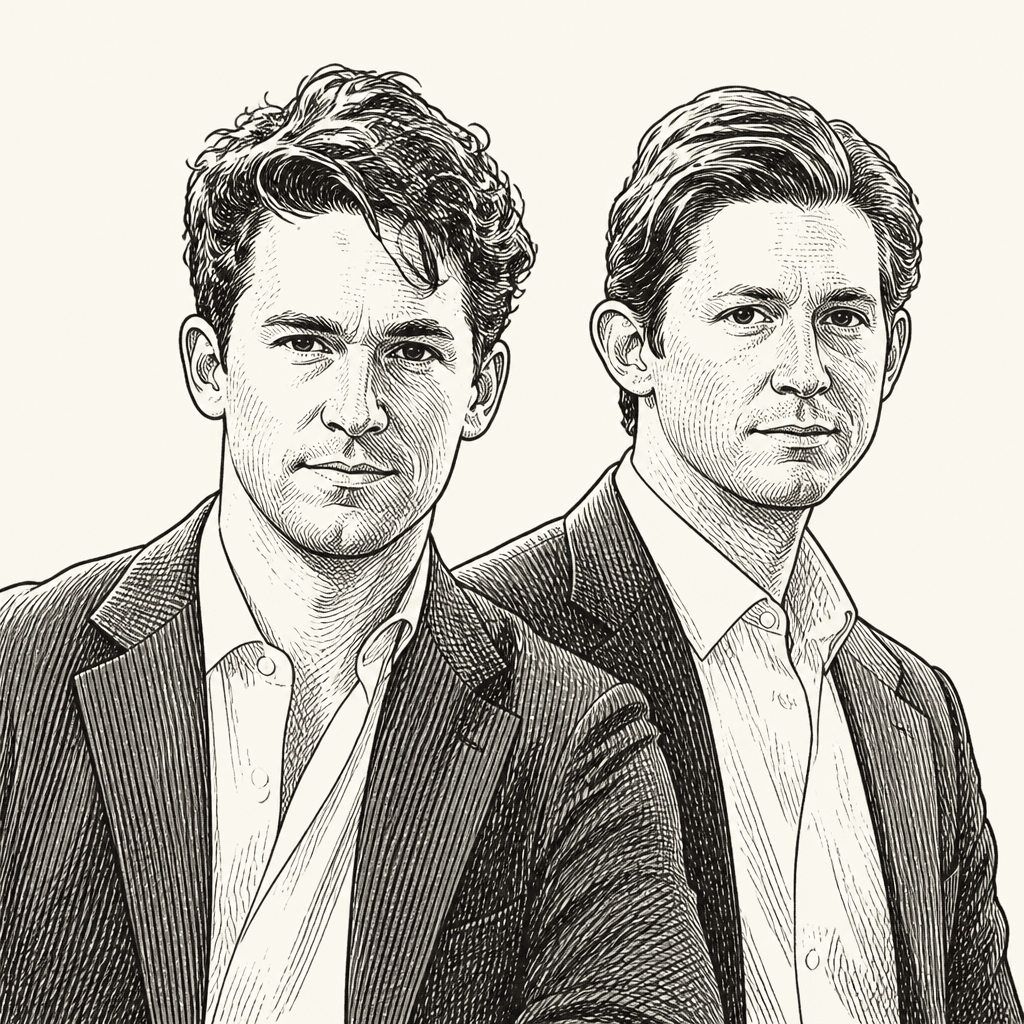

John Coogan frames Rocket Lab’s $8 billion agreement to buy Iridium as a bid to move beyond launch and into the space applications business SpaceX has already defined: spectrum, operating satellites, customers and recurring connectivity revenue. Peter Beck, Rocket Lab’s chief executive, makes the same case in the company’s announcement, arguing that Iridium gives Rocket Lab the scarce assets needed to become a vertically integrated space operator rather than just a launch and spacecraft supplier. The rest of the discussion tests that stack-ownership logic against messier cases, from Comcast unwinding content and connectivity to Meta’s uncertain prediction-market ambitions.

Rocket Lab is buying the hard parts of a space applications business
John Coogan framed Rocket Lab’s agreement to acquire Iridium as a move beyond launch and into the arena SpaceX already occupies: connectivity, applications, customers, and operating infrastructure in orbit. The cash-and-stock deal values Iridium at $8 billion, a 20% premium to its Friday closing share price, according to Coogan’s summary.


Iridium’s value, in that account, is not that it resembles a modern mega-constellation. It is that it is old, operating, licensed, and already commercial. Coogan described Iridium as a pioneer of low-Earth-orbit satellite phones, with its first satellite launched roughly 30 years ago and a fleet today of 66 satellites. That number looks small next to SpaceX’s roughly 10,000-satellite fleet, he noted, because Iridium’s satellites are “bigger, older satellites.” Its network connects handsets and other devices used by ships, mining sites, U.S. government agencies, and other enterprise customers. Coogan called it “an enterprise connectivity play.”
The strategic point was vertical integration. Rocket Lab began as a “small niche satellite launch provider,” Coogan said, but has expanded into satellite design, aerospace components, defense-prime work, and launch. It operates Electron, which he described as the second most launched U.S. rocket annually, and is developing Neutron, a reusable medium-lift launch vehicle. Iridium adds a live constellation, customers, cash flow, and spectrum.
That is the piece Peter Beck emphasized in Rocket Lab’s announcement clip. Beck introduced what he called the “space application equation”: to capture the value of space applications, a company needs launch access, the ability to build spacecraft at scale, spectrum, infrastructure already in orbit, and a sustained cash-flow model. Spectrum, he said, is “finite, almost impossible to get,” and “not all spectrum is created the same.” Building a constellation from scratch also means long delays: satellite design, launch, first revenue, customer acquisition, and recurring cash flow all take time.
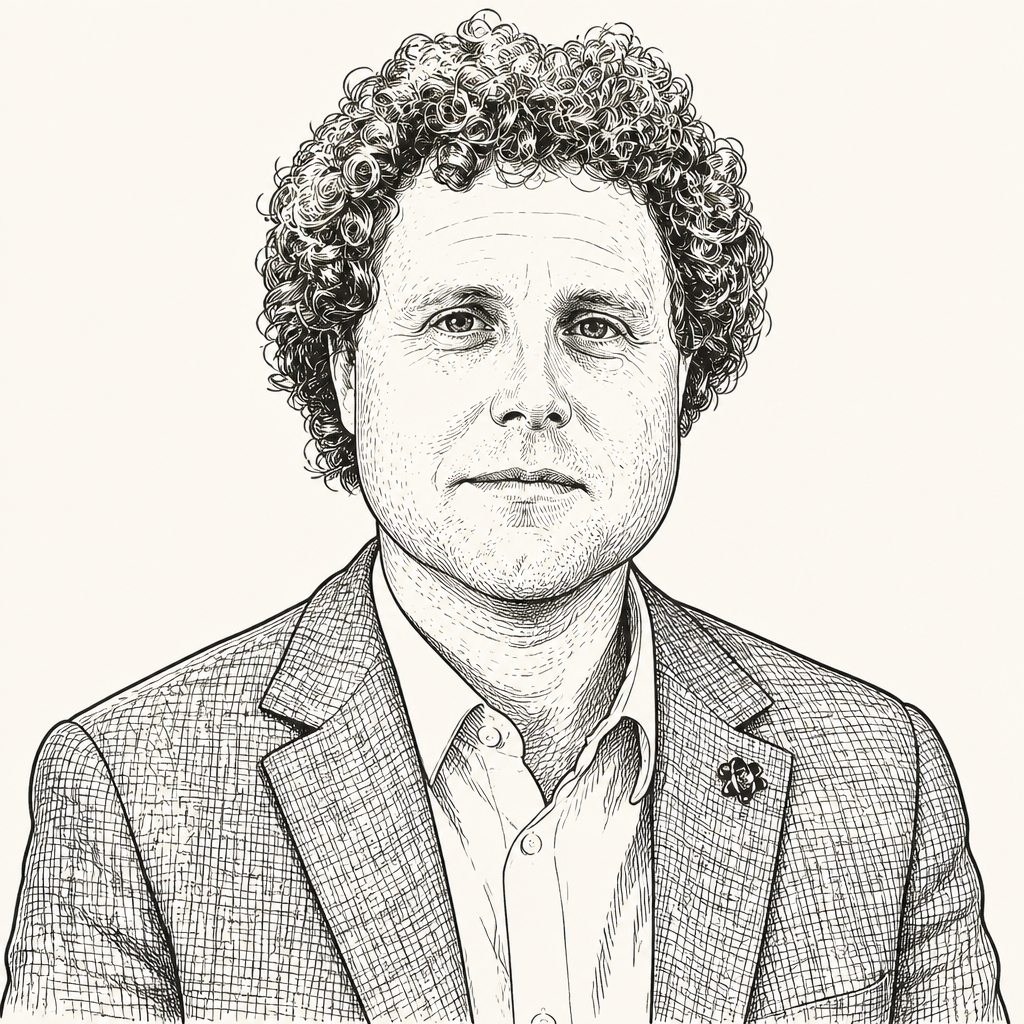
So those of you who know me will know that I'm way too impatient for that. So we found a bit of a shortcut. Rocket Lab is acquiring Iridium Communications.
Beck presented the acquisition as more than adding a communications network to a launch company. Rocket Lab, in his words, has “unfettered access to space”; Iridium has an operational constellation, “extremely valuable spectrum,” millions of customers, and profitability. The combination, he said, creates “a fully integrated self-launching space superpower.”
He also made clear that Rocket Lab does not intend simply to operate Iridium as it exists. The acquisition is “officially our entrance into the space applications market,” Beck said, but “not the finish line.” The plan is to build on Iridium’s network, unlock new markets, and develop new space-based services.
The financial context made the deal more striking. Coogan pointed to a post from delian @zebulgar noting that Rocket Lab went public via SPAC on August 25, 2021, at a $4.1 billion valuation, traded at or below that level for roughly three years, then began growing revenue and getting re-rated in September 2024. Now, as Coogan summarized it, Rocket Lab is acquiring Iridium for twice that original public-market valuation.
Jordi Hays added that Rocket Lab stock could be bought around $4.80 a share on July 1, 2024, and was “now sitting at $101.” Coogan called it “what a run,” adding that the broader space economy has been booming. By his count, Rocket Lab is now a $60 billion company buying an $8 billion connectivity provider.

Connectivity owners are still testing where integration stops working
Comcast’s planned split fit a pattern Coogan identified in telecom and media: distribution companies buy content assets, try to make the combination work, and later unwind it.
In 2011, when Comcast was primarily a cable TV, internet, and phone provider to roughly 30 million Americans, it bought a 51% stake in NBCUniversal from General Electric. In 2013, it acquired the remaining 49%. Comcast then bought Sky, acquired DreamWorks Animation, and built Peacock through NBCUniversal.
A Wall Street Journal report shown on screen said Comcast’s decade-long effort to combine content and distribution was coming to an end. The plan, as Coogan described it, is to split the company in two: Comcast becomes a connectivity-only business again, while NBCUniversal focuses entirely on content.
Coogan connected the move to Verizon and AT&T. Verizon bought AOL and Yahoo, combined them into Verizon Media, and sold that entity to Apollo in 2021. AT&T bought DirecTV and Time Warner, later exiting DirecTV and spinning Time Warner into WarnerMedia in 2022. The Comcast split, in this framing, is another retreat from the idea that telecom distribution and entertainment content naturally belong under one roof.
Placed next to Rocket Lab, the contrast is suggestive rather than something the hosts explicitly formalized as a thesis. Rocket Lab is moving from launch infrastructure toward applications because Beck says the missing assets — spectrum, constellation, customers, recurring cash flow — are barriers to value capture. Comcast, as described through the Journal report and Coogan’s summary, is moving back toward connectivity after a long attempt to own content as well. In one case, integration is presented by the company as a shortcut into a harder business. In the other, separation is reported as the end of an overextended combination.
Blue Origin’s New Glenn update belonged to the same broad infrastructure world, though it was a separate news item. After an explosion in Florida, Coogan said there had been speculation the launchpad might be down for as long as two years. A post shown from Andrew Curran quoted Blue Origin saying it planned to return to flight this year by moving directly to a horizontal/vertical hybrid concept of operations it had already been developing, using existing infrastructure, skipping a new transporter-erector, and creating a common operating model across two pads. Hays joked that Blue Origin had used the explosion as “sort of like a demo” of the old setup; Coogan’s substantive read was that Dave Limp, Blue Origin’s CEO, had offered “good news” because New Glenn could fly again sooner than expected.
Meta’s prediction-market question is whether it wants a product, a data layer, or money movement
Prediction markets sat at the intersection of two issues: how event contracts are treated financially, and what Meta might actually be building.
Coogan first proposed a deliberately absurd tax-avoidance startup idea: use agentic AI to create thousands of Delaware C corporations for doctors. Each medical appointment would involve the patient acquiring one of the doctor’s C corps, whose balance sheet would contain an IOU for the services the doctor would render. The patient would then sign paperwork, the C corp would be wound down, and the doctor would receive capital gains rather than ordinary income.
Hays named the idea plainly: “vertical AI agents for tax fraud.” Coogan said he asked ChatGPT, which called the plan “almost certainly dead on arrival,” not tax optimization but “more like abusive tax shelter with healthcare law side quests.” The core problem, in that answer, was economic substance: the patient is paying for medical care, and the doctor is being compensated for personal services. IRC 61 includes compensation for services and fees in gross income, and the IRS generally includes everything received in payment for personal services. Wrapping the bill in a new C corp does not change the character of the income.
The joke then migrated to prediction markets. Hays suggested the doctor could “wrap it in a prediction market”: the patient takes one side of a market on whether the doctor will do a good job, the doctor takes the other, and the payout becomes the compensation. Coogan noted that this would also resemble insurance: “you don’t pay if the doctor doesn’t do a good job.”
The unresolved tax question mattered mostly because it exposed how much remains unsettled around event contracts. Coogan asked whether prediction-market winnings are capital gains. Hays said he thought it was “still mostly unclear.” Coogan later read a more detailed answer: prediction-market profits are taxable, but their character remains unsettled. CFTC-regulated event contracts such as Kalshi-style contracts have an argument for being financial derivatives rather than gambling, because the CFTC describes event contracts as derivative contracts whose payoff depends on a specified event and granted Kalshi designated-contract-market status. In the best case, he said, some contracts might be treated as Section 1256 contracts, marked to market annually, with gains and losses split 60% long-term capital and 40% short-term capital regardless of holding period.
That ambiguity set up the more serious Meta debate. Coogan and Hays have been weighing whether Meta’s rumored prediction-market effort would involve real money or operate as a social-clout product. Hays remained in the real-dollar camp because, he said, Meta had been reaching out to prediction-market providers as potential partners or vendors.
Coogan pushed back on what “partnership” might mean. It could mean ad inventory, discounted ads, data licensing, search-answer data for Instagram or future Meta AI products, an acquisition funnel, or traffic moving between Meta and prediction-market platforms. If Meta were creating a direct competitor, he argued, it would be odd to ask incumbent prediction markets to hand over their customers.
Hays countered that prediction markets have a history of partnering with other applications as infrastructure providers for real-dollar transactions. Coogan conceded that real money was possible, but noted that other institutions have prediction-market partnerships without embedding payment flows. CNN, CNBC, and the New York Stock Exchange may partner with prediction markets, he said, but users do not open the CNBC app and upload credit-card information to trade. Meta has long wanted deeper financial relationships with users, including saved payment credentials and one-click checkout inside Instagram or Facebook, but those efforts never fully matured.
The evidence did not settle the question. Meta could be building a social layer around forecasts, a data product, a funnel, or a true money market. Hays read the outreach to prediction-market providers as a sign that real dollars are plausible; Coogan argued the same fact also fits less ambitious partnerships.
The better technology wishlist starts with a specific constraint
Wall Street Journal readers were asked what innovations they want in the next 20 years, and the answers gave Coogan and Hays a different kind of product map: not platform language, but consumer pain. The requests ranged from plausible engineering to science fiction, but many were rooted in specific constraints — charging a car, coordinating traffic, reading music with poor eyesight, cooking a steak, reducing noise, or automating dinner.
Marie Gillespie of Irving, Texas, wanted “solar on wheels”: cars with solar panels integrated into the roof, recharging while driving or parked. Coogan said the idea itself is not new, but the physics are limiting. Existing roof-area solar panels are too weak to meaningfully charge a normal electric car; he joked that a car would have to sit outside for “like 5 months” to fully charge. Specialized solar vehicles with large surface areas are different. What Gillespie is really asking for, he said, is much higher solar energy density. Within 20 years, he called that feasible enough to take seriously.
Morgan Clayton of Birmingham, Alabama, wanted autopilot features on cars to talk to each other so traffic could move more efficiently. The goal was to end “accordion traffic jams,” where cars repeatedly stop and start because of small delays and misalignment between drivers. Coogan and Hays treated this as probably doable, but dependent on some shared standard allowing cars to coordinate speed, spacing, merging, and lane changes.
Mary Schnitker Gifford of Alpine, Utah, wanted a device to help musicians with eyesight limitations read music at the piano. She wrote that her father’s sight was so poor he had to look at music from about two inches away, memorize one or two phrases, and then practice what he had memorized; he gave his last recital from memory at age 94. Coogan questioned whether the need was really music-specific rather than a general accessibility problem for reading, and suggested that an iPad app could show one or two notes at a time. Hays pushed the idea into a joke about a humanoid robot physically puppeteering the musician’s hands.
Several domestic requests landed as startup prompts because they identified a narrow job rather than a broad market. Paul Bianco of Bluffton, South Carolina, wanted a “smart spatula” that could tell, without penetrating a hamburger or steak, whether it was rare, medium, or well done. Coogan said this was harder than it sounded because the surface temperature during searing or reverse searing can differ wildly from the interior. Ray Loehr of Lacey, Washington, wanted a robot executive chef for the home: it would call a grocer, order upscale ingredients, receive and unpack them, load the refrigerator, and use existing appliances to make dinner. Coogan called that the right level of science fiction for a 20-year request: not something one could build in a weekend with an Arduino, but not impossible.
The noise-control requests were similarly concrete. Sherrill Franklin of West Grove, Pennsylvania, wanted improved building materials, including drywall with built-in soundproofing and a lightweight sound-blocking film for existing buildings and homes, citing noise’s effects on blood pressure, cardiac stress, and real-estate values. Coogan connected that to a nursery sound-treatment idea: decorative acoustic panels painted with child-friendly animals or pastel scenes, so parents could dampen crying without turning a nursery into a podcast studio.
Jennifer Smith of Roswell, Georgia, wanted outdoor noise control: a way to sit on a screened porch and hear birds without hearing nearby traffic. Hays suggested more electric vehicles would solve part of the problem because they are quieter than internal-combustion cars, at least absent modified exhausts, and wondered whether a large speaker could selectively cancel car noise without canceling bird noise.
The sharpest contrast came from Nolan Williams of Whitwell, Tennessee. Some respondents wanted smarter kitchen tools or better household materials; Williams asked for significant developments in cancer and longevity drugs. “Longer lives means a longer runway for brilliant people to bring forth their own innovations and pass on their knowledge,” he wrote. Hays treated it as the strongest answer: while others asked for a smart spatula, Williams asked to cure cancer and extend productive life.
Autonomy is another capability Hays expects to diffuse
A Rivian demo prompted Jordi Hays to make a broader claim about autonomy: self-driving capability may be commoditizing quickly, in a pattern he compared to large language models.
John Coogan said Rivian had sent Hays a demo unit and, in his telling, told him to drive it hard and “roll it” if he wanted. Hays said the vehicle was “actually an amazing car” and singled out its self-driving feature as “deeply underrated.”
His broader view was that autonomy is not a singular breakthrough reserved for one company. He argued that self-driving technology is commoditizing “as fast as LLM technology” and that companies that take it seriously and prioritize it will be able to implement it in their vehicles. He compared the diffusion to chatbots: just as even Chipotle can get a chatbot, “we will see every car be autonomous.”
The claim was not developed into a detailed comparison of sensor stacks, data, or regulation. It stood as Hays’s market read: autonomy may become a capability many automakers can ship if they decide to prioritize it, rather than remaining the domain of a single company.
AI-enabled solo firms complicate the jobs debate
Derek Thompson’s argument about AI and work supplied the economic frame for the final thread. A post shown from Thompson announced a newsletter titled, “THERE’S NEVER BEEN A BETTER TIME TO GET RICH WORKING ALONE.” Thompson rejected two extremes in the AI-jobs debate: “Doomers,” who say AI will take everyone’s job despite low unemployment and high prime-age employment, and “Deniers,” whose view that AI is a worthless scam blinds them to how it is already changing work and the economy.
Jordi Hays read Thompson’s alternative: the strongest evidence-based claim is that “there’s never been a better time for workers to get rich by going independent.” Thompson called it “a golden age for tiny startups with big revenue.”
The evidence, as Hays summarized Thompson’s charts, was that the number of solo entrepreneurs and tiny startups is taking off; small firms appear more likely to use AI and sell AI-related products such as software, consulting, or design; and Stripe data suggests micro-startups are becoming multimillion-dollar firms faster and more frequently than any generation of firms Stripe has measured.
| Evidence shown from Thompson’s charts | How Hays summarized it |
|---|---|
| Solo entrepreneurs and tiny startups | The number is taking off. |
| AI use and AI-related products | Small firms appear more likely to use AI and sell AI-related products such as software, consulting, or design. |
| Stripe solopreneur income thresholds | Micro-startups are becoming multimillion-dollar firms faster and more frequently than any generation of firms Stripe has measured. |
The implications Thompson flagged were not only celebratory. Hays noted two: more solo entrepreneurs could mean “even more aloneness,” and more pass-through firms could mean “even less tax revenue for a revenue starved government.” Coogan connected that back to the earlier doctor-tax riff: if talented high-income workers leave wage or professional-service income for business ownership, the tax consequences may change.
Hays asked whether the rise of solo entrepreneurship was bullish for co-working spaces. John Coogan was blunt: “Nothing is bullish for co-working spaces to me.” His reason was that people generally like having their own space. He compared co-working to the logic of tiny private rooms with shared amenities, then clarified through a joke about the Unabomber shed: a small shed can be appealing on the right property, but the property is the amenity. The implication, from Coogan’s answer, was that shared workspace alone does not necessarily solve the environment problem for independent workers.
Thompson’s solo-firm argument pointed in a different direction from the Rocket Lab story without becoming the same argument. Rocket Lab is buying scarce assets to move into applications faster. Thompson, as read by Hays, is describing workers who may need less traditional company infrastructure than before to build high-revenue businesses. Both threads turn on where leverage sits once capabilities become easier to access, but the speakers treated them as separate market observations rather than a single unified theory.