AI Leaders Urge Mandatory Checks on Synthetic Nucleic Acid Orders
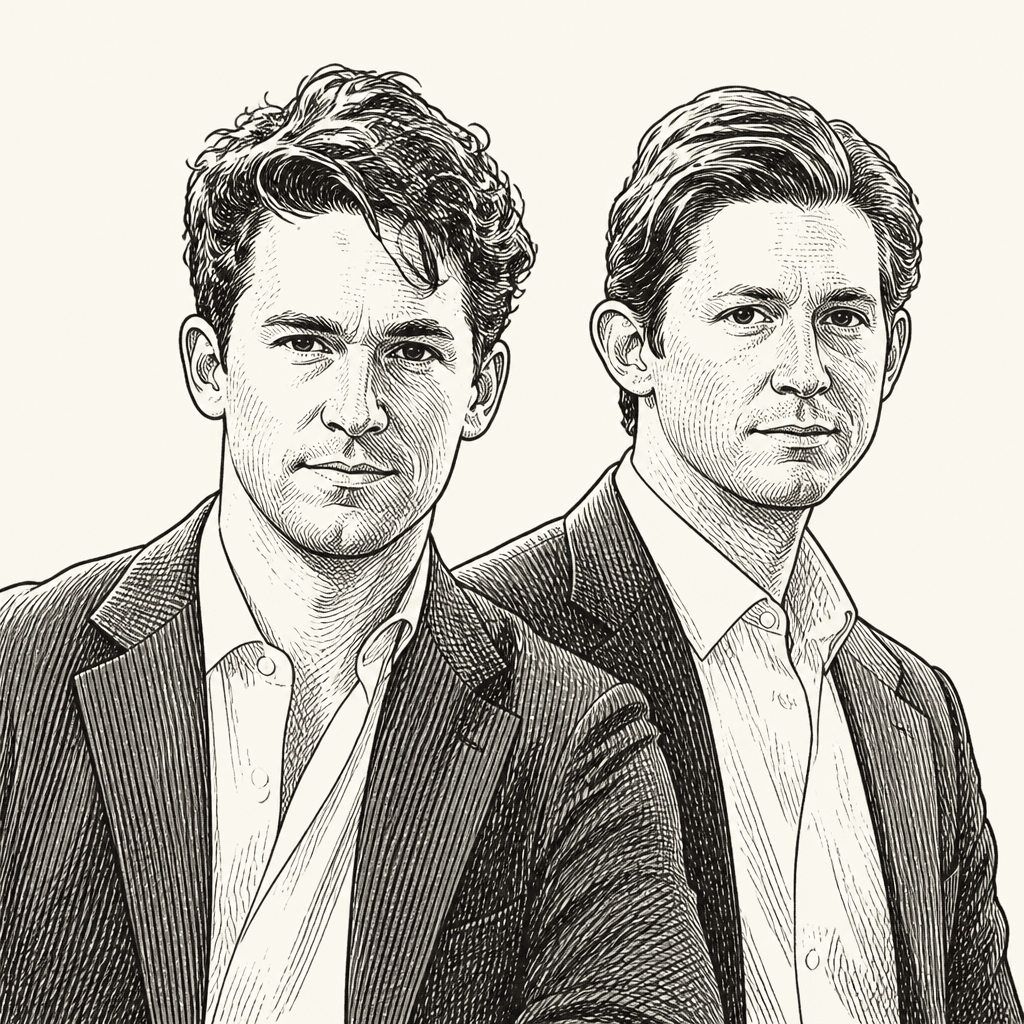
TBPN’s John Coogan and Jordi Hays treated a new AI-biosecurity letter as the day’s most consequential signal: the risk is not near-term AGI designing pathogens from scratch, Hays argued, but an inadequately policed supply chain for synthetic nucleic acids. The letter, signed by AI and biotech figures including Demis Hassabis, Sam Altman and Dario Amodei, calls for mandatory screening and recordkeeping for DNA orders and related equipment, replacing a voluntary regime Hays said leaves meaningful gaps. The episode also read Ramp’s $44bn valuation, Sabi’s leaked BCI round and Benchmark’s first growth fund as signs of capital moving toward AI-adjacent infrastructure, finance and biology.
The biosecurity worry is not AGI; it is a supply-chain gap around synthetic nucleic acids
Jordi Hays framed the new AI-biosecurity push as a shift in Washington’s AI conversation: away from pre-release approval of models and toward “the bio threat.” The specific concern was not that frontier models have already solved the one-shot design of a novel pathogen. Hays emphasized that the open letter circulating among AI and biotech leaders was not, in his view, another frontier-lab announcement of a dangerous new internal model capability. It was a request for a more mundane but potentially more important control: mandatory screening and recordkeeping for synthetic nucleic acid orders and for the equipment used to make them.
The underlying risk, as Hays explained it through Brandon Gorrell’s TBPN newsletter write-up, is that biology has a code-like property. In 1981, researchers published the primary structure of the poliovirus genome in Nature, effectively making public the sequence of building blocks needed to describe the virus from start to finish. Before mass vaccination, Hays noted, polio had been paralyzing and killing more than half a million people per year worldwide.
The practical implication became clearer two decades later. In 2002, researchers synthesized infectious poliovirus from publicly available sequence data. Hays stressed the point: they did not need a physical sample of poliovirus RNA. They took the published sequence, chemically synthesized short DNA fragments, assembled them into a full-length DNA copy of the poliovirus genome, used that DNA to make viral RNA, and recovered infectious virus.
In 2005, researchers used related techniques to reconstruct the 1918 Spanish flu, which Hays described as having killed 675,000 Americans and carrying a 2% to 3% mortality rate among those infected. For Hays, these two examples establish the shape of the problem: once the blueprint exists, physical source material is no longer necessarily required. A sequence can be stored as text and, with the right equipment and workflow, converted back into a biological agent.
AI enters the picture because it may lower the difficulty of generating, modifying, or reconstructing dangerous sequences. Hays compared this to cyber: AI capabilities advanced quickly in cyber because the domain has tight feedback loops and verifiable rewards, which make reinforcement learning work well. Biology, he said, has some similar characteristics. The issue does not require “AGI super intelligence god”; it can arise from “a really powerful tool that creates a new problem.”
John Coogan put the concern in more strategic terms, calling cyber a “very tangible Y2K style moment” with “powerful business strategy” around the resulting demand for security products. Hays extended that logic to bio, suggesting that a new class of AI-enabled threats could create a similar security industry response.
The open letter asks for mandatory screening because voluntary coverage leaves a meaningful hole
The letter Hays discussed was titled “In Support of Mandatory Nucleic Acid Synthesis Screening and Recordkeeping.” According to the document shown on screen, its signatories described themselves as “life sciences researchers, builders of AI and biotechnology, and experts with a wide range of views on how to approach AI policy.” They called on legislators to make screening of orders for synthetic nucleic acids, and the equipment needed to make them, mandatory.
The document also acknowledged the beneficial side of the same infrastructure. The ability to order synthetic DNA online, it said, has accelerated vaccine development, powered basic research, and allowed small teams to access capabilities once confined to major institutions. But since protocols to reconstruct viruses from strands of DNA were published more than two decades ago, that same supply chain has also been recognized as a point where “a bad” actor could intervene.
The signatories named in the segment included Demis Hassabis, Sam Altman, Dario Amodei, Alex Wang, and dozens of leaders across AI, policy, nucleic acid synthesis, and biotechnology. A tweet shown from Andrew Curran described the letter as urging Congress “to increase security on orders of synthetic nucleic acids — and the equipment needed to make them — as models continue to become increasingly bio-capable.”
Coogan’s first reaction was procedural: “Were we not doing recordkeeping here already?” Hays said that was exactly the point. Some screening exists, but it is not comprehensive or mandatory.
The current industry effort, as described by Hays, traces back to the International Gene Synthesis Consortium, started in 2009. Roughly 80% of commercial synthesis volume is described as participating. But Hays stressed several weaknesses: participation is voluntary, the 80% figure is self-reported, and membership does not provide a strong guarantee that companies are actually screening orders or keeping customer records. HHS guidance also exists, he said, but it too is voluntary.
Coogan sharpened the concern: if companies can opt into a program by saying they are opting in, and reporting remains voluntary, the system is not the same as a government-verified compliance regime. Hays did not claim the consortium is untrustworthy; his point was narrower. A voluntary industry framework can be a useful first step while still being too flimsy for the risk now emerging.
Hays captured the unease with an analogy: “80% of nuclear weapons are safely stored. Don’t ask about the other 20%.” The open letter, in his reading, is aimed at that last 20% and at the absence of enforceable verification.
The specific policy ask is not a ban on synthetic biology. It is screening for sequences of concern, verification that the customer is legitimate, and records of what is sent and to whom. Hays gave the example of a customer claiming to be working on cancer treatment or a peptide, while ordering something that looks like poliovirus. The system should be able to detect that mismatch and force scrutiny.
AI’s bio moment is also being read as a market signal
Coogan connected the biosecurity letter to a broader claim: “there’s incredible momentum in biotech,” especially early-stage biotech. Hays agreed on the momentum, but drew a distinction between activity and scale. Compared with AI and chip companies, where he referred to trillion-dollar market capitalizations and giant IPO candidates, biotech remains much smaller.
Coogan noted that biotech had recently been treated by some investors as nearly “left for dead.” He recalled a biotech investor on the show about 14 months earlier saying that, given the returns, it was not obvious why one would invest in the asset class. Coogan’s point was cyclical: every asset class passes through such a phase, and biotech now appears to be gaining momentum again.
The two hosts then discussed whether biotech follows the same power-law dynamics as software and AI. Hays said he would expect biotech to be power-law driven, though perhaps less extremely than a set in which SpaceX, OpenAI, and Anthropic dominate outcomes. Coogan replied that “the power law is universal.” Hays countered that biotech has more of a culture of “base hits, doubles, triples,” with companies frequently flipped in the low billions rather than held for a single enormous winner.
A tweet shown from MGoes listed several examples of tech and AI figures involved in biotechnology companies: Demis Hassabis and DeepMind with Isomorphic Labs at $2.7 billion; Brian Armstrong and NewLimit at $3.1 billion; Sam Altman and Retro Biosciences at $1.2 billion; Jeff Bezos and Altos Labs at $3 billion; Larry Ellison putting $430 million into aging research; Jensen Huang backing programmable biology; and Dario Amodei and Anthropic acquiring Coefficient Bio for $400 million. Coogan and Hays treated the list as evidence that the center of gravity in tech is moving toward biology, though still at a smaller scale than AI infrastructure.
Hays added that large pharmaceutical partnerships already happen frequently, but they are “tucked a little bit deeper” in business coverage because AI dominates the news cycle and even private credit can take precedence over bio headlines. Coogan wondered when companies like Pfizer or Johnson & Johnson might join what he called the “press release economy” and present themselves as being at the frontier of the next platform shift.
Ramp’s new valuation rests on momentum and a claim that AI spend is becoming a finance problem
Ramp’s financing was the clearest business headline in the segment: $750 million raised at a $44 billion valuation. A tweet shown from Ramp co-founder Eric Glyman said, “Last time we grew this fast, we were 1/20th the size.” Coogan called that the standout line. Much of the market chatter, he said, compared Ramp’s valuation to other fintech companies. Ramp was now being discussed as worth more than PayPal, even though PayPal has $32 billion of revenue. Coogan’s distinction was momentum: PayPal, in his view, has “probably negative momentum,” while Ramp has “incredible momentum.”
Hays treated the raise as evidence of “really solid traction,” noting that Ramp has repeatedly raised at short intervals — sometimes every 12 to 18 months, sometimes faster. He described the company’s progress as consistent and strong rather than as a one-off valuation event.
The more interesting piece, for Hays, was Glyman’s accompanying argument about business spending in an AI-native era. Glyman’s tweet described business as historically built on two pillars — people and vendors — with a third pillar now emerging: intelligence. The tweet called intelligence a company’s “least governed cost” and “single greatest opportunity.” The attached text described a “quadrillion token blind spot” and argued that AI is getting both cheaper and smarter: matching GPT-4-level intelligence cost $80 per million tokens in 2023, according to the tweet, and about 40 cents now; GPT-4 solved 2% of complex software bugs in 2023, while “today’s leading models” solve 94%.
Hays summarized Glyman’s financial framing as three basic questions: Who spent what? Was it worth it? What is the bill next month? He connected that to marketing and ad buying, where teams can get lost in ROI, ROAS, and increasingly complex analysis. At the limit, Hays said, the basic question remains whether the company spent money and whether the bank balance went up.
Coogan agreed, saying personal and business finance eventually comes down to whether an entity is making more money than it spends. Hays’s assessment of Ramp’s AI thesis was balanced: token optimization and AI tooling matter, but the company should not “get lost in the sauce.” The core value to customers remains answering the fundamental finance questions more effectively.
Sabi’s leaked BCI round raises the question of what enterprise demand actually means
The hosts also discussed a leaked financing report for Sabi, described in an Arfur Rock tweet as “the beanie BCI company.” The tweet said Sabi was being preempted for roughly $35 million at a $500 million post-money valuation, with about $200 million of letters of intent from B2B customers and a product expected by the end of the year. A quote tweet from Rahul Chhabra said, “you can now control things with your brain. literally,” and described Sabi as building “the most wearable BCI on the planet,” backed by Khosla Ventures, Accel, Initialized, and Kevin Weil.
The on-screen promotional video positioned Sabi as “The Brain Computer Interface in a hat,” with the line: “This isn’t the next frontier. It’s the last. And we’re building it. I think, therefore I can.” It showed renders of a beanie and a baseball cap, which became part of the hosts’ practical debate about form factor.
Coogan said Arfur Rock is “usually pretty dialed,” joking that it is “almost like he has inside information.” Hays speculated about the source of such leaks — someone at a top venture firm, a lawyer seeing deal documents, or another actor in the financing chain. Coogan said there would be “zero benefit for a lawyer” beyond the universal lure of getting a viral post, and suggested the leaker is “out of fund for sure.” He also noted a possible founder-friendly interpretation: a leak can create momentum by putting the deal in front of investors who had not seen it, though it can also be annoying for teams.
The substantive question was what $200 million of B2B LOIs actually represents. Coogan wondered whether the enterprise path runs through hospital networks or the healthcare system, or whether it means employers wanting to monitor worker cognition in some dystopian extension of productivity tracking. Hays joked: “We’re gonna track your screen and your brain.”
Coogan compared the possible trajectory to Neuralink, citing Noland, the first Neuralink patient, discussing on Joe Rogan how he played Call of Duty with the implant. The implication was that consumer imagination around brain-computer interfaces is being shaped by medical and accessibility breakthroughs, while Sabi appears to be exploring a noninvasive wearable path. Hays, meanwhile, got hung up on workplace practicality: in a warehouse in Dallas in the summer, he said, workers are not going to wear a beanie. A hat form factor made more sense.
Benchmark’s growth fund marks the end of a useful fiction about pure venture
Benchmark’s new funds were treated as a symbolic shift in venture capital. A Wall Street Journal article shown on screen, by Kate Clark, reported that Benchmark had raised $2 billion across two new funds and, most notably, its first dedicated growth fund. The headline described the firm as breaking from the past and embracing mature startups after a late-stage bet on Cerebras delivered big returns.
Coogan called for “a moment of silence” for “the end of an era,” describing Benchmark as the last tier-one firm that was still a pure venture capital firm. Hays acknowledged that the firm had been unusually focused for decades.
The hosts also invoked eBoys, the book about Benchmark subtitled The True Story of the Six Tall Men Who Backed eBay, Webvan and Other Billion-dollar Start-ups. Coogan called the title a “hit piece” but said the book itself was fantastic, partly because Benchmark allowed a journalist to observe internal deliberations.
The growth-fund move was not presented as irrational. Coogan and Hays immediately connected it to personnel. They joked that Benchmark had hired someone with precisely the right background for growth investing: Ev Randall, who they described as having experience at Bond Capital, Founders Fund, and Kleiner Perkins. Coogan asked whether Benchmark was now building its entire fund strategy or platform strategy around Randall; Hays answered, “Potentially.”
The underlying read was that Benchmark’s old positioning had real brand value, but market structure has changed. If late-stage opportunities can produce large returns, and if the firm has hired someone who can execute that strategy, the “pure venture” identity may give way to a broader capital strategy.
Some headline numbers are only as meaningful as their starting point
A Financial Times tweet shown on screen said Goldman Sachs expects SpaceX’s AI revenue to surge 100 times by 2030. Coogan’s immediate question was what counts as SpaceX’s AI revenue today, especially if one excludes X. Hays expanded the ambiguity: does the number include Grok subscriptions, Grok token revenue, X subscriptions, cloud vendor relationships, or neocloud contracts?
That uncertainty matters because, as Hays put it, “the smaller the number the easier it is to 100X.” He did not dismiss the forecast. He noted that other AI companies have grown revenue 100-fold over two, three, or four years, so 100X is not a one-of-one scenario in the current AI market. But without knowing the base, the headline is hard to interpret.
Coogan added another data point from the roadshow: forecasts anticipating SpaceX making about $360 billion of capital expenditures through 2028. He joked that Jensen Huang would be “somewhere fist pumping” at that number, reading it as another indication that SpaceX could become a new hyperscaler-scale buyer of compute infrastructure.
Hays also noted that a new Nvidia foundation model was live and said they would need to examine the model card and benchmarks. The mention was brief, but it fit the same pattern: AI infrastructure, model performance, and capex forecasts are increasingly intertwined, and headline numbers can obscure as much as they reveal unless the definitions are clear.
Rogan at 60 Minutes and Audi’s Nuvolari were read as cultural signals, not just curiosities
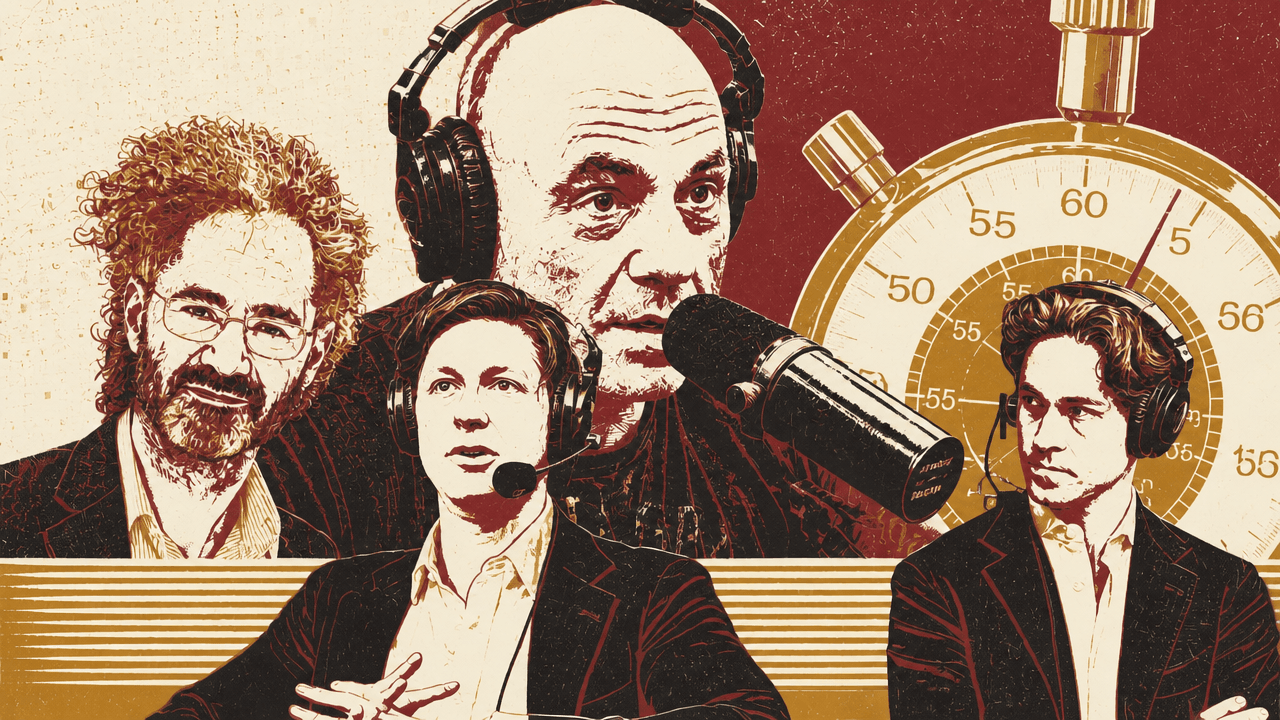
The lighter items still carried a media-and-market subtext. A tweet from the Austin Statesman said Austin-based podcaster Joe Rogan was reportedly being considered for a role at 60 Minutes, asking whether he could replace Anderson Cooper. Hays joked that the show would need to be called “200 Minutes” because Rogan records long podcasts; Coogan said it might simply be called “hundreds of minutes.”
Hays then made the case, jokingly but pointedly, that TBPN could do the job if Paramount’s Barry Diller were listening: they do 60 minutes three times a day and “put up a thousand minutes a week.” Coogan said they had once considered doing a morning show, taking a two-hour break, and returning for another show. The joke rested on a real media contrast: legacy television’s fixed-length format versus the internet’s tolerance for long, frequent, personality-led programming.
The final item was Audi’s Nuvolari. A Motor1 post shown on screen described it as Audi’s first supercar since the R8, with a twin-turbocharged 4.0-liter V8 hybrid, a 217 mph top speed, 987 combined horsepower, a 2.6-second 0-to-60 time, and production limited to 499 units worldwide.
Hays called it a big deal and joked that its top speed was 10% faster than a Cayenne Turbo GT, so Cayenne Turbo GT depreciation must be “through the roof.” Coogan said he thought Audi “did it” and that the Nuvolari looked amazing. Hays called the design “cyberpunky” and futuristic, saying it checked the box for the next supercar in a way the first version had not. Coogan suggested it felt somewhat Cybertruck-inspired. A producer or commenter named Ben apparently said it “can’t touch the R8,” to which Hays answered with the 2.6-second acceleration figure.