AI Exposes Which Software Moats Extend Beyond Code



John Coogan and Jordi Hays argue that AI has weakened software businesses whose main value is readily reproducible code, but has not erased the value of companies built on distribution, customer relationships, operational infrastructure and embedded workflows. They use Chegg as the clearest case of direct displacement, while arguing that platforms such as Shopify, Twilio and Roblox retain harder-to-recreate assets. The discussion also examines how remote hiring can be exploited by North Korean IT workers using stolen identities and U.S.-hosted devices, and why high compensation may not keep AI researchers from leaving large labs to found companies.
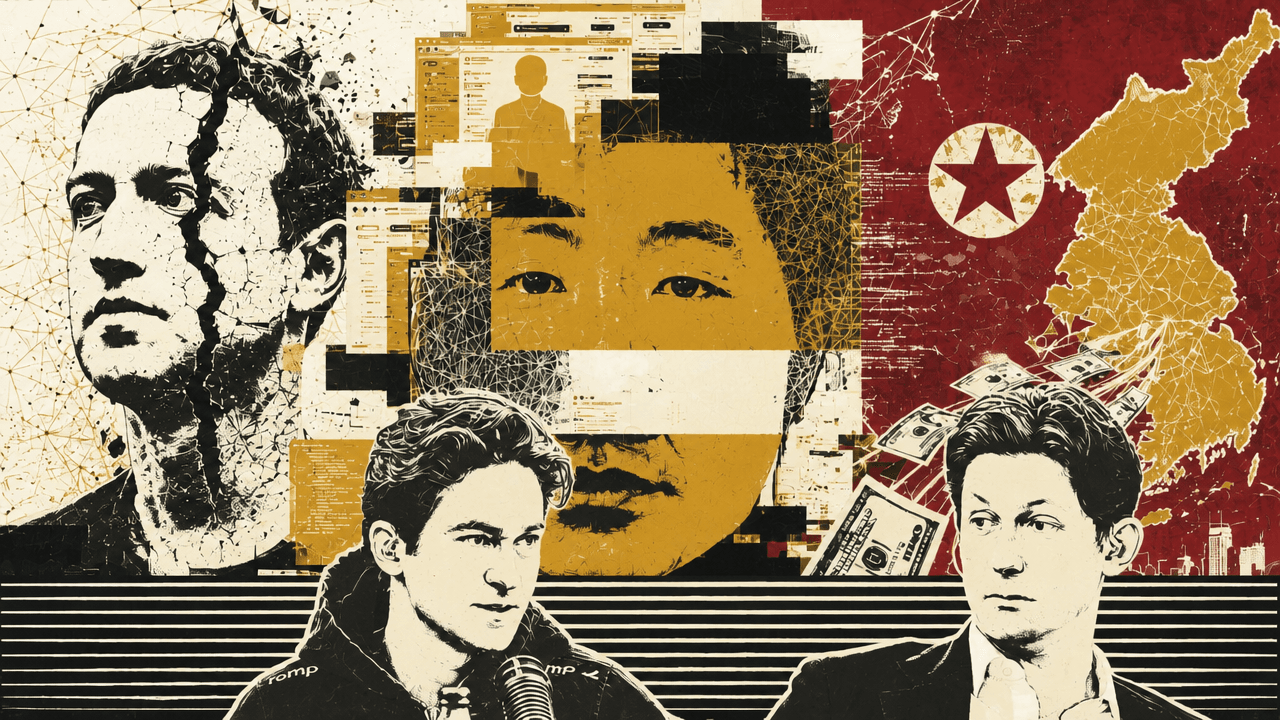
AI made code cheaper, not every software business replaceable
John Coogan and Jordi Hays argue that the “SaaSpocalypse” confused a real long-term pressure with an immediate, universal verdict on software companies. The fear was that AI-assisted coding would let companies build their own CRM, commerce stack, or other application quickly enough that any business built on a large body of code would lose its value. Coogan puts the resulting technology-and-software sell-off at $2 trillion in lost market capitalization.


Their corrective is not that AI leaves software untouched. A large, monolithic software product is less defensible as a moat than it was a decade ago, Coogan says, and point solutions face more competition. But code is only one part of what customers buy. The businesses that recovered had assets that did not fit neatly into a “lots of lines of code” analysis: distribution, customer relationships, operational infrastructure, network effects, and systems embedded deeply enough in a customer’s work that replacing them is a far larger task than generating a user interface.
Many of those SaaS companies that were so beaten up in the SaaSpocalypse were revealed to have sources of strength that didn't fit neatly into the lots-of-lines-of-code-written bucket.
The hosts emphasize the economics of the customer relationship. A vendor taking a large percentage of a customer’s revenue creates a visible target for replacement. A service that costs a tiny fraction of revenue while handling a critical workflow is harder to dislodge. Hays offers Shopify as the example: ecommerce operators, even successful ones, are unlikely to describe Shopify as their largest expense. Coogan cites a business he knows that does nearly $100 million in annual revenue and pays roughly $1,000 a month for Shopify Plus.
The replacement problem is not simply whether an AI model can generate a storefront. Hays argues that, even with current models, matching Shopify’s product would require multiple people “vibe coding around the clock.” A working commerce stack requires more than pages and checkout flows; the hosts’ broader point is that it includes the accumulated operational capability customers depend on.
Six months earlier, they had used Google, Meta, Spotify, Shopify, Roblox, and Salesforce as examples of large software businesses that had become targets of the broader anxiety. Coogan’s view is that Google and Meta should not have been beaten up in the first place. Spotify and Roblox illustrate the more useful distinction. AI may make music generation easier, but listeners could still consume AI-generated music through Spotify. AI may allow more people to create games, but Roblox retains its network, infrastructure, and distribution.
The same reasoning, in their telling, applies to tools that look simple from a distance. Twilio is often described as a service for sending text messages, but Coogan says recreating that function means dealing with mobile carriers, deliverability, spam controls, and relationships built over decades. His company uses Twilio to let people interact with its app over text message. An agent may be able to select such a service from a shelf, he argues, but that makes the service useful infrastructure for agents rather than proving it can be casually rebuilt.
Cybersecurity also belongs, in the hosts’ view, among the categories AI has made more valuable rather than less. Coogan cites Palo Alto Networks, which he says is up 121% over the past year and valued at $320 billion, and CrowdStrike, up 107% over 12 months with a $230 billion market capitalization. He notes that Palo Alto CEO Nikesh Arora invested $10 million of his own money after investors questioned whether AI could disrupt cybersecurity; Coogan says the stake is now worth $26 million.
That does not make every incumbent durable. Chegg is their canonical case of a business whose core value proposition has been directly weakened by baseline large-language-model capabilities. If the product is helping students find answers and work through homework, Coogan argues, the free versions of ChatGPT, Gemini, or other models can perform much of that function. Hays cites Chegg’s 2025 revenue of $376 million, down 39% from $617 million in 2024, and puts its market capitalization at roughly $80 million to $90 million. Coogan says the stock is down 99% over five years.
Canva may face a related pressure, he adds, because some designs can now be produced in a single prompt using image models. The distinction is not between “AI winners” and “SaaS losers” in the abstract. It is between companies whose principal output can be readily generated and companies whose value is inseparable from trust, networks, distribution, compliance, customer workflows, or difficult-to-reproduce operations.
Remote hiring can be exploited as an access and identity system
The Wall Street Journal’s investigation into North Korea’s covert IT workforce gives that operational layer a more troubling form. John Coogan describes the Journal’s reporting as a year-long investigation built around leaked browser histories, emails, calendars, and screen recordings from one cell of workers. The Journal’s documentary, Infiltrated: North Korea’s Secret US Workforce, follows workers who allegedly sought jobs inside American companies through stolen identities, AI assistance, and U.S.-based facilitators.
According to Coogan’s account of the investigation, the FBI says thousands of North Korean IT workers are applying for jobs across the United States. One cell documented by the Journal applied to more than 1,000 companies in three months. AI is used throughout the process, including in technical interviews: Coogan describes candidates keeping a voice agent active during interviews so it can retrieve or generate answers to questions about technologies they do not know.
The scheme does not depend solely on overseas applicants submitting false résumés. It can also use Americans as nominal employees. In the arrangement Coogan describes, an American completes the interview, receives the company laptop, and collects a salary while allowing a North Korean operator to perform the work remotely. The American sends part of the earnings to the operator.
The laptop matters because it can remain physically in the United States. American facilitators are reportedly paid to host company-issued machines, allowing workers overseas to remote into them while appearing to be domestic employees. Coogan says workers may also operate from countries such as China or Russia rather than directly from North Korea, using those locations and U.S.-based devices to obscure where the work is being performed.
The workers allegedly use stolen American identities to clear employment screens, sometimes holding several jobs under one identity and managing multiple identities at the same time. Coogan links the growth of the practice to the remote-work boom during COVID, when a company could hire someone and ship them a laptop without ever meeting them in person.
The scale described in the reporting is financial as well as operational. Coogan says some North Korean IT workers earn as much as $300,000 a year. He also cites Treasury Department estimates that the North Korean government can seize as much as 90% of overseas IT-worker wages and that these operations generated nearly $800 million in 2024.
One participant discussed in the documentary described a $75,000 job whose salary was split evenly between himself and a North Korean counterpart. Coogan says that participant appeared likely to face legal consequences, while also seeming to have been in a difficult personal situation. The Journal’s account nonetheless makes clear how essential such facilitators are: they provide the physical presence, identity, and U.S.-hosted equipment that allow overseas workers to appear as domestic remote hires.
For employers, the reported exposure is concrete: fraudulent applicants can obtain engineering roles, receive company laptops, and remotely perform work through devices hosted in the United States. The operation Coogan describes turns remote hiring into a problem of identity verification, device location, and who is actually operating an employee-issued machine.
A talent raid can buy time without resolving the founder impulse
Jordi Hays and John Coogan treat Jiahui Yu’s departure from Meta’s MSL division as a case study in the limits of compensation as retention.


Yu had been among the first high-profile people to move from OpenAI to Meta during Meta’s recruiting push. The source showed the move as a blue trading-card-style graphic: a photograph of Yu framed beside the text “OpenAI → Meta” and “Jiahui Yu traded.” About a year later, Yu announced that he was leaving Meta to start a company.
In the statement read by Hays, Yu described building the TBD lab alongside Mark and Alex as “deeply inspiring and fulfilling.” He said he was proud of his multimodal team’s work across Muse Spark, Voice Mode, Muse Image, and Muse Video, and of the team behind it. But he also wrote that he had become increasingly drawn to a problem that would matter deeply to humanity’s future and remained largely underexplored. He did not specify the problem or provide a detailed explanation for leaving.
Coogan’s interpretation is that Meta’s talent effort is operating against a clock. The company made a large talent raid about a year earlier, he says, and some recruits with nine- or 10-figure packages may eventually decide they have enough financial security to pursue their own companies.
- August 2025Yu’s move from OpenAI to Meta was depicted in the source as the first TBPN trading-card-style talent-move graphic.
- About one year laterYu announces that he is leaving Meta to start a new company, citing an increasingly strong pull toward an underexplored problem.
“Twenty-five percent of a huge pile of gold is still a huge pile of gold sometimes,” Coogan says: a smaller ownership stake in a new venture can be attractive once an employee no longer needs a large salary to reduce personal risk. The question changes from how much compensation can be secured to whether the work is fulfilling and whether the person wants to choose the problem rather than contribute to someone else’s agenda.
Hays does not present Yu’s decision as evidence of a particular dissatisfaction at Meta. Instead, he frames it as a recurring choice for well-compensated technical leaders. Yu’s exit, Hays argues, is unlikely to be the last from MSL in the next month or two.
The point is narrower than a verdict on Meta’s strategy. Compensation can buy time, attract scarce people, and assemble a frontier team. It cannot eliminate the appeal of founding a company for people who want to own the work and define its direction.
A Decart acquisition would make world models a strategic bet
A social-media post shown on screen attributed to @zerohedge said Anthropic was “in talks to buy AI startup Decart for $6 billion.” The hosts treat that as a reported discussion, not a completed acquisition or an established strategy.
John Coogan says Decart had been valued at $4 billion a quarter earlier and has been working in image and video generation. Hays points to the confidence Decart’s team had shown in public demonstrations: Dean, he says, was willing to run live product demos without pretesting them. For Hays, that was evidence that the company believed its technology could withstand unscripted use rather than only polished presentation.
Coogan relays a view that Decart could be one of the first AI companies focused on world video models to be acquired by a frontier lab. If the reported deal were to occur, he says, it could indicate that frontier labs regard world models as a strategic capability alongside inference optimization.
That implication remains speculative in the hosts’ telling. Coogan does not claim a settled connection between world models and the current markets for enterprise software or coding tools. He describes the technology as impressive but still primarily in the prototype-and-demo stage, without the broad consumer breakout that image generation received during the surge of Ghibli-style outputs.
The strategic interest, as Coogan frames it, is tied to wider optimism around what world models may contribute to AGI efforts. The reported price, if accurate, would therefore be significant not simply as an image-generation acquisition, but as a signal that a frontier lab saw simulated or generated video worlds as a core capability worth owning.
Independent reviews can conflict with the privacy luxury hotels sell
The dispute between Aman and luxury-hotel reviewer Ryan Walker turns on competing ideas of what a review is for. Walker says he pays for hotel stays himself and does not take payment from the properties he reviews. Coogan compares that arrangement to the independent-review model associated with Doug DeMuro: paying one’s own way is meant to make a reviewer less beholden to the business being assessed.


The Wall Street Journal’s account of Walker’s canceled $4,663 stay at a newly opened Aman hotel complicates his video’s framing. Walker told viewers that he arrived and was informed that he had no reservation, and that staff eventually called police to escort him away. Coogan recounts the Journal’s reporting that Aman had emailed Walker the prior day to cancel because of scaled-back opening-week capacity.
Walker initially said in his video that the email had arrived late the previous night. When questioned by the Journal, Coogan says, Walker revised the timing to the prior morning. He did not amend the timeline in the original video or in a later livestream.
An Aman spokesperson said Walker had bypassed the main entrance and ended up at a staff-access point, while declining to comment on bookings. Hays’s view is more pointed: Walker was looking for trouble. He cites the fact that Walker booked a single night during opening week and filmed despite, in Hays’s account, knowing he should not.
The resulting audience split is central to the dispute. Walker’s YouTube comments largely treated the cancellation as evidence against Aman; the source says more than 5,000 comments appeared, many expressing similar criticism. Commenters responding to the Wall Street Journal’s coverage were much more supportive of the hotel, including one saying that a hotel that bans influencers is doing regular guests a service.
Coogan’s narrower observation is that people choose places such as Aman partly because they do not want cameras around them. The dispute is therefore not only about whether a reservation was handled properly. It is about whether influencer documentation functions as consumer accountability, or whether it undermines the seclusion and discretion that a luxury hotel is selling.