Microsoft’s Autopilot Bet Puts Consumer Distribution at the Center of AI Agents
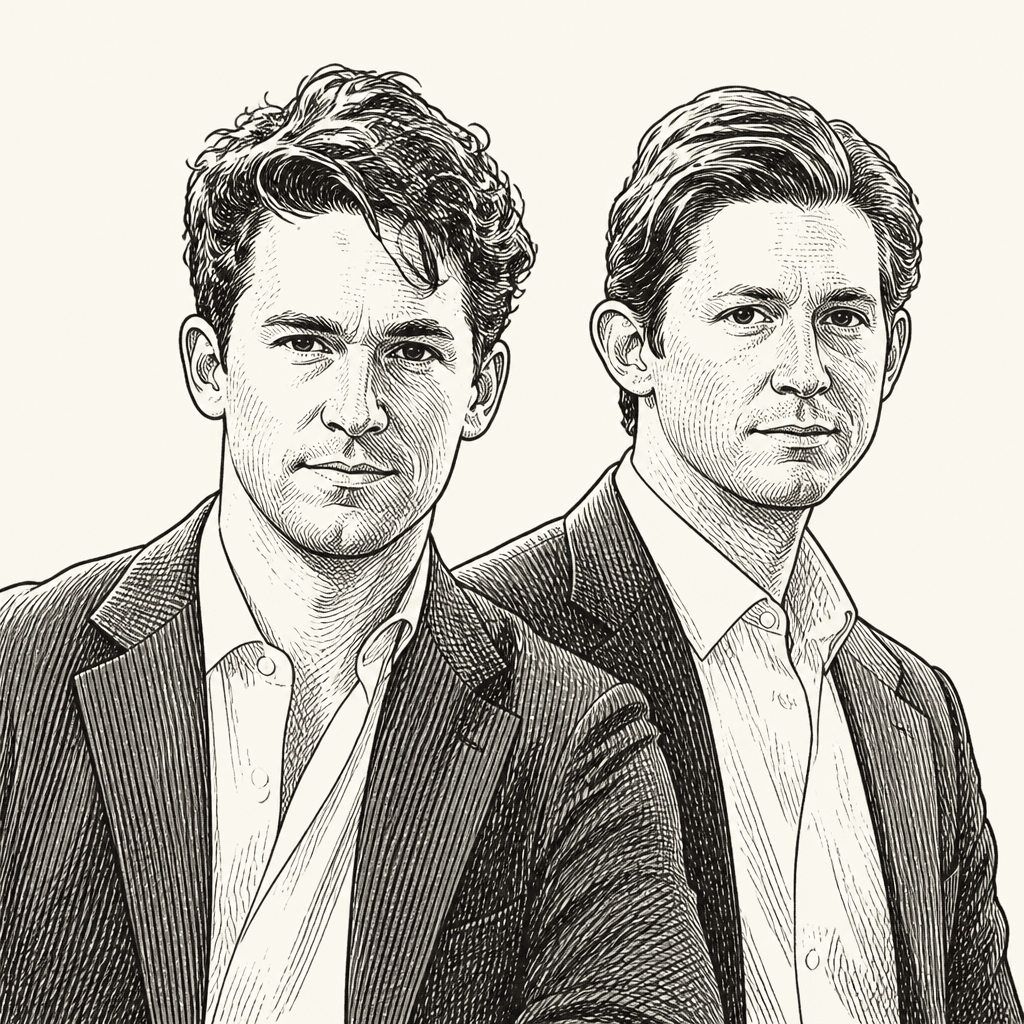

Microsoft is recasting Copilot as Autopilot, a consumer agent designed to work across a user’s services and personal life. On TBPN, John Coogan and Jordi Hays argue that Microsoft’s reach among ordinary consumers could matter as much as the agent’s capabilities: people may encounter it through tools they already use, even if AI enthusiasts are not drawn to a Microsoft-branded product. But acting across services asks users to trust an agent in a more active role.
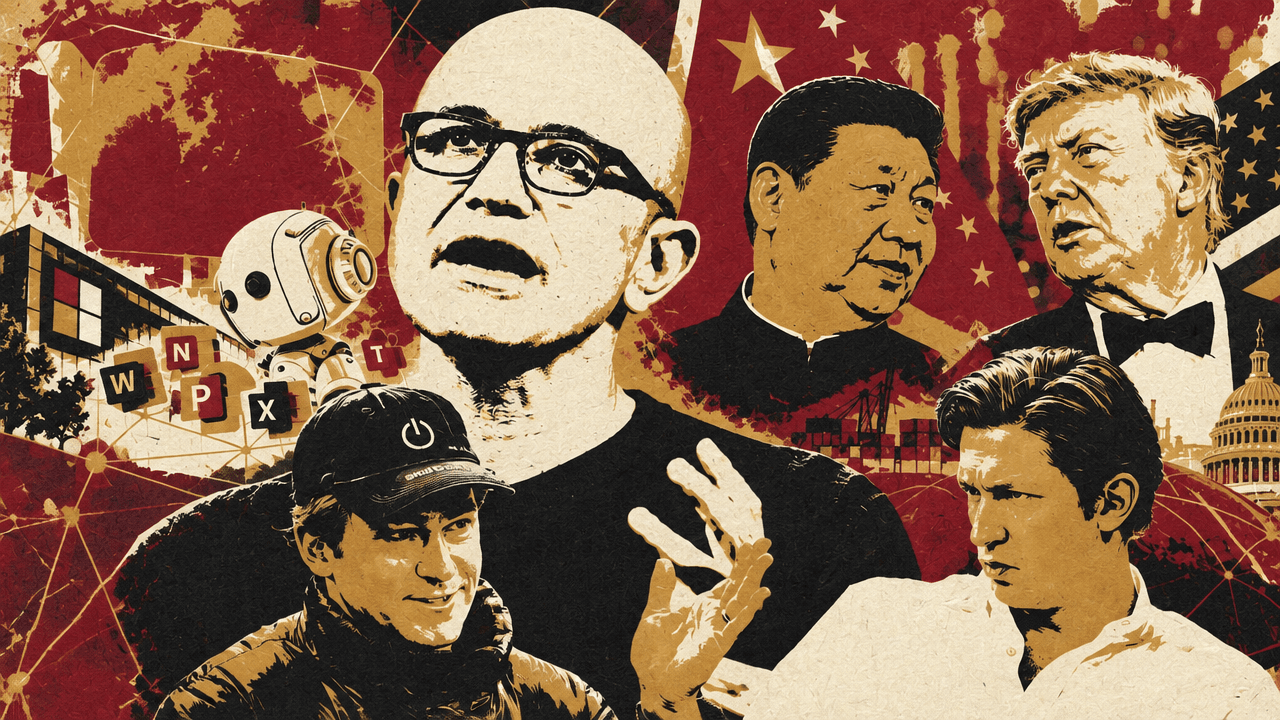
Microsoft’s agent bet depends on distribution as much as capability
Microsoft’s move from Copilot to Autopilot signals a change in ambition: the product is meant to work beyond familiar office applications and into a user’s personal life. In an interview with Alex Heath, Satya Nadella described bringing Microsoft’s AI “chief of staff” to consumers. The agent, described in the discussion as built on a hardened version of OpenClaw, would have its own computer, workspace and memory, allowing it to keep working over time. Nadella pointed to Microsoft’s more than 100 million consumer subscribers and said Autopilot “should also go to the consumer side.” He sees consumer agents as potentially cutting out intermediaries, while enterprise agents could make the market larger than cloud “by orders of magnitude.”
The name matters to Jordi Hays: “Copilot” suggests assistance within an existing workflow, while “Autopilot” implies a system that keeps going without continuous direction. The hosts treated the branding as a signal of Microsoft’s intentions, not proof that the product will deliver on them. John Coogan saw a broader pattern: companies are building toward the same kind of agent, much as they earlier converged on chat apps.



The shift is not just a new interface for a more capable model. The models, the hosts said, have reached a point where they can support a different use: acting on a user’s behalf, rather than mainly retrieving information or writing code. That requires a new “harness”—the product layer, integrations and partnerships that let a model perform useful work. Coding assistants such as Claude Code, Codex and Cursor helped define the previous wave; personal agents need connections to services such as Slack, retailers and other platforms. The hosts raised the question of which companies will partner with agents, naming Amazon, Walmart and Shopify as examples.
The infrastructure matters, but so does user education. People still encounter AI as a system that can hallucinate or has a knowledge cutoff, the hosts noted. An agent that messages people or coordinates across services asks users to trust it in a more active role.
OpenClaw founder Peter Steinberger said Microsoft had shipped a compelling product on top of OpenClaw and that the two teams had worked together since March to prepare the codebase for large-scale deployments. The hosts discussed whether Microsoft had built on or forked the project. They noted that OpenClaw remains open source and that similar conventions or file structures do not, by themselves, establish that one product was copied from another. They also recalled a separate claim that Microsoft built its product from scratch.
The harder question is whether the launch will matter to consumers. Coogan doubted that AI insiders would be especially excited to use a Microsoft-branded agent, even with a Claude connection. But Microsoft has a distribution advantage: ordinary Windows and Microsoft users may encounter the product through tools they already use and discover the agent category that way. Hays added a caveat about the company’s consumer position: many startups default to Google Workspace and Slack, while Microsoft’s full stack is more visible in finance and other established businesses.
The hosts compared the product’s potential with Google’s Gemini Spark, described as an always-on agent that continues working even when a user’s phone and laptop are off. They questioned whether Spark offers a virtual machine and observed that they had seen little public discussion of it. The competitive question is not only who has a capable agent, but who combines the right model, working integrations, a durable workspace and enough reach to make the product familiar. Microsoft’s consumer base could make Autopilot more consequential than its earlier Copilot products, even if it does not become a status symbol among agent enthusiasts.
The White House dinner put technology leaders inside a diplomatic gathering
A photograph shown during the discussion depicted Donald Trump and Xi Jinping at a state dinner, with Melania Trump, Peng Liyuan, Elon Musk, Tim Cook, Lisa Su and Jensen Huang seated around the table for a toast. The guest list displayed on screen extended far beyond technology: it included political figures, business leaders, media personalities and executives from finance, energy, aerospace and other sectors. Among the technology names listed were Sam Altman, Greg Brockman, Sergey Brin, Satya Nadella, Mark Zuckerberg and Jeff Bezos; David Solomon and other finance executives were also included.
The list’s omissions drew attention too. Coogan noted that Dario Amodei of Anthropic was absent, while the company’s co-founder Tom Brown had recently praised a Trump post about data policy at a G20 innovation event. The hosts did not know whether Amodei had been invited and declined or had not received an invitation. Coogan argued that Anthropic was important enough to be part of the conversation, particularly given the company’s hard line on China. A direct meeting with Xi, he suggested, could give Amodei a more firsthand basis for his views.
The guest list also prompted a lighter argument over which public figures were missing, including podcasters. The hosts named Joe Rogan and Jocko Willink as possible invitees, then noted that the line between business leaders and podcasters is not clean: David Sacks, Bret Baier and others have podcast connections. The gathering’s reach was the point: political leadership, major technology companies and other economic institutions appeared together in the same room.
Kalshi’s ad turns a small market into a story about gambling
Kalshi’s animated advertisement used domestic betrayal as its hook. A man thinks his girlfriend is cheating because she repeatedly sends grocery money back to him. The reveal is that she is betting on egg prices through Kalshi: she works a morning shift at a bakery, notices the price movement and places a trade. The on-screen ad paired an AI-generated animation with a song and a dramatic setup. Coogan found the lyrics and details rough, including the repeated account of money being sent for groceries and returned.
The story also raised a practical question: could a consumer actually use a prediction market to hedge food costs? Hays checked the egg-price market and found a 72% probability, but only $417 in volume. Coogan said that could still be enough for someone with a small grocery bill; he did not think the scenario was necessarily fraudulent. His objection was more to the ad’s sloppiness and clickbait structure than to the basic idea that a baker might use market information to trade.
The distinction between a market’s intended use and its consumer presentation remained unresolved. Coogan argued that commodity markets exist partly to let people respond to information about supply and prices, and that a baker acting on experience is not automatically engaging in insider trading. But he questioned whether a consumer app can convey the limits and risks of that activity to people without the research resources or financial expertise of a professional trading desk. The small volume in the egg market made the example plausible at a small scale, while the ad presented the trade as a neat personal solution.
Hays’s larger concern was the volume and normalization of gambling advertising. He said that, as an adult, he felt capable of seeing such ads and deciding they were not for him. His worry was that young people growing up online could see a huge number of gambling ads before adulthood, making betting feel ordinary and immediately available. Ads that frame gambling as a way out of financial pressure can imply that a risky product is a solution. Coogan’s counterpoint was that avoiding participation may be the real way out, especially for people at risk of developing an addiction.
Dopamine sites preserve the shopping ritual and remove the purchase
A post about South Korean “dopamine sites” described websites that recreate the sequence of online shopping—searching, reading reviews, adding items to a cart, entering a shipping address and tracking delivery—without delivering anything. The writer said they had placed imaginary orders for a $44,860 Patek Philippe watch, a $12,500 Hermès bag, a $9,800 Tiffany ring and a $7,350 Cartier bracelet, adding that they neither needed nor could afford the items.
Hays called the sites strange and sad: a reflection of a culture oriented toward consumption rather than creation. The hosts asked whether the sites were as troubling as sports betting or not troubling at all. They did not settle the comparison, but the design of the sites gives it force: the user can repeat the browsing and ordering ritual while avoiding both the expense and the arrival of the goods. The experience is shopping stripped of its practical outcome.
AI investment may be affecting yields, but the evidence does not settle the cause
The discussion framed the rise in the 10-year Treasury yield as a question of competing explanations. A chart shown on screen put the yield at 5.183%; the hosts clarified that this was a move up from lower levels in the 4% range, not a rise to 18%. One explanation was the Iran war and its effect on energy prices, with inflation and expectations for future rate hikes pushing yields higher. Another, advanced by investor Roon, was that large AI capital expenditures are creating substantial demand for borrowing.
The scale of borrowing was part of the argument. One host said hyperscaler and Nvidia debt issuance as a share of total Treasury bond issuance through 2026 had been about 70%, compared with about 30% in 2025.
Astrid Wilde agreed that strong returns and short payback periods could make data centers unusually attractive places to deploy capital. The hosts pointed to the growing number of neocloud companies and data-center projects, including efforts associated with chip companies, as evidence that the buildout extends beyond the largest cloud providers. One host described people being drawn to data-center spreadsheets by the prospect of short payback periods, including a social-media course promoter who said he had bought GPUs and rented them to a data center. The analogy was to buying an apartment building for rental income.
But private data-center projects are not equivalent to government bonds. A reply from DeepDishEnjoyer argued that AI opportunities are not riskless and that private, illiquid AI investments cannot be used as collateral in the same way. A neocloud can go bankrupt, leaving bondholders with a loss. That makes it hard to treat investment demand for AI infrastructure as a direct substitute for Treasuries, even if it draws capital and borrowing into the sector. One speaker still thought there was probably some effect, while acknowledging the risk difference.
A separate argument was that the yield is not historically extraordinary. Cullen Roche said the 10-year yield has averaged 5.8% since 1960 and was around 5%, below that long-run average. He described the current anxiety as recency bias and linked the shift to more historically normal inflation expectations. The hosts also cited a Wall Street Journal account of a resilient U.S. economy, with growth, hiring and AI investment continuing despite inflation, tariffs and higher borrowing costs. The paper’s framing was that AI’s potential returns may be bright enough that even steep interest rates will not slow technology companies’ investment.
The hosts suggested that higher rates may affect young AI companies differently from high-multiple software firms built when rates were near zero. A company already planning for a 4% discount rate may be less affected by a rise from 4% to 6% than a company whose valuation assumed near-zero rates and profits far in the future. That does not settle whether AI borrowing is pushing yields higher. It helps explain why the same rate increase may not put the brakes on every technology investment equally.
American buyers are turning the Cotswolds into a trophy asset
The Cotswolds’ appeal to American buyers was presented as an unusual shift in what counts as an American investment property. A report discussed on screen said that Harry and Meghan’s return to the UK had put the region in the spotlight and that a number of U.S. buyers were looking for homes there. The hosts contrasted that interest with the idea that buying or investing in the area was not traditionally seen as especially American.
One host joked that buyers may have seen what Paul Graham did and wanted to “putter” in the countryside. The other was asked whether he was interested and answered no. The exchange was brief, but it set up a broader contrast with the next property discussion: a country home abroad as a new kind of American trophy asset, followed by a conspicuous Silicon Valley listing at home.
A $44 million Palo Alto house turns its features into a taste test
The final discussion used a five-bedroom Palo Alto home listed for $44 million as a running design argument. Its owners, tech entrepreneur Asher Waldfogel and Helen MacLean, spent $20 million over several years building the house, completed in 2005. They had wanted a modern design that would sit comfortably in a neighborhood associated with Mediterranean architecture, using stucco, mahogany and titanium-zinc cladding. They are now selling as they plan to live closer to their adult daughter on the East Coast.
The hosts assessed the property feature by feature rather than treating the asking price as a verdict. Coogan gave the titanium-zinc cladding an A. The roughly 0.4-acre lot received an F, on the grounds that a true showpiece would need more land. He put staircases in D tier, preferring California ranch-style homes and saying he might feel differently when his children are older. The home’s 7,900 square feet earned a B, though he objected to the space being spread across multiple floors.
Four courtyards landed in D tier. Coogan said they sound appealing but are likely to go mostly unused. The pool, by contrast, earned S tier: he considers pools underrated, though he wanted to see what this one looked like. The two-story, 80-foot concrete wall or “spine” running through the home received a B, because it creates a continuous design theme. A second home in Sun Valley, Idaho, was also rated S tier.
The house’s Palo Alto location puts the listing in a market where the median sale price was reported at $3.5 million for the three months ending in August, up 5.8% year over year. Coogan still found it hard to get excited about the home at its price, comparing it with what a similar property might cost in Los Angeles. The exercise made the tension clear: the house can be a major local listing and a piece of Silicon Valley status, while its particular design choices remain matters of taste rather than automatic luxuries.