Meta’s Class C Plan Could Let Zuckerberg Sell Shares Without Surrendering Control



Meta’s proposed Class C shares would let Mark Zuckerberg sell, donate or use the economic value of his stake without giving up the voting control attached to his Class B shares. On Diet TBPN, John Coogan said the plan would distribute nonvoting shares rather than raise new capital; he and Jordi Hays treated a possible California tax exposure and Zuckerberg’s desire to retain control as plausible motives, not a settled explanation. They also argued that the iPhone Duo’s launch exposed a separate problem: developers’ apps were not fully adapted, but Apple remained responsible for the customer experience.
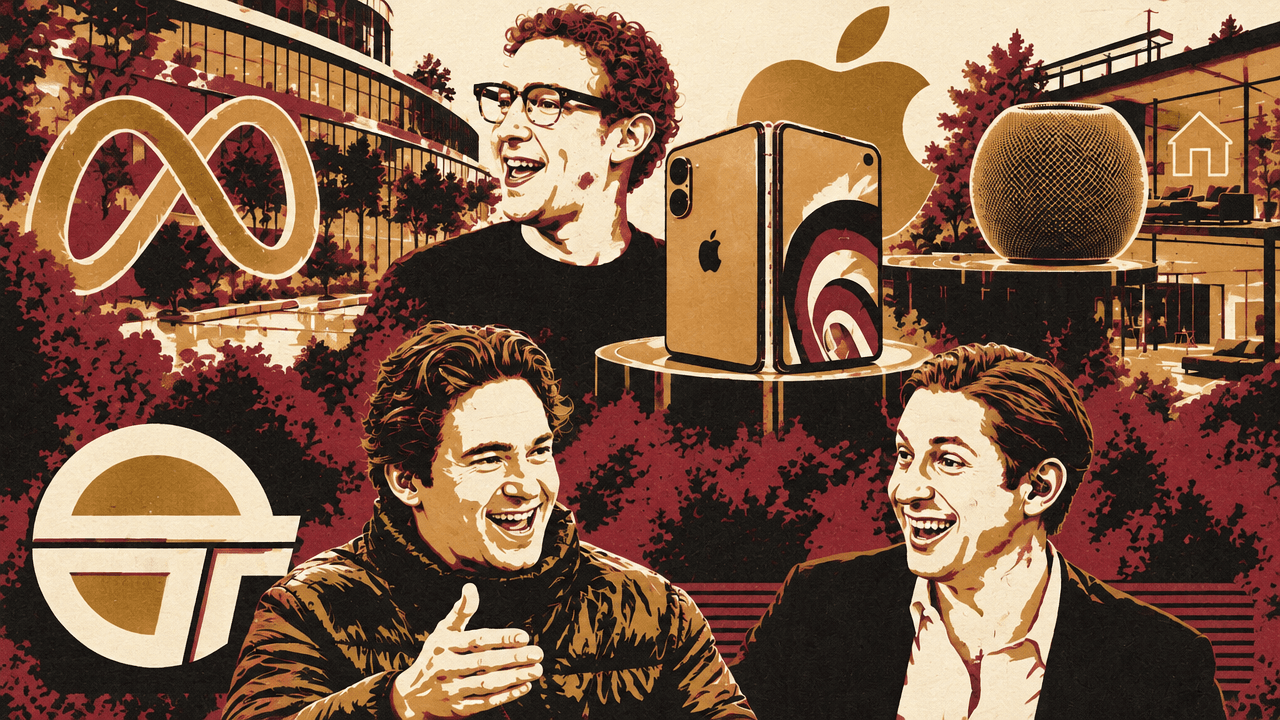
Class C shares separate Zuckerberg’s economic stake from his control
Meta’s proposed Class C shares address a structural tension: Mark Zuckerberg may want to sell, donate, or use the economic value of his Meta stake without giving up the voting control attached to it. John Coogan described the plan as distributing one nonvoting Class C share for each existing Class A or Class B share. He compared it to a two-for-one stock split, not a fundraising round: the distribution would not itself change shareholders’ percentage ownership or make Zuckerberg richer.
| Share class | Votes per share | Status |
|---|---|---|
| Class A | 1 | Existing |
| Class B | 10 | Existing |
| Class C | 0 | New nonvoting class |
The distinction is between economic interest and voting rights. Coogan said Zuckerberg’s Class B shares carry ten votes each, compared with one for Class A shares. The new Class C shares would carry none. Selling or donating Class C shares could transfer economic value without transferring the votes attached to Zuckerberg’s Class B shares.
Coogan argued that public-market investors are generally buying into a company’s financial prospects, not its voting rights. He compared Meta’s proposal with startup investments, where a stake can come with other terms—such as a board seat or information rights. In his account, Meta could offer economic value while preserving the existing control structure.
The company tried a related approach before. In 2016, when it was still called Facebook, it proposed nonvoting Class C shares. Coogan said the rationale was to let Zuckerberg retain control while selling or donating part of his economic stake to support the Chan Zuckerberg Initiative. Shareholders challenged the proposal, and Facebook withdrew it in September 2017, before a scheduled Delaware trial. Coogan said Zuckerberg later explained that Meta’s share-price appreciation had allowed him to fund the initiative without selling shares.
The stated goal, Coogan said, has not changed: allow Zuckerberg to sell, donate, or use the economic portion of his stake—including to pay taxes—without losing control of the company he founded. What is less settled is why the arrangement is being introduced now.
Coogan described the New York Times account as focusing on a possible California billionaire tax and negotiations between Zuckerberg and Meta’s board. As Coogan recounted the report, Zuckerberg had discussed the issue with board members over dinner on September 9 and effectively indicated that he would sell his Palo Alto home if no deal were reached. Coogan speculated that a public sale could affect the real-estate market for other board members with homes in the area; that was his interpretation, not a reported explanation of Zuckerberg’s position.
Jordi Hays treated the tax question as a serious possible motive. He said he had expected Zuckerberg’s Florida home to support a change of residency, and argued that if a proposed tax were retroactive, moving might not eliminate the exposure. Zuckerberg could still challenge the tax in court, Hays said, while leaving California might affect his position during that process. Hays described a potential conflict between avoiding tax exposure and spending time near Meta’s teams.
The hosts differed in how they read the residency issue. Hays said the New York Times account framed it as a possible choice between being on-site in Menlo Park and retaining control if the tax required Zuckerberg to reduce his voting stake. Coogan instead emphasized Zuckerberg’s apparent preference to work closely with the company. He described Zuckerberg as an unusually hands-on founder and suggested the board might be more relaxed about where he lived than Zuckerberg himself would be.
Hays compared the situation with Google’s co-founders, whom he said had used a stock split to maintain voting control while relocating to Florida. He suggested the moves drew less attention because Sundar Pichai was the company’s public face. The comparison supported Hays’s broader view that the tax and control questions can coexist, rather than reducing the deal to a single motive.
The plan also sits alongside Meta’s capital spending. Hays contrasted current debate over the return on Meta’s AI investment with earlier criticism of companies such as Google for holding cash and returning it to investors rather than pursuing new opportunities. Meta’s stated outlook was:
Hays acknowledged that the return on Meta’s AI capital expenditure was being debated, but saw the company’s willingness to invest at scale as preferable to simply returning cash to shareholders. In his view, the share plan and the investment push can be understood together: Meta is preparing to deploy substantial capital while Zuckerberg seeks a way to preserve control. The hosts treated both tax exposure and continued investment as plausible parts of the rationale, not as a settled account of the board’s thinking.
The iPhone Duo’s launch exposed a gap between new hardware and ready software
The iPhone Duo’s early problems raised a question of responsibility: developers’ apps were not fully adapted, but Apple was still selling customers the device. In the YouTube example discussed by Hays and Coogan, the app stretched across the Duo’s two displays but left a black bar on the right. A screenshot of Apple’s own timer showed “15mi” clipped where the hosts expected a clear 15-minute display. Hays called the launch embarrassing and said the responsibility ultimately rested with Apple, even if developers also had work to do.
Hays said a report he had seen indicated that major developers had access to the device for about a month. That made it reasonable to ask why familiar apps were not better prepared. Coogan wondered whether developers had received devices, software previews, or an emulator early enough. Hays’s answer was that Apple owned the overall customer experience: a customer encountering a poorly adapted app on a new Apple device would still experience it as a failure of the product.
The hosts also disagreed about how comparable the Duo was to Apple’s Vision Pro. Coogan recalled Apple inviting developers to build for the headset, while many technology companies declined, in part because they did not want to build for a platform where Apple would take 30 percent. Hays said the Duo was different: it was an extension of the iPhone rather than a separate ecosystem. That made the lack of polished support from familiar apps more conspicuous.
A TechDroider post added another point of criticism: Apple had mocked black bars and compromised layouts on other foldable devices, then released a product that showed a black bar in the YouTube example. Coogan said the comparison had a point. Even if the app’s developers were responsible for their implementation, he said, launching with black bars was a rough start. The timer example made the problem harder to attribute to outside developers because it involved Apple’s own software.
The evidence the hosts discussed was concrete but limited: visible layout problems in apps, plus a timer display that did not look finished. Against that, Coogan expected software support to improve quickly. He suggested that if an app developer faced a small share of users on the Duo, adapting the app might not otherwise seem worth the effort. If an AI agent could get the developer most of the way toward a suitable layout, he reasoned, the work might happen sooner. That was a forecast, not evidence that the launch problems would be fixed on a particular timetable.
The hardware had its own appeal. Hays liked watching someone flip the Duo open with one hand, calling the motion satisfying and comparing it to a fidget spinner. Coogan joked that the software could be broken and the device might still be enjoyable to handle. But the pleasure of opening the phone did not resolve whether its software was ready for everyday use.
John Gruber’s review gave the hosts a concise description of that gap. He wrote that the Duo felt like “an extraordinarily polished prototype,” not a finished product he would want to buy and carry. Hays also cited Tae Kim’s description of the phone as half-baked and his suggestion that many people might be better off with an iPad Mini and a hotspot. Coogan was more optimistic about software improvements, but the hosts’ examples showed why the prototype comparison had force: the device could be compelling as hardware and still present unfinished experiences at launch.
They also discussed durability separately from software polish. Coogan said Joanna Stern had tested a device built to fold repeatedly, putting it through 32,000 folds, and that it appeared to hold up well. He was less concerned about the crease becoming more visible after repeated folding, saying he did not think most people would care. The durability test offered a reason for confidence in one aspect of the device; it did not answer the hosts’ concerns about app layouts or the timer.
Milton’s replies kept the mock-up dispute alive
The aircraft at SyberJet’s October 19 unveiling was a full-scale mock-up, not a finished plane. That distinction mattered in the online dispute over the event: Coogan and Hays discussed a photo in which a support post appeared beneath the mock-up’s wing, while Trevor Milton posted a different image and told critics to “see the real picture.”
Hays read Milton’s reply to the hosts’ video. Milton said SyberJet had more than 50 aircraft “on order slash LOIs by real buyers” and called the event potentially the most successful jet launch to date. In a separate reply to The VIP Seat, which had attended the unveiling and criticized the presentation, Milton claimed the company had landed “almost a billion in orders.” He called the outlet a clown and accused it of misleading people.
Coogan said he had checked video of the presentation and seen the support post, so he understood the criticized photo to show a real feature of the event. Hays joked that someone could have digitally modeled a post and composited it into the footage. The joke did not resolve the disagreement; the hosts’ point was that Milton’s alternative image did not settle what attendees had seen.
Hays also focused on the way Milton shared that image: a landscape photo appeared small inside a portrait phone screenshot, with the phone interface still visible. He called it “elite unk posting,” turning the clumsy presentation into another part of the exchange.
When a commenter compared Milton to a student who studies but never passes, Milton responded with a list of claimed accomplishments, including building companies and developing hydrogen and electric trucks. He also said he had broken a light-jet speed record as a pilot. The hosts questioned whether he had been the pilot on the record-setting flight, saying the account seemed to stretch the truth; they did not establish the details during the discussion.
Coogan joked that a plane “a little rough around the edges” might appeal to wealthy thrill-seekers. Hays and Coogan said Milton was welcome on their show, with Hays adding, jokingly, that they would need to spend two weeks with him first.
The hosts saw the Stripe deal as another step toward podcast ads
John Coogan welcomed Ben Thompson’s new Stripe sponsorship on Stratechery, arguing that the pairing made sense because Thompson had built his business on Stripe. Coogan also noted that Stripe was a successful company without the public-market earnings cycle that often drives technology coverage. He was pleased to hear that Stratechery would carry ads.
The hosts tied the deal to a goal they had set for TBPN: getting technology podcasts to accept advertising. Coogan named Stratechery, All-In, and TBPN, and joked that Conversations with Tyler remained an exception because he had not heard paid ad reads there. He also pointed to Tyler Cowen’s guest-hosting role on the New York Times’ Interesting Times as another possible opening for advertisers. Their victory lap was about making advertising more common across technology shows, not about a claim that every show had already adopted it.
The closing jokes turned to products and focus
Hays highlighted a bulky digital “gum watch” with a compartment for pieces of gum, calling it a real product and suggesting the team consider making it. Coogan liked the idea of having gum on one’s wrist. Earlier, the hosts had watched a clip of a heavily customized truck with chains along its side; Hays praised its maker’s unusual vehicles, while Coogan imagined it as transportation for a future in which the grid goes down.
The final post they discussed read, “just put the lightning in the bottle bro,” followed by a reply changing it to “whiskey in the jar bro.” Coogan turned the phrase into a lesson about focus: when something works unusually well, he said, double down and direct attention toward it rather than treating the success as routine.