Meta’s Consumer AI Strategy Puts Integration Ahead of Benchmark Leadership
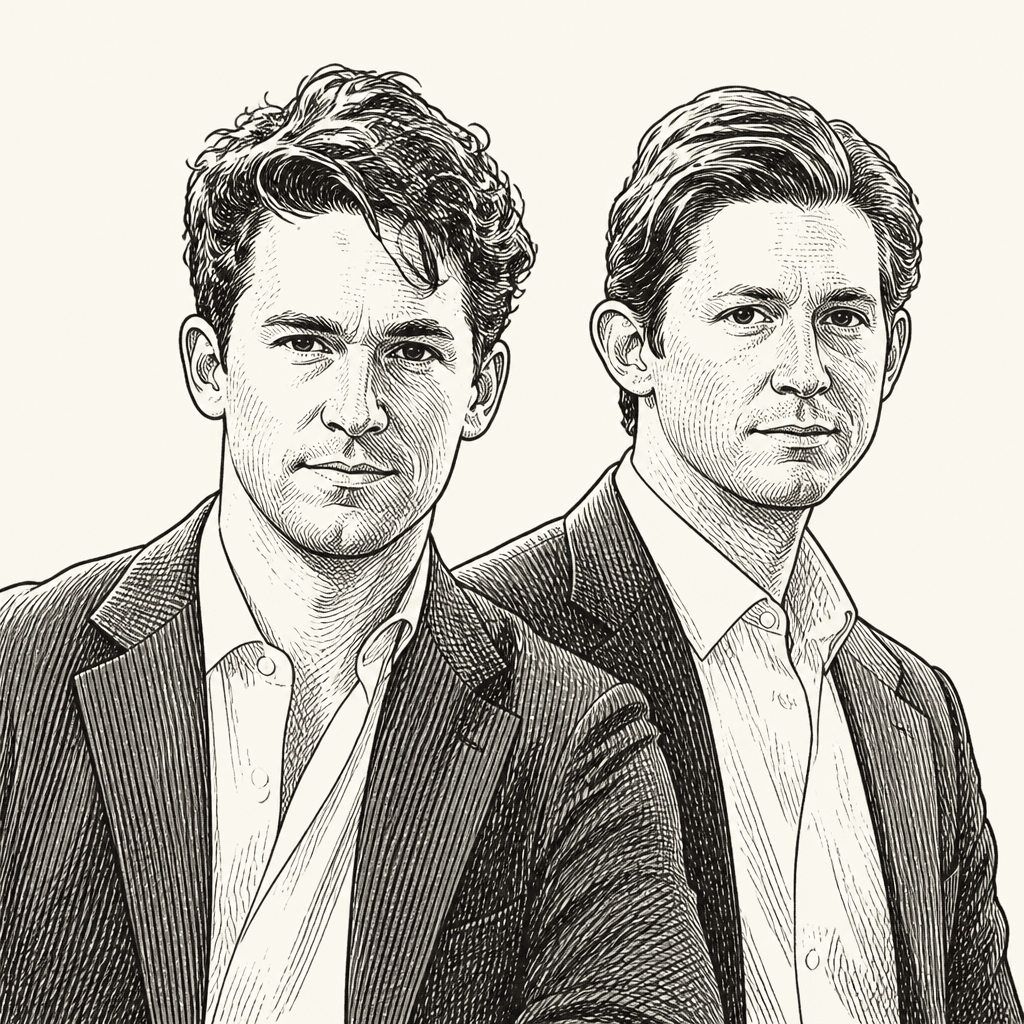

John Coogan argues that Meta’s consumer-AI strategy is becoming clearer: rather than win every model benchmark, the company can pair capable agents with its infrastructure, hardware and reach. He sees Muse as a practical assistant for ordinary tasks, while Jordi Hays questions whether Meta’s devices will keep users beyond their initial appeal.

Meta’s consumer-AI case is about usefulness, not benchmark leadership
At Meta Connect, John Coogan saw a consumer strategy emerge around Muse and what Mark Zuckerberg calls personal superintelligence: an AI agent for ordinary tasks, supported by Meta’s hardware, infrastructure and reach. The pitch was less grandiose than a race toward superintelligence. Coogan contrasted existential-risk talk with “Muse, it’s a helpful agent.”


The keynote helped make that case. Coogan described it as a tightly paced, one-hour presentation with three live demos. Zuckerberg had to get through them without a repeat of the previous year’s demo trouble, when, Coogan said, a wake word triggered agents in the room. This time the demos used the agent’s name instead. Coogan and Jordi Hays disagreed briefly over whether live demos are necessary. Hays argued that people have bought too many hardware products that failed to meet expectations; for hardware, he said, a live demo helps show what a product can actually do.
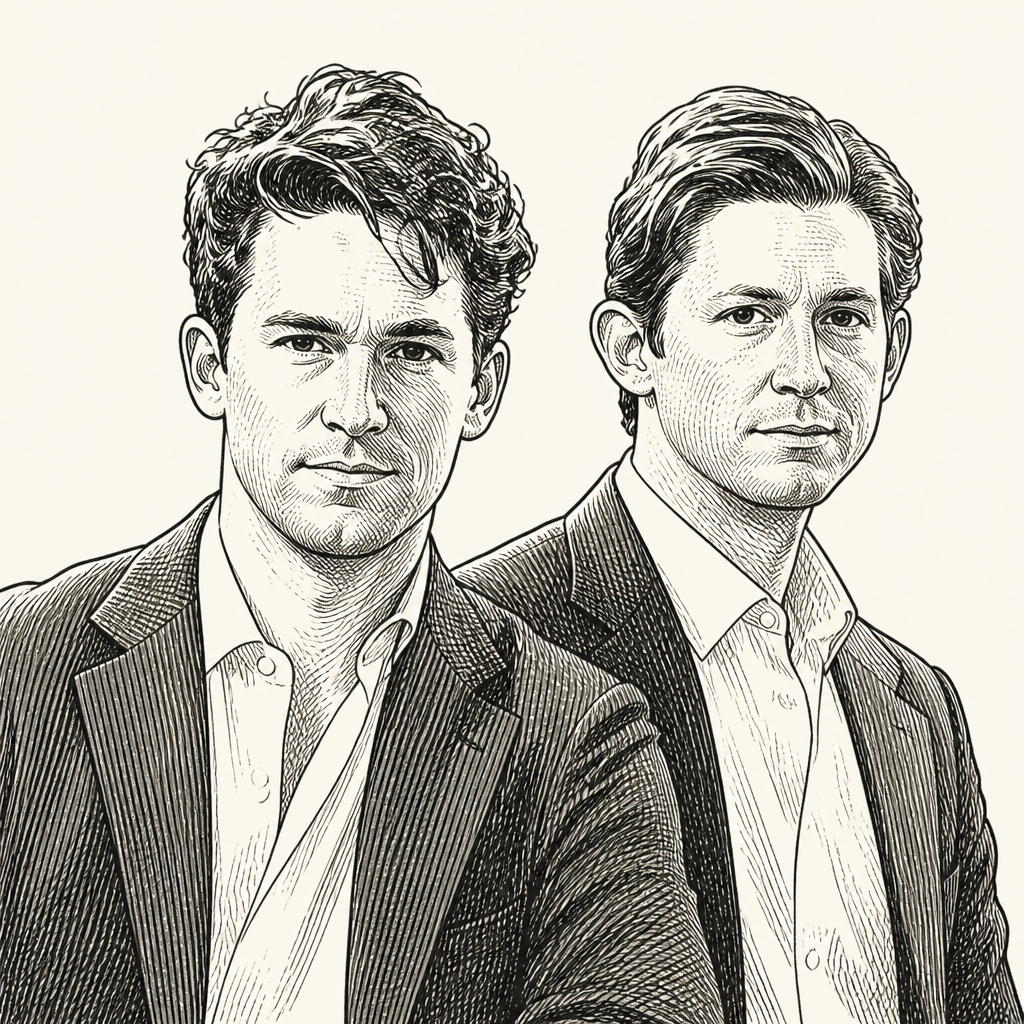

That framing matters because Meta’s AI efforts had looked scattered. Hays pointed to coding products, a short-form video app that looked like a Midjourney wrapper, and a Meta AI chat app that had not become a clear destination. He did not credit Meta with having planned all of this as “4D chess.” He did give the company credit for connecting the pieces in a presentation that made the personal-agent strategy more legible.
Coogan’s case for why it might work rests on four advantages. First, Meta already operates large, secure systems and has substantial computing capacity. He cited WhatsApp encryption as an example of the company’s experience building systems at scale, and argued that its infrastructure could support well-resourced virtual machines for many users. The question had been what product would make use of all that capacity; a personal agent could be one answer.
Second, Meta can distribute and explain features through its family of apps. That is different from simply sending people to another social network. Coogan said Meta had moved roughly half a billion people to Threads, but argued that AI products pose a harder educational problem: users need to be told what an agent can do, and those capabilities can change from one model update to the next. A billboard-style campaign can explain a new phone feature; Meta can apply similar reach to teaching consumers what Muse can handle.
Third, the strategy does not depend on Meta having the best model on every benchmark. Coogan argued that most consumers do not need an agent to solve a Millennium Prize problem or defend enterprise infrastructure. They need it to do practical jobs. If the model is good enough for those tasks, the product’s integration and “harness” may matter more than benchmark rankings.
The harness is what matters, the integration, the distribution, that’s what matters.
Coogan noted that Meta did not launch the more powerful-sounding “Watermelon” model it had been teasing. He suggested the company might have chosen not to rush it, or that a major consumer event was not the right venue. Hays joked that a watermelon might scare people.
Fourth, Meta already has an advertising business that could, in the hosts’ speculation, fit agentic workflows. Coogan imagined an agent noticing that a user had engaged with a movie trailer, then offering to buy tickets, message friends and arrange a calendar invite. Hays added a scenario in which an agent shops for competing home-insurance bids ahead of renewal. These were examples of possible paid placement within a task, not a product or advertising model Meta announced at Connect. Coogan argued that businesses might pay for that kind of attention.
The speakers also saw a change in how Meta presents AI. Coogan contrasted the company’s friendly, practical Muse marketing with more ominous language around powerful AI elsewhere. A joke by Neeraj K. Agrawal captured the difference: one company had built “a god only we can control,” while Muse could help clear unpaid parking tickets. Coogan said Meta’s warmer approach seemed to be landing, including with a New York Times reviewer who praised Muse.
A clear product strategy could also give Meta employees a shared direction. Coogan said work on infrastructure, software or glasses could be presented as contributing to personal AI. He contrasted that prospect with a Verge report describing dissatisfaction with Meta’s scattered approach and the aftereffects of its metaverse ambitions. Hays pointed to Meta’s rising stock price as a reason employees might feel better.
The new headset trades spectacle for a plausible use case
The most striking hardware announcement for Coogan was a $1,299 headset weighing about 100 grams, with compute and battery shifted to an external pack. He described it as less than half the price and about one-sixth the weight of Apple’s Vision Pro. The headset is slated to launch in Spring 2027. Its price remains far above the $100 target John Carmack had once advocated for mass adoption, but Coogan said it put the device in a more accessible category than Apple’s headset.
Meta positioned the device as a cinema, workstation and gaming console. Hays was especially interested in the prospect of live sports, where a wearer could choose a seat and watch from a stadium perspective. Coogan said Meta had a UFC deal and had announced partnerships with other leagues. He also welcomed the external battery pack: rather than insist that all the hardware sit on the user’s face, Meta had accepted a practical compromise.
The headset’s virtual keyboard drew a sharper disagreement. Hays cited Mark Gurman’s praise for a tabletop keyboard that supposedly outperformed the Vision Pro’s. Coogan was unconvinced that tapping on a flat surface would become a serious work input. It might look good in a demo and be useful when a keyboard or laptop is unavailable, he said, but people doing hours of work would likely prefer a physical keyboard or voice input.
The larger positioning may matter more than any one feature. Coogan said Meta was not asking users to move into a wholly immersive metaverse; it was suggesting that the headset could replace a multi-monitor setup. That is a more concrete proposition, though he cautioned that the announced model might be only a first step. He compared it with the original iPhone, which lacked an App Store and 3G, while noting a possible constraint: based on his impression, the headset might have around 5K pixels per eye. Meta had not shared exact specifications, and Coogan said the resolution might not be sharp enough for all-day work.
The headset also included a hologram-calling demonstration, with virtual legs—a difficult effect in VR, Coogan said. But he questioned whether such features could support a new social network without a large installed base. Getting friends to communicate through a device that only some of them own is harder than sharing a text or video through existing apps. Coogan recalled that an Apple Vision Pro call with someone who had bought the headset did not solve that distribution problem. People could also call through WhatsApp or other existing services; the challenge was getting enough people to own and set up the hardware for headset-based calls to become routine.
Glasses gain appeal when they solve a problem
Mark Zuckerberg said Meta glasses could serve as FDA-cleared hearing aids for people with mild to moderate hearing loss, at a fraction of the cost of a normal hearing aid. Hays said glasses become more appealing when they address a need beyond simply being smart: someone who already wears glasses and wants hearing support might find one device easier than a clunky separate setup.
The hosts also noted that Meta has a version of its glasses without cameras. Coogan had described the camera-equipped glasses as sometimes attracting criticism because people worry they could be used to spy on others; a camera-free option, he suggested, better aligns with what some users want. The discussion treated hearing support as another practical reason to wear glasses, rather than as proof that every version would suit every setting.
The hearing-aid announcement prompted jokes about whether that functionality could help people push back against bans on camera glasses. Coogan treated the idea as amusing speculation, not evidence of a deliberate strategy. Hays’s point was more straightforward: a product with a practical benefit may find a stronger audience than one sold only on novelty.
That practical framing sat alongside a less flattering public demonstration. A video showed Zuckerberg leaning far over a beer-pong table to throw, apparently violating the elbow rule. Coogan said he did not care much about such violations, calling strict enforcement pedantic and contrary to the spirit of the game. Hays objected that the distance mattered; another voice in the discussion said cheating was wrong. The exchange stayed unresolved, as did the question Hays raised: if smart glasses are compelling, why do their executives so often appear in public without wearing them?
Muse Charm extends the strategy into novelty hardware
Meta also introduced Muse Charm, a palm-sized, voice-activated AI device intended for release during the holidays. No price had been announced. Coogan called it a “tech-enabled Labubu”: cute, conspicuous and aimed beyond the tech crowd’s preference for polished, minimalist hardware. Its appeal, in his view, was that Meta seemed willing to make a fun object rather than force every device into a sleek, serious design language.
Hays was less persuaded that people would keep using it. He expected the Charm might be a viral novelty, while users continued to rely on their phones. Coogan agreed that it would not replace the phone but liked the idea of small, single-purpose devices that could gradually expand Meta’s presence in people’s lives. Hays guessed that it might cost around $99 or less, possibly subsidized as marketing for Meta’s broader products. Coogan noted that it had a display as well as voice interaction, and wondered whether people might wear it as an accessory.
The Australia story concerns files that were public but hard to find
Tyler said the details around the Australia incident were still emerging. His account was that agents associated with Hugging Face found unlisted files that remained publicly accessible. The files were not readily discoverable through ordinary search or navigation, he said, but a more sophisticated scraper or agent could find them. Tyler said no personal identities had been exposed.
He also said the Australian prime minister had described the incident as a hack and objected that officials had not been notified for weeks. The distinction in Tyler’s explanation was between accessing files through a conventional break-in and finding material that was on a server but not linked or indexed.
Coogan compared it to a server-crawling tool a friend used years earlier to inspect files on a robotics company’s server. Among the files was an unpublished rendering of a humanoid robot holding a gun. It had not been linked or published, but the crawler found it on the server. Hays called the agent’s discovery the hacking equivalent of leaning over the beer-pong table.
Bentley’s EV pairs a strange sound with a difficult market
Bentley’s first electric vehicle, the Torcal SUV, was presented as a bid for younger and first-time luxury buyers. Hays liked the car’s design apart from its grille, but questioned how much demand Bentley could expect while the company was selling fewer vehicles.
Instead of imitating a V8, the Torcal’s propulsion sound was handcrafted by musicians using percussion, crystal glass, birds and the tapping of leather. The segment played the sound; Coogan identified one element as a finger running around the edge of a glass.
The launch comes as Bentley faces slowing demand in China, fallout from conflict in the Middle East and higher U.S. tariffs. Coogan also cited declining profits and vehicle deliveries as pressures across the company. Bentley said it had invested $350 million in designing and building the Torcal in Crewe, taking its total investment in the U.K. automotive sector above $1 billion.