Kushner And Iger’s $12.5B Lakers Bid Casts Sports as an AI Hedge
TBPN’s John Coogan and Jordi Hays argue that, amid rapid technological change, markets and investors increasingly depend on assets and signals that can hold up under scrutiny. They cast Josh Kushner and Bob Iger’s proposed $12.5 billion Lakers purchase as a hedge against AI disruption, and see Grok 4.6’s pricing and workflow speed as at least as important as its benchmark scores. Anthropic’s watermarking proposal tests whether AI assistance can be distinguished from authorship, while their debate over investor updates turns on whether founders can preserve trust by showing progress before they need capital.

A $12.5 billion Lakers bid makes sports look like a hedge on technological disruption
John Coogan presented Josh Kushner and Bob Iger’s reported $12.5 billion bid for the Los Angeles Lakers as more than another trophy-asset purchase. In the framing developed with Jordi Hays, the deal reflects a view that elite sports franchises may be unusually durable assets in a world where AI disrupts the biggest conventional businesses.
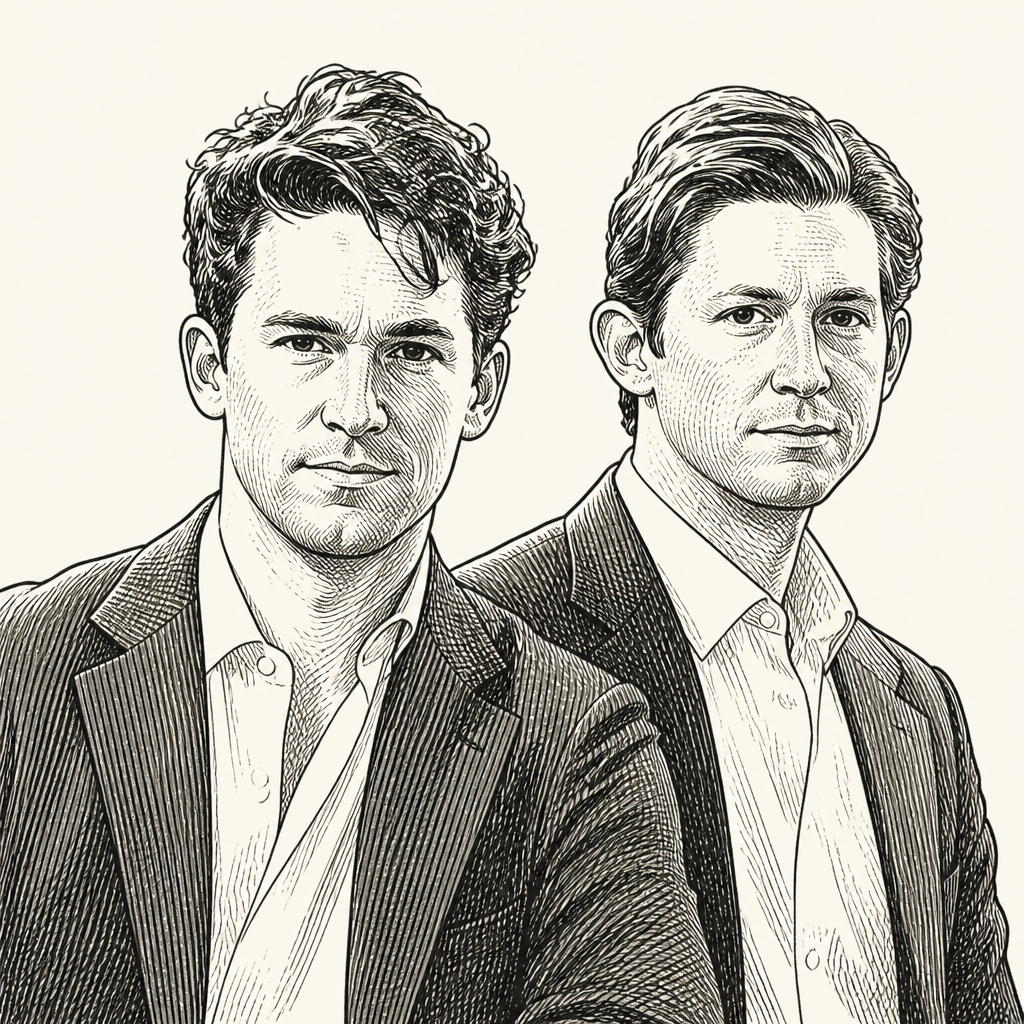
The proposed sale, according to Coogan’s account of reporting attributed to ESPN, would move control of the Lakers from Mark Walter—who bought a controlling interest from the Buss family at a roughly $10 billion valuation only the prior year—to Kushner and Iger. Walter became majority owner after NBA approval last October; the new transaction would likewise require approval by the league’s Board of Governors, scheduled to meet the following month in New York.
Coogan noted that the quick resale has a possible context beyond the asset’s appreciation. Walter, CEO and chairman of TWG Global, is under federal investigation, Coogan said, over allegations involving related-party private-credit transactions placed in an affiliated insurer’s books. He emphasized that Walter has denied wrongdoing and that the claims remain allegations. But the investigation could help explain why an owner apparently optimistic enough to acquire control so recently might sell again.
Kushner would need to sell his minority Miami Heat stake to complete the purchase. Coogan described him as Thrive Capital’s founder and CEO, Oscar Health’s co-founder and vice chairman, and a former minority owner of the Memphis Grizzlies. Iger had stepped down as Disney CEO earlier in the year and, with his wife Willow Bay, became controlling owner of Angel City FC in 2024.
The prospective owners received an early public welcome from Lakers figures. Coogan quoted Luka Dončić saying that being a Laker “means everything” to him and that the team’s potential remains unlimited despite the changes around it. Magic Johnson, who said he had known Iger for more than 40 years, called Kushner and Iger the two best owners Lakers fans could have and said Iger would bring championships back to Los Angeles. Kushner and Iger, in their own statement, called themselves lifelong NBA fans and said they intended to build on the Buss family legacy, compete at the highest level, and serve the team, its fans, and Los Angeles.
The more consequential investment thesis was longevity. Hays praised the name of Kushner’s Thrive Eternal fund because “Eternal” fit the idea: amid rapid technological change, he said, sports franchises can plausibly outlast many of today’s largest companies. Coogan echoed an audience argument that sports properties are increasingly being treated not simply as vanity purchases but as portfolio diversifiers for investors with exposure to high-risk technology.
That does not erase the familiar objections to sports investing: franchises are capital-intensive and have often been described as assets people buy because they love the team. But the hosts saw a fresh rationale for demand. If one is long artificial general intelligence and the future it could produce, Coogan said, owning something that continues to command cultural attention “no matter how many robots there are” can provide balance in a portfolio. Hays agreed that the logic fit Thrive Eternal’s strategy.
Grok’s frontier push is as much a price challenge as a benchmark story
Coogan characterized Grok 4.6 as a notable move by SpaceX into the frontier-model race, citing a comparison from Gavin Baker that put it at roughly comparable performance to Fable 5 Max at an 85% discount: 80% cheaper for input tokens and 88% cheaper for output tokens. Baker’s claim was that the model was “Pareto dominant,” while predicting a larger Grok 4.7 trained with Cursor and SpaceX data would improve further.
The released benchmark table placed Grok 4.6 High near the leading models across three measures, while not leading every one.
| Model | AA Intelligence Index | GDP/HR-AA v2 | CursorBench v3.2 |
|---|---|---|---|
| Grok 4.6 High | 61 | 1753 | 68.9% |
| Grok 4.5 High | 56 | 1526 | 63.9% |
| GPT-5.6 Sol Max | 61 | 1728 | 66.7% |
| Fable 5 Max | 62 | 1741 | 70.5% |
Coogan’s conclusion was measured: the model appears to be catching up, its team seems to be building momentum, and its claims will now be tested through user adoption and public demonstrations. He pointed to existing game demos and expected more examples to surface, but also stressed that Grok has been slower to gain adoption than Cursor, which he described as having very large enterprise and business usage.
Hays treated pricing as the immediate market signal. “The price wars have definitely begun,” he said, pointing to pressure from Meta and now Grok. Yet he also argued that confidence in benchmarks is unusually low. There have been enough releases with impressive reported scores and less consequential lived experience, he said, that benchmark leadership no longer settles the question for users.
That distinction matters for Grok’s positioning. Michael Truell’s launch framing, shown in the source, called 4.6 a more capable “digital colleague,” substantially better at difficult tasks and knowledge work while combining Opus-class intelligence and polish with low cost and high speed. Coogan argued that speed can have practical value beyond headline benchmark scores: in a Cursor-like iterative workflow, users do not have to wait and return much later to see a result.
A technical account displayed in the source attributed Grok 4.6’s CursorBench performance to additional mid-pretraining on the Grok 4.5 checkpoint, newer supervised fine-tuning stages using Grok 4.5 traces, and model-based filtering. Coogan highlighted the implication: a strong SFT checkpoint remains important. The same source described an unusually strong test-time performance curve on CursorBench, which evaluates agents on ambiguous, multi-file tasks from real Cursor sessions.
The launch also included Grok Bot, described as an AI teammate that signs into a user’s tools, uses them as the user would, and returns finished work. Coogan liked the name and read the product direction plainly: “Grok for work” is arriving under the Grok Bot brand.
Artificial Analysis, as shown on screen, scored Grok 4.6 at 61 on its Intelligence Index, five points above Grok 4.5 a little over a month after that model’s release and 23 points above Grok 4.3. Its characterization was that the new model had joined the frontier alongside GPT-5.6 Sol, behind only Anthropic, with particularly strong agentic performance at lower cost.
Coogan broadened the competition to Nvidia, which released an open-source Nemotron 3.5 Lightning model and Nemo Switchyard, a model router intended to make agentic AI faster, smarter, and more efficient. He saw a straightforward distribution logic for Nvidia: a sizable organization that owns Nvidia chips and its own data centers could find it natural to use a router integrated with the rest of the Nvidia stack. For cost-sensitive organizations with racks of GPUs, that stack-level integration could be a meaningful advantage.
The model race, in this view, is no longer solely a contest over who posts the highest score. It is becoming a contest over cost, speed, agent behavior, workflow integration, infrastructure control, and whether claimed capabilities survive contact with actual users.
Watermarking could reveal AI assistance without resolving who deserves authorship
Anthropic’s proposed watermarking of model-generated text and files raised a different question: not whether a model can produce writing, but what readers should infer when they learn that it was involved.
Coogan explained that the watermark would not necessarily appear visibly on text in the manner of an image watermark. A user would take material to Anthropic’s verification tool to determine whether it had been AI-generated. Hays preferred the word “breadcrumbs”: evidence that can be checked later rather than a conspicuous mark placed over the work.
In theory, Coogan said, a platform such as LinkedIn or X could integrate an Anthropic API to run those checks. He also relayed Ben Thompson’s view that an EU regulation was the driving force. Anthropic could, in principle, have confined watermarking to Europe, but Coogan’s understanding was that the watermarking is embedded more deeply at the model level rather than added as a final post-generation step. The practical result would be material marked whether it originated in Europe or elsewhere.
Hays wondered whether Anthropic ever considered withdrawing from Europe rather than accept such a requirement, particularly given the company’s compute constraints and the unknown share of revenue it derives from the region. Coogan did not think watermarking itself would be a significant burden for Anthropic or its enterprise customers. Businesses that want AI-generated code throughout a codebase, he said, primarily care that the work is clean, efficient, and effective; an indication of AI involvement is not their central concern.
The harder case is human work touched lightly by a model. Coogan summarized Thompson’s frustration with a writer who creates an essay and uses Claude only for proofreading, grammar checks, or edits. If those edits insert watermark-bearing text, the eventual reader might conclude that the entire work was AI-generated—even if the AI’s contribution came only at the final stage.
Coogan connected that concern to a familiar social dynamic. When writers ran work through ChatGPT for proofreading, he said, early models’ heavy use of em dashes became a tell. Observers would dismiss the whole piece as AI even where the model had merely performed the final polish. For people who care about credit, that distinction can be material: the human may have developed the idea, written the work, and used AI as an editor rather than an author.
Thompson’s underlying objection, as Coogan relayed it, was severe: European bureaucrats were making human creation contingent on substantiation and effectively giving the AI credit, even where a person supplied the text for proofreading or the prompt that led to writing. He framed it as a mandate for the replacement people fear.
Tyler pushed back on the assumption that a watermarking result must be binary. The mechanics are not public, he said, but he described a plausible system in which token selection during sampling leaves a detectable statistical signature. If a human-written essay has only one sentence replaced by AI, 99% of the original tokens remain. It would not make sense, he argued, for the whole document to be labeled AI-written; the system should identify only the relevant sentence or tokens.
Coogan accepted the distinction, saying users may receive a percentage rather than a simple yes-or-no label. Tyler cited Google SynthID as an example of an existing approach that can highlight particular words or passages likely generated by AI rather than making a blanket judgment about an entire document.
Hays’s concern was less technical than social. The “peanut gallery” online may treat the finding as binary regardless of the detector’s nuance. An Instagram caption containing one AI-assisted sentence could still become grounds for ridicule. That gap—between what a detection system technically says and what an audience chooses to infer—is where the authorship dispute will likely sit.
The hosts also expected an adversarial response. Coogan referred to a tool released the previous day that rewrites text to register as fully human to Pangram, forcing the detector’s developers to adapt. Hays’s question—how long until someone ships a Claude watermark remover—was rhetorical. Coogan’s answer was that it will be a cat-and-mouse game.
Silence may protect a founder’s image, but it spends investor trust
A post from Alfred Wahlforss of Listen Labs offered the blunt rule: founders should send investor updates only when they are winning. Listen, he wrote, had sent only three in its history, all fundraising announcements; nobody reads a bad update and helps, they simply mark the company as dying.
Hays called it terrible advice, except for companies that are winning. His reversal of the rule was more pointed: if founders are winning, then they can send updates only when they are winning. For everyone else, he argued, periodic communication is how investors develop trust and assess whether a team is making progress, iterating quickly, and responding well to adversity.
He offered a counterexample from his angel investing. A company he assumed was dead after a year without communication eventually contacted him because it needed a signature in connection with a sale for roughly $250 million. The outcome was positive, but the silence had obscured it completely. More importantly, when a founder eventually needs another round—especially a bridge—the ability to raise depends partly on whether investors have been able to update their conviction in the team over time.
Coogan took a narrower, more contextual position. At the pre-seed stage, where a company has zero revenue and is still searching for its first product, formal updates may matter less, especially if there are only one or two investors and the founder can speak with them directly. Hays agreed that updates at that stage should not be long. A multi-paragraph memo from a very early company would make him “super, super bearish,” he said. But concise bullets on what the company is working on, followed by another update the next month, still have value.
Coogan also argued that Wahlforss’s advice may reveal the unusual fundraising conditions surrounding Listen Labs. He noted that the company was only three years old, raised a Series A in April 2025, and reportedly had a Series C in progress. Three updates over that span could plausibly mean one every six months: not monthly or quarterly, but not wildly infrequent for a company repeatedly raising capital.
The norm changes for companies in slower markets or harder industries, where fundraising may happen every 18 to 24 months rather than every few months. In that setting, Coogan said, an investor who wrote a Series A check needs visibility into runway and progress. He therefore saw the advice as non-universal rather than categorically indefensible.
Hays maintained that absence of updates creates its own signal. Companies building in public often share momentum for months and then go dark when growth stalls, revenue declines, or the product proves too thin. He described another angel investment where a founder resurfaced after a year seeking a bridge. The investor can ask retrospective questions, he said, but that is fundamentally different from having watched the team confront problems and build momentum in real time.
The disagreement ultimately turned on cadence and company context, not on whether founders should manufacture optimism. Hays’s case was that a useful update does not need to announce a win. It needs to give investors an honest, legible basis for understanding what has changed since they invested.