Google’s I/O Pitch Put Distribution Ahead of Model Breakthroughs

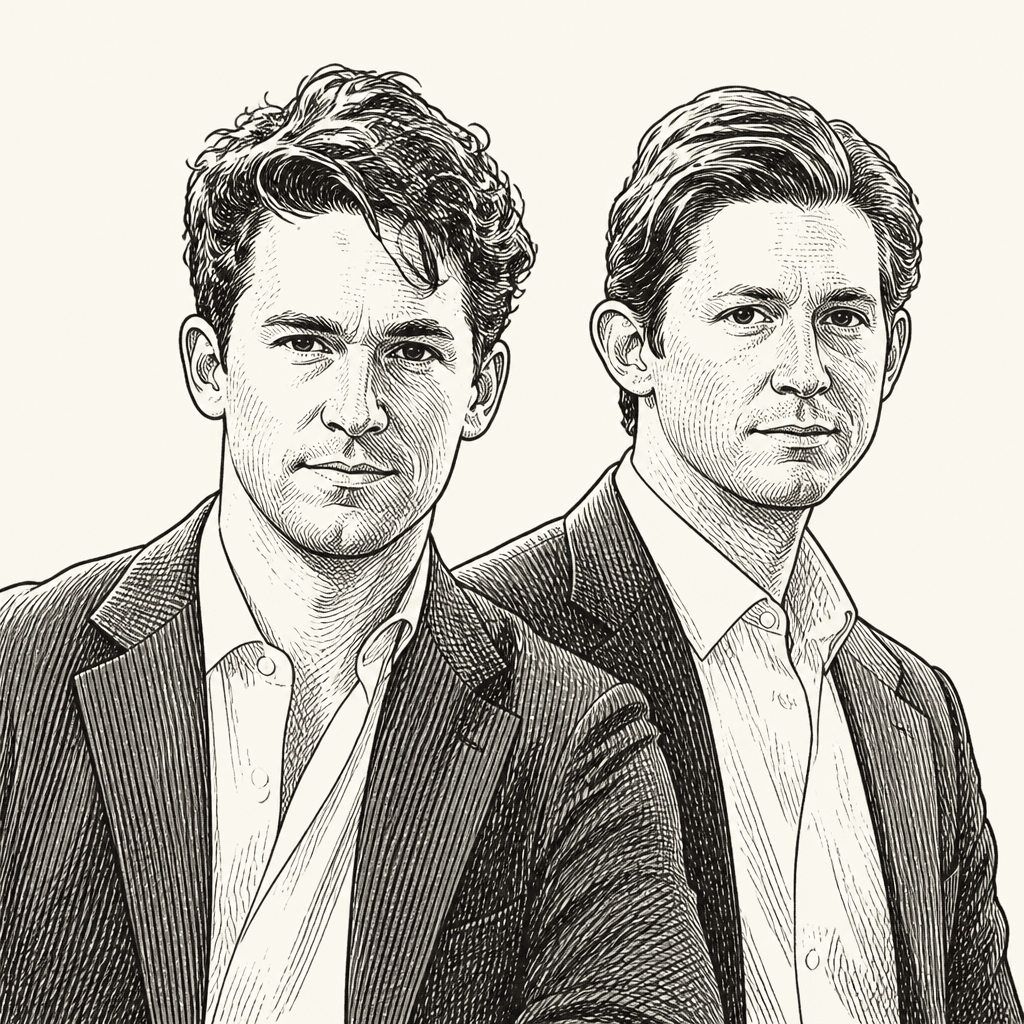


John Coogan and Jordi Hays read Google I/O as a mixed signal: Google’s smart-glasses strategy looks stronger where it combines Gemini with eyewear distribution and Google’s own services, but its model launches exposed the risk of tying AI progress to a fixed conference calendar. On TBPN, they argued that Street View may be an underappreciated AI training asset and that AI video still has to move from impressive short clips to coherent long-form outputs. The episode also framed a potential SpaceX IPO and Nvidia’s latest results as evidence that the financial returns from space and AI infrastructure are already arriving at exceptional scale.
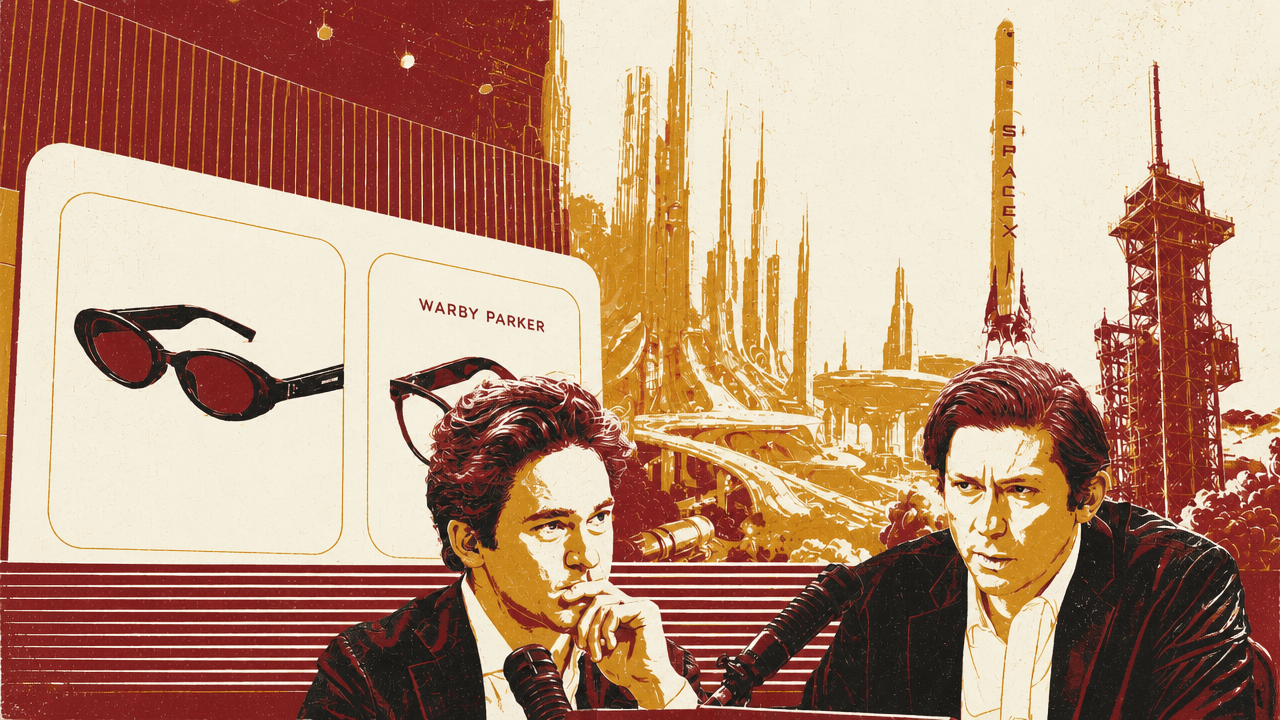
Google’s glasses pitch depends on distribution, not just demos
The most commercially important Google I/O thread, for John Coogan and Jordi Hays, was intelligent eyewear: Google’s partnership with Samsung, Gentle Monster, and Warby Parker on Gemini-powered glasses. Google’s own post, shown on screen, described “new intelligent eyewear” and previewed two designs from upcoming fall collections, one branded Gentle Monster and one Warby Parker.


Coogan treated the design problem as more than aesthetics. Meta’s Ray-Bans, in his view, have already done “the hard work of becoming the first face computer.” Once consumers learn that slightly thick Ray-Bans may contain a camera, they start looking for a lens and wondering whether they are being recorded. The Gentle Monster design struck him as more subtle: the silhouette does not immediately read as wearable technology or a “face camera.” The Warby Parker design looked acceptable to him, but he noticed that its camera appeared to protrude from the frame rather than sit flush, raising the practical question of how the bump would catch light in normal use.
Hays framed the partnership strategy as structurally different from how Apple is likely to behave. His expectation, explicitly “uninformed,” was that Apple would make “Apple glasses” rather than permit another company to shape the design language at launch. By contrast, Meta’s Luxottica partnership and Google’s deals with Gentle Monster and Warby Parker made sense to him because eyewear has many established silhouettes, brands, and consumer preferences.
Warby Parker mattered to the discussion because it is not just a brand name on a frame. Coogan contrasted it with the broader direct-to-consumer cohort. Warby Parker, he said, had been “surprisingly resilient” where other DTC names such as Allbirds and Everlane had struggled in public markets. He cited Warby Parker’s market capitalization as roughly $3.5 billion, down from about $6 billion in 2021, but still meaningfully intact compared with some peers. A chart shown on screen displayed Warby Parker trading at $24.71, down $3.94, or 13.75%, on the day.
Hays pushed the implication further: if smart glasses find product-market fit first with people who already need glasses, Warby Parker’s distribution becomes more valuable. His reasoning was simple. A person who already wears glasses all day has a lower adoption hurdle for smart features than someone who must add a new device to their routine. That led him to ask when Google simply buys Warby Parker. At roughly a $3 billion market cap, he said, the company has “incredible distribution” and could be “sniped at some point.”
Coogan saw Google’s advantage not only in eyewear partners but in the services behind them. Meta’s glasses can integrate with WhatsApp, Instagram DMs, and Messenger, but those services do not necessarily sit at the center of many users’ work or personal archives. Google Docs, Drive, and Gmail do. Apple has similar leverage through Mail, iMessage, Files, iCloud storage, and the camera roll. An AI agent running through either Apple’s or Google’s ecosystem can act on a user’s personal workflow. Meta, by contrast, may “bump up against the walled gardens.”
That distinction helped explain why a keynote glasses demo could be simultaneously impressive and narrow. Coogan cited a widely shared description of a Google keynote moment in which Nishtha, wearing the Gentle Monster + Gemini glasses, tapped the side of the frame, summoned Gemini, and asked it to “take a photo and put a cartoon blimp in the sky that says Google I/O 2026.” Within seconds, the edited image appeared on her watch via Nano Banana. Coogan called it “very cool” and “impressive technology,” especially as evidence that voice may become the dominant interaction mode for ambient AI. But he also understood the criticism that regular users may not want that exact feature. As a demo, it showed the full stack. As a daily use case, it lacked the “creative spark” that makes a normal person say: yes, I needed that image on my wrist at that moment.
Street View turns out to be a strategic AI asset
The Street View-backed Genie 3 demos shifted Coogan’s attention from interface to training data. Google showed simulations “created using Google Street View imagery”: a Formula 1-style car moving through a city street, cartoon characters in recognizable civic plazas, a scooter through parkland, a small boat under bridges, and a runner on a pedestrian bridge. The result looked less like a static map and more like a world model built on Google’s real-world image archive.
Coogan said he had thought of YouTube as a major data asset for Google’s video models, including Omni and Veo. He had not thought as much about Street View as a comparable trove. Seeing Genie 3 grounded in Street View changed that. Google, he said, is “sitting on a mother lode of real-world data,” and Demis Hassabis appears “very data-pilled.” More broadly, he argued that important proprietary data stores across the large technology companies are increasing in value.
The open question was whether this becomes a product, a game platform, or simply a strong demo. Hays asked directly whether Google would allow people to build games on top of it. Coogan linked the thought to Hassabis’s background in games and to the broader return of simulation as a computing paradigm. But he was careful about what makes games compelling. A simulation of a real place is impressive, yet gamers often return for the mechanic rather than the graphical fidelity. Some games that hold attention have AAA graphics; others are two-dimensional. The repeat use comes from the interaction design.
The AR and display implications were adjacent. A viewer in the live chat said they could not wait for smart glasses to replace monitors. Coogan thought that would likely require augmented reality rather than camera-and-audio glasses alone. He described Meta’s Ray-Ban Display direction as a partial move toward that future, with what he called a “Call of Duty HUD,” but not full augmented reality. He also said Orion had not shipped, while referring to a smaller Meta Ray-Ban display version. Orion, which Coogan said he had demoed, could place a screen in front of the user despite a narrow field of view. He had expected faster progress, while acknowledging that the product was widely described as expensive, clunky, and not ready for prime time.
He also speculated that Meta’s heavy turn toward AI capital expenditure may have pushed AR further back, though he did not claim to know. His preference was clear: he wants AR and VR to produce “a new fun product.” For Apple, that means a lighter Vision Pro successor — “Apple Vision Air,” perhaps — with the same screen quality, lower weight, and maybe lower price.
The model reactions exposed a cadence problem
Google I/O’s model news drew a more skeptical response. Coogan quoted one reaction calling “gemini flash 3.5” “pretty neat and extremely fast” but still incremental, and describing the overall I/O as disappointing. Coogan’s interpretation was that many users had expected a larger step. He said “Gemini 3” had felt like “a new base pre-train,” with “big model smell” and a noticeably enjoyable interaction quality. The event did not deliver that kind of step change.
Hays added that “we’re still waiting for Pro.” Coogan then identified a structural mismatch between AI research and corporate events. Google I/O is scheduled far in advance; model training runs are not guaranteed to finish in time for a keynote. Independent labs can launch models “when they’re done,” then wrap a blog post, model card, video, or conference-like moment around the release. A company grinding toward a fixed product conference may have to present whatever is ready, even if the result looks incremental.
Developer reaction, according to Hays, was “not good at all” from what they were seeing. The most concrete example came from a Cursor benchmark screenshot shared on screen. The visible table labeled the model “Gemini 3.5 Flash” and placed it below Composer 2, with a lower score and roughly four times the average cost.
| Model | Score | Average cost |
|---|---|---|
| Composer 2 | 52.2% | $0.56 |
| Gemini 3.5 Flash | 49.8% | $1.94 |
Coogan initially questioned whether a benchmark from Cursor should be treated as fair for evaluating a major lab model, comparing it jokingly to ranking another livestream on a hypothetical TBPN benchmark. Hays pushed back that Cursor’s list included the other frontier models, and Coogan conceded that some external models appeared ahead of Cursor’s own models on Cursor’s own benchmark. Hays emphasized that this was only one data point, but a damaging one: the Google model underperformed Composer 2 while costing about four times as much.
For Coogan, that suggested a possible shift in Google’s AI positioning. He said Google had long been seen as frontier or near-frontier with the best possible pricing. This result, if representative, would mark a different strategy. Hays then argued that Google’s heavy investment in Anthropic “starts to make more and more and more sense.”
There was also a product-organization criticism. Coogan referenced a post joking about the maze of Google AI names and product surfaces: Gemini, AI Studio, Google One, Gemini Business, AI Pro, AI Ultra, Spark, Gemini API managed agents, Jules, Antigravity, Flow, Veo, Nano Banana, AI Mode, and NotebookLM. He treated the joke as familiar Google product-name confusion, but also tied it to a deeper question: whether users will experience AI fatigue as Google stuffs AI into every surface.
Antigravity’s Codex cameo made Google’s internal AI use the story
Google’s Antigravity launch supplied a smaller but telling controversy. Hays said the Antigravity team had flashed a Codex folder in its demo video. A screenshot shown on screen displayed a macOS Finder window with folders including “Codex,” “Golf Courses,” and “Screen Studio Presets,” alongside a Google Antigravity post introducing Antigravity 2.0 as a standalone desktop application for an “agent-optimized experience.”
A post from Gergely Orosz, shown on screen, said he had to do a double take: in the second minute of the Antigravity 2.0 launch video, people on the Antigravity team could be seen using Codex. He asked whether anyone had double-checked the launch video and called it “typical Google.”
Hays did not find it shocking. Many people were saying Antigravity looked quite a lot like Codex, he said, so the inspiration was not hard to infer. More broadly, Hays said Google had been using Anthropic models and “a ton of different models” and products internally. Coogan wondered whether Antigravity looked more like Codex or Windsurf, suggesting that perhaps Google had rebuilt a Windsurf-like experience instead. Neither treated the evidence as dispositive about the product; the point was that the demo unintentionally turned attention toward what Google’s own teams use.
Coogan connected that to a recent dispute involving Steve Yegge and Demis Hassabis over whether Google employees were broadly and effectively using AI tools. He described it as a “big dust up” on the timeline about which teams used which models and how well AI had been deployed inside Google. Hassabis, Coogan said, had pushed back strongly, saying the criticism was wrong and that everyone was using AI. The Antigravity screenshot fit into that broader concern: not simply what Google sells, but whether Google’s own organization has cleanly adopted the tools it is promoting.
AI video is impressive, but the next benchmark is duration and logic
Coogan and Hays had been impressed by Google’s Omni Flash video demos, while still noticing quirks. In one generated engine clip, people in the chat had pointed out that the firing order of the V8 appeared wrong; Hays said it was “missing two cylinders.” Coogan said it had looked good to him anyway.
The more important comparison shown on screen was between Omni Flash and Seedance 2.0. The clips included side-by-side generated fight scenes in a warehouse, a black muscle car moving through a city street, and airport hugging scenes. Coogan said both Seedance 2.0 and Omni Flash looked great and would be useful, but he noted that Seedance seemed to operate with looser content restrictions. He speculated that this might be related to the difficulty of Hollywood suing or enforcing copyright claims against Chinese businesses, while Hays argued more broadly that Chinese companies had long been relatively insulated from U.S. copyright law in practice.
The legal aside was not the main technical point. Coogan’s real question was when AI video moves beyond impressive short clips. Today’s systems can produce 8-, 10-, or 20-second outputs that look near-real at first glance. But they still take time to generate, are hard to control, and reveal errors when inspected closely. Coogan described the current state as “99% fidelity,” with flaws appearing when one clicks into details.
The next benchmark, he argued, is not another short clip. It is whether a user can ask a question and receive a coherent six- or ten-minute explainer video comparable to YouTube. That requires maintaining logic, detail, and continuity over a much longer span. He compared the desired future product to “the deep research report of Omni Flash”: not a visual toy, but a generated explanatory artifact with structure and substance. Someone who wants to understand a V8 engine may want a 20-minute breakdown, not a 10-second stylized animation. “We gotta move the goalposts,” he said.
A SpaceX IPO would produce venture returns on a scale few funds ever see
The finance thread was SpaceX. A Zerohedge post shown on screen claimed a SpaceX prospectus could arrive as soon as May 20 and that Goldman would lead left, citing the Wall Street Journal. Coogan treated the claimed Goldman role as a surprise because Michael Grimes had worked with Elon Musk for a long time at Morgan Stanley, though there had been some back and forth and Grimes had returned to Morgan Stanley. Coogan also noted that for an IPO of this size, there had been a question of whether there would even be a conventional lead-left bank or whether the banks would share economics more evenly. If the offering happens on that scale, he said, the banks would “make a ton of money.”
Katie Roof’s reported numbers were the centerpiece. A post shown on screen said Founders Fund and Valor were set to make more than $60 billion in gains on the SpaceX IPO, while Sequoia would make more than $20 billion. Coogan highlighted Roof’s post as a major scoop and treated the reported gains as historically large.
Hays wondered whether the public emphasis on those returns was partly a reaction to D1 receiving credit earlier in the week for roughly $20 billion in returns. Coogan was skeptical of that explanation. At this scale, he said, many limited partners have long known the numbers, ownership percentages, and holdings. Back-of-the-envelope math would already show “pretty huge numbers.”
Hays argued that Sequoia and Founders Fund “needed a win,” but not because the investments were obvious. Quite the opposite. The early SpaceX investments, he said, were made around 2004 and 2010, before there was a Starlink narrative or a space data center narrative. It was a rocket company “blowing up rockets left and right” and not yet obviously attached to massive businesses. Investors had to be believers, and some were.
A Packy McCormick post shown on screen mocked the conventional line that megafunds are too large to generate returns and are “basically just fee collectors.” Coogan read the line; Hays supplied the conclusion: “And of course, they’re printing.”
Nvidia’s numbers made the AI infrastructure story hard to dismiss
Nvidia’s quarter closed the business loop. Coogan quoted Jensen Huang describing the buildout of “AI factories” as “the largest infrastructure expansion in human history” and saying it was accelerating at extraordinary speed. Coogan disliked the term “AI factory,” but accepted the substance of Huang’s point. Agentic AI, Huang said, had arrived, was doing productive work, generating real value, and scaling across companies and industries. Coogan agreed with each clause.
The numbers Coogan cited were stark. He said Nvidia net income rose to $42.96 billion, almost $43 billion, compared with $18.8 billion a year earlier. Revenue, he said, rose 85% to $81.62 billion from $44 billion last year. Hays called the results “really wild” and “the definition of printing.”
| Metric | Current period cited by Coogan | Year-earlier period cited by Coogan |
|---|---|---|
| Net income | $42.96B | $18.8B |
| Revenue | $81.62B | $44B |
Coogan noted that the stock was moving up and down and was basically flat in the moment they were discussing it. The market reaction did not change the read-through for him: the AI infrastructure buildout is producing real financial results, even if he objected to the branding language around “factories.”
Wozniak’s AI joke worked because it knew the room
The final AI moment came from Steve Wozniak speaking at Grand Valley State University. A clip showed him in graduation regalia telling the audience: “You all have AI. You all have AI: actual intelligence.” The on-screen captions continued as he said he had spent his technical life following people trying to figure out how to make a brain through software, hardware, and synapse chips. Then he added that he had been at a company where engineers figured out how to make a brain: “Takes nine months.”


Coogan and Hays treated the line as a crowd-pleasing joke rather than a serious AI thesis. Coogan called it a “mic drop” and said Wozniak knew the audience. Hays called it a “knee slapper,” but also said he was a fan of Wozniak. Coogan’s read was that Wozniak is probably not “AGI-pilled” or “superintelligence-pilled,” but the framing may still have been right for the setting. It gave the audience a human-centered bridge into a broader conversation about AI and how humans fit into a post-AGI world.