Blue Origin’s $130 Billion Valuation Prices Reusable Launch Capability

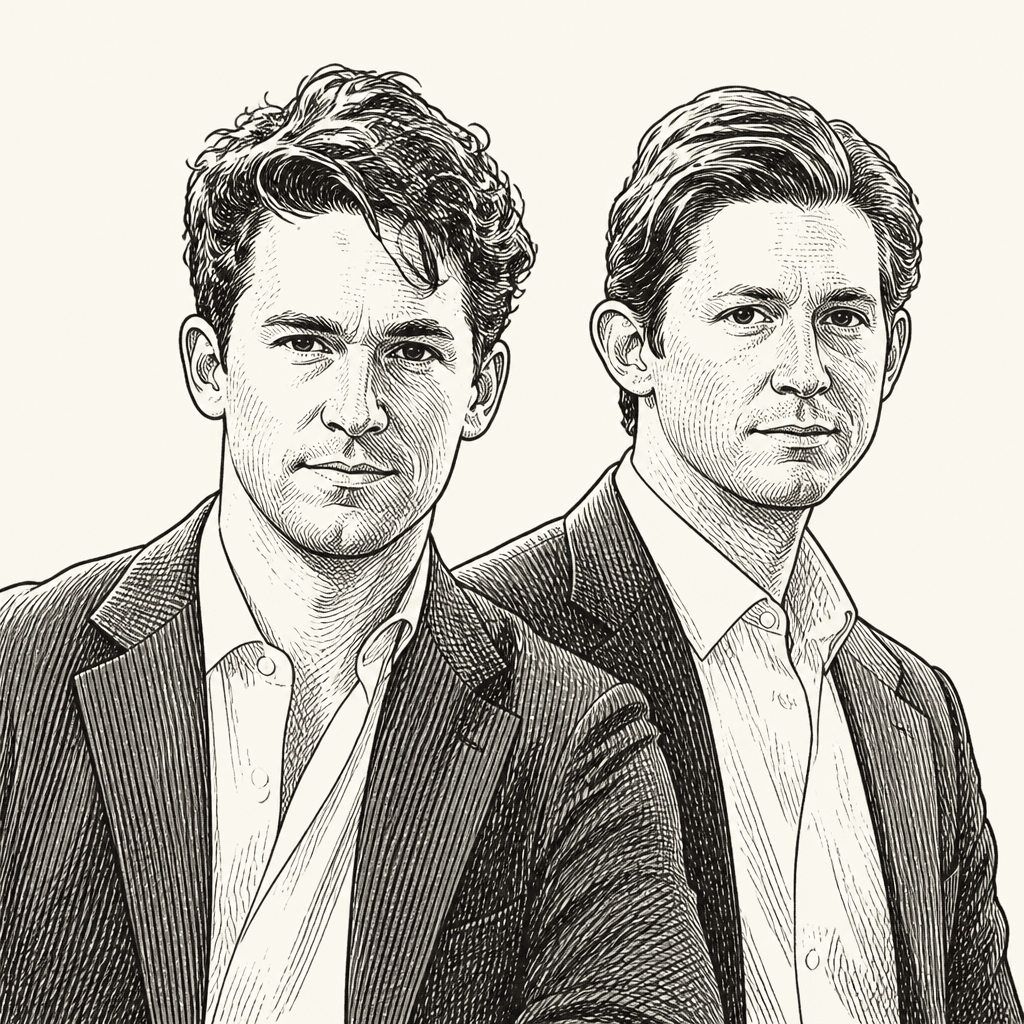
Old market, regulatory and product categories are failing to describe new technical capabilities, John Coogan and Jordi Hays argue in Diet TBPN. Coogan frames Blue Origin’s reported $130bn valuation as a bet on reusable-launch capability and Jeff Bezos’s commitment rather than current revenue, while the failed Getty-Shutterstock merger becomes, in their telling, a test of whether antitrust analysis can account for AI-generated images as substitutes. Their discussion of OpenAI’s GPT-Live and GPT-5.6 turns on a similar shift: models are being judged by whether they can sustain conversation, delegate work and operate software.

Blue Origin’s first outside raise prices Bezos’s ambition as much as current business
John Coogan framed Blue Origin’s reported fundraise as a strange kind of bootstrap story: a 25-year-old aerospace company funded almost entirely by Jeff Bezos, now raising outside capital for the first time. The reported round is $10 billion at an expected $130 billion valuation, with Bezos himself putting in $2 billion and Coatue taking a $4 billion allocation. Bezos’s family office is also a major investor in Coatue’s Innovative Strategies fund, according to the New York Times report Coogan cited, making the financing relationship less cleanly “outside” than the headline might suggest.


Jordi Hays put the valuation tension simply: investors cannot complain too much about the price if Bezos is himself a meaningful participant in setting it. Coogan treated the number as a window into how private markets now value frontier infrastructure companies. He contrasted the expected $130 billion valuation with an older private-market benchmark: Gavin Baker wanting to value Uber at $14 billion while at Fidelity, an auction taking the valuation to $17 billion, and the reaction at the time that this was unprecedented for a private company. By today’s standards, Coogan said, $17 billion — even $60 billion — looks “quaint” in a market with many private companies above $100 billion.
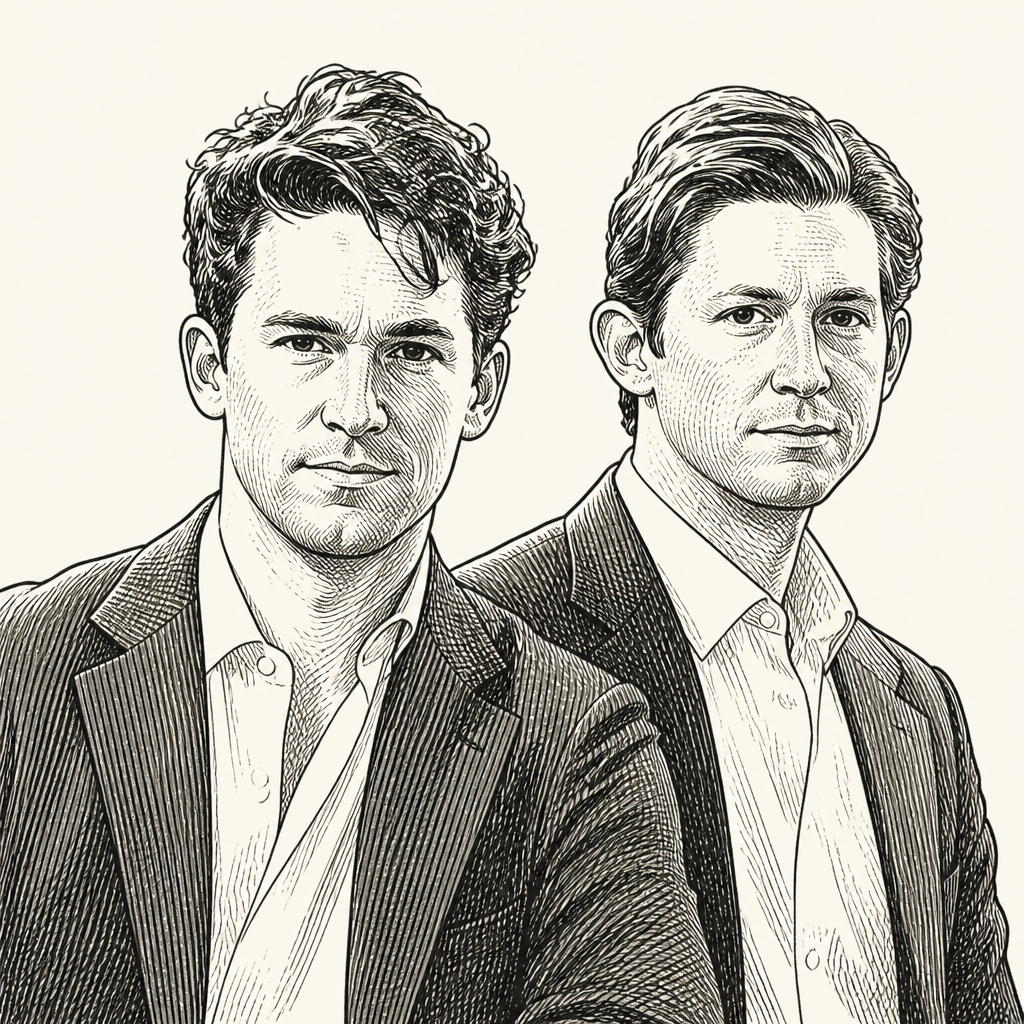
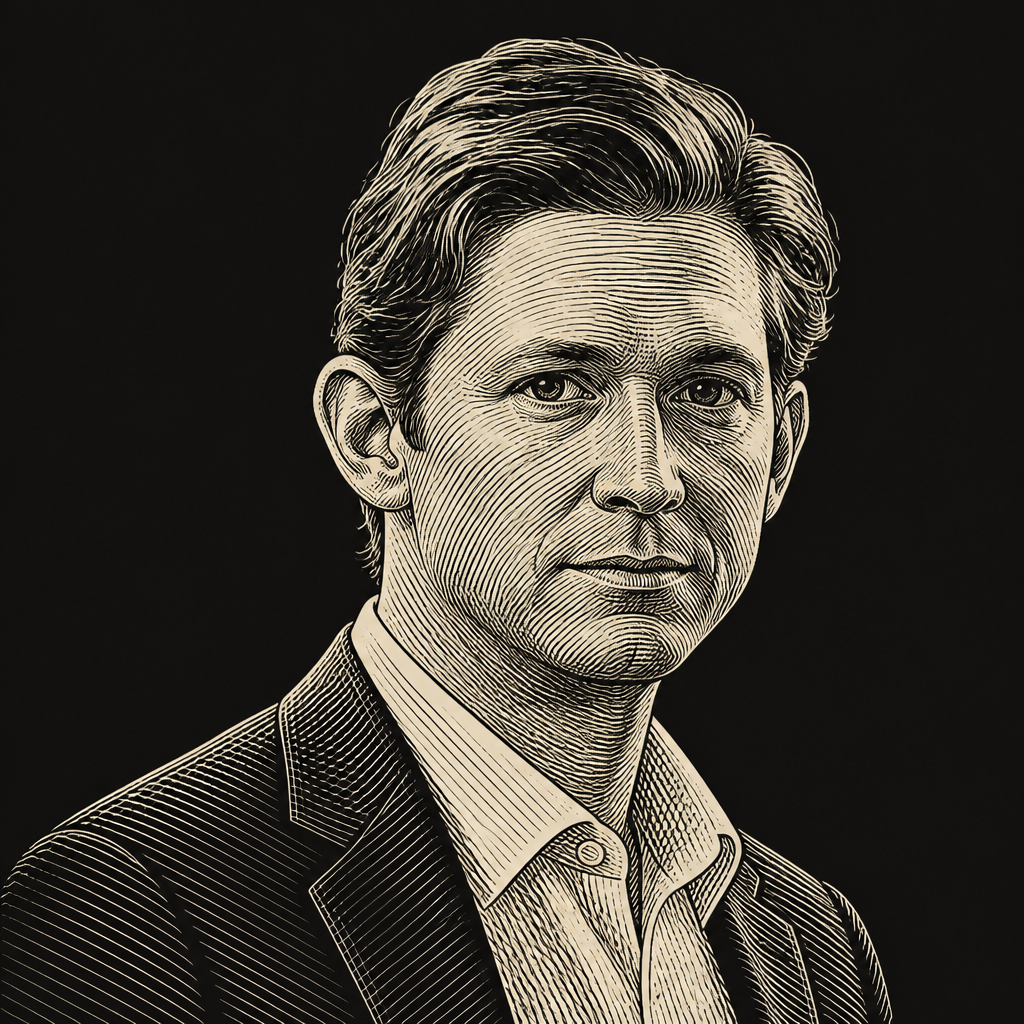
The important point, in Coogan’s telling, is that Blue Origin is not being valued on ordinary financial metrics. He said he did not know of a leaked revenue figure, but assumed the business’s current revenue must be small relative to the valuation. That makes the round a high-multiple transaction if treated conventionally. But investors are pricing the company on demonstrated capability. Coogan characterized Blue Origin, with an explicit “I believe” hedge, as the second company in the world to bring a rocket to orbit, land it successfully, and prove reusability. He also emphasized that it reached that milestone before China, which he described as having tried for years to copy SpaceX.
The case for the valuation rests on the size of the market and the rarity of the launch capability Coogan believes Blue Origin has demonstrated. He acknowledged a recent setback involving a launchpad explosion, but said Blue Origin had found a solution and was “chopping along just fine.” The company is estimated to burn $5 billion this year, he said, making the $10 billion raise look like a standard 12-to-18-month financing. Across its lifetime, Blue Origin has burned something like $27 billion, or roughly $1 billion per year on average over 25 years — still “a lot of money,” but not out of proportion to the ambition.
Hays introduced public-market comparables that investors would likely study. AST SpaceMobile was sitting around $27 billion to $28 billion in market cap, according to Hays. Coogan said AST had not gotten much to orbit yet beyond experiments and tests, but treated the valuation as evidence of how large the perceived market is. Hays also pointed to Rocket Lab at just under $50 billion.
Those comparisons help explain why “Elon bulls” might argue that SpaceX is now underpriced. If Blue Origin can command $130 billion because investors are pricing Bezos, market size, and reusable-launch progress more than present revenue, SpaceX’s valuation looks different to people already inclined to be bullish on it. The logic is not that Blue Origin’s cash flows justify the number; it is that investors may be assigning enormous value to a difficult aerospace capability in a large market.
Apple’s cheaper Vision Pro display project exposes the category’s unresolved demand problem
John Coogan treated the report that Apple had scrapped work on a cheaper Apple Vision Pro display as bad news for a very small constituency: “me and the other three Apple Vision Pro fans.” The report, attributed on screen to MacRumors, said Samsung Display was winding down work on a lower-cost display project and was expected to formally end it by September.
His view of Vision Pro remained split. He called it an “incredible piece of technology” and described using it to watch films including Dunkirk, The Godfather Part II, and Master and Commander. The cinematic experience can justify the effort once the headset is on. But the product never found product-market fit: it was expensive, heavy, cumbersome, and the developer ecosystem did not arrive. The studio owns one and has enjoyed it, but that did not change the broader adoption problem.
The cheaper display mattered because Coogan saw the display as both Vision Pro’s great advantage and its commercial bottleneck. He recounted rumors about Apple’s approach to securing the original display: rather than use display technology ready for high-scale manufacturing, Apple allegedly pushed Samsung toward the technology several years out — excellent, but not yet automated, requiring manual work and suffering from very low yields. Coogan used the chip and display industry’s term “yield” to explain the tradeoff: mature manufacturing wants very high output from each run, while new technologies may produce usable components only a small percentage of the time. Apple’s strategy, as he described it, was to pay heavily for the best available display, charge a high price, and enter the category with the technically superior product.
What he expected next was commoditization. If the display technology got cheaper over time, the headset could become lighter, less expensive, and more accessible. The report that Apple had stopped development on a cheaper display undermined that thesis. “It probably has” become cheaper, he said, but not enough to solve the VR and AR problem.
Jordi Hays suggested Apple may simply be bearish on the near-term market for people watching movies in VR, while still continuing R&D on everyday glasses. Coogan accepted that as plausible and broadened the problem beyond hardware. Sitting down to watch a full movie is itself a rarer behavior, he argued. People are not reading or watching films as much; they are scrolling. Phones satisfy that demand. And scrolling has interaction density that VR does not obviously improve: people read comments, send posts to friends, fact-check with AI, open profiles, and spin off into other tasks.
Doomscrolling is “somewhat interactive” and “somewhat multiplayer,” Coogan said, even if many people see it as brain-rotting and isolating. A movie, by contrast, asks the viewer to sit still and not interact. If the dominant media behavior continues moving toward high-tap, high-context-switch feeds, VR’s immersive cinematic strengths may become less relevant rather than more.
Hays still defended the category’s builders. VR, he said, attracts people willing to “look silly for a long time” through repeated hype cycles and keep building anyway. He cited Bigscreen and a founder who had demonstrated a glasses product on the show as examples of unusually committed practitioners. His point was less that the market has arrived than that the category depends on people willing to endure long periods of weak consensus.
The Getty-Shutterstock collapse is a test of old antitrust logic in an AI-disrupted market
The collapse of Getty Images’ planned merger with Shutterstock bothered John Coogan because he saw the two companies as facing an obvious strategic threat from AI image generation. Getty and Shutterstock are both stock-photo businesses. In his view, they are exactly the kind of companies that should be “absolutely decimated” as image models become good enough to produce generic visuals on demand.
He referred to several current image-generation products and examples — including a new Meta image tool he called “Muse,” something he referred to as “Nano Banana Pro,” OpenAI’s image generation, and images Adam Mosseri had posted on Instagram — to make the point that the line between ordinary photography and AI-generated illustration is becoming hard to see in many routine contexts. If a user needs a picture of a forest to illustrate a point, AI image generation is already highly competitive with the stock-image industry.
Jordi Hays added that some of these businesses may have seen recent net-new revenue from licensing deals with AI labs. But the larger claim was that consolidation would be normal in a shrinking or disrupted industry. In the face of new competition, a merger between two incumbents should not automatically raise the same regulatory alarm that it might in a stable market.
The deal, announced in January 2025, was valued at $3.7 billion based on share prices at the time. It received clearance from the U.S. Justice Department in April, according to Coogan’s account of the Wall Street Journal report. The UK Competition and Markets Authority, however, required Getty to sell Shutterstock’s editorial business as a condition. Getty’s board voted not to proceed if that divestiture was required, and Getty then terminated the tie-up.
Coogan quoted the CMA inquiry group’s rationale: losing competition between the two businesses could reduce choice for UK media outlets and lead to higher prices. He did not dismiss the logic entirely — combining Getty and Shutterstock could create some pricing power for real editorial images — but argued that this must be weighed against pressure from AI-generated alternatives. If some customers can leave for generative tools, higher prices for authentic or licensed imagery may look less like a simple monopoly outcome and more like an attempt to offset a shrinking paid market.
Hays sharpened the financial context. The $3.7 billion headline valuation reflected January 2025 share prices, not current values. At the time of the discussion, he said Shutterstock had a market cap of about $329 million and Getty about $340 million. The businesses had been “really, really beat up” since deciding to merge.
| Company or deal | Figure cited |
|---|---|
| Getty-Shutterstock announced deal value | $3.7B |
| Shutterstock market cap at discussion time | $329M |
| Getty market cap at discussion time | $340M |
That led Hays to say UK regulators looked like they were “trying to just kick these companies while they’re down.” Coogan allowed that it could be a complete mistake and compared it to other regulatory interventions in small or speculative technology markets. He cited U.S. regulators blocking Meta from buying a VR fitness company on monopoly concerns in VR fitness — a market he said “never happened” at meaningful scale. Tyler, speaking briefly from off camera, added another UK example: the 2022 block of Meta’s acquisition of Giphy, which he characterized as preventing a monopoly in GIFs.
The exchange returned to whether UK media outlets have alternatives. Hays asked whether they are barred from using AI content. Coogan said he did not think there was any broad rule against it. An outlet such as the Financial Times may choose not to use AI images on the front page, and would probably disclose AI imagery if it used it, but he framed that as an editorial choice rather than a marketwide legal constraint. Hays also noted a comment that Canva does not label AI in its stock images, which he took as evidence that the competitive landscape is broader than Getty and Shutterstock.
For Coogan, the regulatory question is whether antitrust analysis is properly incorporating the new substitute: generated imagery. If the relevant market is narrowly “licensed editorial images sold to UK media outlets,” the CMA’s concern is legible. If the relevant market is visual content creation under AI disruption, the blocked consolidation may weaken the very companies regulators are trying to keep competitive.
IBM’s abandoned Somers campus shows how internet distribution turns trespass into a loop
The former IBM campus in Somers, New York gave the hosts a lighter but still revealing technology story: a corporate monument turned urban-exploration magnet. John Coogan introduced it through a Wall Street Journal story about the “world’s creepiest office,” a New York complex vacated by IBM that now attracts people looking for abandoned places to enter and film.
The visuals carried much of the segment’s texture: aerial footage of a large, snow-covered corporate campus with geometric architecture; dark wooded approaches; dim utility rooms with exposed pipes; and a large empty atrium with a glass pyramid skylight, graffiti, and a makeshift skateboard ramp. Jordi Hays joked that if a new AI lab were called something like “Ominous Intelligence,” the campus could serve as a James Bond villain-style headquarters or a first “micro data center.” Coogan checked the distance and said it was about an hour to an hour and ten minutes from New York City.
The Wall Street Journal account Coogan read described Robert Carlton, a 62-year-old retired engineer, encountering teenagers running from nearby woods in April. Carlton said he cut them off at the road, raised his arms, and told them, “Stop, it’s over.” New York State Police troopers soon emerged from the treeline and arrested seven juveniles for trespassing on the former IBM campus.
The useful point was not only that the building is creepy or photogenic. Urban exploration — “urbex” — is an older phenomenon that has been amplified by Instagram and TikTok videos. One video invites another, and abandoned malls, hospitals, power plants, amusement parks, factories, and corporate campuses become destinations for people trying to produce their own version. Coogan cited police warnings in Livingston, New Jersey, about the closed Livingston Mall property, and in Jacksonville Beach, Florida, about the shuttered Adventure Landing amusement park.
Coogan questioned whether people doing TikTok challenges to enter abandoned properties should be able to post the videos, given the danger. Hays kept returning to the infrastructure angle: could a data center go there, and how much power did the building have? The abandoned IBM campus became both a joke about the aesthetics of frontier AI labs and an example of how internet distribution turns disused industrial or corporate space into a recurring offline challenge.
GPT-Live is judged less by demos than by whether it can stay in the conversation
OpenAI’s GPT-Live announcement drew John Coogan’s attention because it addressed limits that users have been informally benchmarking in existing voice models. The on-screen OpenAI post described GPT-Live as “a new generation of voice models for natural human-AI interaction,” rolling out in ChatGPT. Coogan said it was “a lot smarter” and later noted that it has a full-duplex architecture, meaning it can listen and speak at the same time so it can jump in more appropriately.
The hosts connected the launch to a recurring Instagram critic of legacy voice models. Coogan compared that person to a kind of white-hat hacker: not necessarily jailbreaking the system, but repeatedly exposing clear limitations. Through those videos, one can understand where existing voice models fail. They lack tool use, so they cannot count or set timers reliably. They do not maintain a long-running context window well enough to stay with a user over time. They cannot talk to each other. Jordi Hays called these “benchmarks,” and Coogan agreed: if a new voice model can satisfy those scenarios, it is probably a better product.
If you can satisfy his videos and run those experiments again in a satisfying way, you probably have a better product at the end of the day.
Hays was interested in whether real-time conversation enables a new kind of live audio format — something closer to a podcast conversation with an AI about a topic. Coogan said they should have the model sitting with them, but he was more focused on a workflow change he wanted: voice that can route certain questions to smarter models in the background while maintaining a natural conversation in the foreground.
His current workaround while driving is clunky: tap record rather than voice mode, dictate a long prompt, send it, wait for the model to work, then have the answer read back. That gives him the depth he wants, but through a sequence of extra clicks. The desired product is a continuous conversation.
The more ambitious version involves multiple threads inside one conversation. A user might ask the model to prepare a deep research report on IBM Watson, then continue talking about the latest news while the report runs in the background. Later, the model could return to say the report or code is ready, while also staying aware of other tasks, decisions, or research projects. Coogan compared it to working with another person: you delegate a task, continue the conversation, send a text, wait for a revision, then return to the original work without losing continuity.
That was the product bar implied by the GPT-Live discussion. Naturalness, for the hosts, is not only about better voice quality. It is about the hope for concurrency, interruption, delegation, and enough continuity over a session to keep a human workflow moving without forcing the user back into a sequence of discrete prompts.
GPT-5.6 creates a model-choice problem, not just a capability jump
OpenAI’s second AI announcement was GPT-5.6 Sol, along with Terra and Luna, launching publicly on Thursday with preview access expanding globally. John Coogan said people with early access were having fun with the release, while others were joking about not having access. The on-screen examples included John Palmer writing that he had not been a tester but had heard the model was “really good,” and that it would “probably be my default model from here on (when I get access).” Kit Langton joked that he had been using GPT-5.6 “for many months, if not decades,” and that what was obvious looking back on his life was that other people “did not have access to it.”
Beyond the jokes, the hosts treated GPT-5.6 as evidence that frontier models are becoming more differentiated. Coogan said the “vibe” around 5.6 seemed different from Fable 5: Sol was described by others as more interactive and engaging, while Fable was compared to moving at “light speed across the galaxy.” He interpreted this as fragmentation around “the right tool for the job.”
Jordi Hays read two more substantive on-screen reactions. Ethan Mollick wrote that both Sol and Fable represent jumps over previous models and have opened “a large gap with the next-best AIs”; for work where better intelligence matters, he said, those two are the only choices, though users will have preferences. Dean W. Ball wrote that he could not remember a time when leading models were both so clearly ahead of the rest and so distinct from one another.
Coogan’s explanation was that model differentiation may reflect tighter distillation protocols and less “pollution.” Earlier frontier labs could all train on essentially the same web corpus. Now, he said, each company has different datasets, data brokers, usage patterns, and research tastes. The result is less convergence in feel and behavior, even among high-performing models.
The practical edge of that differentiation came through in the discussion of “computer use.” An on-screen post from Theo said GPT-5.6-sol was “world leading in computer use,” made him use it “100x more,” and that after losing access he “quickly started to go insane without it.” Hays said people were asking what “computer use” means, and his answer was blunt: anything on your computer. Not every task will be a good use, but the category should be understood broadly.
Coogan argued that the industry still needs to popularize genuinely useful patterns. Deep research worked partly because it offered a recognizable pattern: ask for a topic, get a 20-page report, and let the model do much of the work. Many people do not immediately know what a new capability is good for, how to prompt it, or how to use it without wasting tokens and time. Some users adopt new AI tools quickly and find profitable workflows; others need concrete examples.
Stale public impressions also slow adoption. People still judge models based on hallucinations that disappeared a year ago or on cutoff-window assumptions that have not applied for some time. Those limitations, Coogan said, get burned into online culture as memes, so users need to be updated when capabilities change.
For computer use, Coogan’s half-serious benchmark was whether the model can play Counter-Strike effectively: “Can it rank me up to Global Elite?” The joke still captured his point. Computer-use demos need to show models acting in real environments where success and failure are obvious, not just completing contrived tasks in a controlled UI. If GPT-5.6 Sol is genuinely better at that, the launch is not only about smarter chat. It is about whether models can begin operating the software layer people already work inside.