Apple Sues OpenAI Over Alleged AI Device Trade Secrets
Apple’s lawsuit, California’s challenge to Paramount’s Warner Bros. Discovery acquisition, and a new AI warning letter each concern how institutions respond to technological or market disruption. Apple alleges document theft and improper recruiting as OpenAI develops consumer hardware, while the Paramount case turns on whether Hollywood is a distinct antitrust market or competes for attention across media. The letter, signed by more than 200 researchers and economists, does not prescribe a fixed intervention but calls for research and institutional readiness for possible AI-driven economic change.
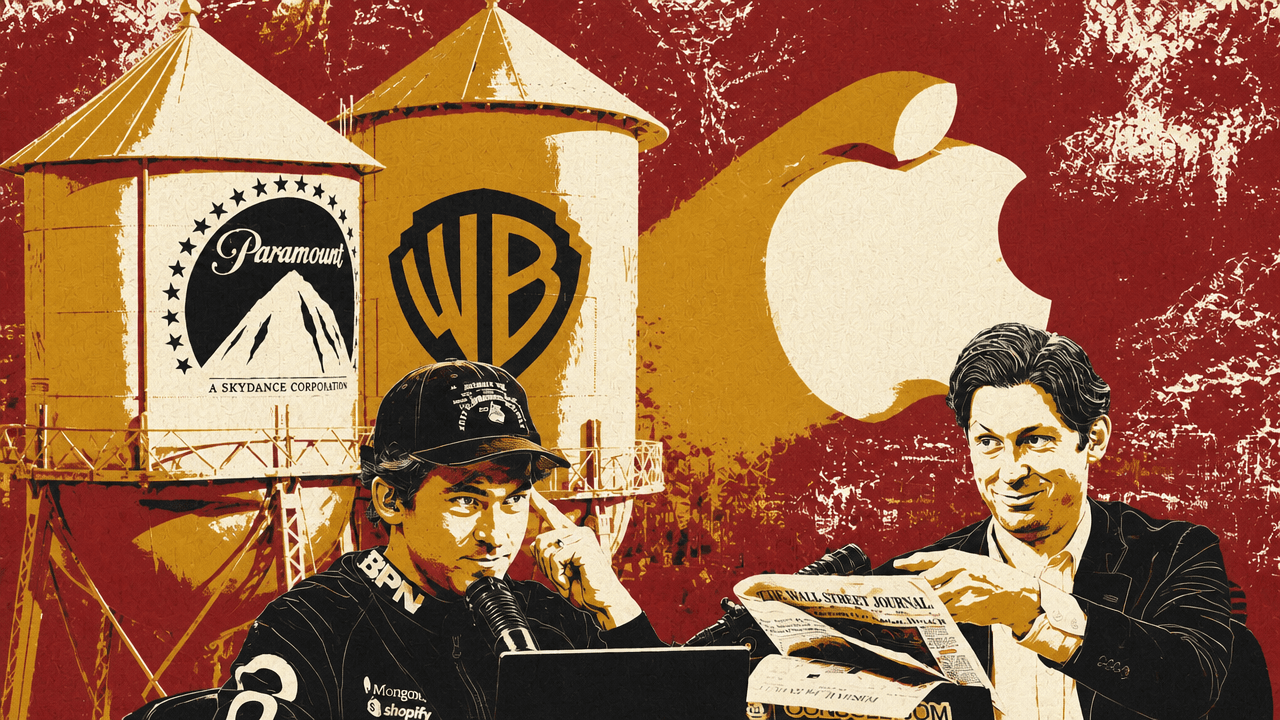
Apple’s suit puts OpenAI’s hardware effort under a legal cloud
Apple has sued OpenAI, alleging a coordinated campaign to steal trade secrets connected to Apple’s forthcoming products as OpenAI develops its own AI-device lineup. The suit arrives before OpenAI has released that hardware, but after its 2025 acquisition of io, the device company co-founded by former Apple design leader Tang Tan and Jony Ive.
John Coogan emphasized the distinction between the allegations and established facts: the case may take months or years to resolve. But Apple’s complaint makes unusually specific claims about both a former employee, Chang Liu, and Tan, now OpenAI’s chief hardware officer.
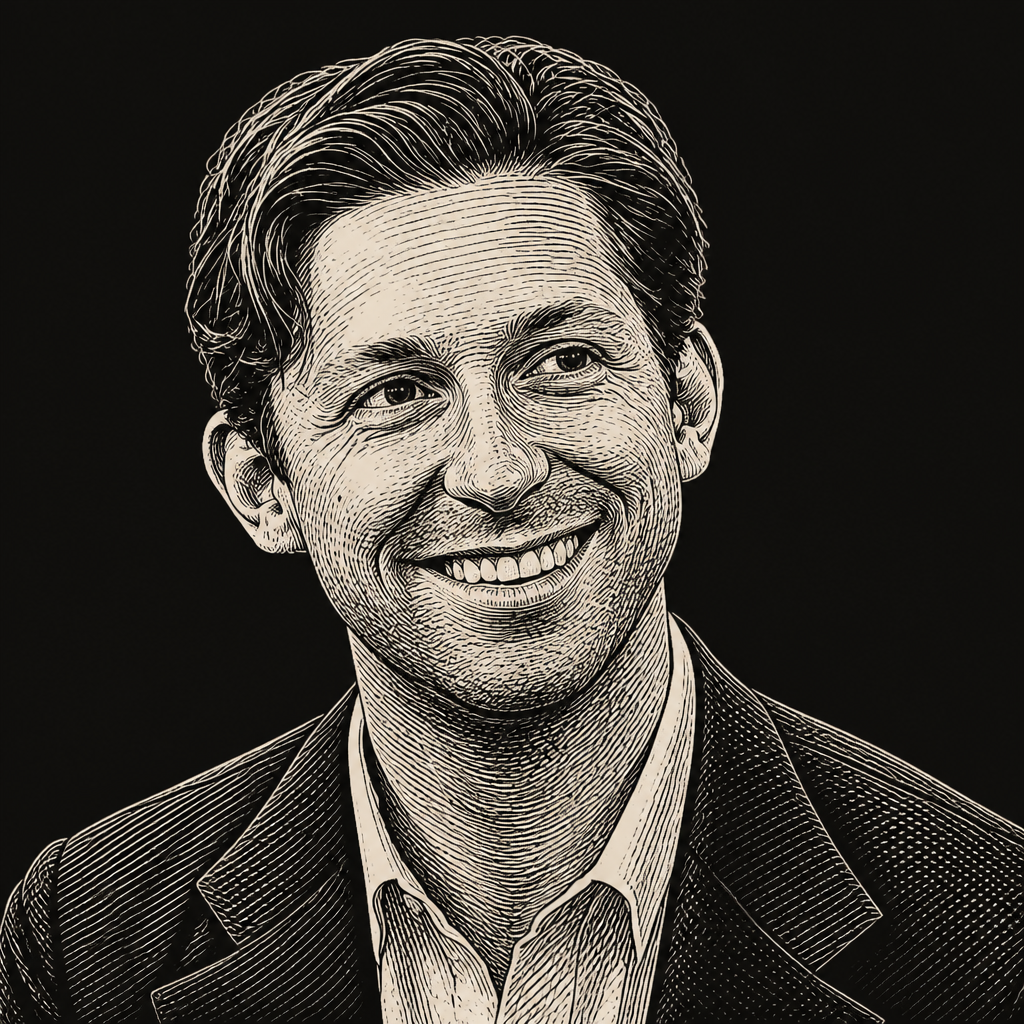
The allegation concerning Liu is the most concrete. Apple says Liu left for OpenAI but retained an Apple-issued laptop for weeks, downloaded proprietary Apple hardware files, continued to access Apple’s internal systems after his departure, and encouraged other Apple employees to do the same. Coogan’s practical point was straightforward: leaving a company ordinarily means leaving its device, files, and internal access behind.
Apple’s account also raises questions about its own controls. As Jordi Hays relayed from Ben Thompson’s reading of the complaint, Apple allegedly failed to recover Liu’s laptop or disable it remotely, and Liu apparently retained server access for weeks because of what Apple described as a bug. Thompson called the security posture depicted in the complaint “shockingly poor,” even while arguing that the detailed allegations make Liu appear culpable.
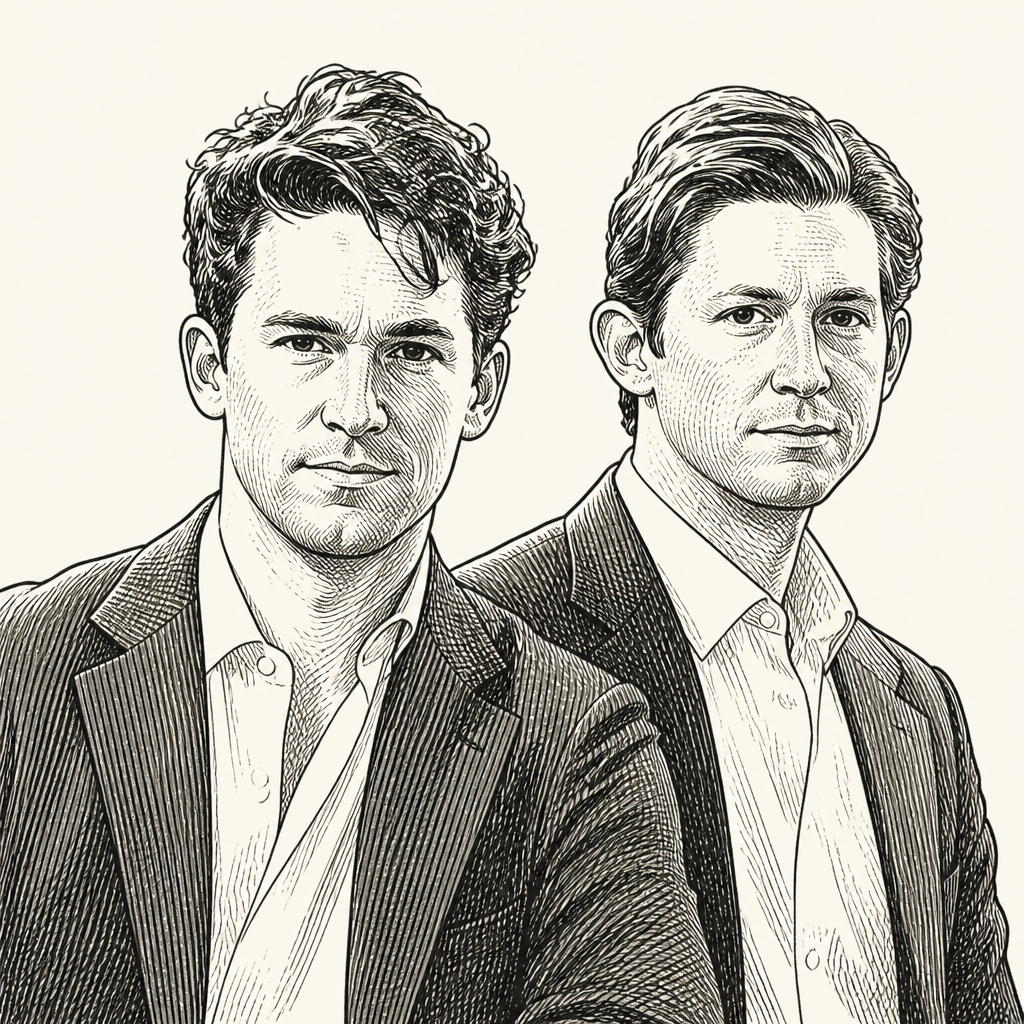
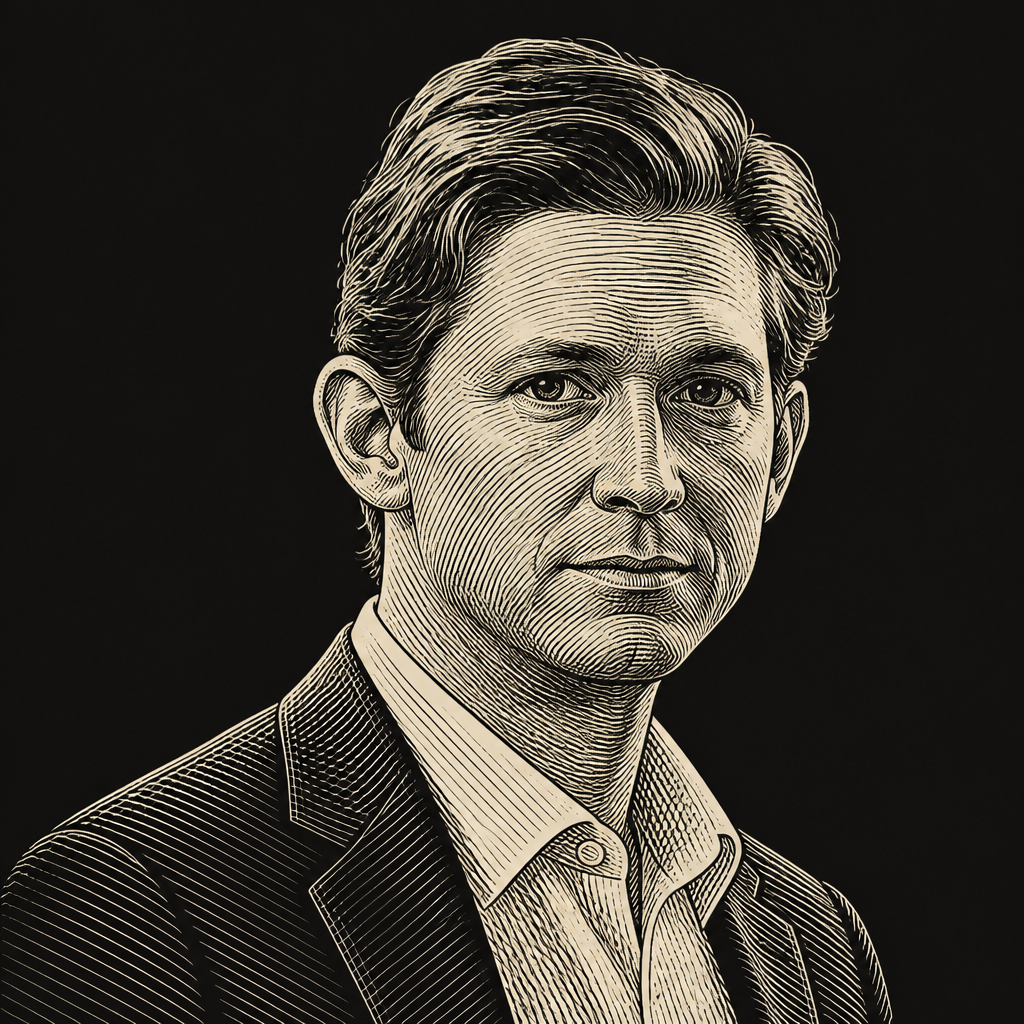
Apple’s allegations against Tan are different. The company says Tan systematically solicited sensitive information from Apple employees interviewing for OpenAI jobs and encouraged candidates to bring “actual parts from Apple” to OpenAI for show-and-tell sessions. Tan spent 24 years at Apple, rising to vice president of product design, before leaving in 2024 to co-found io. Apple says OpenAI has hired more than 400 of its employees in recent years.
Hiring competitor talent is not itself misconduct. Hays noted that people familiar with technology hiring said interviewers commonly ask candidates to discuss their past work, and showing work-related components is not necessarily unusual. The disputed question is whether the parts or information at issue were sensitive; Apple was seeking discovery on that point.
OpenAI responded that it has “no interest in other companies’ trade secrets” and remains focused on building technology that empowers everyday people. Tan and Liu did not respond to the requests for comment cited in the discussion.
The commercial significance lies in what OpenAI is trying to build. The on-screen report from Mark Gurman described Apple’s accusation as relating to OpenAI’s upcoming suite of AI devices. Product details remain unspecified, though Coogan noted that speculation has ranged across phones, headphones, pins, and other form factors. The io acquisition is the firmer signal: OpenAI has committed to a consumer-device effort under Tan’s leadership.
That effort poses a more fundamental question than the lawsuit can answer. If AI agents increasingly do work in the background and can be reached through existing messaging interfaces, the next computing shift may require a new device category—or may reduce the importance of dedicated devices. OpenAI is evidently betting on a hardware answer. Apple’s lawsuit seeks to constrain how that bet is built.
OpenAI’s device push gives Thompson’s Apple diagnosis its force
The complaint arrives as OpenAI pursues consumer hardware under the former Apple executive who now leads its device work. Jordi Hays relayed Ben Thompson’s interpretation that this timing makes the case emotionally and strategically potent for Apple: AI has disrupted assumptions that had supported its position, while OpenAI is pursuing a possible successor to the smartphone interface.
Coogan cited Wall Street Journal columnist Rolfe Winkler’s comparison to Steve Jobs’s promise of “thermonuclear war” against Android, which Jobs called a stolen product. Apple’s prior fight with Samsung likewise centered on accusations that Samsung had copied the iPhone; that litigation lasted years before a 2018 settlement. In each case, Apple presented the dispute as a breach of trust as well as a contest over products.
The OpenAI case has its own trust narrative. Google’s then-chief executive Eric Schmidt sat on Apple’s board while Google developed Android. Here, Apple alleges that a former senior Apple design executive and former employees used Apple knowledge to help a rival hardware organization.
Hays relayed Thompson’s broader diagnosis: Apple entered 2022 with a powerful premium-smartphone franchise, durable services revenue, and supply-chain strength. In Thompson’s account, the AI transition forced Apple to decide whether to compete seriously in models, exposed it to embarrassment around its 2024 Siri introduction, and raised the possibility that AI could weaken the iPhone’s central role rather than simply enhance it.
The AI era has sucked for Apple even if they aren't necessarily doomed and even if the relaunched new Siri ends up working out.
That assessment is Thompson’s, as relayed by Hays, not Apple’s legal theory. Still, the complaint’s emphasis on more than 400 OpenAI hires gives the argument a concrete personnel dimension. A well-documented instance of alleged document theft could become, in Thompson’s framing, a cudgel against the company most closely associated with Apple’s AI-era pressure.
Apple’s own history complicates any broader moral story about who appropriates innovation. Coogan noted that “sherlocking” became shorthand for Apple absorbing third-party software functionality into its platform, a reference to the Mac search product whose capabilities were later incorporated into Spotlight. He also noted that the effect of such moves varies: built-in smartphone features made many standalone utilities, including flashlight apps, less necessary, while Apple’s newer invitations product has not obviously displaced Partiful.
None of that bears on whether OpenAI or its employees improperly obtained Apple trade secrets. It does help explain why the lawsuit is being read as more than a routine employee-offboarding dispute: it is a fight between companies with overlapping ambitions to define what comes after the smartphone.
California’s challenge turns on whether Hollywood is its own market
California Attorney General Rob Bonta and 11 other state attorneys general have sued to block Paramount’s proposed $110 billion acquisition of Warner Bros. Discovery. John Coogan described the dispute as a contest over how competition in entertainment should be defined.
Coogan said Paramount characterized California’s complaint as one that “distorts settled antitrust law” and misrepresents competition in the entertainment industry. He also said that the Justice Department had cleared the merger, and that China and other international regulators had not, according to the discussion, raised comparable objections.
The same reporting, as relayed by Coogan, said Paramount was weighing whether to shift major California operations if the state challenge continued. He said potential ticking fees of roughly $600 million to $1.2 billion could become an issue for state taxpayers if the litigation produced damages. Coogan also said friends and advisers of Paramount chief executive David Ellison had reportedly urged the company to reconsider its California footprint in the event of a suit.
The narrow-market case against the merger is direct. According to Coogan, the transaction would combine two of the five major film distributors and give the resulting company control of roughly 27% of U.S. film distribution and basic-cable channels. Two separate studios that buy scripts and intellectual property would become one buyer. That could reduce competition for projects, diminish bargaining leverage for creators, and lead to fewer films being made.
The concern is also tied to physical production capacity. Paramount and Warner Bros. own historic Los Angeles studio lots, and critics worry that a combined company may not maintain both. Coogan said Paramount had offered to keep both lots open and release 30 films annually—what he understood as roughly their combined existing output—and that executives had privately complained Bonta would not negotiate.
The opposing market definition is broader: Hollywood competes not merely with other Hollywood studios but with YouTube, Instagram, podcasts, livestreams, and other claims on audience time. On that view, consolidation is a response to competitive pressure from outside the traditional studio system, not an attempt to monopolize a self-contained market. Coogan compared the logic to the argument for a Shutterstock-Getty Images combination amid disruption in stock imagery.
The merger’s competitive meaning therefore depends on the frame. Treat major studios as the relevant market and the deal intensifies concentration among buyers of film projects. Treat consumer attention as the market and the same deal looks like a defensive consolidation in an industry losing attention to many other formats.
The new AI letter asks for readiness, not a fixed intervention
More than 200 researchers and economists signed a brief statement calling on governments and institutions to prepare for AI’s economic effects. Jordi Hays named signatories including Jack Clark, Jeff Dean, Noam Brown, Tyler Cowen, Sholto Douglas, John Schulman, Yoshua Bengio, Eric Schmidt, and Dean Ball.
The statement makes three claims. First, AI “may become radically more powerful” over the next decade. Second, it says that development could create an economic transformation larger than the Industrial Revolution on a much shorter timescale, bringing both large-scale job displacement and major gains in living standards. Third, it calls on economists, policymakers, and technology leaders to act now to understand the economics of transformative AI and build incentives, guardrails, and institutions that steer it toward complementing people and benefiting society.
John Coogan regarded the first proposition as deliberately conservative relative to fast-takeoff forecasts and some frontier-lab timelines. Hays’s criticism was that saying AI may become more powerful demands little commitment. Coogan agreed that the statement is easier to endorse than claims of near-term recursive self-improvement or other aggressive forecasts, though he argued that a meaningful group of AI skeptics would reject even the premise that the technology will become substantially more useful.
For Coogan, the third point is the substantive one because it does not turn on a probability estimate. A person could assign only a small chance to a radical AI transformation and still support more economic research, policy work, and institutional preparation. The letter does not call for a pause in development, a cap on training runs, emergency spending, or a specific regulatory architecture.
That restraint distinguishes it from proposals for a global slowdown in large AI training runs or U.S.-China negotiations modeled on nuclear arms-control discussions. The letter’s request is to develop understanding and contingency plans before a shock occurs.
Coogan supported being prepared for a severe labor-market event, offering 10% or 15% unemployment as examples of the sort of shock for which governments should have tools available. He said such displacement does not appear to be occurring at present, but saw little downside in developing information, studies, and policy options in advance.
Its vagueness is also its limitation. Hays offered the critical interpretation: people building the technology are again telling society that something must be done about its consequences without agreeing on what should be done. Coogan further speculated that the absence of several top AI executives from the signatory list may reflect reluctance to be publicly associated with headlines about large-scale job displacement. That remains his inference; the statement itself neither explains absent signatures nor assigns responsibility for the policy response.