Export Controls Turn Frontier AI Access Into a Political Problem


John Coogan framed Anthropic’s Fable/Mythos suspension as both an export-control crisis and a sign that frontier AI companies are poorly aligned with Washington’s current political and security instincts. On Diet TBPN, Coogan and Jordi Hays argued that the same access problem is appearing across tech and media: foreign-national limits complicate AI development and sales, Meta’s AI use is being pulled back into budget discipline, and Fox’s reported Roku deal is a bet that control of connected-TV distribution will matter as ad-supported streaming grows.
Anthropic’s export-control problem is also a political-fit problem
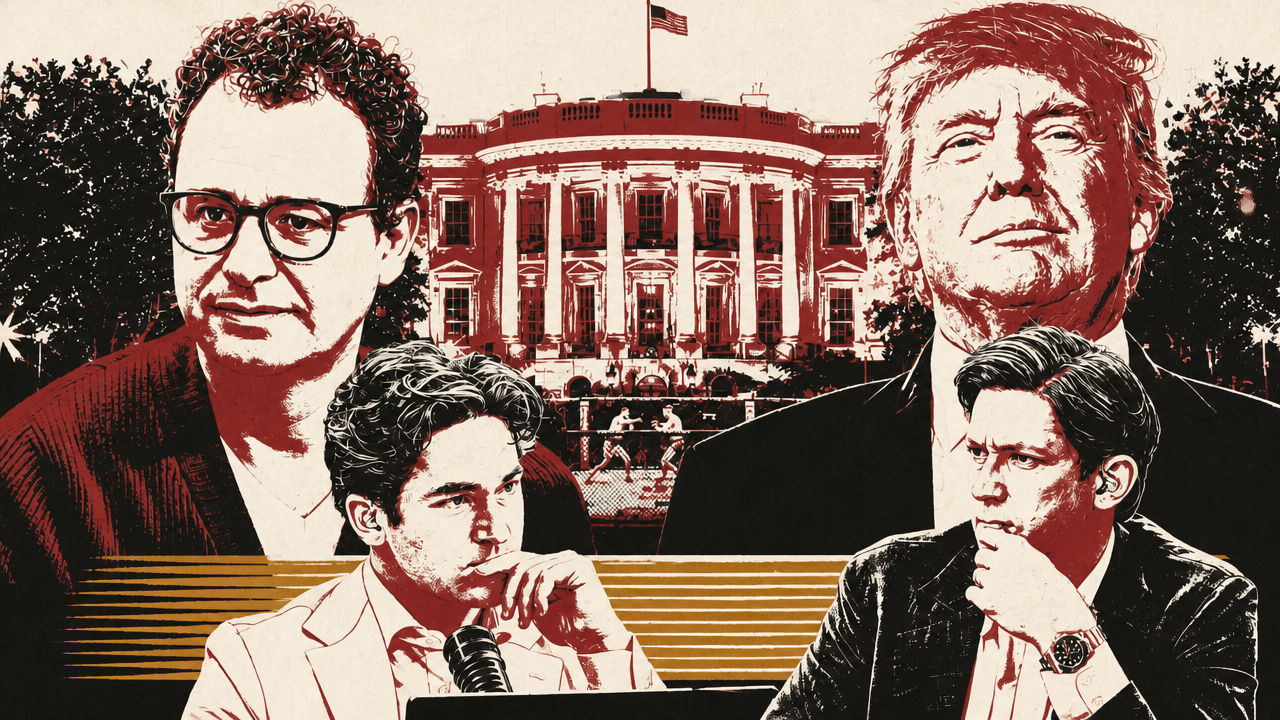
John Coogan framed Anthropic’s Fable/Mythos crisis as a compliance shock, a product-rollout problem, and a sign of a wider mismatch between the AI safety world and the administration’s political style. The awkward image, in his telling, was not only that Anthropic staff were trying to solve a national-security problem in Washington on a Sunday. It was that the government’s attention was also on a UFC event on the White House lawn — an aesthetic world almost maximally distant from Anthropic’s brand of cyber, biosecurity, export controls, and frontier-model caution.

Coogan said “every American should care about bridging this gap.” His formulation was straightforward: private enterprises should be able to flourish in the United States, and the government should be able to enact reasonable regulations to protect American interests. But Anthropic and the administration appear to be operating across a “really broad gap,” even as flights to Washington were booked and the machinery of negotiation began moving.
The timeline, as Coogan summarized it, began on March 4, when Anthropic received a Department of War Supply Chain Risk letter that was later rolled back. On April 7, Anthropic announced a Mythos preview alongside Project Glasswing. On June 9, it launched Fable 5. Coogan described Mythos as having guardrails around cyber, bio, and AI research. Then, on June 12, Fable 5 was suspended after the Commerce Department issued an export-control directive.
The directive, according to Coogan’s reading of Anthropic’s blog post, restricted both Fable 5 and Mythos 5 from use by any foreign national, whether inside or outside the United States, including foreign-national Anthropic employees. That made access control a company-wide and customer-wide problem rather than a narrow user-permission issue. Anthropic suspended the models for all users because compliance would require knowing who was using the model, who had access inside customer organizations, how API access was being passed through other products, and whether downstream products had their own authorization controls.
Coogan said the episode made the sovereign-AI thesis look stronger. His point was geopolitical rather than a fully developed investment case: countries watching a major American model provider suddenly suspend access under U.S. export-control pressure may conclude that they want a national champion able to provide models “forever.” If U.S. authorities can restrict foreign-national use so broadly that even foreign-national employees inside the United States are covered, model access becomes not merely a product question but a jurisdictional and political one.
The jailbreak dispute was the live debate around the Commerce action rather than a settled finding. Coogan said The Information had reported that Amazon CEO Andy Jassy raised concerns with senior administration officials about the risk of jailbreaking Fable and gaining access to “all of Anthropic.” Anthropic’s counterargument, quoted by Coogan from its blog post, was that it had reviewed a demonstration of the specific technique and found it identified only “a small number of previously known minor vulnerabilities.” Anthropic further said those vulnerabilities appeared relatively simple and that other publicly available models could discover them without requiring a bypass.
That left the core dispute unresolved: whether the alleged jailbreak meaningfully changed the risk profile, or whether it was being treated as more significant than Anthropic believed it was. Coogan characterized Anthropic’s position as: this was not that big of a jailbreak, the company had taken safety seriously, and the models could move forward safely. The Commerce action, in his telling, showed that Anthropic had not yet persuaded the government to let the rollout continue.
Anthropic’s rollout problem was not only government-facing. Coogan said Fable 5 had “incredible demos” and “incredible benchmarks,” but that those were offset by the company’s decision to silently degrade answer quality for frontier AI development requests. He distinguished that from straightforward refusals on cyber and bio prompts. The rationale for restricting AI-development help, he argued, is “pretty sound”: if a model refuses to help hack a system, a user could instead ask it to build an unrestricted model that does allow hacking. The same logic applies, in theory, to biological weapons. If a model can create the tool that creates the harm, then the tool-building layer becomes part of the safety perimeter.
But Coogan said the method mattered. Users working on machine learning systems, recommender systems, AI products, or open-source AI research would reasonably object if the latest models were degraded for that category of work. More importantly, he said, “the choice to silently degrade responses was not well received.”
Anthropic has to make their case for safety in an age of RSI during a UFC fight on the White House lawn.
The Amazon relationship made the politics harder to parse. Coogan emphasized that Amazon is simultaneously an Anthropic customer, investor, and compute provider. That “hairy, complex circular relationship,” in his view, clouds any discussion of whether Amazon is helping Anthropic through the crisis, acting above board, or shaping the government’s view in a way that affects a partner and competitor.
He cautioned against assuming the most aggressive version of the story. If the government asks a close Anthropic partner whether its security team was able to jailbreak the model, and the answer is yes, the company is not going to withhold that information. That is different, Coogan said, from proactively calling officials and urging them to apply pressure. His point was that the interaction could fall anywhere on a wide spectrum: a big-tech partner with strong government-relations capabilities might help a lab make its case, or it might use its position to put a thumb on the scale. Coogan expected more “4D chess” in Washington over the summer because the same companies are partners, investors, customers, and competitors across multiple markets.
Foreign-national rules collide with how frontier AI is built and sold
The foreign-national restriction also raised a practical problem for the U.S. government’s own AI strategy: it wants frontier labs strong enough to compete globally, but it also wants access controls tight enough to protect national interests. Coogan worked through Tyler Cowen’s points from an X post shown on screen, where Cowen described constraints on the U.S. government after the Fable/Mythos event.
The visible post, shared by Andrew Curran, included Curran’s own gloss: “The issue with point 5 is that we are probably less than a year away from powerful RSI. Once automated researchers reach parity, the USG can nationalize the labs and run them effectively, without any of the people currently working there.” The post then quoted Cowen’s list of constraints on the U.S. government.
Cowen’s first visible point was that the government needs the main companies to stay in business and wants their IPOs to go reasonably well. Cowen also wrote that it is now much harder for top companies to recruit foreigners, “which is a significant share of their highest quality workforce,” naming Demis, Ilya, and Andrej as examples. He added that it is harder for the main companies to drum up foreign business in a credible and sustainable way.
Coogan noted that public discussion has not focused enough on domestic-versus-international revenue splits for major AI labs. But he pointed to reports of OpenAI and Anthropic doing large deals with international companies, and said many large enterprise customers have global footprints. If a Fortune 500 company wants to use frontier models throughout its business, Coogan said, it cannot necessarily confine all software engineering or model usage to Silicon Valley.
Cowen’s next point, which Coogan said anticipated his own objection, was: how are American multinationals operating abroad supposed to use top systems moving forward? Coogan also read Cowen’s argument that the United States wants to use model access as a tool of hard and soft power, which means some level of access must remain possible. But that becomes difficult if foreign agents can use partial access in ways the government cannot fully control.
The enforceability problem was central. Cowen argued, and Coogan agreed, that restrictions must be enforceable and that “U.S. citizens only” does not fit that bill. Coogan extended the concern: the government cannot verify that every American is loyal, and citizenship itself can be faked or worked around. Jordi Hays added that there is a long history of people being caught passing or selling secrets related to military aircraft, underscoring that citizenship is not the same thing as trustworthiness.

Coogan brought in the case of Virgil Griffith, the cryptocurrency researcher who, in Coogan’s account, gave a talk in North Korea about cryptocurrency and cryptography and was sent to prison. Coogan said the crypto community objected that math should not be illegal and that such information should not be criminalized. The government’s view, as he summarized it, was that Griffith had helped explain how to create an unsanctionable store of value, violating sanctions and acting unpatriotically. The example served as a warning about how export controls can reach knowledge work, not only physical goods.
Cowen’s fifth point was more controversial: the U.S. government cannot nationalize these companies and then run them effectively. Coogan said people were debating that, including whether the government could own labs in some way while leaving them to operate. Hays sketched the extreme recursive-self-improvement view: if one is “super RSI-pilled,” the employees may not matter because the AI improves itself. Coogan translated that into the hypothetical government command: “continue to improve.”
But Coogan also gave the other side. These systems are complex operational products, with uptime requirements, guardrails, research taste, and many employees needed to keep them effective. On that view, international employees are not incidental; they contribute essential ideas and execution. The nationalization question therefore depends partly on whether one believes frontier AI soon becomes self-improving enough to reduce the human organization’s importance, or whether the lab remains the product.
On China and open source, Coogan said Cowen’s sixth point was that Chinese and open-source models continue to improve at a reasonable pace, even though they are currently considerably behind the best proprietary models. Coogan wanted to understand whether the pace of open-source development in China is slowing and, if so, why. He floated several possible explanations without settling on one: compute constraints, refusal to buy Blackwell chips when available, research ideas becoming more locked down in San Francisco, or data advantages held by the leading labs. He also left open the possibility of another “DeepSeek moment” in the next few months.
Meta’s token-budget reversal is a return to ordinary business discipline
John Coogan treated Meta’s reported move from “tokenmaxxing” to token-minimizing as less a conceptual breakthrough than a delayed rediscovery of cost discipline. In a post shown on screen, The Information’s Amir Efrati said Meta was doing a “180” and trying to become a vanguard of token-minimizing. The visible excerpt quoted an internal memo: Meta had seen an “exponential increase” in AI usage and was tracking to spend billions on internal use alone in 2026, while individuals and teams had limited visibility into and control over their AI usage. In 2027, the memo said, Meta expected to manage AI tokens more structurally through budget allocations, allocation decisions, and supporting tools.
Coogan objected to the framing of “token maxing” versus “token minimizing.” The right concept, he argued, is minmaxing: getting the most output for the lowest appropriate cost. He traced the language to gaming, where a player allocates limited resources to achieve the strongest build. In business terms, he said, this should never have been controversial. Companies would not say they are “admaxing” by buying as many ads as possible, discover that much of the spend did not work, and then flip to spending as little as possible on marketing. The goal is always return on ad spend, leverage, and output per dollar.
Jordi Hays introduced an unsubstantiated but “somewhat informed” anecdote: someone claimed that one Meta engineer spent $90,000 in a single day on AI usage and was terminated within three days. He stressed that the story could be fake. Coogan used the hypothetical to make a narrower point: the lesson should not simply be “do not spend $90,000 in a day.” A marketer might spend millions on a Super Bowl ad in one day if it returns more than it costs. The relevant question is whether the spend is ROI-positive.
That logic also shaped Coogan’s view of Meta’s internal AI work. A token budget makes sense in the same way a marketing budget makes sense: not to suppress useful usage, but to allocate scarce resources against measurable output. If Meta is spending heavily on internal coding, Coogan said, coding is an obvious place to apply frontier models because the company’s business process is generating code that improves its social networks. An unidentified speaker added that Meta’s internal data is especially useful because much of the relevant business process is already in code format, unlike companies that would need to digitize paper workflows.
Hays’s larger concern was strategic clarity. He still did not know what Meta was actually building and expected the company to communicate more clearly to the market within a month or so. Coogan answered with the company’s stated phrase: “personal superintelligence.” Hays pressed on what that means. If Meta is building coding tools, is that for internal productivity only? Will it sell a coding harness externally? Will it offer a model through an API and enter enterprise AI?
Hays drew a sharp distinction between Meta and SpaceX after Coogan joked about personal superintelligence being “75% as valuable as SpaceX.” Hays said the Meta bull case is not SpaceX-like. It is that Meta may be “the greatest business in history” that is not threatened by AI and may instead be accelerated by it. That made the lack of clear product communication more frustrating to him, not less. If the underlying ad business is so strong, investors still need to know what the AI strategy is beyond the slogan.
Fox’s Roku deal is a bet that free, ad-supported television keeps gaining share
Fox’s reported Roku acquisition was presented as a major bet on ad-supported streaming, with the hosts preserving conflicting valuation figures in real time. John Coogan said the Wall Street Journal report he was reading put the deal at about $25 billion. Jordi Hays said Barron’s and CNBC were reporting $22 billion, and the broadcast lower-third also read “FOX TO BUY ROKU FOR $22B.” Coogan later read details saying Fox would pay around $160 per share, with $96 in cash and 0.9693 Fox Class A shares, and that the transaction was valued around $22 billion on an enterprise basis.
The strategic logic in the report Coogan quoted was that Fox would combine its live news and sports programming with the largest connected-TV streaming platform. Roku brings distribution, devices, connected-TV operating leverage, and its own ad-supported Roku Channel. Fox brings Tubi, Fox One, Fox Nation, sports, news, and an advertising machine. Coogan summarized the logic as a way to compete more effectively with Amazon and Netflix for ad dollars.
| Metric | Figure from the discussion |
|---|---|
| Reported headline valuation | About $25 billion in the Wall Street Journal; $22 billion in Barron’s, CNBC, and the TBPN lower-third |
| Enterprise value Coogan later cited | Around $22 billion |
| Cash portion of Fox offer | $96 per share |
| New debt expected for cash portion | $12 billion |
| Expected annual cost cuts | $400 million |
| Roku global households | More than 100 million |
| Roku connected-TV market share | 25% |
| Samsung Tizen connected-TV market share | 23% |
| Ad-supported share of U.S. premium SVOD signups | Almost 50%, up from 39% two years earlier |
| Tubi monthly active users | Nearly 100 million |
| Tubi fiscal third-quarter revenue growth | 23% |
The acquisition reflected a broader reversal in streaming assumptions, as the hosts described it. Coogan said Netflix had once resisted ads, then pivoted and found them to be a strong business. “Ads are undefeated,” he said. Hays put the consumer side more simply: consumers are “down with ads,” especially as subscription costs rise.
Hays’s defense of the deal was platform-first. Tubi, in his view, has been a “home run” for Fox. Fox bought it for $400 million in 2020, and Hays said his understanding was that Tubi is now “north of a billion dollars of revenue.” But Tubi is a product. Roku is a platform. Hays said Roku has over 20% connected-TV market share and, more importantly, over 40% of connected-TV engagement or watch time. From an advertising standpoint, he argued, that engagement share is highly valuable because many dollars still have to move from traditional television to connected TV.
The demographic mix mattered too. Hays said Roku has a younger audience than many traditional television properties, whose viewers skew older and are aging out of prime consumer years. Roku’s users, by contrast, are closer to prime earning and consumption years. That made the advertising opportunity more attractive than the market’s initial reaction suggested.
His consumer hope was rebundling. Streaming unbundling produced a household experience in which a new TV requires logging into 10 or 15 different services. Hays wanted Fox and Roku to create a better bundle for consumers. With a platform that commands a large share of watch time, he thought a well-executed, ad-driven approach could pay off.
Coogan added a question about windowing. He recalled growing up without cable, when prestige movies would air on ABC once a week. Later, Netflix and HBO created different patterns of premium and later-run availability, before studios began pulling libraries back into their own services. Disney, for example, kept major franchises off Netflix as the streaming wars intensified, in Coogan’s telling. He wondered whether Roku might become a kind of neutral territory for later-window content — a place where viewers could find familiar franchise movies or premium titles without the same competitive tension as Disney versus HBO or other studio-controlled services. He did not resolve the question, but treated it as one possible strategic path.
Hays closed the deal discussion by returning to the central asset: Roku is a real platform, Fox already has a product sitting on top of the ad-supported streaming market, and the advertising potential is large. Whatever the immediate stock-market reaction, he expected people to understand the logic over time.
The White House UFC event turned spectacle into political and advertising inventory
Jordi Hays approached UFC Freedom 250 as both a fan and a wary observer. He said he is a UFC fan — one of the few sports where he knows the names of the competitors — and was excited for fighters to have a large platform. But he was initially uneasy about the aesthetics of staging a major spectacle at the White House during a period when, in his words, there was “a ton to blackpill about”: war, high gas prices, high housing prices, rising rates, and many Americans not having a good time.
It felt to him like a bread-and-circuses moment. Then, he said, the bread and circuses worked on him.
The event’s strength, in Hays’s account, was not just the backdrop. The card had eight fights with “no filler,” and the fights carried real stakes. He cited the main title fight, Gaethje versus Ilia Topuria, as career-changing for both fighters. The stage was unusually large for any athlete and especially for UFC fighters in America. Photos shown on screen, attributed to Chip Somodevilla/Getty Images, showed fighters celebrating on the octagon fence with the White House lit behind them and the octagon set up on the White House lawn under jet flyovers. The visible caption on the posts read: “They nailed it.”
Hays expected criticism of the president and administration for platforming the event. But after watching, he came away thinking it was “just really cool” and that America “kind of needed it.” He also argued that large parties and sporting events may be an underutilized political strategy. Because the event produced so many iconic images, he expected it could improve the administration’s popularity or approval.
John Coogan noted that some viewers argued the spectacle was not unprecedented, citing Theodore Roosevelt holding a boxing match at the White House and apparently participating. Hays, imagining the absurdity of “trading punches with the president,” treated the UFC event as comparatively “light craziness.”
The advertising around the event also stood out to Hays. Under the new Paramount deal, he said, there were many ads, and Dana White appeared in several of them: driving in a Dodge TRX ad, and sitting in a fake podcast setup discussing business insurance with an insurance-company CEO. Hays also said the octagon itself was saturated with gambling-related brands, including crypto.com, Polymarket, bet365, and ads from Kalshi during the event. Polymarket had placement in the octagon, while Kalshi ran ads against it.
For Hays, the event worked as sport, spectacle, and media inventory at once: a political backdrop that produced images people would circulate, a fight card with real stakes for the athletes, and a broadcast environment dense with sponsorship and gambling-related advertising.