Anduril’s BlueChip Ties U.S. Laptop Manufacturing to National Security
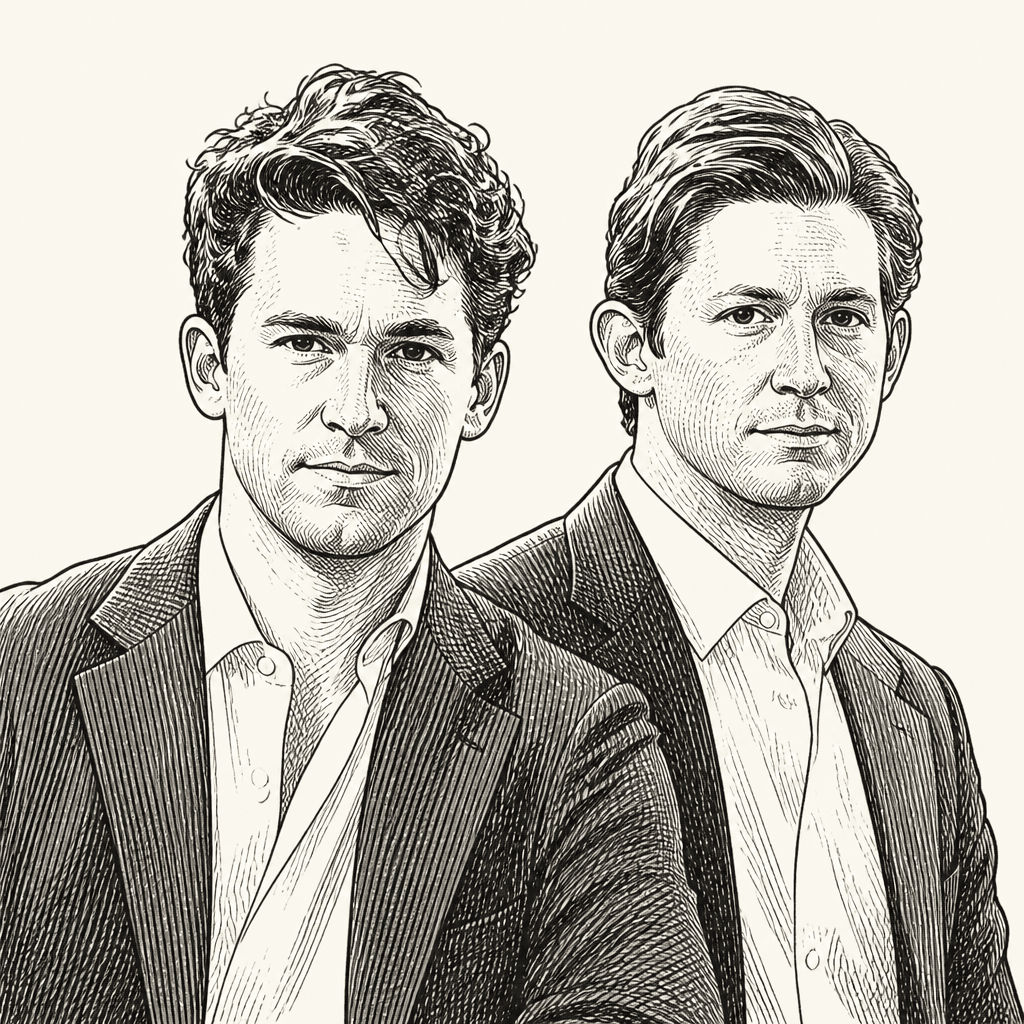

Anduril’s BlueChip laptop makes domestic computer manufacturing part of a national-security argument. Founder Palmer Luckey says countries that rely on foreign suppliers for critical hardware cannot fully secure the technology they depend on; the laptop, planned for 2027, is aimed at government, defense and public-safety users. The same discussion turns to OpenAI’s reported algorithm challenging the Exponential Time Hypothesis, a foundational but unproven assumption in computer science—a claim the source says remains under review, not a disproof of P versus NP.

BlueChip makes domestic production part of the security argument
Anduril and Qualcomm announced BlueChip, a laptop intended for government, defense, first responders, and public-safety workers, with availability planned for 2027. It is not being offered as a consumer product. The larger claim made by Palmer Luckey is that a country’s ability to make computers is connected to its ability to secure them.
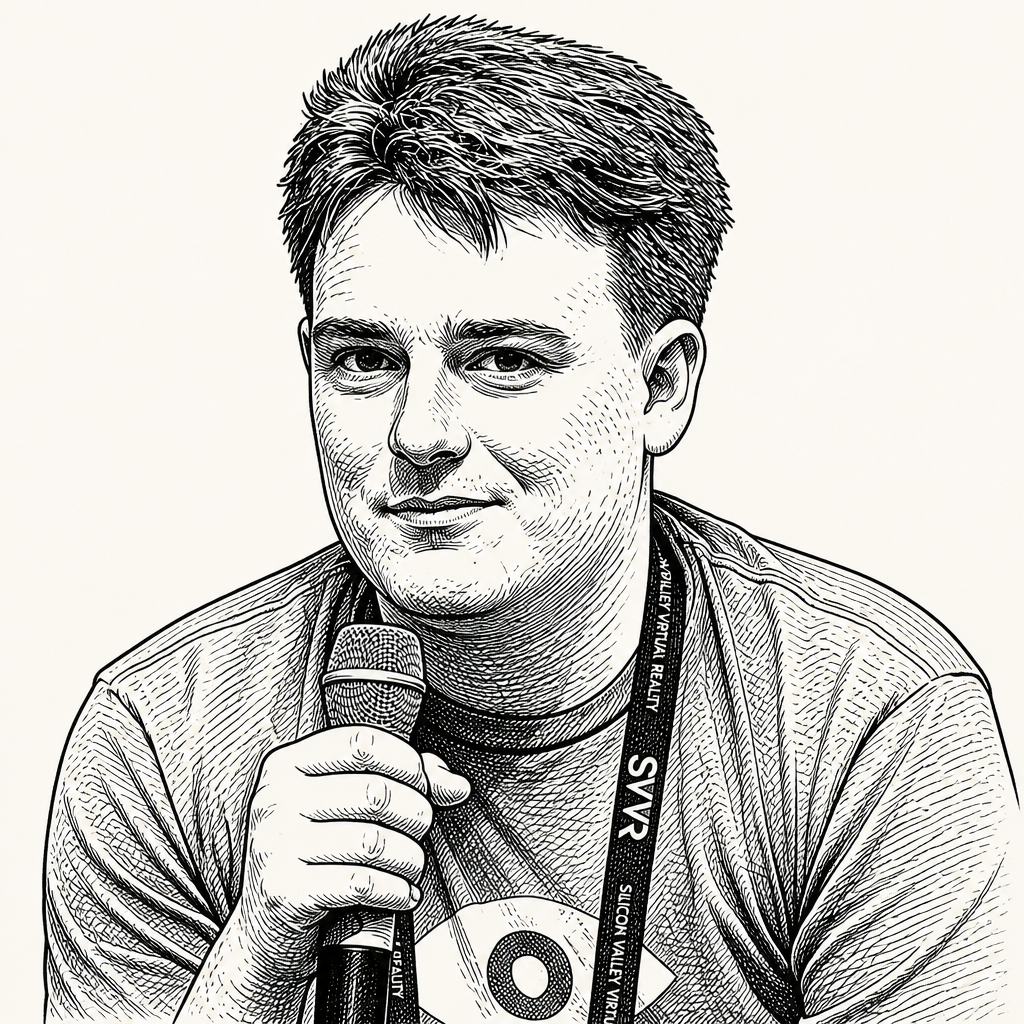

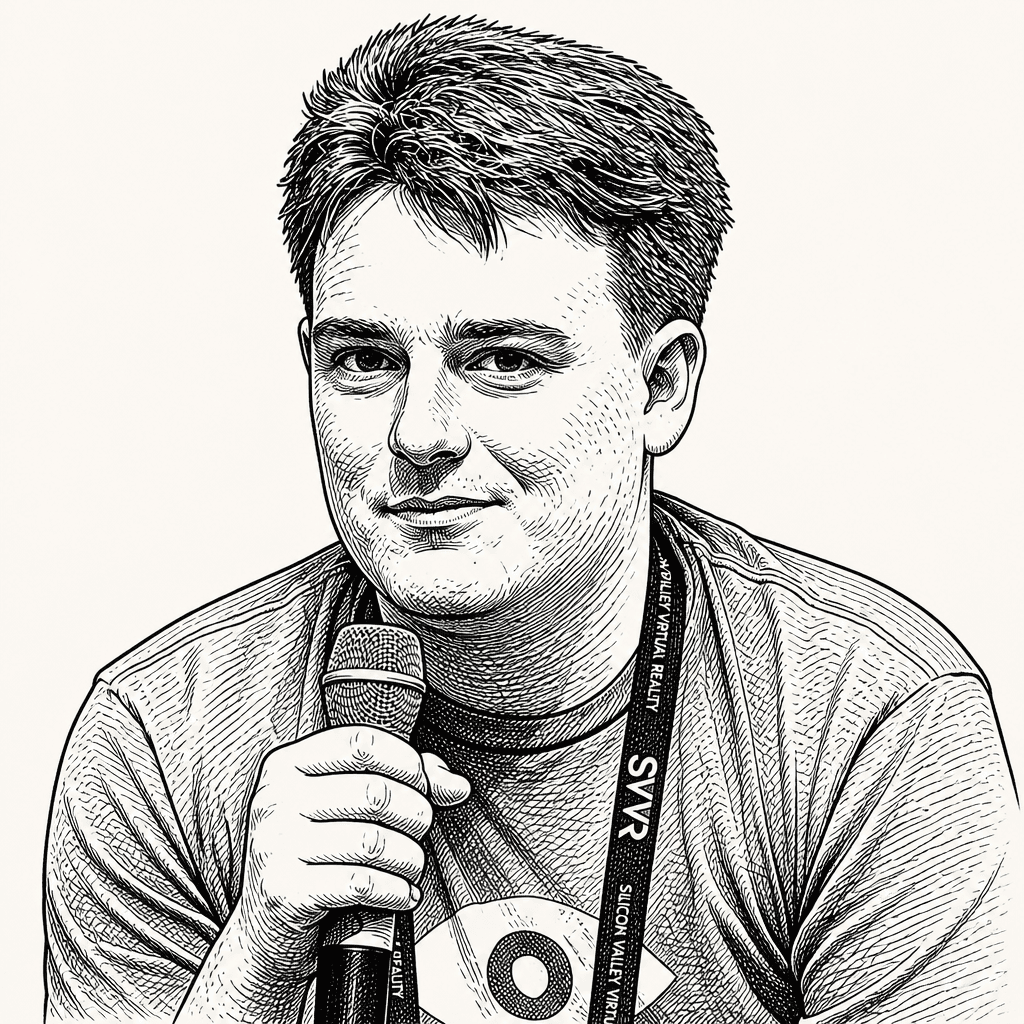
Palmer Luckey argues that a country dependent on other nations, including strategic adversaries, for the hardware that runs its businesses, economy, and national-security systems cannot fully control the technology it relies on. He connects that dependence to the origins of modern computing: during World War II, he says, the US Army Ordnance Corps needed faster calculations for artillery trajectories, and American engineers built a computer to meet that need. The United States later outsourced manufacturing of technology it had invented, he argues. BlueChip is presented as an effort to bring some of that production back.
Luckey says Anduril is making the laptop in the United States, using metals that can be extracted, refined, processed, and milled domestically at scale and at reasonable cost. He says the same principle applies to the battery technology. He describes a chassis designed for rough environments, with replaceable top and bottom shells that could accommodate additions such as solar panels, soft goods, or service insignias.
Palmer Luckey says, “Any country that can't build its own computers can't secure them. If you don't control your technology, you can't control your future.”
John Coogan sees potential in hardware whose software can change with users’ needs. He argues that operating systems are increasingly interchangeable, and that AI-assisted coding could make it easier to build missing features rather than treat a computer’s default software as fixed. He points to window management as an example: Windows offered a keyboard shortcut for arranging windows side by side before Mac did. In his view, users may be able to create the features they want across platforms, except where a task depends on complex server-side infrastructure.


Jordi Hays sees a separate appeal in a genuinely rugged personal computer: a machine that could take everyday knocks or be thrown onto a couch. BlueChip itself, however, is being built for institutional users.
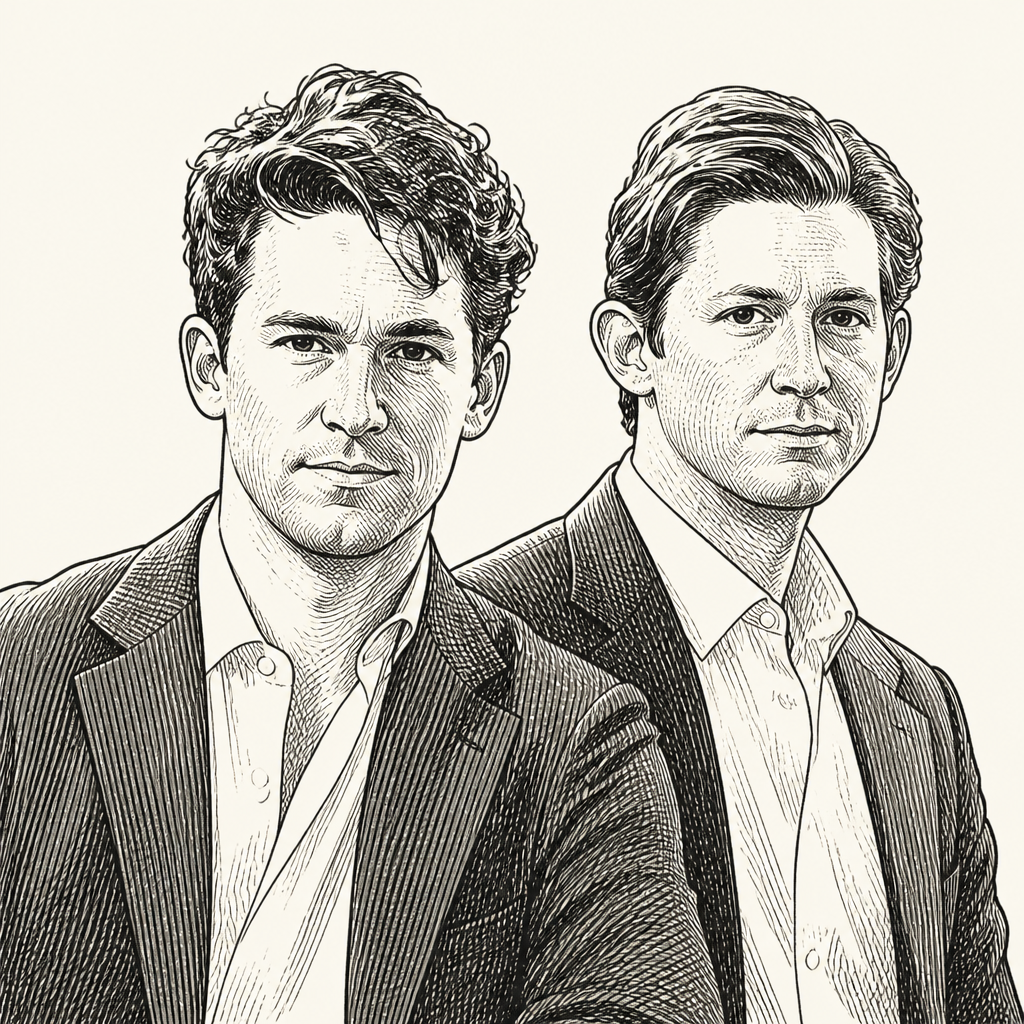
The hosts also discuss the launch video’s departure from a familiar tech-marketing formula. They joke that it omits the rapid montage of cavemen making fire, the Wright brothers, the Model T, or a nuclear explosion. Instead, Luckey explains the history he wants the product to invoke, while the footage follows that history and shows the machine. Coogan says the images support what Luckey is actually saying. Hays jokes that the familiar “vibe reel” has been overused and should stay retired for decades.
Coogan connects Luckey’s security argument to the possibility of hardware flaws, while explicitly treating as unconfirmed a story he has heard about the NSA operating its own chip fab. The concern he raises is whether a country’s ability to secure its computing depends in part on where and how its hardware is made. BlueChip’s stated audience is institutional, and its domestic-production rationale is Luckey’s argument for bringing computer manufacturing back to the United States.
A history of laptops makes today’s sameness more visible
Coogan traces a short history of American portable computers to put BlueChip’s manufacturing claim in context. He describes the Osborne 1 as a commercially successful portable computer built in 1981, with a five-inch screen, two floppy drives, 64 kilobytes of memory, and a listed price of $1,795. He also says the company filed for bankruptcy in 1993. The GRiD Compass, launched in 1982 by a company founded in 1979, had a folding screen and a more recognizable laptop form; Coogan says it cost about $8,000 and was used aboard the Space Shuttle.
Coogan says Houston-based Compaq launched the LTE in 1989, a six-pound notebook intended to deliver near-desktop IBM-compatible computing, with battery power and floppy disks. Apple followed with the PowerBook in 1991. Looking at the PowerBook, Hays says the last decade has felt like a stretch of incremental updates: another gray notebook with a keyboard.
The hosts also discuss Apple’s newly announced 14-inch MacBook Pro with an M6 chip. An Apple Hub post shown on screen lists a 12-core CPU and 12-core GPU, up to 30% faster graphics, up to 25% faster AI performance, up to 24 hours of battery life, and a starting price of $1,999. The post says pre-orders were due to open the following day, with availability listed for November 6.
The update may be faster, thinner, and lighter, but Coogan says it still looks like a MacBook Pro. He makes the same point about the iPhone: newer models can improve without changing the device’s basic shape. A rumored touchscreen MacBook seems incremental to him, too. Hays focuses on the physical consequences: will Apple reinforce the hinge so users can press the screen without making the laptop flex? He also anticipates the familiar backlash invoking Steve Jobs, while Coogan notes that memories of Jobs-era Apple products tend to favor the successes over the oddities.
BlueChip’s rugged design and the MacBook’s familiar silhouette represent different possibilities for what a laptop might change. The hosts do not claim that BlueChip resolves the broader stagnation Hays sees in consumer computers; its announced audience is government and public-safety customers.
OpenAI’s reported result challenges a deep assumption, not P versus NP
OpenAI announced three reported discoveries across mathematics, computer science, and physics, naming harmonic analysis, complexity theory, and quantum field theory. The claim that receives the most attention is that an internal model found an algorithm challenging the Exponential Time Hypothesis, or ETH. The source’s on-screen material labels the result a reported claim under review; it is not presented as a settled disproof.
Coogan relays an explanation of the underlying problem using 3-SAT. In that puzzle, a solver must find an arrangement of yes-or-no variables that satisfies a set of rules. Trying every possible arrangement becomes impractical quickly: each new variable doubles the number of combinations. The ETH, proposed roughly 25 years earlier by Russell Impagliazzo and Ramamohan Paturi, working with Francis Zane, formalized the belief that no algorithm could solve 3-SAT without the time required growing exponentially. The hypothesis was not proven, but Coogan says it became a foundation for modern computer science.
The reported result is not a solution to P versus NP, and “subexponential” does not mean polynomial time or make the problem easy. The algorithm remains slow in absolute terms. As Coogan frames it, the significance is narrower: a machine may have found a faster way to solve a problem in a field where many researchers had treated exponential growth as a settled boundary.
OpenAI’s accompanying material describes a process from the reported research claim to formalization and proof checking, followed by independent expert examination. It distinguishes formal verification from broader community understanding and says the review is ongoing. Coogan says the proof was checked in Lean, a computer system for verifying formal proofs, and that researchers associated with the hypothesis, along with MIT’s Ryan Williams, were leading public review. The source does not present that review as complete.
Hays shifts from the result itself to what may not be disclosed. He argues that when an AI system produces a public discovery with little immediate commercial use, readers should consider whether labs or individuals are keeping more commercially valuable discoveries private. Coogan names areas where disclosure could be constrained: AI research, biology that needs testing, materials science that may be patented, and cybersecurity advances that may need careful deployment. Mathematical findings, he suggests, can be shared more readily with the research community than discoveries whose consequences depend on testing, intellectual property, or controlled rollout.
Anthropic’s succession rules point beyond the founders
A Forbes report discussed by Coogan and Hays describes a private succession mechanism for Anthropic founders’ voting power. The report says the founders can name potential successors, subject to approval by the other founders. A graphic shown during the discussion says each founder can privately name up to ten voting successors. Separately, Coogan and Hays describe a single Class F share held by Founder LLC.
Hays calls the arrangement unusual and sees it as evidence of a company thinking beyond its immediate founders and the coming decades. The founders, he says, have agreed on a structure while leaving room for circumstances to change. Coogan is interested in how the reported process relates to Anthropic’s other governance bodies, including a board and a higher-level group whose membership he discusses uncertainly. He does not offer a settled account of how those bodies relate to Founder LLC.
The hosts joke that the voting share might eventually belong to a future model, or that Founder LLC could make decisions through one. Coogan treats that as speculation, saying it does not seem to be the plan. The concrete point is the reported succession process: founders can identify successors to their voting power, and those choices require mutual approval.
Viral tech culture can outgrow its intended audience
Hays says SOTA Wives creators Sarah Cheng and Vivian Shen appear to be deliberately using rage bait. Coogan notes that the hosts had discussed going further in that direction, including a proposed “Trophy Wives” name. A post shown on screen gives dating advice framed around a woman whose boyfriend’s startup was acquired by NVIDIA: “Lock it in before the acquisition.”
Coogan cites a clip with about a million views, 450 likes, and 160 comments. Hays says the response outside the tech world is less welcoming than inside it: a conversation that may feel recognizable to people in San Francisco can reach a much broader audience once it spreads online.
Coogan connects that mismatch to a critique he says The Economist made of tech podcasts, including TBPN, All-In, and Acquired: Silicon Valley media can function as a way for the Valley to talk to itself, while sounding jarring to people who do not follow the industry closely. The SOTA Wives clip, in his view, presents a similar problem.
A reported DoorDash bid would join adjacent delivery businesses
A news report shown during the discussion said DoorDash was in advanced talks to acquire Instacart for around $17 billion, with a deal potentially completing within the week. Those were reported talks, not a completed acquisition. The report said Instacart went public in 2023 with a market value of about $13 billion and that its shares rose 8% on Monday following the report. It also put DoorDash’s value at around $73 billion and said DoorDash shares fell 6% on Monday.
Coogan sees a possible strategic fit: Instacart’s core business is grocery delivery, while DoorDash is more associated with prepared meals and dinner delivery. Combining them could broaden DoorDash’s services and help it differentiate from Uber. Hays says he has no view on whether the deal makes sense; Coogan says the businesses could work well together.
Changing the name of AI may not change what people think
The hosts close on a post by Donald Trump calling artificial intelligence an inaccurate name and proposing “SI,” for “Superintelligence.” He said the term AI would be banned from relevant documents and other materials, and that SI was a name others were already using or would soon use.
Coogan holds up a Wall Street Journal page bearing the headline “Meta Unveils $95 Billion AI Plan” and jokes that it might be among the last to use the acronym. He says he prefers “MI,” for machine intelligence: in his view, these systems represent a different kind of intelligence, strong at mathematics but not necessarily at practical judgment. Hays is unconvinced that a new label will make people more receptive; it could instead confuse them.