Travel AI Needs Visual Agents, Not Chatbot Booking Flows
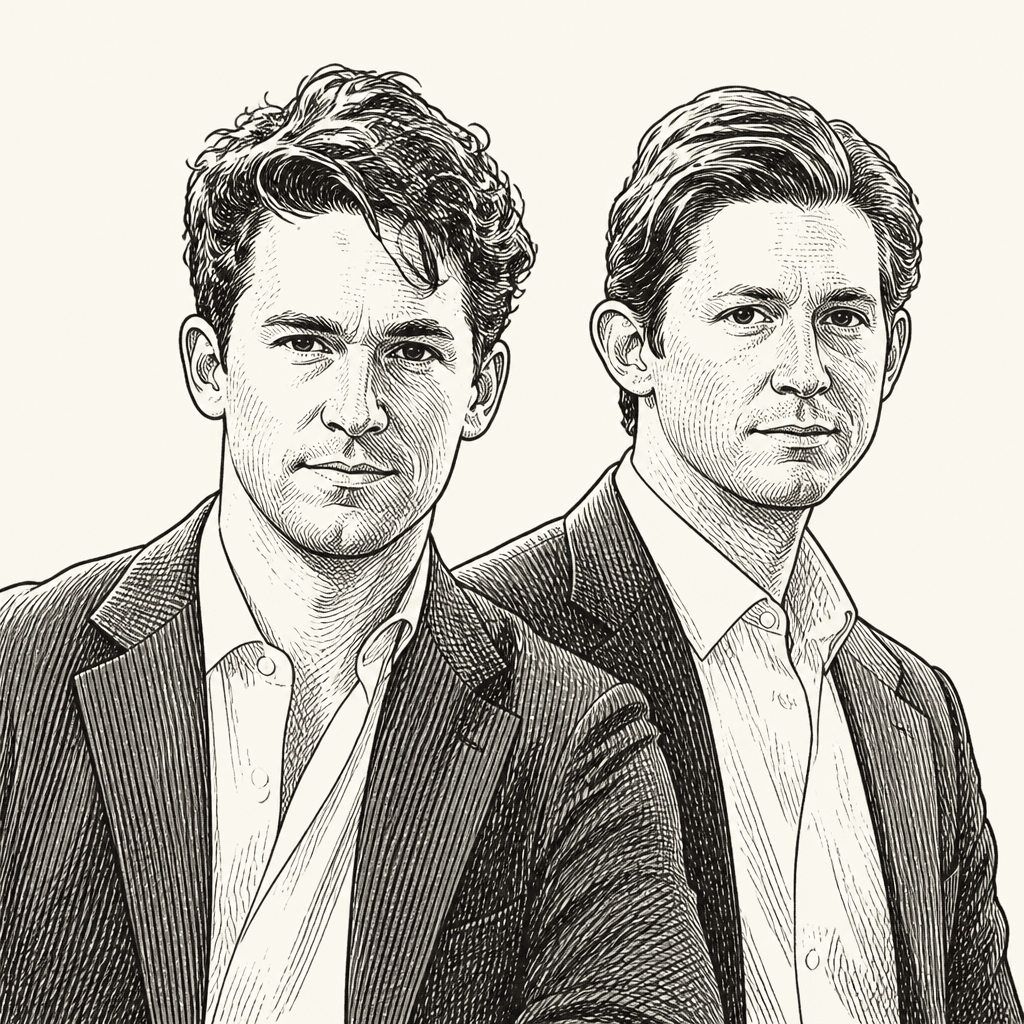

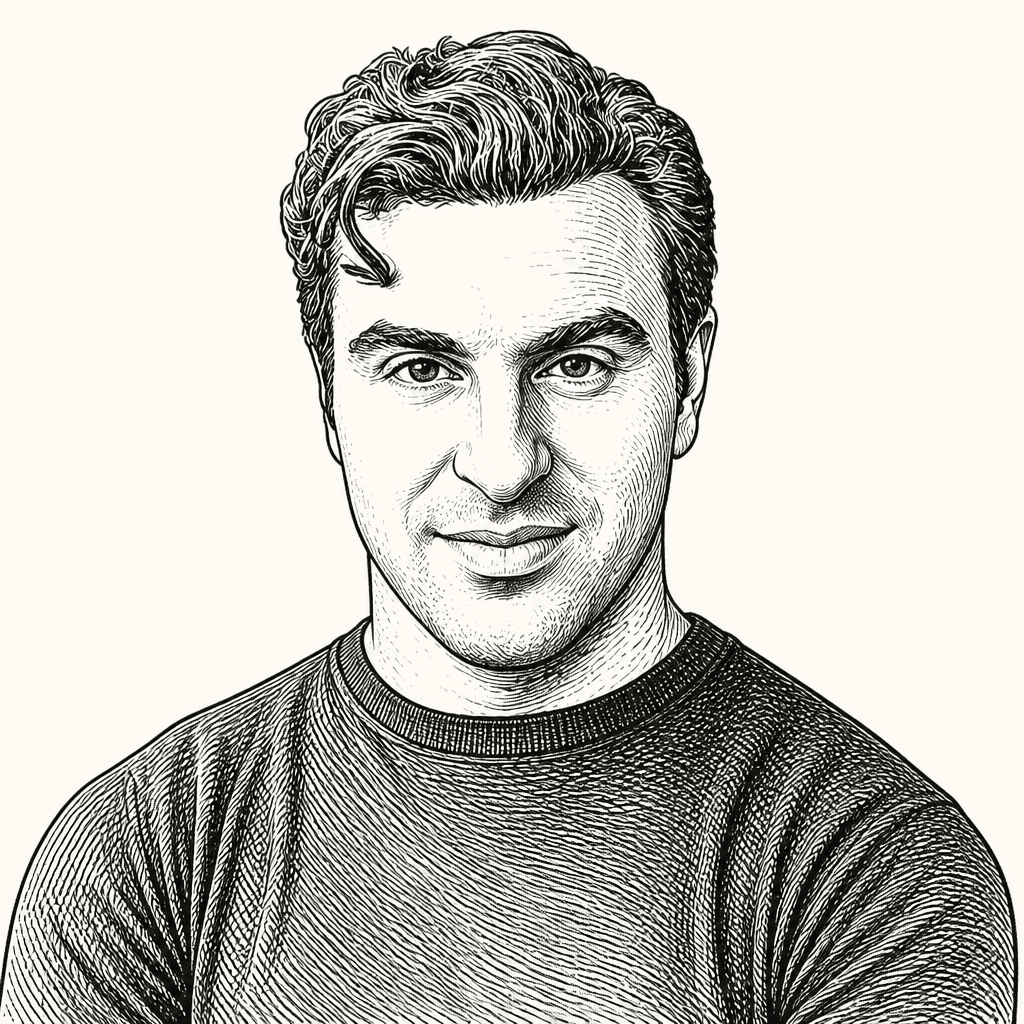
Airbnb chief executive Brian Chesky argues that today’s AI chatbots are the wrong interface for travel and e-commerce, even as AI becomes central to how Airbnb operates. In a live TBPN conversation, Chesky said consumer AI’s next wave will depend on richer, more visual and collaborative agentic products, not text-first chat boxes or another round of enterprise software. He also tied Airbnb’s recent growth reacceleration to more hands-on “founder mode” management, saying AI makes operating intensity more important rather than less.

Today’s chatbot is not the interface Chesky wants for travel
Brian Chesky’s strongest claim was that the current chatbot is not the right interface for travel or e-commerce. He called that a potentially radical statement, especially because ChatGPT had launched third-party apps and, according to Chesky, Airbnb’s stock fell by about 7% when that happened. He said he thought third-party apps were a good idea and could have worked, but only with a richer SDK.
His critique was specific. First, chatbots are text-based, with photos treated as an afterthought. Second, they lack direct manipulation: a user cannot naturally click around, add filters, or compare options without typing more instructions. Third, travel and e-commerce often require comparison shopping across many choices, while AI systems tend to work best when they can infer exactly what the user wants and present one or two answers. Fourth, most AI products are “single-player,” while travel often requires collaboration.
Airbnb also has product-specific constraints. Chesky said Airbnb requires accounts, and that 85% of people send a message. The booking flow is not simply a search box followed by a transaction.
Jordi Hays challenged the claim by describing how his wife might use a chatbot-like agent to plan a vacation: specify hotels, dates, group size, and preferences; pull together room types, pricing, photos, and tradeoffs; then share the analysis so both could review it. Chesky agreed that this is the future — but argued that what Hays described is not really a chatbot. It is “a completely different interface.”
His preferred language was that the future is “not apps” but “agents,” while also insisting those agents should not be text-forward. They should have rich user interfaces, visual comparison, conversation, maps, photos, neighborhood context, and perhaps video. A user might talk to the system and have it talk back, but the experience should not resemble using iMessage to operate every function on a phone.
Chesky used Apple’s App Store as the positive analogy. The reason the iPhone App Store worked for Airbnb and many others, in his telling, was that each app could have a unique, rich interface. E-commerce, he said, needs that kind of richness; a text-only interface is inadequate for many consumer tasks.
For travel, Chesky separated the journey into stages: destination discovery, flights, lodging, activities and restaurants, logistics such as car rentals and services, and then spontaneous decisions while already in the city. He said LLM technology, if applied through a richer interface than a typical chatbot, will be “revolutionary” for destination discovery and flights.
Flights, in his view, are structurally easier to build around because there are only three global distribution systems, and a company can pipe in an API and create a flight-booking app relatively quickly. Destination discovery is where LLMs become more interesting. Chesky gave the example of a traveler asking for somewhere like Paris but more affordable, good in August, and aligned with an interest in opera. A model could generate a rich set of suggestions.
But again, Chesky’s argument was not that the current chatbot is sufficient. He said the existing interface lacks rich maps and could become more visual, photo-based, or video-based. For travel, he imagined something that could show the neighborhood, compare hotel photos, place options on a map, and let a user converse with the system to understand tradeoffs.
That distinction matters for incumbents. Chesky said current chatbots behave more like Google: they send referral traffic to travel companies. He added that referral traffic from chatbots is converting higher than Google, making today’s chatbots additive to travel companies rather than disintermediating them. To disintermediate a travel company, in his view, an AI product would need to disintermediate the whole travel journey — and therefore become much richer.
Consumer AI is underbuilt because the builders and incentives point elsewhere
The puzzle is that the technical capacity is already visible in other domains, while consumer products still look mostly like chat. John Coogan used Hipmunk as an example of an older flight-search product that made comparison legible. The startup ranked flights by “agony,” blending price with inconvenience such as stopovers and early airport times. Coogan suggested that something like Hipmunk could now be vibe-coded over a weekend, yet the App Store charts are dominated by ChatGPT, Gemini, Claude, and other AI chat apps. AI can write 60% of Airbnb’s code, he noted, but there has not been a new breakout consumer experience like a major new game.


Brian Chesky attributed the gap partly to who is building AI companies. He said he had seen a tweet claiming roughly 60 new AI labs were being formed, and that a number of researchers he has met are interested in similar problems. Many teams, he said, are “purely AI people” without product people or designers. They focus on science, coding, or creating a different kind of model. He did not dismiss those efforts, but questioned whether all of those companies should be pursuing the same kinds of problems.
He also suggested that some AI builders assume AGI will “just figure out consumer,” a view he called overly simplistic. Consumer products, in his view, still require a point of view.
The second force is herd behavior. Chesky said Silicon Valley has become more “vibe and trend-based” than when he arrived in 2007, though he acknowledged it was trend-driven then too. If enterprise companies are doing well, more founders go into enterprise. Y Combinator companies, he said, can use other YC companies as customers, and over time it became more efficient to sell to them as businesses than to ask them to use a consumer product.
Enterprise, Chesky said, makes sense “until everyone does enterprise.” Competing in consumer is hard, but so is being one of ten enterprise startups pursuing the same idea.
His founder-market advice was straightforward: do not become the tenth company chasing the same obvious trend. Chesky quoted Peter Thiel’s line that “competition is for losers,” and said entrepreneurs should try to claim a space of their own unless they can be decisively better in a crowded market. Airbnb, he said, was an accidental version of that. In 2007, when everyone wanted to build “a social networking something,” Airbnb inflated three airbeds for a weekend and built what people thought was “the worst idea ever.” It became, in his phrase, “the worst idea that ever worked.”
He put OpenAI in a related but qualified category: it “wasn’t trying to be anyone else either,” though he said maybe it was “a little bit like DeepMind.” His point was that AI was not the dominant trend when companies such as OpenAI and Anthropic got started. The lesson he drew was not to ignore markets, but to be wary once something has become a trend. There is still much of the U.S. economy that AI has not touched.
Chesky expects image and video generation to change what consumer products can be. He compared Image 2 to a Claude Code-like breakthrough and cited Sora and SeaDance video models as evidence that AI products are about to move beyond text. He predicted that real-time AI-generated interfaces could appear in the next year or two.
His broader view was that the current era has been dominated by enterprise AI. Even ChatGPT’s breakout consumer success, he speculated, may ultimately produce most of its revenue through Codex, because of the amount of money flowing into code-generation tools such as Claude. He emphasized that he “might be wrong,” but said he expects a “massive revolution in consumer” within the next two years, led by companies that create new reference points for what the interface should be.
Chesky acknowledged that if he says the chatbot is not the interface, the obvious question is: what is? Airbnb will try to contribute, he said, though he was not sure Airbnb would be the company to blaze the trail. In another era, he said, Steve Jobs-era Apple would typically have been the company to define such a paradigm; perhaps Apple still will.
Airbnb’s reacceleration came from operating intensity, not a single growth hack
Brian Chesky said Airbnb has accelerated growth “for the first time since the pandemic,” moving from 10% revenue growth last year to 18% revenue growth in the most recently announced quarter. He framed that as unusually difficult for a marketplace of Airbnb’s size: around $100 billion in gross bookings a year, by his figure, where growth deceleration can start to feel like gravity.
The explanation Chesky gave was not a new channel or single product bet. It was a management intervention that began with a small internal team focused narrowly on conversion rate and the guest journey. Airbnb called it Project Hawaii, but Chesky said the name did not matter. What mattered was the operating model: a small group, a confined service area, high intensity, close review of customer experience and data, and an explicit attempt to work “as if we were at Rausch Street,” the apartment where Chesky, Joe Gebbia, and Nate Blecharczyk started Airbnb.
That became the template for a broader change. Chesky said Airbnb took pods, coached them in early-company working habits, recruited stronger people, removed management obstacles, and raised the pace. Because financial results lag changes inside a large company, he said the work had been underway for years before the numbers reflected it.
The management doctrine behind it is what Chesky associated with “founder mode,” the phrase Paul Graham used in writing about him. Chesky described it as skipping layers of management and going directly into the details with teams. His advice to other large-company CEOs was to avoid trying to transform the whole company at once: “Don’t renovate the whole house, pick like one room and make it perfect and then go room to room.”
That did not mean replacing the existing teams wholesale. Chesky said he took teams already working on the problem, hand-picked some people, and began reviewing work very frequently — sometimes weekly, sometimes daily — to teach a level of pace and quality. He acknowledged that it was “unfamiliar and uncomfortable,” that not everyone liked it, and that some people left the company because they did not want to work that way. But he said most stayed, and many came to see CEO involvement not as bureaucracy but as a way to remove it.
Great leadership is presence, not absence.
Chesky’s criticism was directed at a management doctrine he believes conflates trust with absence. He said leaders should be “on the field” with their teams, like a cavalry general on a horse rather than someone far away issuing blueprints. Over time, he said, the repeated close work becomes “muscle memory,” allowing him to step back after teams internalize the standard.
AI, in his view, intensifies rather than reduces the need for hands-on leadership. Chesky said Airbnb now has 60% of its code written by AI, which he described as twice Airbnb’s benchmark of competitors and peers. He also said AI has lowered Airbnb’s cost per customer-service ticket by 10%, and that 40% of people who contact Airbnb have their problem solved by AI.
The organizational implication, for Chesky, is that “AI founder mode” will make purely managerial roles harder to justify. In an AI-enabled company, he said, people are closer to details and data, and it is difficult to imagine managers “only managing people and not agents.” His conclusion was broad: everyone inside a company should become more hands-on.
The guest app is easier to copy than the business behind it
Brian Chesky thinks explicitly about how he would disrupt Airbnb if he were starting again. He told Airbnb employees that the 26-year-old versions of himself, Gebbia, and Blecharczyk “could F us up” if they wanted to. He added that he remains paranoid enough to believe another group of 20- or 30-year-olds could also disrupt Airbnb if the company sits still.
Chesky drew a distinction between Airbnb’s defensible network and its software surface. Airbnb has a brand that is both noun and verb, he said, and a global network effect that would be hard to replicate. But the app itself, even if beautiful, cannot be treated as permanent protection. Airbnb, he said, has to move into an AI-native world before someone else does.
He said the guest app would be relatively easy to copy, and Airbnb wants to make a better, agentic version before anyone else does. But he stressed that “most of Airbnb is not the app that you use.” The company is also payments, customer service, dispute adjudication, host tools, guarantees, offline operations, and the coordination of millions of stays.
He said Airbnb typically has 4 million to 5 million people staying in an Airbnb every night in more than 100 countries. He said Airbnb manages 5.5 million hosts and has a host app as well as a guest app. He also pointed to Airbnb’s $3 million guarantee against theft or property damage; applied across what he described as “a million homes a night,” he characterized that as $3 trillion.
Ahmed, Airbnb’s CTO and previously a leader of Meta’s Llama models, had recently made a similar observation to Chesky: Airbnb is much more than the app, and the visible app is “like 20% of Airbnb.” Chesky used that to frame Airbnb as more than its consumer-facing interface. The guest app can be copied. The offline network and operations are harder.
Designers who sit out AI will let engineers define the interface
The opportunity, in Brian Chesky’s telling, is not merely technical. It is especially important for designers, artists, and creative people. Coogan raised the resistance to AI he sees in design communities and colleges, including fear of job loss and concern about whether AI should be used at all. Chesky said he is worried that an entire generation of creative people will “sit out AI.” He called it the biggest opportunity for creative people in his lifetime.
His historical analogy was the web. Chesky said prestigious designers were late to the internet and web design, which was considered lower-status than print. Because many strong designers stayed away, a gap opened between design and engineering. Product management, he argued, emerged partly to fill that void. He was careful not to argue against product managers — Airbnb has them, and he called them important — but he contrasted web software with fields like industrial design and architecture, where the designer or architect often acts as the product leader.
If designers sit out AI, Chesky said, engineers and product managers will design for them. His counterclaim is that designers can now become product people and front-end engineers “for all intents and purposes.” If he were starting Airbnb today, he said, he would be vibe coding in Claude Code and would have thought of himself as a technical person at 26.
That does not mean he thinks the future should become more text-based. Quite the opposite: he argued that photo and video generation models can enable “incredibly rich interfaces,” and that designers should move beyond wireframes and “just start coding.”
I think this is the best time in the world for designers and creative people to get involved.
Mature distribution raises the bar for both product and marketing
New consumer products also face a distribution environment that is less forgiving than the one Airbnb entered. Brian Chesky said new patterns are needed because marketing playbooks decay: once a tactic works, everyone copies it and people tune it out. He pointed to influencer marketing as an example — effective when novel, less effective once ubiquitous. He invoked “banner blindness,” the phenomenon where people stop seeing what they have seen too many times.
He also argued that the marketing function is unusually difficult because what works changes every few years. He speculated that chief marketing officer may be one of the highest-turnover executive roles in Silicon Valley, not because marketing is unimportant, but because old playbooks age quickly.
At Airbnb’s beginning, the internet and App Store were still expanding. A company could launch a website and ride the growth of hundreds of millions of people coming online. That tailwind is gone. Consumer distribution is more mature.
Still, Chesky pointed out that the top apps in the App Store include new AI apps, mostly chatbots. To him, that shows consumers can still find something if it is sufficiently breakthrough. His two principles for new consumer companies were: build something revolutionary enough that consumers will find it, and invent new tactics rather than relying on anything standard.
The marketing philosophy is consistent with his product philosophy: difference matters. Chesky said advertising influences people more than they admit; if it did not, companies would not spend billions of dollars on it. But he believes the return on new ideas is much higher than the return on ordinary advertising.
His example was Airbnb’s Barbie Malibu Dreamhouse campaign. When the Barbie movie came out, Airbnb took a house in Malibu and turned it into the Barbie Malibu Dreamhouse. Chesky said “the whole internet talked about it,” and that the return on investment was better than any ad Airbnb had ever done.
The point was not that every company should copy that tactic. It was the opposite: the tactic worked because it was new and noticeable. Coogan compared it to Red Bull’s Felix Baumgartner space-jump campaign, which he said had enormous ROI, while noting that if ten companies did the same kind of spectacle, the tenth would not work as well. Chesky agreed with the broader logic. The key to marketing, he said, is being different enough to stand out.
The discussion briefly turned that principle into a live idea: after Hays and Coogan joked about wanting to broadcast from a blimp, Chesky said Airbnb and TBPN should work on a blimp partnership. The aside fit the marketing point more than it introduced a developed business plan: memorable experiences can do work ordinary ads cannot.
Airbnb’s next markets sit beyond short-term rentals
Airbnb’s biggest opportunity, according to Brian Chesky, is to move beyond its core business. The core remains large: he said Airbnb is close to $100 billion in gross sales or gross booking value, netting out other businesses. He believes that core could “probably double one day,” though he did not specify when. His reasoning was that for every person who stays in an Airbnb, eight or nine stay in a hotel; eventually, Airbnb may be able to convert one additional person.
Hotels themselves are one expansion vector. Chesky said hotels are about eight or nine times the size of Airbnb. He does not expect Airbnb to become a hotel-dominant site, but said the company is becoming more aggressive in hotels, especially independent and boutique properties.
His argument is that about half the hotels in the world are independents and boutiques rather than chains, and many are not happy listing on online travel agencies because they pay higher commissions than chains. Some feel forced toward franchising with Marriott, Hilton, or other brands because those chains have loyalty programs and can negotiate lower commissions. Airbnb sees an opportunity to become a distribution channel for those independent and boutique hotels, which Chesky called a multi-billion-dollar market.
A second expansion area is services. Chesky framed the absence as striking: there is no “Amazon for services.” Consumers can press a button for a car or food delivery, but not for “80 other things.” No single service category may be huge, he said, but the combination of many verticals could add up to a large market.
A third area is longer-term living: stays of more than 30 days. Chesky tied that to more people working from laptops, becoming more nomadic, and moving around more often. He described it as another large market and said Airbnb is looking to expand into many categories, with most future growth coming from those broader moves.