Discovery Loop Aims to Automate Scientific Experimentation

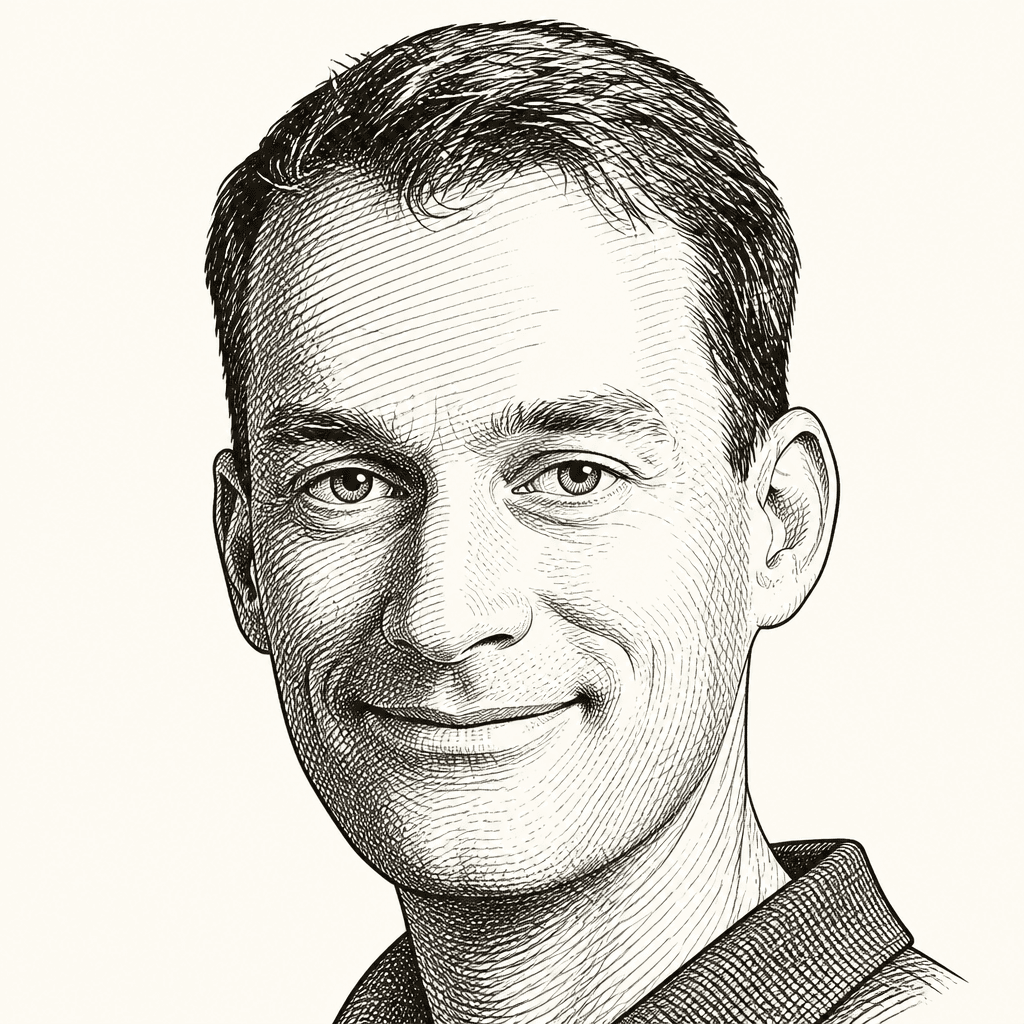
Jeff Dean argues that Discovery Loop can accelerate scientific and engineering work by automating the cycle of proposing experiments, running them and using results to guide the next attempt. In a closing discussion with Stanford AI researcher Fei-Fei Li, he distinguishes that kind of self-improvement from recursive self-improvement, which would improve the system that proposes improvements—and says neither makes progress limitless. Their exchange also tests how automated discovery might serve theory as well as experiment, and what human oversight is needed as AI reshapes work and research.
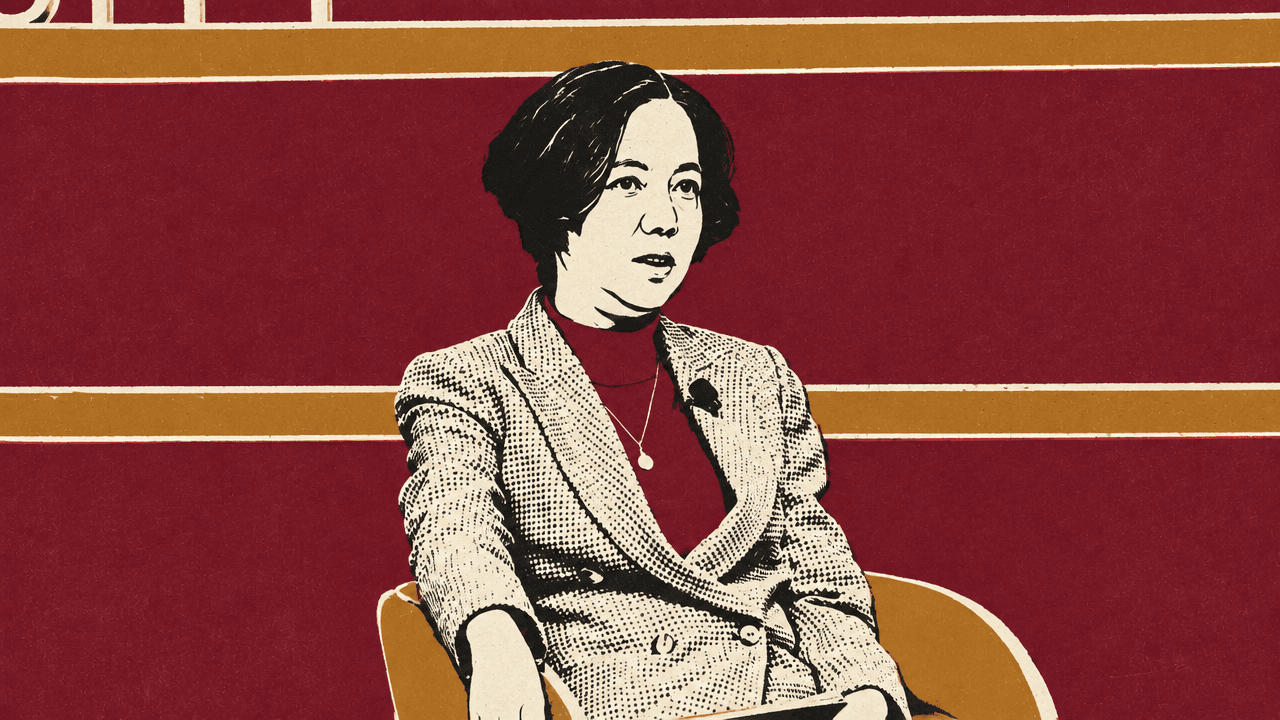
Automation is meant to change the pace and coordination of experimentation
Jeff Dean describes Discovery Loop’s ambition as automating a recurring pattern in science and engineering: propose an experiment, implement and run it, evaluate the result, and decide what to try next. The company aims to apply that cycle to machine learning, science, and engineering. Its premise is that shorter iteration times, more experiments, and better use of previous results can improve both the volume and quality of exploration.
The diagrams Dean presented make the workflow concrete. In the basic loop, experiments move from proposal to implementation and evaluation. In the traditional version, people do substantial manual work at every stage, slowing iteration and reducing the number of experiments. Larger projects add a decomposition problem: teams divide the work into subproblems, run experiments in parallel, coordinate across them, and try to combine the results. Dean said that decomposition can be difficult in its own right; resource conflicts and large-system effects can complicate it, and early choices may be hard to revisit once a project is underway. He used building an airplane and training a leading frontier model as examples of efforts where those constraints matter.
Discovery Loop’s proposed alternative combines frontier models with domain-specific tools and models to implement and run experiments. Evaluation supplies a signal for reinforcement learning or evolutionary algorithms to use in deciding what to try next. Dean said the system should weigh the value of one experiment against another, learn from earlier results, and revisit decisions as evidence accumulates rather than locking in an initial plan.
The ambition is to support tens of thousands of automated experiments and, eventually, to let a relatively small number of domain experts tackle larger problems. Dean said automated systems might decompose a problem into useful subproblems and solve them, while allowing human guidance on which subproblems matter. The aim, as he described it, is not to remove people from the work but to reduce the effort required of experts.
That plan depends on more than capable base models. Dean described advances in hardware, software abstractions, model architectures, training algorithms, and inference algorithms as jointly enabling today’s models. He cited the progression from Word2Vec and sequence-to-sequence models to transformers and mixture-of-experts architectures; frameworks such as TensorFlow, PyTorch, and JAX; and methods such as distillation, chain-of-thought, and inference-time compute scaling. He also pointed to improvements in GPUs, TPUs, and other specialized hardware.
For complex scientific and engineering work, Dean said, agents must use tools effectively, handle complicated tasks, and come up with ideas that are genuinely new—not merely repeat established approaches. They should also learn from previous experiments. He described a possible system that had solved thousands of problems and could draw on the most relevant prior work when facing a new one.
Dean’s stated near-term focus is a software loop for automating machine-learning research and engineering, which he believes can help unlock progress in other fields. The company is also focusing on hardware design, areas where he said the founders have domain expertise. His longer-term trajectory runs from capable frontier models to automated ML and code, and then toward autonomous science addressing complex physics, materials, and National Academy of Engineering Grand Challenges. He said the company’s goal is to make domain experts 20 to 50 times more productive.
The target is not limited to one discipline. Dean pointed to the National Academy of Engineering’s Grand Challenges as examples of consequential problems where automated discovery loops might assist with subproblems. The list includes making solar energy economical, providing energy for fusion, developing carbon sequestration, managing the nitrogen cycle, improving access to clean water, engineering better medicines, and advancing health informatics.
The company’s public-benefit structure is part of how Dean says it intends to pursue that work. Discovery Loop is a Public Benefit Corporation, with a stated mission to develop technology addressing important societal problems and provide broad access to its benefits. Dean said technology can have a positive impact, but people must work to ensure it does.
The founders bring experience from several parts of the AI and computing stack. Dean described his co-founders—Sanjay Ghemawat, Quoc Le, and Oriol Vinyals—as long-time collaborators, with pairwise working relationships ranging from 14 to 30 years. Their past work, as he presented it, spans products, infrastructure, AI research, and applications. Among the examples he named were large-scale systems such as MapReduce and BigTable; machine-learning infrastructure including TensorFlow and TPUs; research on mixture-of-experts models, distillation, and neural architecture search; and applications such as AlphaChip, AlphaFold, and neural weather forecasting.
Dean also emphasized experience managing and building teams. He said he had managed Google Brain up to about 600 people and Google Research and AI teams up to about 4,400. Vinyals had managed teams of up to about 250, and Le up to about 60. The group’s work together included the Gemini project, where Dean and Vinyals were co-technical leads and Le led post-training.
Hiring was an early priority. In the company’s first three weeks, the founders conducted about 400 interviews, mostly at Café Venetia, and began assembling a team with both experienced researchers and people earlier in their careers. Dean said roughly 10 percent of the company had the ACM Prize in Computing and roughly 10 percent had International Olympiad in Informatics medals.
The company’s early work included building an agent harness for its own development and automated work. Dean said the harness lets a person work with a model, invite a teammate into the exchange, and receive comments or proposed designs from others before an agent acts. The team had also built infrastructure intended to support tens or hundreds of thousands of agents and had about 20 automated improvement loops running across different problem areas.
Self-improvement is not the same as recursive self-improvement
In the discussion, Fei-Fei Li pressed Dean to define “self-improvement” and “recursive self-improvement” more carefully. She noted that related ideas have appeared under different names over the years, from incremental and continuous learning to meta-learning, lifelong learning, and neural architecture search. Her concern was that recursive self-improvement was being used loosely, amid claims that systems might accelerate without limit.


Dean’s distinction was specific. A self-improving system is given a goal—such as improving a machine-learning model’s accuracy—and tries different approaches to improve a measurable objective. He offered a system that develops a model for interpreting MRI images as an example. If its experiments lead to better-performing models, the system has improved the solution to that task.
But that is not yet recursive self-improvement. Li pointed out that a system’s ability to improve a model does not by itself show that it can improve the process that proposes what to try. Dean agreed: recursive self-improvement would mean using a self-improving approach to improve the base system responsible for proposing improvements.
He cautioned against imagining that this kind of recursion makes improvement unlimited. Dean compared automated systems with the human research and engineering process that has produced successive generations of models. Researchers run experiments, identify what worked, and incorporate those lessons into later versions. Automation could shorten the process: a system might inspect results overnight and decide what to do next rather than wait for a person to return in the morning. He also suggested it could make decisions across a large project more effectively than individuals handling separate pieces.
Experiments still require computation; results have to be produced and saved, and then assessed before anyone can decide what to do next. Dean said those requirements impose physical limits. Automation can increase the rate of improvement, he argued, but cannot make the process infinitely fast.
Having automated systems that can try to improve things is definitely going to improve the rate at which we can improve those systems. But it’s not gonna make them go infinitely fast.
Li tested the distinction with an analogy. Learning to cook an omelet is self-improvement: after burning one, a person can do better the next time. Recursive improvement would involve changes to the person’s learning process—changes in the brain that make later learning more effective. Dean said humans can be both: they learn particular skills, and they also learn how to learn, which can make them more effective at acquiring other skills.
For Dean, describing recursive improvement as an engineering process makes it less mysterious and less frightening. The distinction is between improving a solution to a task and improving the system that develops solutions. Both can involve iteration; recursive improvement applies that process to the mechanism proposing the improvements.
The experimental loop need not exclude theory
Li asked whether automated discovery loops privilege experimental science over theory. In physics, she noted, researchers distinguish between experimentalists and theorists; a process centered on proposing hypotheses, running experiments, and evaluating results might seem to favor the experimental side. She contrasted that approach with theoretical work associated with figures such as Newton and Einstein, who did not primarily conduct experiments themselves.
Dean allowed that the approach may lean somewhat toward experimentation, but said it could also support theoretical work. A system might be asked to find a theory that explains a body of data, then iterate toward a minimal description. He also argued that theory and experiment are not sealed-off disciplines: theoretical physicists often respond to observations that experimentalists have made but do not yet understand.
He extended that point across fields. A system that had worked through many problems and experiments in different domains could bring relevant experience to a new problem. That cross-domain learning, Dean suggested, may not respect the boundaries people create through academic departments. He cited HAI’s role in bringing people across institutions together as a useful model for that kind of exchange.
A proof can establish a result without making its route clear
Li raised recent AI work on difficult mathematical problems and the mixed response it has drawn from mathematicians. A proof can establish a result, she observed, while mathematics also values the beauty and insight of the route to it. She asked how Dean viewed systems producing machine-checkable proofs that may run to hundreds of pages.
Dean called the ability to solve hard, unsolved problems a revelation of what current models and agent systems can do. But he understood why long proofs can feel unsatisfying: a machine-checked result may be established without giving people an elegant, comprehensible path to it.
Dean did not argue that only elegant solutions produce new mathematics. His narrower point was that an elegant solution can expose a technique that applies elsewhere, while a long proof may establish that a result is possible without making such a technique apparent. Knowing a problem can be solved may encourage people to pursue it, perhaps by finding a different or clearer route. The challenge, he said, is to use the new capability to do more mathematics.
Some breakthroughs were expected; others were not
Reflecting on the years since the Transformer paper, Jeff Dean pointed to the architecture’s ability to preserve and attend to prior states, rather than repeatedly compressing them into a smaller representation as earlier recurrent models did. He said this helped models learn more with less computation than LSTM-based approaches.
He also cited distillation, work he carried out with Oriol Vinyals and Geoffrey Hinton. The paper was rejected from NeurIPS in 2016, Dean recalled, but later received roughly 40,000 citations. Distillation lets a smaller “student” model learn from a larger “teacher,” helping produce capable models that are less cumbersome and expensive to run.
Mixture-of-experts architectures, which activate only a small part of a model’s total capacity for a given token or task, have also proved useful. But Dean had expected that line of work to lead to more radically different architectures: less regular networks with more varied connections. Instead, many mixture-of-experts models retain a consistent structure, with experts of the same size and outputs that quickly come back together.
Li noted that neural architecture search had also produced more unusual structures, though that direction had not become the dominant model design. Dean said those architectures can have unexpectedly long or irregular connections, unlike the more uniform, human-designed stacks. His expectation that model architectures would become more “organic” and exotic was one prediction he thought had not come to pass.
He also named coding capability as an important development he had not fully anticipated. Coding became a crucial way to make models more capable across a range of tasks, even though it was not initially the central focus of the Gemini effort. Li agreed that its eventual significance exceeded what many had predicted.
The social consequences require more than technical work
Jeff Dean described AI as a general technology affecting many areas at once, from mathematics and coding to image generation and autonomous vehicles. That breadth brings excitement as well as apprehension and fear. He referred to a paper he co-authored, Shaping AI’s Impact on Billions of People, which examined seven areas, including employment and the economy, AI for science, and misinformation and disinformation. The authors spoke with experts in those fields about AI’s current and likely effects.
The concern he singled out was how to capture as much of AI’s potential as possible while minimizing harm. He said that cannot be handled by technical work alone; it also requires regulators, policymakers, and citizens to participate. Employment is one practical test: when people’s jobs are affected, they need ways to adapt to changing needs and sustain a prosperous life.
Li’s final question turned to students anxious about jobs and the economic future. Dean said he understood the difficulty of planning when the world is changing quickly. His advice was to understand the technologies that are emerging and learn to use them in the area a person cares about—whether that is medicine, literature, or software. AI may support work across those fields, he said, but people still decide what they want to do collectively. The task is to identify that purpose, become good at it, and use the tools available.