Persistent Agents Turn AI Work Into Shared Team Investigations
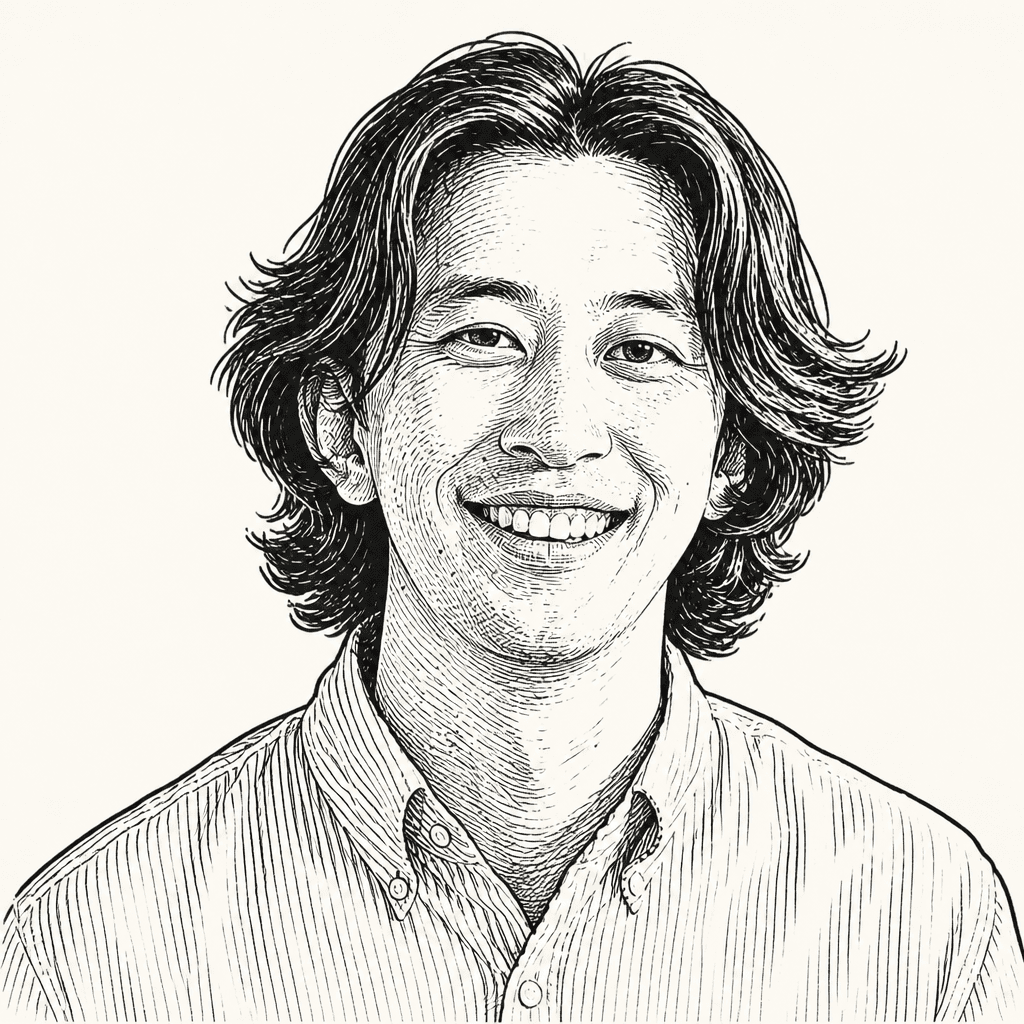
At OpenAI DevDay 2026, Jason Liu argues that the next step for workplace agents is not simply helping one person do more, but letting teams contribute to work that continues across conversations, meetings and devices. He says persistent agents, shared workspaces and reusable tools can keep an investigation moving without requiring one person to gather every clue, relay updates and carry the task to completion.

The bottleneck is carrying work between people
Jason Liu describes a shift in what he wants from AI at work. At first, the question was what he could do with AI; then, what an agent could do with access to his computer, files, browser, and apps. The next question, he argues, is how to build systems that bring the team into the work rather than making one person a “super powered IC.”
Liu says he began to feel like the glue holding multiple systems together—and a bottleneck for the work those systems were meant to accelerate. More tools helped him do more, but also left him managing more: pinning conversations, configuring automations, and making sure one task’s context made it into another. His definition of “multiplayer” is not simply a shared chat thread. It is a way for teammates’ conversations and contributions to enter ongoing work without one person having to carry every step through to completion.
He illustrates the problem with a hypothetical: at 8 a.m., he sees social-media posts from people hitting usage limits. He does not yet know what broke or whether anyone else is investigating. But he needs to track the reports, decide when to escalate, and keep context from getting stranded in a browser tab or Slack thread. The example is less about diagnosing a particular outage than about the coordination burden: someone has to notice the clues, connect them, and keep the investigation moving.
Liu contrasts three stages in his workflow. Six months earlier, he used Codex alongside internal tools to check Slack and make sense of issues. The work still ran on his computer, and he had to push it forward and connect the pieces himself. Three months earlier, tasks could run on his behalf: he could pin a thread and set an automation. But his teammates could not easily pick up where he had left off. Work still flowed through him, and other teams could repeat the same investigation rather than contribute to a shared effort.
He presents the current direction as a move toward a shared investigation: a place for evidence, reports, files, and action items, with agents and people able to contribute. An agent, in his account, should be able to follow a Slack comment, email, or browser update, keep track of an investigation, and work with engineers or customers as it goes. The aim is to make the work legible and available beyond the person who first noticed the issue.
Persistence helps only if the agent can keep collecting context
Appshots are Liu’s example of bringing an agent into the work already in front of someone. Rather than opening Codex to an empty composer and explaining where to look, he says, he can take an Appshot from within an application. It captures a screenshot along with information such as the application, metadata, URLs, and content below the visible portion of the page. He describes it as a way to “tag” ChatGPT from wherever he is working. In his experience, about 30% of the Codex sessions he started came from an Appshot.
That convenience did not solve the underlying bottleneck. Liu says he was still taking more Appshots, pinning and naming more threads, adding heartbeat automations, and asking the agent to check Slack when something happened between scheduled runs. After meetings, he had to tell the agent that a meeting had taken place so it could catch up. He describes the result as becoming a “really, really good micromanager,” limited by what he calls his “APM”—actions per minute.
I just became a really, really good micromanager.
His proposed alternative is for the agent to collect context as it arrives. Liu describes a dot that can pick up comments, emails, and thread replies, reducing the chance that a clue falls through the cracks. He credits work on memory, compaction, and longer-running agents, as well as product features that expose more surfaces, with making more persistent and proactive behavior possible.
Where the agent runs is part of this model. Liu says an Appshot provides context from his desktop, but the agent receiving it runs in the cloud, with its own computer, browser, and files. It can continue an investigation whether or not his laptop is on, while he checks its progress from a phone or browser. With permission, the cloud agent can also use his computer as a “last mile”—for example, to access a browser session in which he is already logged in, check a local app, or test something on his machine.
The investigation can start on his computer, continue in the cloud, and later need access to a browser or local app. Liu says the agent can ask for permission to use the computer when that access is needed. The model is meant to let the agent meet him where he is while still making progress when he is away from his desktop.
Team conversations can become instructions without being tidied first
Liu distinguishes dictation from agentic voice. Dictation is one-way: a person speaks and the system receives the words. Agentic voice is two-way: the person can speak, the agent can work and report back, and the exchange can continue through questions or brainstorming. But even then, the interaction is mainly between one person and an agent. ChatGPT Meetings, in his example, makes it multi-way: coworkers talk together while the conversation is transcribed and picked up by the agent in the background.
His meeting example is intentionally informal. He recalls saying that a problem might involve “Guardian mode,” that he had seen a Slack message from someone whose first name began with T, and that the agent should check feature-flag configurations, caching updates, and related pull requests. Liu says he would not have typed that full instruction. He might instead have taken an Appshot, said “Please investigate,” and then complained that the model was not doing a good job.
For Liu, the value of speaking this way is that people can be messy and let the system organize the request. He says a persistent agent can pick up meeting notes automatically and, when given permission, try to move the resulting work forward. He describes using a conversation to ask for a blog-post draft to review later or a timeline made with a screenplay tool. At the end of a meeting, he might give his team action items and assign separate follow-ups to the agent.
Those follow-ups can be specific: use a Slack connector to message two people and ask whether they understand what changed, then post their replies in the main Slack channel; use a browser to contact four people online and ask for their feedback IDs. Liu presents these as tasks he can assign during the meeting rather than reconstructing the context afterward, reopening the meeting, and taking another Appshot.
Outside meetings, Liu describes teammates tagging a dot in Slack or Teams and asking it to follow up or investigate. A person can have a long conversation with coworkers about a design, discuss it in a meeting, and then tag the agent to act on that context. He also mentions the possibility of personal dots and team dots, identifying team dots as a future direction, and says additional surfaces are planned.
A shared workspace gives the investigation somewhere to live
For work to continue beyond one person’s machine, Liu argues, the team needs a shared place to organize it. His personal workflows relied on local automations and files. That made it difficult for colleagues to contribute and difficult to use cloud agents with work locked on his computer. He compares a shared source of truth for knowledge work with the common codebase that, in his view, has helped make software engineering more productive.
For the hypothetical usage-limit investigation, a Space gives the scattered clues a shared home. Liu says he would ask an agent to create a page from a template and share it with the team. The space could hold reports from users, evidence gathered from Slack or elsewhere, files, and action items. Colleagues could see what had been found and contribute clues without relying on Liu to relay each one.
Page instructions define how agents should work with that material. Liu says he used Markdown files and directories partly because they let him specify human-readable outputs, correct citations, and consistent formatting. Page instructions, as he describes them, provide similar guidance for shared documents, including how agents should update custom artifacts, embedded HTML, and visualizations. The aim is to let different coworkers’ agents contribute without making a mess of the workspace.
Automations can be attached to an individual agent, a page, or a team. In this investigation, they could help keep the shared page current as people contribute. Liu also gives examples from other functions: a finance team’s cloud agent updating weekly analytics reports; engineering agents organizing pull requests by project and identifying the directly responsible individual; and research teams tracking long-running experiments. He says he used similar systems to coordinate DevDay work, from his talk and slide updates to booths and a “mod retro.”
The shared record can include a timeline of what happened, reports, feedback gathered online, and links or citations to the conversations behind them, Liu says. With that context, a cloud agent can be directed to try to reproduce the issue, investigate it, and attempt a solution. The team can use the assembled information to form a hypothesis and discuss communications for when things are back online.
Reusable tools extend the work beyond the investigation
A pull request is not necessarily the final deliverable of an incident, Liu says. Teams may also need a postmortem, a presentation, or a blog post, and may already have skills for communications or design. He frames plugins and extensions as a step beyond rules and automations: they can be shared, updated, and versioned, so improvements made for one workflow can be distributed to colleagues.
Liu says extensions can provide custom interfaces inside the Codex app, and that OpenAI’s meetings and code-review products are built on the same components as plugins. He also describes tools for websites that can support logging in with ChatGPT and connecting connectors, sites serving authenticated MCP servers, and web MCP tools that a person and an AI can use together. These are examples of capabilities he says teams can build and expose, rather than features specific to the hypothetical outage investigation.
This shifts the early adopter’s role, in Liu’s framing, away from using more agents or tokens and toward building infrastructure other people can use. He calls that becoming the company’s “plugin hero”: turning useful automations, skills, and plugins into shared team capabilities.
The payoff is more room to work with people
Liu says the same approach applies beyond engineering. He uses dots and Spaces to coordinate production shoots and content planning. During a launch-video shoot, he says, he is often on set amid a scramble, while his dot keeps him updated during breaks and tries to unblock itself on ambitious tasks. If he has ten minutes, he can read an update that the rest of the team can also see. He can then make site or documentation changes based on feedback and approvals. When time is short, he says, voice gives him a faster way to communicate.
For content planning, ideas emerge in Slack conversations and meetings with the creative and marketing teams. Liu says the system helps keep him accountable and stops ideas from slipping through the cracks. He has built more skills, plugins, and websites for prototyping because he expects an idea for a blog post or launch video to be developed later into a site, presentation, or website that helps the team consider how to make an ad or approach a launch.
Liu describes the practical benefit as getting his attention back. With tracking and follow-up happening in the background, he says he can spend more time on research, creative work, product, and marketing, and work more closely with colleagues. Across the examples, teammates can spot reports, provide clues, pick up an investigation, and inform users. He says that makes the work feel more like teamwork again.
He is wary of a mode in which someone locks in with a coding agent and works alone until 3 a.m. He joined a company, he says, to work with people and figure things out together. His aspiration is to let AI do the work that feels like laundry or dishes so people have more time for the work that feels like making art.