LSEG Grounds AI Strategy in Trusted Financial Data and Controls


Emily Prince, group head of AI at LSEG, argues in an OpenAI Customer Ignite talk that AI in financial services only becomes useful at scale when it is grounded in trusted data, evaluation frameworks and governance that fit regulated work. She presents LSEG’s strategy as an effort to make its financial data and analytics available inside the tools customers and employees already use, including through APIs and Model Context Protocol, rather than treating AI as a generic answer engine. The case is that speed and experimentation matter, but only if controls, source quality and industry-specific workflows are built into the system.

LSEG’s AI strategy starts with trusted data, not generic answers
Emily Prince frames LSEG’s AI problem as a financial-services problem before it is a model problem. For LSEG, the value of AI depends on whether it can be grounded in trusted data, deterministic financial models, and controls that match the work being done. LSEG’s role in the market, she says, is to provide “trusted financial information” — underlying data, pricing, market models such as risk models, and services including clearing and the exchange.
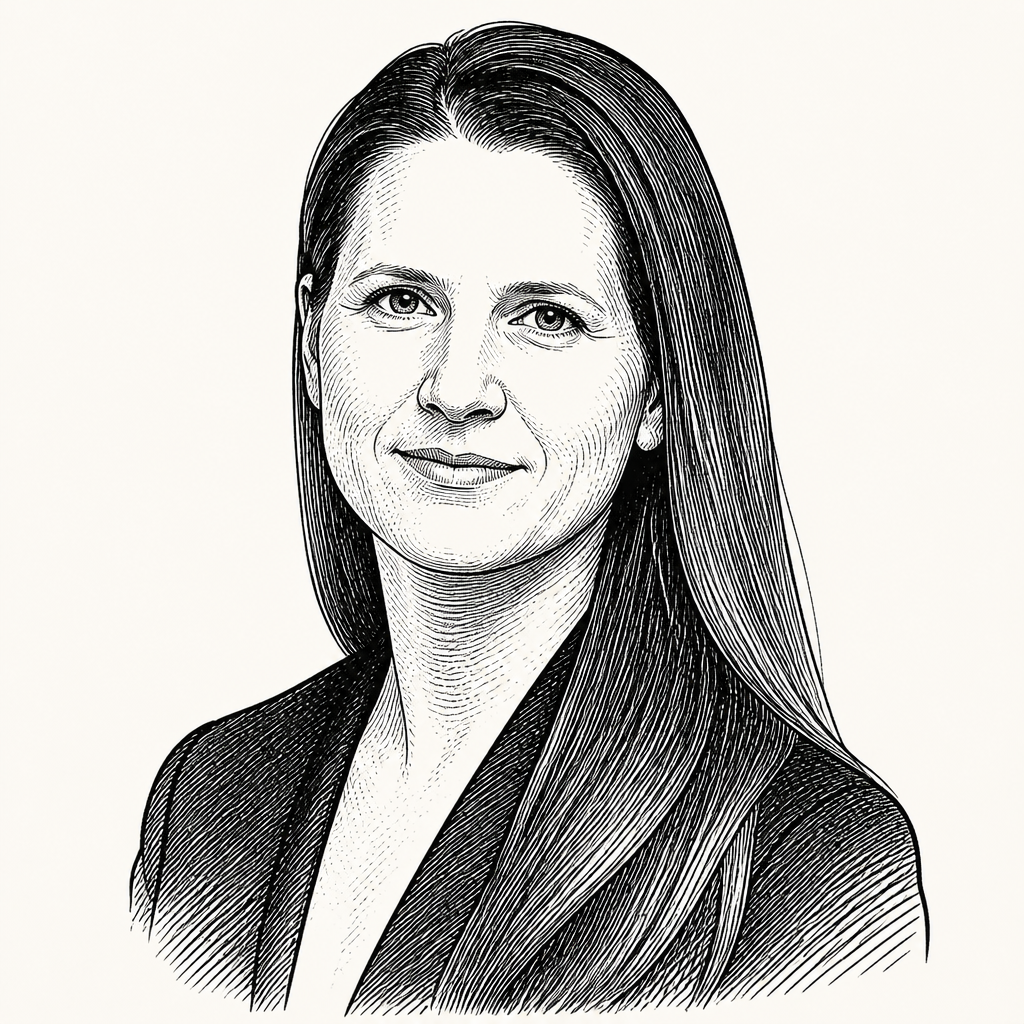
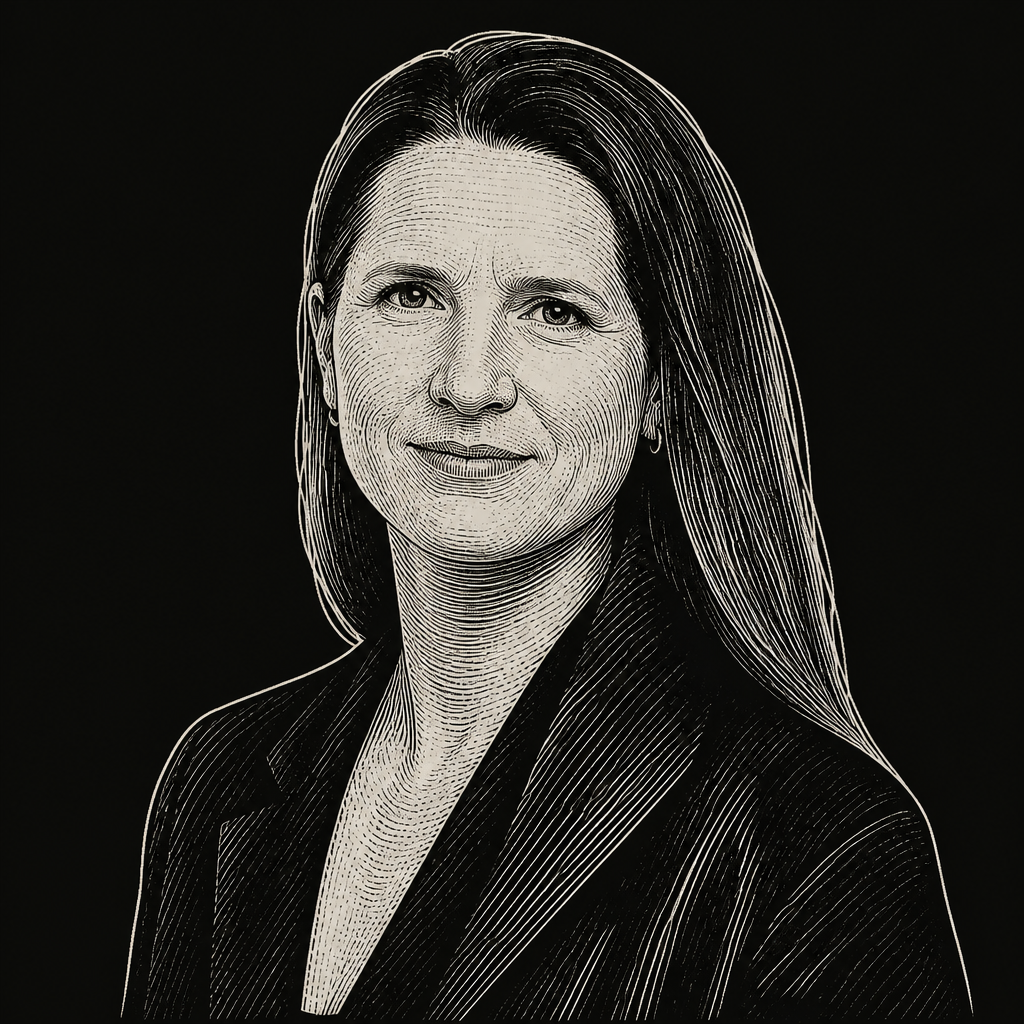
That is the logic behind “LSEG Everywhere,” the company’s AI strategy. Prince describes her role as having two sides: how LSEG uses AI internally, and how it serves customers with AI safely. She does not present the strategy as a bet on one tool. She describes a landscape where people will use different tools, while still needing an anchor in LSEG’s trusted information.
Together with OpenAI, Prince says, LSEG made available tools including its MCP, which she expands as Model Context Protocol and describes as the mechanism for unlocking LSEG’s data in AI workflows. Taking only LSEG’s data and analytics business, she says, the company holds more than 33 petabytes of data. The objective is to put that data into customers’ hands directly, so that someone working in ChatGPT can ask questions and build reports grounded in trusted financial data rather than receive only a general-purpose summary.
The phrase “LSEG Everywhere” captures the broader design principle Prince describes: wherever customers and employees are working, and whatever tools they are using, they need the trusted-information layer to be present. Without that anchor, the technology remains powerful but generic. With it, Prince argues, AI can become a genuine transformation in the way people work.
Nikolai Skabo positions LSEG as a FTSE 100 global financial markets infrastructure and data provider serving 44,000 customers, with 26,000 employees across 170 markets. Prince’s response makes clear why those numbers are operationally relevant: LSEG is not trying to deploy one isolated AI feature into a simple environment. It is trying to make trusted information usable across a large, acquired, heterogeneous organization and customer base.


The hard scaling problem is unifying fragmented data and workflows
Prince says LSEG’s AI work had to move beyond “a thousand flowers blooming” — isolated experiments and local initiatives — toward scalable impact. The obstacle was not only technical model performance. LSEG had multiple acquisitions, multiple data models, and many separate workflows. To make AI useful at scale, the company had to find a way to unlock those assets across both internal operations and customer-facing products.
Her answer was to lean heavily into LSEG’s API strategy, with MCP as the “unlock” that allows tools to sit on top of the company’s trusted information. She calls that a “true game changer” for the way LSEG works.
The distinction is between AI as an interface over generic intelligence and AI as an interface over the actual resources a job requires. For LSEG, “no regret” investments were the work around APIs and MCP because they determined whether teams were working with relevant intelligence for the job to be done or with a capable but insufficiently grounded system.
That is also how Prince explains the company’s approach to model choice. LSEG wants a level of universality in model selection, with a harness around the models and applications it uses. The important point is not that one model is the permanent answer; it is that the organization needs a way to apply different tools over trusted data without rebuilding the whole system each time.
Prince says LSEG and OpenAI push each other on financial-services-specific problems. The examples she gives are deterministic practices, risk workflows, regulation, and the question of how to balance frontier capabilities with the way finance actually operates. She is explicit that AI is “not a kind of panacea” for long-running industry problems. Some frontier capabilities, in her account, do not directly apply until the teams “go that extra mile” to make them useful within financial-services constraints.
This is not a kind of panacea.
Evaluation frameworks became the price of moving fast
Asked how her strategic view of AI has changed compared with a year earlier, Prince says she now talks about “evaluation framework” multiple times a day. As LSEG’s work scaled from contained experiments to broader deployment, the company had to define not only which models to use, but how to know whether a given application was achieving the intended outcome.
I don't think I say evaluation framework without a laugh. I think every day I say probably evaluation framework multiple times a day.
The evaluation work starts with clarity about the problem being solved. LSEG has to define success across many persona groups: finance teams, marketing teams, product teams, engineering teams, investment banking divisions, portfolio managers, and analyst research teams. The evaluation question is different for each of those groups because the work itself is different.
The framework therefore goes beyond model selection. It includes the harness LSEG uses around applications and the organization’s ability to evaluate quality consistently at scale. Prince connects that directly to speed: LSEG can “run at speed” only if it has a way to uphold quality and measure whether the system is doing what it is meant to do.
This is one of the core tensions in Prince’s remarks. LSEG wants short development cycles, rapid iteration, and open-minded engagement with frontier models. At the same time, the company operates in an industry where trust, risk, and regulation are not optional. Her answer is not to slow everything down into legacy governance processes, but to build evaluation and control mechanisms into the way teams work.
For analysts, AI changes the amount of information that can be used
Prince’s example of analyst work is concrete. Analysts often have to work across many structured and unstructured data sources. In principle, they want as much relevant information as possible, including “slightly orthogonal insights” that can differentiate their analysis. In practice, time constraints lead people to condition themselves to use only certain sources.
AI changes that constraint if it can access trusted sources directly. Analysts can pull from a more abundant set of inputs while maintaining standards around source quality. The value is not simply faster summarization. It is the ability to use more of the information environment without spending large amounts of time preprocessing data before it becomes usable.
Prince also says AI can embed, through mechanisms such as skills, “a lot of the standards or policies or preferences, the biases” at scale. In context, she is describing the way analyst workflows can incorporate institutional standards and working assumptions while allowing faster iteration. Analysts can move through feedback cycles in real time rather than over hours or days.
The analyst use case shows why LSEG’s emphasis on trusted data matters. Prince describes a user asking questions of trusted LSEG data inside a familiar workflow and receiving outputs that would previously have required substantial manual preparation. The interface becomes conversational and generative, but the underlying source still has to be reliable.
The difference, in her account, is that LSEG’s MCP can provide “turnkey access” to trusted content. There is no six-month data onboarding program before the tool becomes useful. A spreadsheet can be populated generatively with trusted content in a way that, in Prince’s view, would once have taken several hours.
Culture depends on safe experimentation
Prince repeatedly returns to culture. Asked about adoption across LSEG, she says the differentiator is less a formal skill list than attitude. The people making the biggest leaps are those who lean in, experiment, create, and play with the tools until they have the “oh my gosh” moment of seeing what the technology can do.
She describes that moment from her own experience in finance. Earlier in her career, she says, she did “horrendous reconciliation in Excel,” debugged macros, and worked through other painful manual processes. The contrast with the current ability to talk to a spreadsheet is, for her, “kind of radical.”
Excitement alone is not enough. Prince says excitement is often accompanied by fear, and that AI is surrounded by miscommunication. The cultural work is to get people “safely engaged” so they are not left behind and can use the technology to solve real problems.
LSEG’s internal efforts include giving employees access to ChatGPT, making sure they have MCPs and related tools, and investing in education programs. The company is moving beyond awareness and learning toward hands-on building, where teams use AI to solve specific problems for themselves rather than generic demonstrations.
Prince points approvingly to finance examples discussed earlier at the summit and says that is what the work should look like: hands-on, accountable, and tied to a real team’s problems. Broad adoption does not come from abstract training alone. It comes when a team can identify a painful workflow, build against it, and see the result.
Governance had to be built as scaffolding, not handcuffs
Prince says LSEG began developing responsible AI principles and a broad governance framework early, roughly two years before the discussion. The company had some governance already, but realized the scale of innovation required a more institutionalized approach.
The design goal was not to create a new rulebook detached from existing work. LSEG looked at the end-to-end way it builds and services products, then identified what needed to adapt for AI. The goal was to embed governance into normal workflows rather than constrain the business from the outside.
We didn't want to handcuff people but we wanted to create a safe framework where people could really ideate properly.
That framing matters because workflows are compressing. Traditional development involved product requirement documents, intake processes, and long cycles. In the new mode, teams are building and iterating much faster, with “everyone in the tent together.” Problems that might previously have required ten people may be handled by one or two people in a fraction of the time.
For LSEG, that compression creates a governance challenge. If fewer people are doing more work more quickly, the old checkpoints may no longer appear in the same places. Prince says the company must make sure governance and process are embedded within the new workflows as they emerge.
She expects this to be continuous work. New models, new harnesses, and changing workflows all require LSEG to keep revisiting whether its controls still fit. The governance model cannot be a one-time design because the way teams build with AI is still changing.
Skabo frames OpenAI’s role as needing to be an agile partner so that speed does not compromise trust or the governance model LSEG already has. Prince’s answer gives a more precise view of the partnership: she describes LSEG’s API strategy, MCP work, responsible AI principles, and evaluation frameworks as elements of how the company is scaling AI, while OpenAI is a partner with which LSEG makes tools available and tests frontier capabilities against financial-services-specific problems. The collaboration is practical where LSEG pushes on the constraints that matter to its business — risk, regulation, deterministic practices, and governance — and OpenAI has to meet that pace without weakening the controls.
The opportunity is to challenge inherited finance processes
Prince’s advice to peers is less a checklist than an argument for self-disruption. She describes the current moment as a “lean in” moment and, after 20 years in the industry, says it is an extraordinary time to work in finance. Her focus is on inherited processes: heavy-handed ways of working that may not have been designed intentionally, but evolved over time.
The question she wants organizations to ask is whether a process truly has to work the way it does. Is there a regulatory reason for it, or is it merely an inherited pattern? If the process can be reconsidered, she argues, AI creates an opportunity to get better insights, differentiate, and let the organization move faster.
Prince is careful not to suggest that there is a fixed blueprint. She says there is no book to read, no established precedent, and no complete map for what the future should look like. Organizations are learning and creating as they go.
That uncertainty is not incidental to her argument. It is part of why LSEG is investing in flexible data access, evaluation frameworks, governance scaffolding, and hands-on cultural adoption rather than treating AI as a single static program. The company needs to move quickly, but it also needs the capacity to keep adapting as the tools, workflows, and regulatory questions evolve.