NVIDIA Frames AI Compute as Revenue-Producing Infrastructure
NVIDIA’s GTC Berlin 2026 keynote closing video presents AI computing as industrial infrastructure with the potential to generate revenue, linking GPUs and data centers to a wider stack of models, software and robotics. In a musical recap performed by robot characters, the company also calls for agents to act within security limits and urges Europe to build across that stack. The performance makes these points through slogans rather than technical or financial evidence.
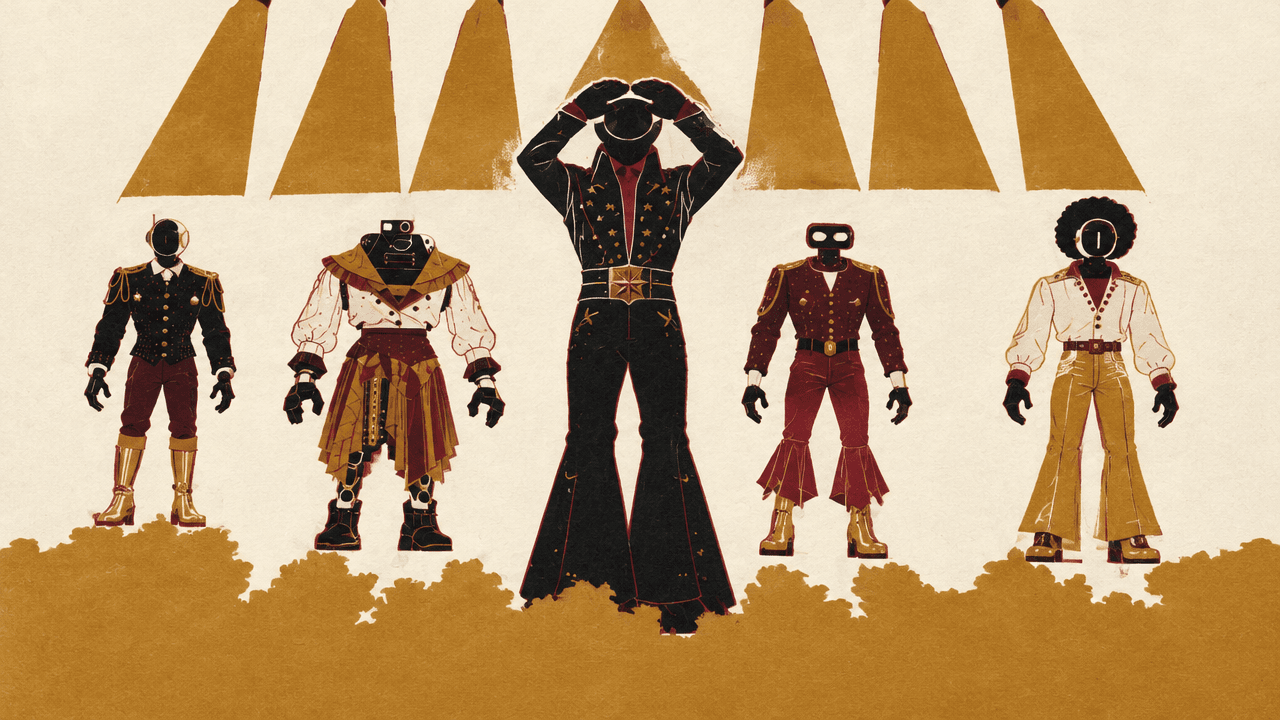
Compute is framed as infrastructure that can produce revenue
NVIDIA’s keynote closing performance presents AI infrastructure as a chain of industrial inputs: power plants, cables and data centers leading to what the lyrics call “AI factories.” Those factories “turn sand into thoughts,” a compressed image of computing capacity as the basis for AI systems. The lyrics then shift from construction to investment, describing a GPU as an asset that “looks like a chip, acts like a cash machine.”
The financial language is deliberately assertive. The GPU is set against oil and the S&P, and the lyrics say GPUs “make revenue while you relax,” with cash flows “smoother than this sax.” These are promotional claims, not figures or a worked financial case: the performance gives no revenue amounts, costs, or conditions. Its point is the framing itself—that compute should be seen not only as equipment, but as infrastructure associated with revenue generation. On-screen labels make that framing explicit, first with “Infrastructure” and then “Investible Asset.”
The infrastructure claim also sets up the performance’s broader idea of a full stack. AI factories, GPUs and data centers are presented alongside models, software and robotics, rather than as isolated products. The lyrics do not explain the stack’s layers, but they make breadth part of the pitch: “Full stack!” is both a refrain and a way to connect the different systems named in the performance.
Agent autonomy is paired with limits on access
The lyrics describe agents as systems that “code and make decisions,” then make their freedom conditional: give them room to act, but “control their missions.” They name OpenShell and Varis in a line about checking a list and dismissing credentials, and describe Sentry on BlueField as protecting a sandbox without “clocking off.” A “Security” banner and a BlueField lifeguard-tower image reinforce the language of watchfulness.
The claims remain at the level of slogans. The performance does not specify how OpenShell, Varis, Sentry or BlueField work together, or what controls they enforce. It pairs the product names with the principles of access control and protection, then states the desired balance directly: “We advance AI but limit risks. We’re responsibly optimistic.” RTX Spark appears in the same passage, described as keeping agents “safe and bright”; the lyrics do not elaborate on its role.
This emphasis on control carries into the description of physical AI, but the problem changes. Rather than only code and decisions, systems must learn “the rules of gravity, friction, and using real tools.” Isaac Lab and Cosmos are named as training tools, and the lyrics compare robot training to “college for robots without student loans.” The joke makes the contrast concrete: these systems are being described as learning to operate amid physical constraints, not just handling information.
DGX pods, meanwhile, are said to keep AI “in sync,” with “less power, more brains.” CuVS, Nemotron and CuMo are named in a line about serving knowledge faster. Together, these references extend the full-stack picture across computing, software, models and robotics. They do not establish a technical specification or comparative performance; they place the products within the performance’s account of what the stack contains.
Europe’s ambition is participation across the stack
The regional claim is not limited to one product or country. The lyrics declare that “Europe’s moment has arrived,” call for Europe to build “full stack,” and connect that ambition to an ecosystem described as “leading the race” and committed to open source. Hugging Face is invoked as a shorthand for that open-source emphasis. The performance offers no evidence or comparison behind its claim of leadership; it presents leadership as an aspiration and rallying point.
A graphic listing countries beside their flags makes the collective frame visible. It names the United Kingdom, France, Germany, Italy, Portugal, Sweden, Poland, the Netherlands, Spain, Slovenia, Bulgaria, Austria, Finland, Luxembourg and Greece. The list broadens the address beyond Berlin or Germany, while the refrain—“We are Europe”—is repeated in several languages. The invitation is to see the continent as a shared participant in building AI across the stack.
The opening Eurovision reference establishes the performance’s register: a playful, musical way to bring the keynote’s themes together. But the claims it leaves on the table are specific. Compute is cast as productive infrastructure; agents are expected to act under limits; physical AI must learn rules of the real world; and Europe is urged to build across the stack. The closing “Welcome all to GTC” turns that regional appeal back toward the audience.