NVIDIA cuPhoton Cuts Rubin Observatory Data Processing From Months to Minutes
NVIDIA presents cuPhoton as a GPU-accelerated pipeline meant to remove the processing bottleneck behind Rubin Observatory’s nightly 20TB sky surveys. The company argues that by accelerating image loading, high-performance analysis, AI-assisted signal detection and searchable storage across multi-GPU, multi-node systems, cuPhoton can turn workflows that once took months into minutes. Its stated claim is a 14,900-fold speedup in image loading and reading and up to an 8,400-fold acceleration in processing and analysis.
The bottleneck is the workflow after capture
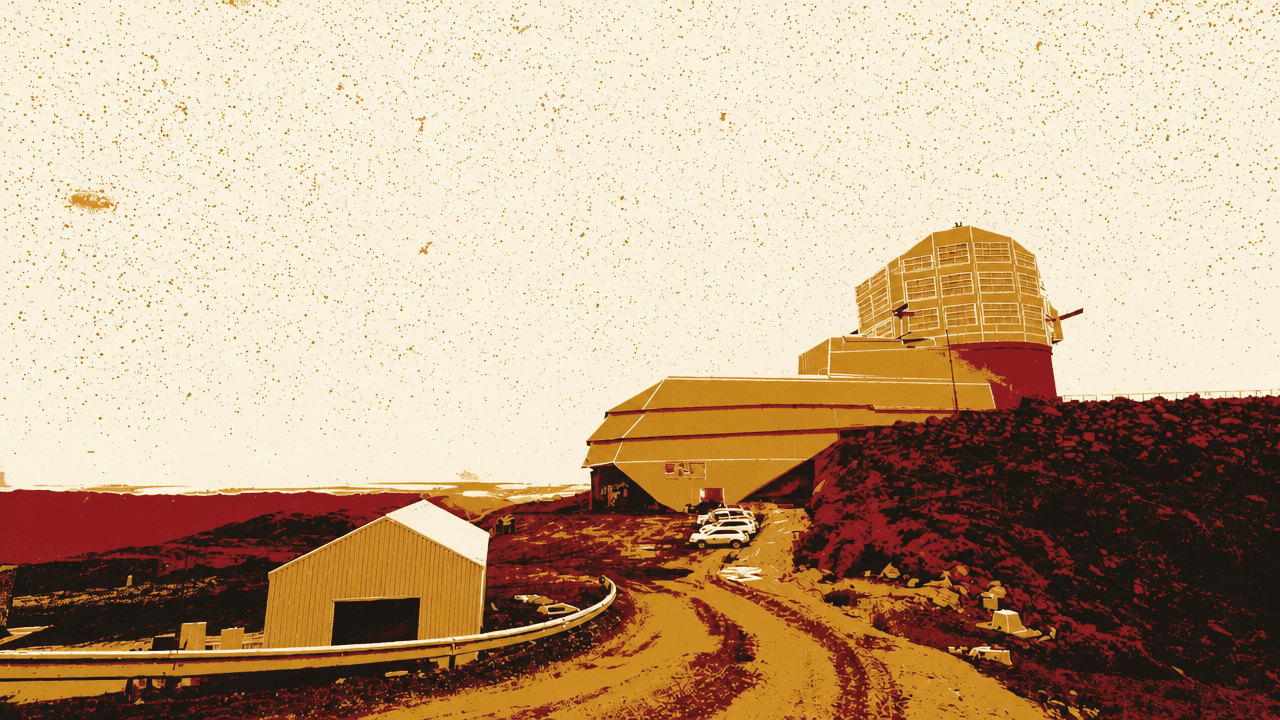
Rubin Observatory is presented as a data problem at astronomical scale. High in the Chilean mountains, it houses what NVIDIA describes as the largest digital camera ever built. Each night, that camera captures 20 terabytes of sky data. NVIDIA says the stream reveals billions of galaxies and thousands of new asteroids.
The scientific stake is larger than cataloging objects. NVIDIA frames the accumulated petabytes as containing secrets of dark matter and dark energy, described in the source as 95% of the universe. The operational problem is that traditional workflows can take months to process the data.
If images and multidimensional data remain inside slow processing workflows, the observatory’s ability to collect sky data does not immediately become usable analysis. NVIDIA’s claim for cuPhoton is that the time from capture to processing, detection, and storage can be compressed sharply.
The setting is shown with an exterior night view of the Rubin Observatory dome under a starry sky, with on-screen attribution to “NSF-DOE Vera C. Rubin Observatory/NOIRLab/SLAC/AURA.”
cuPhoton is shown as a pipeline from images to a searchable database
NVIDIA describes cuPhoton as a GPU-accelerated pipeline running on multi-GPU, multi-node systems. The on-screen diagram places astronomical images on the left, a central “NVIDIA cuPhoton” block, and a “Searchable Data Base” on the right. Inside the cuPhoton block are three named stages: “Data Loading and Reading,” “HPC Processing and Analysis,” and “AI Training and Signal Detection.”
| Pipeline stage | What the visual shows | What NVIDIA states or labels |
|---|---|---|
| Data loading and reading | Astronomical imagery and a centroid-coordinate readout | Image loading and reading are accelerated |
| HPC processing and analysis | 3D surface plots with peaks and valleys | Processing and analysis are accelerated |
| AI training and signal detection | A false-color astronomical image with a bounding box around a bright point | The pipeline includes AI training and signal detection |
| Searchable database | A red database icon at the pipeline output | Newly found asteroids and stellar objects are stored in a searchable database |
That structure matters because the claimed speedup is not confined to one displayed step. NVIDIA says cuPhoton speeds image loading and reading by 14,900 times, and accelerates processing and analysis by up to 8,400 times. The stated result is a change in time scale: work that once took months can happen in minutes.
What once took months can now happen in minutes.
The staged visuals do part of the explanation. One version of the pipeline highlights loading with a starfield and a visible readout that includes centroid coordinates. Another replaces the central processing block with 3D surface plots, indicating analysis. A later screenshot shows a false-color astronomical image with a small bounding box around a bright point, tying the pipeline to signal detection.
The source’s point is the sequence: sky images enter the pipeline; cuPhoton supports loading and reading, high-performance processing and analysis, and AI training and signal detection; the results move into a searchable database.
Near-real-time work depends on processing and storing detections quickly
NVIDIA says scientists can load, process, and analyze multidimensional data in near real time, including AI training and signal detection. The final step is storage: newly found asteroids and stellar objects are placed in a searchable database.
That makes the claim more specific than a general promise of faster astronomy. The workflow shown is large-volume sky imaging, accelerated loading and reading, accelerated processing and analysis, AI-assisted detection, and searchable storage of the objects found. NVIDIA’s broader language about unlocking faster insights and “bringing the universe into focus” rests on that pipeline.