AI Factories Are Being Built to Run Agents, Not Just Models
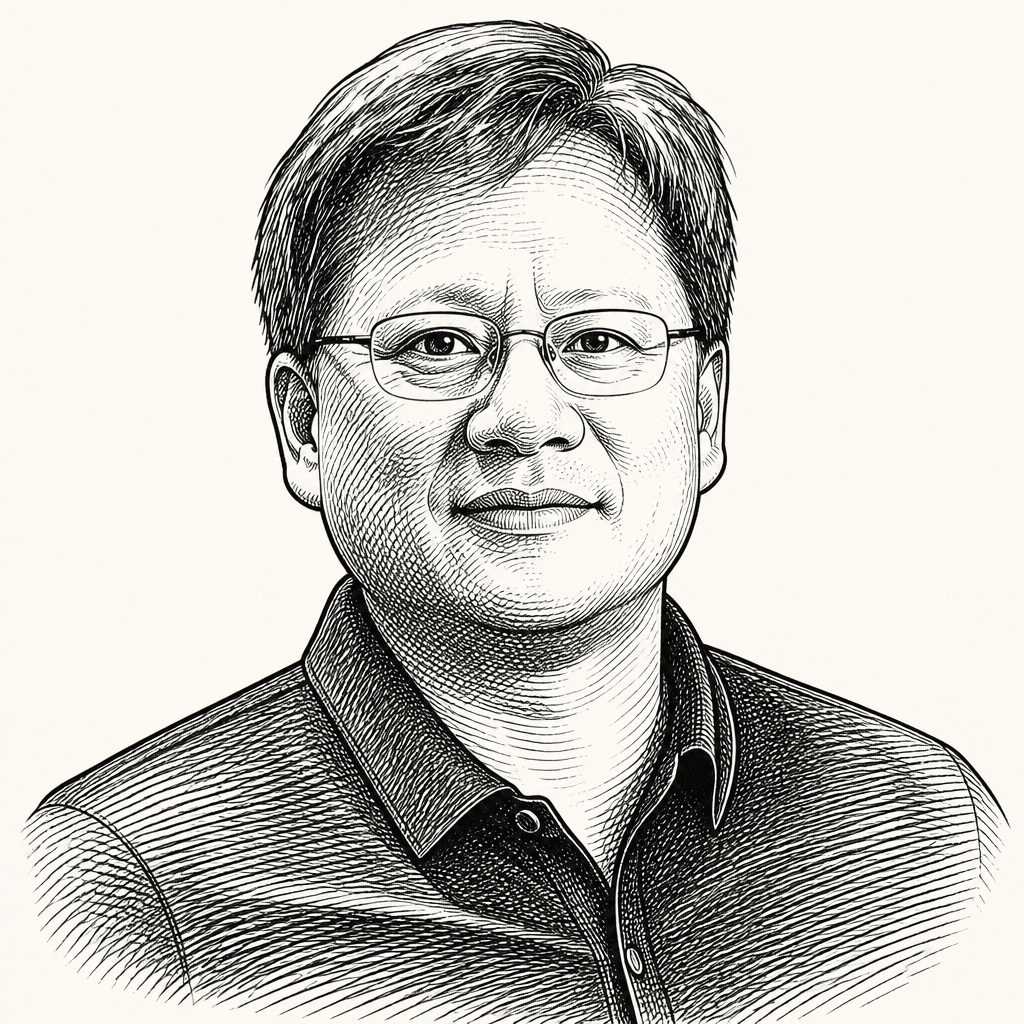
NVIDIA CEO Jensen Huang argues that AI infrastructure is shifting from systems built to run models to AI factories designed to run agents, which he describes as the basis of a new industrial economy. In his GTC Berlin keynote, he extended that case to physical AI, presenting shared platforms and reference systems for vehicles and robots as part of the effort to build Europe’s AI economy.

AI factories are being built to produce intelligence, not just run models
Jensen Huang framed the current moment as the beginning of an industrial revolution: an AI economy in which people use AI, companies are powered by it, and industries change or emerge. His infrastructure claim is that this economy requires more than standalone computing hardware. NVIDIA, he said, is building a “full stack, end-to-end, complete AI factory platform.”
A diagram labeled the NVIDIA DSX Full-Stack AI Factory Platform and showed CUDA-X libraries, platform libraries and open models alongside hardware. Another visual showed a rack-scale system expanding into a data-center pod. Its displayed specifications for the Vera Rubin NVL72 DSX Pod included 25 exaFLOPS of AI and 17 kilometres of networking cable. Huang described the pod as a transformation of the world’s computing supply chain and “the next click” of NVIDIA computing.
The shift is not only one of scale. Huang’s central claim was that these facilities are changing what computing infrastructure does: they are being built to run agents, not only models. He described an agent as comprising five elements—a model, a sandbox, a harness, knowledge and tools—and showed the harness cycling through context, reason, plan and act.
These AI factories don't just run models anymore, they run entire agents.
Safe deployment and specialized tools are part of the agent stack
Jensen Huang argued that agents intended for broad deployment require security technology designed for that purpose. He announced OpenShell as a platform for deploying agents safely. Its diagram placed an agent harness inside a broader system containing a gateway, supervisor and policy prover.
A graphic said more than 100 partners were advancing agent safety with OpenShell. Logos included Anthropic, AWS, Cisco, Google Cloud, IBM, JPMorganChase, Microsoft, OpenAI, Oracle Cloud, Palantir, SAP and Siemens. Huang said that “just about every major company” had adopted the platform.
Huang also said that building an organization’s own AI is not necessarily difficult, and starts with the model. NVIDIA’s open-model effort, he said, provides not just open weights but “the entire recipe” for turning an organization’s data into what he called sovereign intelligence. The accompanying graphic framed open models as a way to turn expertise and proprietary data into an advantage. It also showed an accuracy comparison between Claude Opus 3.5 and Nemotron 3.5 Lightning, annotated “+20,” and described Nemotron as “incredibly customizable.”
That open-model claim is distinct from Huang’s description of CUDA-X. Open models provide a starting point for adapting AI to an organization’s data; CUDA-X libraries provide algorithms and tools agents can use. Huang characterized NVIDIA as “an algorithm company that designs silicon to accelerate them,” and said CUDA-X gives agents “the tools of the trade.” A graphic grouped the libraries around simulations, solvers, databases, optimization, search and recommendation.
The demonstrations included scientific applications and a production-planning agent. Huang’s broader prediction was that “every single tools company will now become an AI company,” offering agents optimized to use its tools. That is Huang’s forecast for specialist software providers, rather than a description of a capability the demonstrations established.
Physical AI depends on shared platforms and reference systems
Jensen Huang extended the argument from software agents to machines that act in the physical world. In mobility, he said, car companies will want their vehicles to participate in ride-hailing fleets. NVIDIA Hyperion, which he called “essentially a giant virtual fleet,” was presented as a platform for building a global robotaxi and ride-hailing ecosystem. The graphic grouped partners across mobility platforms, autonomous-vehicle software, automakers and commercial vehicles.
Huang announced that vehicles from Volkswagen, JLR, Volvo and Mercedes would be compatible with Hyperion. The graphic also listed components including DRIVE AGX Thor, Alpamayo, Helios, Cosmos and AlpaSim.
For robotics, Huang called humanoid robotics “the next great industry” and introduced Agile ONE, a reference robot built with Agile Robots. He said the project would accelerate robotics development. The announcement graphic specified Jetson Thor onboard computing, Isaac OS and Helios Safety OS, alongside a 31-degree-of-freedom body and five-finger hands with 20 degrees of freedom. It listed Q1 2027 as the robot’s availability date.
| Agile ONE specification | Displayed detail |
|---|---|
| Body | 31 degrees of freedom |
| Hands | Five fingers; 20 degrees of freedom |
| Onboard compute | NVIDIA Jetson Thor |
| Availability | Q1 2027 |
The keynote also showed a live demonstration in which one of four small bipedal robots performed a forward somersault.
Europe’s AI economy is presented as an ecosystem project
Jensen Huang announced RTX Spark, a new line of computers. He said it followed four years of partnership with Microsoft. He placed the announcement within a wider call to build an AI economy in Europe.
A closing graphic displayed “$10B Over the Last Year,” “14 New Investments In Start-Ups This Week” and “12K+ Companies in Our Ecosystem.” It did not specify what the $10 billion measured. Huang separately described more than 12,000 partnerships working toward a shared goal: building Europe’s AI economy and putting AI to work.