AI Models and Robotic Labs Narrow Candidates for B-Cell Lymphoma Therapy
Lila Sciences is connecting AI agents to an autonomous laboratory to search for candidate therapies intended to help a patient’s own immune cells fight B-cell lymphoma. The company’s workflow uses Iris, built on NVIDIA Nemotron and Agent Toolkit, to turn a research goal into an experimental plan; models built with NVIDIA BioNeMo then run millions of virtual experiments to narrow candidates before robots make and test them. Lab results feed back into the next round of designs, though the source presents a research process, not a finished therapy.
Virtual experiments narrow the field before lab testing
Scientists can imagine more experiments than they can carry out. Lila Sciences’ system addresses that constraint by connecting AI agents to an autonomous laboratory: computational models can run millions of virtual experiments to narrow candidates, and robots then make and test candidates in the lab. The results return to the system to inform the next designs and experiments.
The example is a search for a therapy intended to use a patient’s own immune cells to recognize and fight B-cell lymphoma. The source illustrates the target with a CAR T-cell interacting with a cancer cell. It does not describe a finished therapy; it shows a process for planning and testing candidate designs against that research goal.
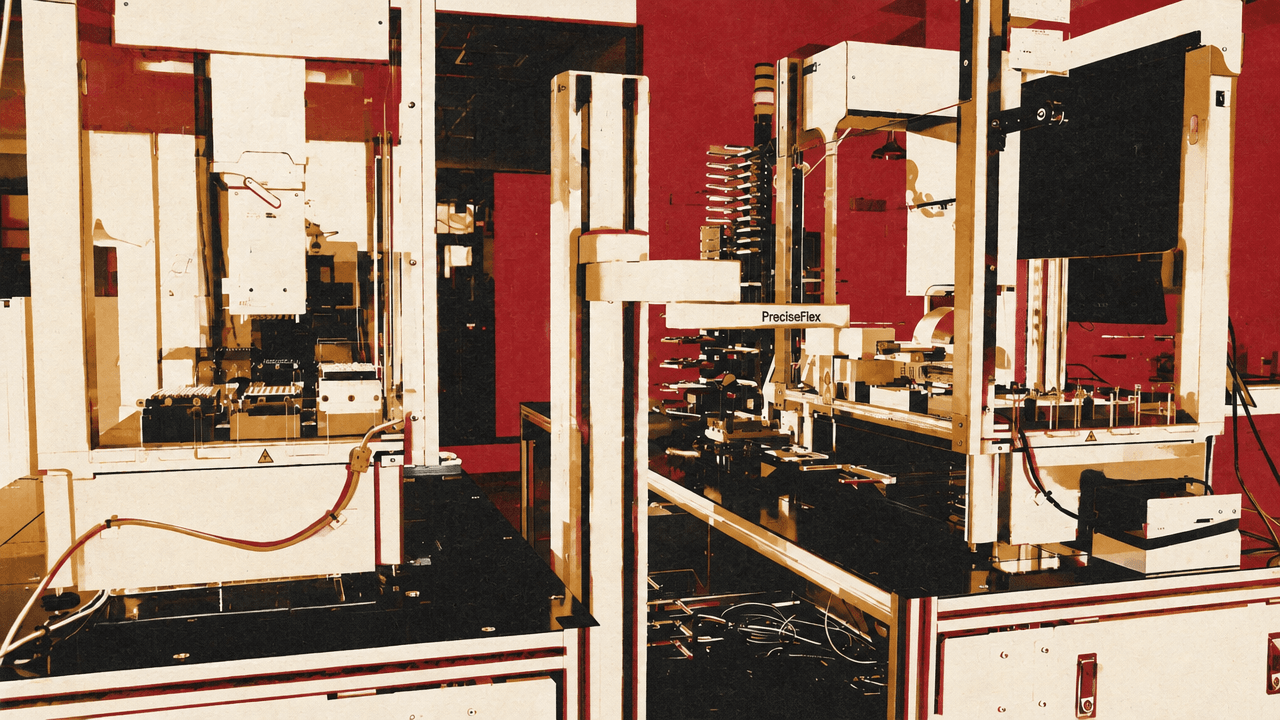
The stages have distinct roles. Lila Iris takes the scientist’s goal and builds an experimental plan. Domain-specific models built with NVIDIA BioNeMo then run virtual experiments on candidates, narrowing the set before laboratory testing. Candidates move into Lila’s AI Science Factory, where autonomous robots make and test them. The measured results go back to Iris, informing another round of designs and experiments.
This ordering matters: the virtual experiments are presented as a way to narrow candidates before committing to physical tests, while laboratory measurements supply results that feed the next round. The loop connects computational exploration with physical experimentation rather than treating either as a standalone stage.
Iris connects the research goal to models and lab operations
Iris builds the experimental plan from the scientist’s goal. Its interface shows reasoning steps alongside a table of variant candidates, placing the planning process and possible designs in the same view. The source identifies NVIDIA Nemotron and NVIDIA Agent Toolkit as the technologies Iris is built on.
An architecture diagram situates an LLM alongside categories labeled “Knowledge” and “Tools.” The listed scientific capabilities include target identification, molecular modeling and molecular design; lab-related capabilities include a lab digital twin and lab operations. The diagram also names NVIDIA OpenShell and Lila components labeled gateway, supervisor, agent sandbox and policy prover. It does not explain the individual functions of those components, but the overall arrangement places planning alongside access to scientific knowledge and tools.
From Iris’s plan, the workflow moves into the computational dry lab. Models built with NVIDIA BioNeMo can run millions of virtual experiments, narrowing candidates before they are tested in the physical lab. A displayed grid of protein structures includes examples marked with green checks and red Xs; the source does not specify what criteria those marks represent. The point of this stage is the scale of computational exploration before candidates move on to robotic testing.
Robotic tests feed the next design decision
Candidates that proceed to laboratory work enter Lila’s AI Science Factory, where autonomous robots make and test them. NVIDIA Isaac and Omniverse help develop and simulate the robotic systems, while Jetson and Thor provide the compute. A digital simulation shows robotic arms operating on tracks between shelving units, illustrating the automated laboratory environment.
The experiments measure how the candidates perform. Those measurements return to Iris and inform subsequent designs and experiments. In the source’s three-stage diagram, the cycle is labeled “Design,” “Make and Test,” and “Learn”: computational designs lead to physical tests, and the results provide input for another design round.
The example keeps the research goal and the workflow connected. The goal is a therapy involving a patient’s immune cells and B-cell lymphoma; the workflow supplies a repeated way to plan candidate designs, narrow them through virtual experiments, test them in an autonomous lab, and use the resulting evidence in the next round. Each cycle gives scientists more evidence to build on.