Robot-Ready Blender Scenes Require Physics, Sensors, and Semantic Labels
NVIDIA argues that 3D scenes built for visual realism must also be given physical, sensor and semantic properties before they can train robots. Its Omniverse libraries, now part of the NVIDIA Agent Toolkit, are designed to bring that validation work into Blender: in the company’s demonstration, an agent adds rigid-body physics, LiDAR-style sensor output and object labels to a classroom before it is handed to Isaac Sim. The aim is to let creators prepare robot-ready environments without leaving their existing authoring tools.
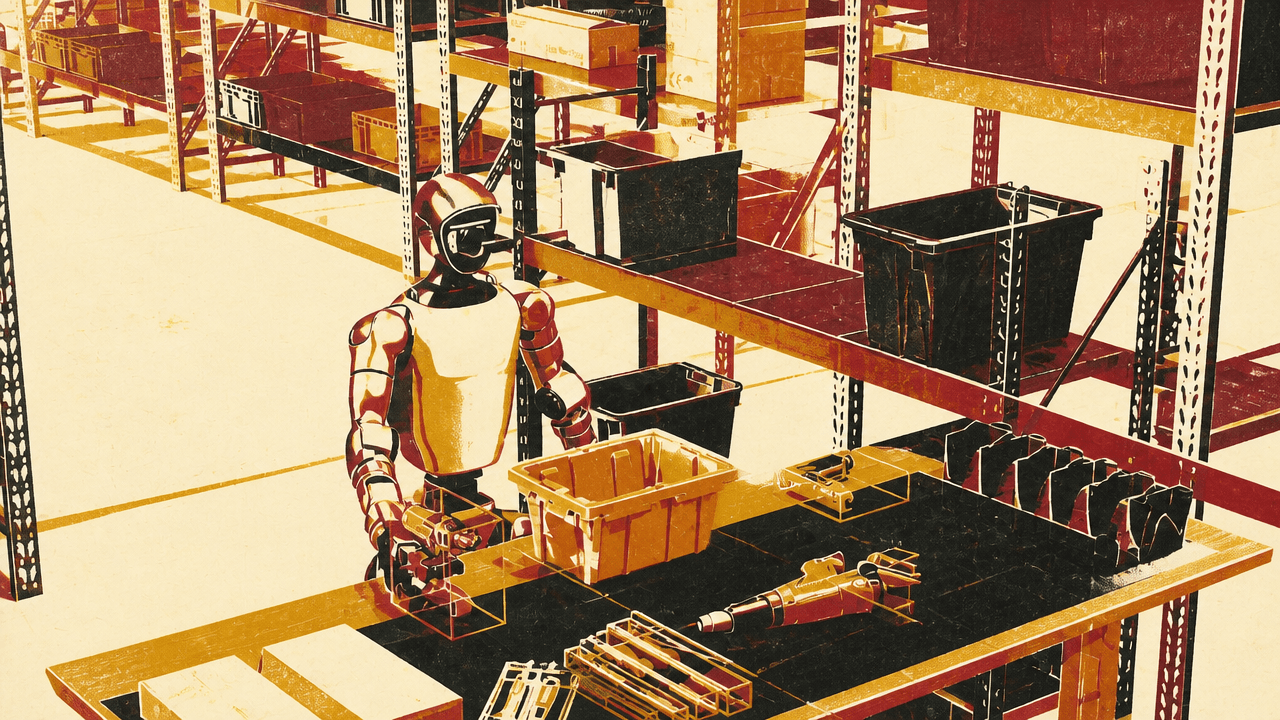
The bottleneck is not creating 3D scenes but making them usable by robots
A visually complete 3D scene does not automatically provide a usable environment for physical AI. NVIDIA’s premise is that robots will learn first through synthetic experience, in simulated worlds that behave like real ones rather than merely resemble them. That requires structure and scale, physical behavior, sensor behavior, and validated materials—not simply plausible geometry, lighting, and textures.
The distinction matters because conventional creative assets are often built to be viewed by people. A warehouse may contain shelving, boxes, and conveyor systems; a classroom may contain desks, walls, and furniture. For NVIDIA’s intended simulation use case, those scenes need further information that lets an autonomous system perceive the environment, interpret objects, and interact with them under simulated conditions.
Omniverse libraries are positioned as a way to bring those requirements into existing 3D applications, including Blender, rather than moving creators into a separate scene-preparation workflow. Developers can use the libraries, skills, and AI-agent tools to make both scenes and creative tools “robot-ready.”
The industrial warehouse rendered at the outset, attributed on screen to Siemens, GXO, KION Group, and Accenture, establishes the kind of built environment NVIDIA has in view. The company’s claim is not that a scene needs a more convincing render; it needs the physical and perceptual properties that can support synthetic training experiences.
Robots learn with synthetic experiences in simulated worlds that behave like the real world, not just look like it.
The Blender workflow checks three missing layers
The proposed workflow puts an agent-driven validation and update layer within Blender. In the demonstration, the user asks an agent to install OV RTX and OV Physics for Blender, then asks it to make a classroom scene ready for robotic simulation. The interface shows the agent locating and installing the relevant components alongside Blender MCP, then working through a checklist: physics, sensors, and semantic labels.
That checklist makes the demonstrated gap more specific than a general distinction between authoring and simulation. The classroom’s desks are visibly modeled, but the agent says they are missing physics properties. The scene can be viewed conventionally, but the workflow also produces a LiDAR-style point cloud. Its objects are present geometrically, but the agent adds metadata and semantic labels.
| Simulation layer | What the classroom workflow adds or verifies | What the demonstration shows |
|---|---|---|
| Physics | Rigid-body properties for 20 desk assemblies through OV Physics | The agent identifies desks as missing physics properties and applies them. |
| Sensors | A LiDAR point-cloud view through OV RTX sensor simulation | The Blender viewport displays the classroom as a green point cloud. |
| Semantics | Metadata and semantic labels for classroom objects | The scene is rendered with color-coded segmentation masks. |
NVIDIA describes OV Physics as enabling real-time, GPU-accelerated rigid-body dynamics. After the update, the on-screen agent reports that all 20 desk assemblies are simulation-ready.
The sensor and metadata steps serve different purposes in the demonstration. The LiDAR view changes the scene into sensor-oriented output rather than a shaded render. The semantic-labeling step adds missing object metadata and produces a segmentation view. NVIDIA’s framing is that an agent can use Omniverse libraries to check, validate, and update this missing information from within the creator’s existing environment.
Robot-ready is the hand-off condition for Isaac Sim
The completed classroom is presented as ready to move to Isaac Sim only after the physics, sensor, and semantic checks have been completed. NVIDIA calls the scene “robot-ready” and “fully validated,” then shows a small wheeled robot navigating the classroom.
The final visual passes clarify what is meant by simulation readiness in this example. The same classroom appears as a conventional 3D environment, a depth-oriented view, semantic segmentation, and a point cloud; a flying drone is visible in the point-cloud sequence. These are distinct representations of one scene, rather than separate assets created from scratch.
The demonstrated hand-off is therefore concrete: Blender remains the authoring environment, while Omniverse libraries supply simulation-oriented capabilities through the agent workflow. The output is a scene NVIDIA presents as prepared for Isaac Sim, with rigid-body behavior, sensor simulation, and semantic information addressed before the robot enters it.