Podcast Growth Plan Centers on Clips, Barbell Guests, and Better Prep



Sam Parr and Shaan Puri used a live My First Million strategy meeting to argue that the show’s next growth phase should come from tighter execution, not a broader slate of projects. Puri pushed the team to focus first on a 90-day clip distribution push, more deliberate guest selection, and better interview preparation built around concrete artifacts, while Parr framed the show’s strength as curiosity-led conversations that still feel useful to the hosts themselves.
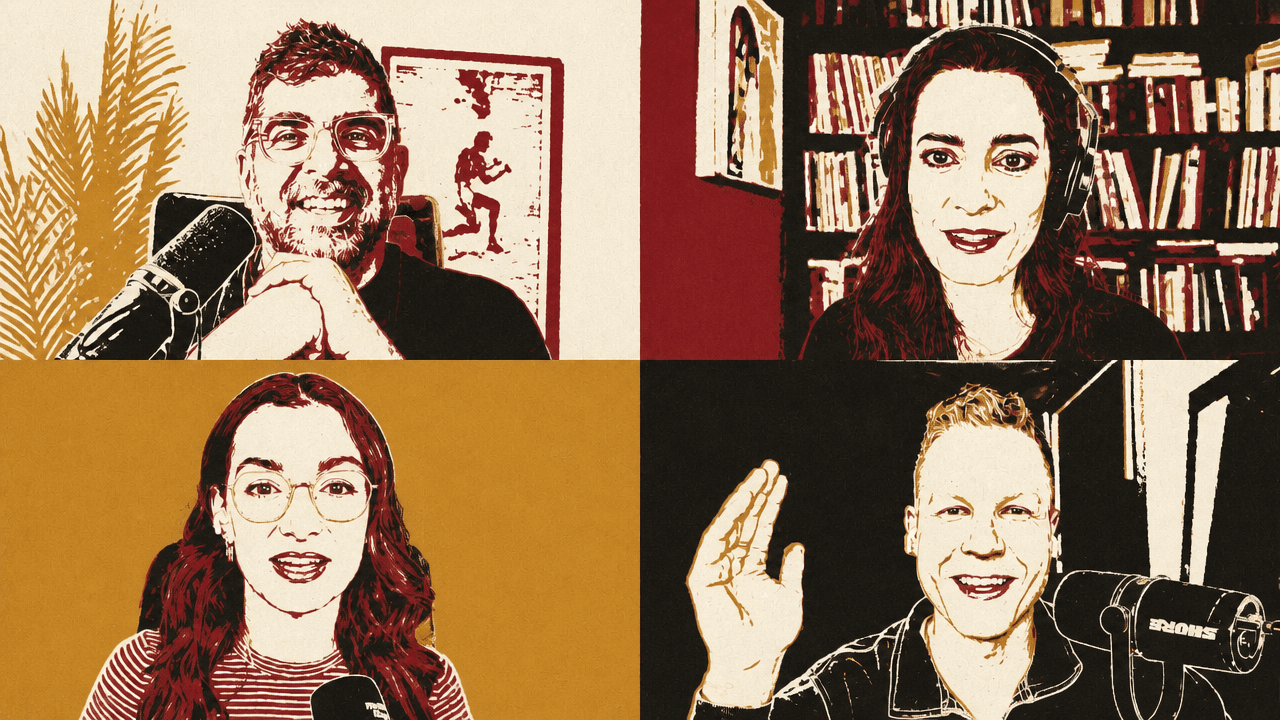
Puri tried to narrow the work before the team added more ideas
The center of the strategy discussion was focus. Shaan Puri kept pushing the group toward a small set of near-term moves: build a clipper army, sharpen guest selection, and improve guest preparation so interviews reveal artifacts rather than rehearsed answers. Other ideas — a newsletter, dinner clubs, intimate events, quarterly reading episodes — were treated as live possibilities, but Puri’s bias was to sequence them rather than let every promising idea become work at once.
That distinction matters because My First Million is already large enough to behave like a media company, while still operating with gaps that would be strange inside one. Puri said the show was six years old, 822 episodes in, and had done roughly 115 million podcast downloads. Yet Sam Parr said they had never had a social media person, and Puri described basic channel operations as comically broken: HubSpot people asking for the Twitter login, a LinkedIn page no one remembered creating, and an Instagram account whose password was lost for years.

The goal was not to professionalize everything. It was to decide which missing functions would amplify the thing that already worked.
Parr’s governing principle was deliberately selfish. In the pre-work, he wrote that he wanted to “do the selfish thing” with the podcast: have fun, learn, and improve himself, because he believed listeners would enjoy that more than an inauthentic attempt to appeal to them. Puri connected that to a Rick Rubin line: “the best way to serve your audience is to ignore them completely.”
Parr said he was nervous to write it because it could sound like telling the audience to “f themselves.” His point was narrower. In the first three years of the podcast, he said, he and Puri essentially did not look at the data. He still does not pay much attention to the numbers, except that YouTube metrics can pull him into thinking in headlines and click-through rates. When that happens, he sometimes suggests episodes built around what he thinks will perform. Those are the episodes that give him “the Sunday scaries on a Tuesday night,” because the show records on Wednesdays.
The opposite category gives him energy: a guest like Graham Weaver or Sarah Moore; a book Parr cannot wait to tell Puri about; Puri returning from Austin and explaining who he met and what was interesting. Parr did not claim that data-driven episodes always fail. He claimed that curiosity-driven episodes are more likely to create the energy that made the show work in the first place.
Puri described the podcast’s core mechanic as “an empire built on four words”: “Dude, have you seen this?” In his view, the show is a “giving contest.” One host brings something surprising, useful, strange, or exciting; the other reacts; then they trade roles. The strategic test for new initiatives became whether they help more people experience that feeling without forcing the show into a shape neither host wants to make.
The biggest missed opportunity is sampling the show where people already are
Shaan Puri’s strongest recommendation was not generic social posting. It was a discovery problem: people who might love the core product do not know it exists, do not know what it feels like, and may never begin with a full episode.
He separated loyal listeners from “samplers.” In the current podcast market, he argued, many people experience shows through clips distributed on platforms where they already spend time. His example was Basement Yard: he said he had never listened to a full episode but had watched roughly 200 clips and would still say he loved the show. Those clips gave him a consistent sense of the hosts — funny, likable, reliable — without requiring him to consume the canonical product.
That is the gap he sees for MFM. The show has frame breaks, stories, banter, inspiration, and business ideas, but the team does not package enough “MFM in a shot” for X, Instagram, TikTok, and LinkedIn. His proposed unit was not 10 or 20 clips a day. It was three or four strong moments from each hour-long episode, edited tightly enough that a cold viewer understands the setup quickly, gets the payoff, and recognizes the show’s underlying feeling.
Puri pointed to an appearance he made on Chris Williamson’s podcast. He thought the full episode was good but not an outlier on Williamson’s YouTube channel. The notable part, to him, was what happened afterward: for three weeks, Williamson’s team kept clipping short stories and nuggets from the episode. One of those clips was posted to X and drew a reply from Elon Musk. Puri’s point was that similar moments could have happened repeatedly from MFM episodes, but the team would not know what it was missing because missed distribution is invisible.
Parr connected this to a past experiment. The team had once created a bounty: $5,000 to the person who clipped the most moments they liked. Parr said that produced 20 million impressions in one month. He described it as an early example of what are now called “clipper armies,” though they did not know what they were doing at the time.
Puri said they had “stumbled ass backwards” into the approach because they did not trust their own team to execute clips well. Two things happened: the clips spread widely, and the person whose clips performed best eventually created a short-form content company and sold it to Morning Brew. Then, Puri said, they did the “hilarious” thing: they stopped doing what was working and forgot about it.
Parr’s recommendation had two parts. First, the internal team should post much more on all platforms. Second, they should revive the external incentive model, either with the same bounty structure or by paying on a CPM-like basis. He floated an example of paying for views, though he did not settle the math.
Arie Desormeaux then made the discussion more useful by interrupting the performance mode. She told Puri he was being “podcast Shaan” rather than the blunter version he is in strategy meetings. Asked for the difference, Desormeaux said he is more direct off-air; Parr translated that as “more of a dick.” Puri asked them to leave it in, then gave Cassie Tucker the mandate in the harsher operating style.



In the next 90 days, I need you to raise a clipper army, get this shit going.
The assignment was to copy a working playbook, use money to incentivize young editors who are good at short-form content, and pursue scale aggressively rather than tiptoe into a test that would remain inconclusive. Puri told Tucker to set a target within 24 hours, spend more money than seemed necessary, be looser with controls than instinct might suggest, and produce a clear answer after 90 days about whether the tactic works for MFM.
Tucker’s channel-audit work made the process more concrete. She said she put MFM’s numbers, competitors, and goals into a Claude prompt and generated a 60-day action plan for growing the channels. The on-screen document, titled “The Prompt,” asked Claude to read a filled-out channel audit spreadsheet and produce a marketing strategy with a channel assessment, flywheel gap, and priority action matrix. Its tone instruction was specific: “Sam & Shaan energy. Direct, specific, punchy, short sentences. No corporate fluff. No ‘consider leveraging synergies.’”
| Prompt section shown | What it asked Claude to produce |
|---|---|
| Channel assessment | For each platform: a WORKING / UNDERPERFORMING / MISSING / UNTAPPED status tag, one bold verdict, 2–3 sentences of analysis, and one quick win for the week. |
| Flywheel gap | A diagnosis of what is missing between the team’s current channels and its growth goals. |
| Priority action matrix | A 60-day action plan based on the actual channel data rather than generic advice. |
A related screenshot showed the “MFM Channel Audit Kit,” with rows for Podcast, YouTube, Instagram, TikTok, X/Twitter, Newsletter, and LinkedIn. The instruction was to fill in channel data and leave blank what did not exist, so the AI could flag missing fields.
| Platform row in the audit kit | Example field shown |
|---|---|
| Podcast | e.g. myfirstmillion |
| YouTube | e.g. youtube.com/@mfm |
| e.g. myfirstmillionpod | |
| TikTok | e.g. @myfirstmillion |
| X / Twitter | e.g. @ShaanVP |
| Newsletter | e.g. newsletter URL |
| e.g. linkedin.com/company/... |
The point was not the download offer. It showed the process the team was trying to impose on a show that had grown despite weak channel hygiene: inventory the channels, identify what is missing or underperforming, and turn the answer into actions someone can execute this week.
Events and dinner clubs were attractive only where they solved for intimacy
Events were discussed as possible extensions, but the bar was high. Sam Parr was open to a two- or three-city tour only if the format was natural enough for them to “kick ass” at it. He was skeptical of live podcast tapings because, in his view, almost all of them “suck.” Performing in front of 2,000 people is hard, and MFM would need a format better than simply moving the podcast onto a stage.
Shaan Puri was explicit about what would not motivate him. He did not want to do an event for money, though he was fine with making money. He did not want to do it for the ego of walking into a theater full of fans, even though that would be gratifying. His motivation was to identify and meet the “top 1%” of MFM listeners.
The phrase meant the most interesting listeners. Puri’s examples were founders of cool products or places he already likes, people he sometimes discovers are fans only because his business partner Ben Levy hears it from them. Puri’s reaction was that it is “insane” they do not know who those listeners are. A curated event of 100 to 150 people, with friends of the show such as Andrew and Steph Smith, would be valuable because it would put those listeners in a room together and let the hosts meet them without the stress of a performance.
Puri also proposed an “opposite” of the big live show: an MFM version of NPR’s Tiny Desk. The reference was about scale and vibe. He liked the intimacy of seeing an artist “cook” in a small, interesting space rather than a large, sterile venue. His version would put 20 entrepreneurial listeners in a compact, cool venue and have Puri and Parr spitball with them live.
He said he had done something like this at a Mercury event, where he discarded his deck on the drive over and instead asked attendees to describe their businesses and biggest problems. He then tried to help them on the spot. He described the feeling as “like a magician,” because someone is stuck and the host gets them unstuck. Parr had watched that talk and thought it was good.
This format appealed because it would be both an experience and a content engine. Puri pointed out that workshop-style formats can generate many clips: someone has a problem, the expert gives a useful answer, the person reacts. For MFM, this would be easier than writing or performing live entertainment, and more aligned with the hosts’ strengths.
Parr liked this more than a room of “really successful people.” He said he often dislikes settings full of “ballers” because they can become status contests. He prefers “the nobodies” — people who may not look impressive but are interesting or insightful.
The dinner-club idea sat in the same category: promising, but not adopted as an immediate priority. Puri raised it after recalling earlier local MFM meetups, including listeners who described being part of small city groups where the show was the common bond. He pointed to DNNR, a platform shown on screen as a white-labeled dinner club platform for turning an audience into recurring revenue and real-life community.
| Metric shown | Value |
|---|---|
| Dinner clubs | 80+ |
| Dinner attendees | 14K+ |
| Brand earnings | $160K+ |
| Local GDP created | $750K+ |
Puri was not drawn to the idea as a growth hack or revenue channel. He called it part of a “barbell approach”: some work should reach everybody, while other work should meaningfully affect a small number of people. If an MFM dinner helps someone meet a co-founder, make a strong connection, or find business-minded friends in their city, that would be “good karma for the world.”
The risk is attribution. Even if the team sees the dinner as an opt-in, decentralized experience, attendees would likely attribute the quality of the night to MFM. If the dinner is awkward or poorly matched, it reflects on the brand. Arie Desormeaux liked the idea and joked that it could be called “the other 99%,” a counterpart to Puri’s “1%” event. Parr thought it was cool, but Puri’s liability point made him more cautious.
By the end, events and meetups remained useful options rather than first moves. Parr was willing to group newsletter, clips, and meetups as a six-month focus. Puri later pushed for a tighter sequence: do the more urgent work first, then return to meetups once the team had earned the right to add more.
A newsletter could work if it stays close to the show
When Cassie Tucker asked about a branded newsletter, Sam Parr’s first reaction was risk management. He was interested, but only if the newsletter became an asset rather than a liability. Neither host has time to write it. If someone else writes it, Parr worried it could say something dumb, fail to fit their taste, or be factually wrong. Any of those could harm their reputation.
That did not make him anti-newsletter. It meant the newsletter needed to be de-risked enough that the hosts trusted it. His preferred version was simple: takeaways from episodes. With roughly 850 episodes, he wanted a useful way to resurface the best ideas and reminders without requiring listeners to revisit everything.
Shaan Puri agreed and described the product as a plainspoken companion to the show: what they just did, who is coming up, and the three or four most interesting stories from recent episodes. If a guest shared growth numbers, the newsletter should state them clearly. “No gatekeeping,” he said. The purpose would be to give value quickly and make someone more likely to listen or watch.
He did not want a pure AI summary. He was open to a small section with extras — a viral post from Parr, something the team is doing, a product they bought — but the foundation should be the best material from the show in concise form.
Puri also offered a possible execution path. Diego, his head of content and former lead writer for Milk Road, had been trained to write in Puri’s style and could potentially take on the work. The harder strategic question was where the show directs listener attention. Puri said there is already a conflict because they send people to HubSpot offers; a newsletter would need to become a main destination if they wanted enough subscribers to justify the effort.
The newsletter remained in the “likely useful, but sequence carefully” category, alongside other ways to extract more value from the existing show.
The guest strategy should move away from the middle
Sam Parr’s guest recommendation was a barbell. He wanted the show to aim higher and lower: more “super, mega popular” people, but only when they can talk about something new, and more unknown people who are unusually insightful. What he did not want was popularity for its own sake.
The lower end of the barbell mattered as much as the higher end. Parr cited Sarah Moore and his mother-in-law as examples of people without conventional public status who were still highly interesting. Arie Desormeaux added the example of Ishan, Puri’s former chief of staff, who came on when he was about 22. That episode felt memorable because, as Desormeaux put it, no other podcast was going to have him on.
Shaan Puri compared the instinct to Theo Von interviewing unexpected people such as an Amish kid or a trash man. Parr said he loved those episodes and took pride in liking both “world leaders and movers and shakers” and people who have done nothing conventionally impressive but carry wisdom.
He added a specific category: older guests, roughly 70 and above. Parr said he gets particular joy from learning from “old people,” because they often bring life perspective he wants to absorb.
That broadened into another content direction Parr wanted to explore: less purely business-hard topics and more conversations about happiness, parenting, passion, and living well. He named Arthur Brooks as someone he would like to talk to and described Graham Weaver as an example of the kind of guest who is successful in business but interesting because of how he thinks about life.
Puri was open to it. He connected it to the show’s earlier expansion into investing. The podcast began around business ideas, but as he and Parr wanted to become better investors, they started asking more investment questions. Now that they are fathers, Puri said, they want to get better at parenting too — not in a cliché way, but by finding the non-obvious practices that matter.
One example he had heard repeatedly from entrepreneurs: taking a one-on-one trip with each child around age six, seven, or eight, creating a distinct core memory and a different dynamic from the usual family group setting. Puri said he had heard that advice around seven times and eventually had to stop being “a dummy” and act on it. His point was that such ideas emerge only if the hosts ask.
The best new formats are really better preparation systems
Several proposed formats were less about inventing new shows than about changing what the hosts prepare and what guests reveal.
Arie Desormeaux suggested using the hosts as “professional explainers.” Sam Parr reads heavily, Shaan Puri consumes different material, and each could explain the most useful things they have found. Puri liked the idea because it could make his reading double as MFM prep: a “two for one.” The format might involve both hosts reading the same book, each bringing a book, or each telling the other which books are worth skipping or seeking out.
Parr preferred making it quarterly: the best things that shaped his quarter. He mentioned Maverick, Ricardo Semler’s book about a Brazilian business leader who ran his company through unusual democratic practices; Barack Obama’s A Promised Land; and An Informal Guide to Workwear. His conclusion was not that the show should become a book club. It was that he could reliably bring stories and takeaways from his reading once a quarter.
Puri proposed adding a ritual question for guests. He cited Patrick O’Shaughnessy’s habit of asking, “What’s the kindest thing anyone’s ever done to you?” at the end of episodes, because it softens successful people and draws out heartfelt stories. He also cited Guy Raz’s CEO format, where each guest writes a question for the next guest. Puri wanted MFM’s own version: one recurring closer or tradition that adds texture without becoming heavy.
He also suggested an “Acquired, but for everyman businesses” format: episodes that turn inside out the backstory of recognizable products or companies people encounter but do not really understand. His examples included Bitchin’ Sauce at Whole Foods, Stanley mugs, Crocs, and Yeezy. The difference from the show’s usual riffing would be packaging and preparation. A standalone episode would make a clear title-and-thumbnail promise, both hosts would study the company enough, and the episode would deliver the story: ups, downs, how it took off, and the most interesting business lessons.
Parr liked the idea but asked how to make it actionable. Puri suggested keeping it on the radar and using moments of authentic curiosity when one of them encounters a business with a surprisingly good backstory. They referenced CNBC Make It as a possible internal codename for the style: a focused, story-driven package about how a recognizable thing was built.
Parr then raised “artifact episodes,” built around screen shares and real objects from a guest’s life. He wanted to ask a guest to show their calendar, investment allocation, Chrome plugins, desktop organization, frequently used websites, or workflow tools. He called it a search for “alpha,” but Puri added that even when it is not tactically useful, it breaks the guest out of routine and reveals something idiosyncratic.
Puri suggested asking guests in prep for screenshots of their calendar, phone home screen, desk, or workspace. A desk can expose a philosophy. He remembered sitting at Mohnish’s house and seeing a sign that said “Trouble is opportunity,” which clearly had a story behind it. He also cited Warren Buffett’s “Too Hard Pile” as the kind of artifact that prompts a different question than a normal interview would.
Artifacts are a way to get guests off script. A calendar, a desktop, or a sign on a desk gives the hosts something concrete to interrogate.
Guest diligence has to happen before the interview
Sam Parr raised one operational concern near the end: guests with checkered pasts. If the show books someone like Martin Shkreli, Parr feels responsible for asking about the behavior that made the person controversial. At the same time, he does not want the show to become a place built around confrontation.
Shaan Puri agreed with the tension: there is a responsibility to ask, and also he does not want to spend the show doing that.
Parr’s request to Arie Desormeaux was not to ban controversial guests. It was to make sure the team knows what it is getting into and that the guest is worth the burden. He mentioned an episode with a guest named Thomas, connected to a story in Italy, where they discovered mid-recording that the guest had been in trouble for fraud. Desormeaux recalled Parr looking up the headline during the recording and realizing “it’s not good.” Parr felt he had to call it out even though the conversation had been going well.
The rule he wanted was proportionality. Some controversial guests are interesting enough to justify the responsibility. With Shkreli, Parr said, they can say plainly that he has done things they do not like and also that he is interesting. But they need to know in advance, not stumble into it during the interview.
Desormeaux already plays a protective editorial role. Parr compared this to moments when she flags jokes or claims that come off badly or may be unsupported. Puri joked that Desormeaux often suggests removing a part and Parr almost always wants to leave it in.
The team does not want a prosecutorial show, but it also does not want to discover during an interview that a guest’s past requires a question the hosts were not prepared to ask.
The short memo was clips, guests, and prep
By the close, Shaan Puri’s version of the near-term agenda had three parts.
First, Cassie Tucker would raise the clipper army. Puri framed it as her main challenge on joining the team: even if she did five other useful things, this was the thing he wanted judged because the team believed it was the biggest opportunity. It would require learning where clippers gather, how incentives work, and how to build scale quickly enough to get a real answer.
Second, the show should shift guest selection toward the ends of the barbell: bigger names with something new to say, unknown people with unusual insight, and more conversations about important areas of life the show has not historically covered, including parenting and happiness.
Third, the team should improve guest prep through artifacts and recurring questions: screenshots, spaces, desks, home screens, calendars, and possibly a ritual closer that becomes part of the show’s texture.
Parr’s own shortlist was slightly broader: newsletter, clips, meetups, and openness to happiness and parenting topics. The difference was less about whether those ideas were good than about when to take them on. Puri wanted the team to execute the immediate work for 90 days, come up for air, and then decide whether they had earned the right to add more.