Lifestyle Brands Work When the Product Comes From the Life


Sam Parr and Shaan Puri use Hannah Neeleman’s Ballerina Farm as a case study in how a personal aesthetic can become a large consumer business when the life, content and products appear to come from the same system. Their argument is narrower than “sell a lifestyle”: the strongest brands show visible work and transformation, then sell products that feel like artifacts of that world. The model, they argue, depends on committing to an identity publicly rather than merely borrowing its imagery.
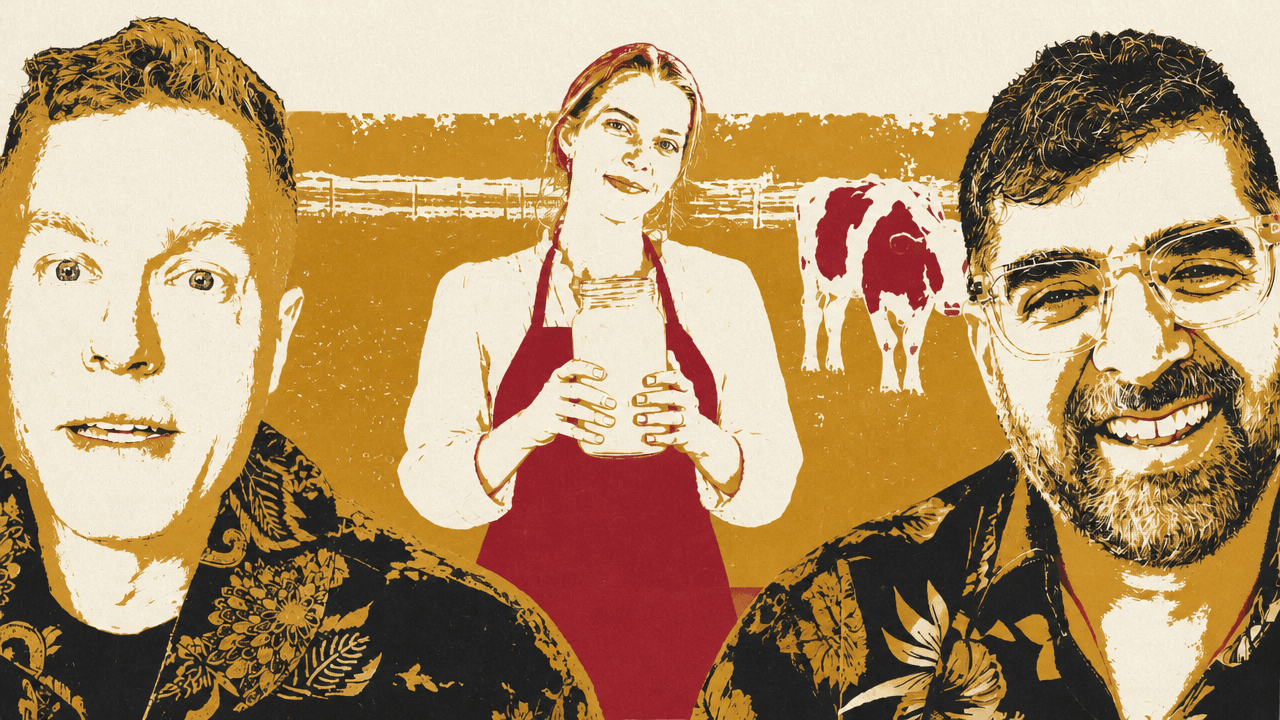
The business works when the product comes from the life
Ballerina Farm matters as a business case because the content, persona, and products appear to come from the same lived system. The audience is not only watching Hannah Neeleman present a rural domestic aesthetic. It is watching the apparent world from which the goods are supposed to emerge: bread, milk, meat, family, cooking, farm work, motherhood, faith, and the visual calm of a life organized around those things.
Sam Parr described discovering Neeleman’s Ballerina Farm account well after it had already become a phenomenon. The Instagram profile listed the handle ballerinafarm, 9.5 million followers, “Agriculture,” “Married to @hogfathering,” “@juilliardschool graduate,” and “City kids turned ranchers.” Parr said Neeleman has about 20 million followers across platforms.


The content, as Parr described it, is warmly lit farm life: making sourdough bread, getting milk from cows, cooking, raising children, and presenting a calm domestic aesthetic. He placed it near the “trad wife” category, while adding that he did not think Neeleman herself would necessarily use that label.
The business is not incidental to the aesthetic. Parr said Ballerina Farm sells sourdough mix, electrolyte mix, meat, and at one point milk. The shop page promoted Farmer Hydrate and displayed products including bone broth hot cocoa and farmer protein. The site’s “About Us” page described Neeleman as sharing “a glimpse into our rural farm and family life here in the mountains of northern Utah” and wearing “many hats—mom, wife, cook, business owner, content creator, lover of God and all things butter.”
Parr said he had seen estimates from reputable sites putting Ballerina Farm at roughly $70 million to $80 million in annual revenue. A New York Times article framed the physical Ballerina Farm Store in Midway, Utah, as a tourist draw. The headline read: “Tradwife Influencer Opens Store in Small Town. Tourists Abound.” Parr read from the article’s description of Midway as a Hallmark-like Utah village and said teen girls were lining up “as if this was Disney World.”
The “trad wife” framing brings political and cultural baggage. Parr noted the anti-feminist critique, the aspirational pull for some young women, resentment from others, and criticism of Neeleman because her husband’s father founded JetBlue and is very wealthy. He dismissed the “it’s easy for you” critique as “nonsense” for the business point he wanted to make. The useful question was how someone goes all in on a life and lets the audience come along.
Shaan Puri sharpened the terminology. He was not sure “lifestyle” was the right word. He would call it an “aesthetic” or an “escape.” He compared Ballerina Farm to the appeal of Bridgerton or The Crown: not because the products are similar, but because each lets viewers enter a fantasized world. Men do something analogous with sci-fi, Game of Thrones, gladiator stories, or the meme of thinking about the Roman Empire.


The commercial move, Puri argued, is to place ordinary products inside one of those escape aesthetics. Apparel already does this. People buy golf brands without playing golf, running shoes without running, and clothes coded as “summer in the Hamptons” without belonging to that world. He wondered what would happen if more brands did the same in less obvious categories: dental care, supplements, milk, creatine, collagen, or everyday consumables. The commodity may be familiar; the world around it can make it feel different.
Parr’s distinction was that “life” should be taken literally. The creator is not only borrowing a look. The making of the thing is the content. A farm brand is stronger if the farm is the show. A fitness product is stronger if the transformation is visible. A craft product is stronger if the craft itself is the narrative.
That constraint matters because, as Parr put it, the concept becomes lame “the moment you start typing on a computer.” The model works best where the audience can watch the creator make, restore, train, farm, build, hunt, or learn. The product cannot feel detached from the life. The story arc is: “I was this person, I want to become this person, come along this journey. And for the few of you who truly are bought into this, I happen to have a product that you can buy.”
Visible transformation is the business
The opportunity is not new. The distribution has changed. What used to require a television producer, a camcorder, and a network can now be done with a phone, if the work itself is visually and emotionally legible.
Sam Parr’s reference point was Mike Wolfe of American Pickers, for whom he said he used to work. Before the show became a television hit, Wolfe drove around the country, visited old barns, found interesting objects, and uncovered the stories of the people and things he was buying. Parr said Wolfe carried a camcorder in the late 1990s or early 2000s, before smartphones. The work became a show and helped popularize “pickin’,” an identity around collecting, antiquing, and hunting for overlooked objects.
The same structure appears in Ghost Town Living. Parr said Brent, a former partner of Ryan Holiday, was involved in buying an abandoned California mining town of about 500 acres that had been for sale for roughly $2 million. During the pandemic, Brent decided to live there. The Ghost Town Living YouTube channel had 2.05 million subscribers, 128 videos, and the description: “Living in an abandoned ghost town, trying to bring it back to life.” Videos included “I Spent My Life Savings On An Abandoned Ghost Town,” listed with 8.9 million views, along with posts about digging into an abandoned mine, hitting water after 160 years, and legally claiming U.S. land.
Restoring a ghost town is not efficient. Parr noted that turning a town into a hotel is far more work than making and selling a cast iron skillet. That inefficiency is part of why it works. The difficulty creates the story. The work is the show.
Shaan Puri added Zach Duke, who presents himself as “World Cup Dad.” The account described him as a father “chasing impossible goal: play pro soccer at 34 w/ no exp.” Puri said Duke posted that he was a 34- or 35-year-old dad who had never played soccer and was training to make the World Cup team. He had an immediate visual hook: a dad body, but enough athleticism to make the attempt watchable. He did not hedge the goal as an experiment. He declared that he would make it.
That declaration created two audiences. Haters liked the absurdity. Others found the commitment inspiring. Puri said Duke got into legitimately great shape, became “pretty good at soccer” for someone who had never played, and earned brand deals and opportunities to play in small-sided formats, including the Adidas Cup. He did not make the U.S. national team. Parr’s response was the key: “You don’t have to.”
For Puri, Duke belongs to a category he calls “man on a mission” content. The mission may be nearly impossible, but the transformation can still be real. “I bet his videos get more views than eight of the 11 guys on the starting team on the actual World Cup team,” Puri said. Falling short of the literal stated goal can still produce a valuable outcome: a changed body, a changed life, an audience, and a business.
Parr connected that pattern to Ralph Lauren. He described Lauren as a Jewish man from New York City who sold Western wear and was sometimes criticized for seeming to cosplay. Parr’s reading of Lauren was that he dressed toward what he wanted to become. If he wanted to feel braver, he might wear vintage military gear. If he wanted to feel more adventurous, he might dress like a cowboy. Over time, the costume was not merely a costume. He went to a farm, owned a ranch, and became closer to the identity he had chosen.
Mark O’Brien, a New York real estate figure, was another example. His Instagram profile listed 686,000 followers. Parr said O’Brien used to look like a normal New York real estate guy in a suit. More recently, his content shows him in a white T-shirt restoring old Brooklyn brownstones, carrying a sledgehammer, breaking into renovation projects, and explaining the history of the houses. One video framed the work as “RESTORING HISTORY SO WE CAN REMEMBER HISTORY,” asking how many people had been married in a 150-year-old Brooklyn brownstone and how many had raised children there.
Parr said he was “enamored” watching the transformation because O’Brien seemed to have leaned into an identity until he became it. The creator does not have to begin as the person the audience eventually sees. Starting far away may make the story better.
The missed opportunity, in Parr’s view, is how few brands show the life behind the thing. Maui Nui Venison, which makes venison products from Maui deer, was one example. Its Instagram described the product as “The most nutrient-dense, stress-free, wildly delicious red meat on the planet.” Parr said the brand could bring people further into the hunt, the setup, the ethics, and why the meat is better. If the sourcing story is the differentiator, the sourcing story should be visible.
He named several broad human desires that could support this type of brand: cleanliness in food and home, care and protection of children, mastery, craftsmanship, and excellence. His practical advice was to look at what worked on television in the 1990s and 2000s, then redo it with a phone, with the creator’s life as the set.
Reinvention works better when it is declared
Shaan Puri placed the examples inside a more explicit theory of self-invention. He read Robert Greene’s Law 25 from The 48 Laws of Power, “Re-Create Yourself”: “Do not accept the roles that society foists on you. Re-create yourself by forging a new identity, one that commands attention and never bores the audience. Be the master of your own image rather than letting others define it for you. Incorporate dramatic devices into your public gestures and actions — your power will be enhanced and your character will seem larger than life.”
For Puri, that passage described the mechanism behind Ballerina Farm, World Cup Dad, Mark O’Brien, and Ralph Lauren: the public creation of a new self. He then told a story from a Tony Robbins event. Robbins, whose birth name Puri identified as Anthony J. Mahavoric, said during a Q&A that he had not simply woken up as Tony Robbins.
I created this Tony Robbins motherfucker. I created him. I decided that that's who I needed to be and then I created him.
Puri took the line seriously. Reinvention is available “on the drop of a hat,” he argued. A person could pause, open Apple Notes, and write, “Yesterday I was this and today I’m this.” The act does not complete the transformation, but it begins it. The power is in refusing to treat the current role as fixed.
Sam Parr emphasized labeling. He recalled being only “mildly fit” and deciding, “I’m an athlete.” He joked with Puri that he was a fitness influencer, but said it was not really a joke. He was not saying, “I’m working to become that.” He was saying, “I am that.”
Puri connected this to Florence Scovel Shinn’s Your Word Is Your Wand. The title, he said, contains the useful idea: words are spells people cast on themselves and others. His trainer pays attention to distinctions like “I’m going to” versus “I am,” or the addition of “yet,” as in “I haven’t done this yet.” Puri said he named his LLC “Inevitable Outcomes” more than a decade earlier, before he had made his first million, because he wanted to live under the belief that success was inevitable.
His broader claim was not mystical in the way it might first sound. He described himself as analytical, but argued that belief changes thought, thought changes action, and action changes results. In that sense, “manifestation” is not a substitute for execution. It is upstream of execution.
Parr added that one of his most annoying traits, according to his wife and probably everyone who knows him, is being a stickler for words. He rejects “it’s just semantics” as a dismissal. “Yeah, it is just semantics,” he said, “and it’s just really important.” If someone answers “I don’t know” when asked what they think, Parr will object: he did not ask what they know; he asked what they think.
Puri gave a management example from Twitch after its acquisition. He described sitting in executive meetings where teams would come to CEO Emmett Shear and the COO, Sara, with problems. At first, Puri thought Shear was both brilliant and absurdly hung up on minor wording. Shear would stop teams on terms such as “algorithmic” versus “editorial” and ask what “editorial” meant. Who were the editors? How did they pick? What exactly did the team mean?
Over time, Puri came to see the method. If a team and a CEO use the same word to mean different things, they cannot solve the problem together. The debates were costly and sometimes taken too far, but they forced precision. Teams learned that they needed to understand the details and define their language because Shear might test it. The result was clearer thinking.
Parr said his high school speech class taught the same principle: always define your terms. The downside is social. It makes a person look like an asshole. It is annoying to ask, “What do you mean?” and then, when the repeated answer remains unclear, say, “Those words don’t make sense to me. Can you use other words?” But Parr’s conclusion was blunt: unclear words reveal unclear thinking.
A fresh frame can make the familiar valuable
The World Cup examples were not only travel color. They illustrated the same mechanism as Ballerina Farm or Ghost Town Living: a familiar thing becomes valuable when someone frames it as a world worth entering. Farm chores, brownstone demolition, free chips and salsa, a Bass Pro Shop, or a spotless locker room are not automatically interesting. They become interesting when a person with a distinct point of view makes the audience see the system behind them.
Shaan Puri pointed to international World Cup tourists discovering ordinary American places with astonishment. Freddy, a German soccer fan traveling through the U.S. for the World Cup, posted from Outdoor World: “We found another surreal place on our way. I know some people will say I’m too positive about everything I see, but this place was crazy. They had a shooting range in the store.” The post had 10.4 million views.
Puri said Freddy had also been stopping at Buc-ee’s, tubing in Chattanooga, encountering strangers who offered help, and marveling at the scale and strangeness of American life. To Puri, it resembled rediscovering the world through children. Adults forget the wonder of ordinary things; outsiders make the familiar visible again. A WGNO article described “German tourist Freddy going viral as he visits Louisiana on way to World Cup,” saying he had earned more than 440,000 followers on X. Puri said watching these visitors was “more entertaining than the World Cup” to him.
Sam Parr connected that to Ilf and Petrov’s American Road Trip, a book about two Soviet writers who traveled across the United States in 1935. The Amazon description shown in the source said Ilya Ilf and Evgeny Petrov came to the U.S. as special correspondents for Pravda and drove cross-country for ten weeks, recording American life in text and photographs. Parr said it was one of his favorite books because it revealed American history through outsiders’ eyes. Their observations — everything huge, everything big, processed food everywhere — sounded to him like things visitors still notice now.
Puri also read a viral post attributed to NOBUNAGA, a Japanese account, about free chips and salsa at an American Mexican restaurant. The narrator treats the automatic arrival of chips and salsa as a profound cultural event: “We have not earned these,” he tells the waiter. The waiter replies, “They just come with the table, man.” The post interprets bottomless refills as evidence that America has “wells of salsa” and that “the trust of a nation is in that salsa.” Parr called it beautiful, then asked whether it was real. Puri said he did not think it was real, though he found it hilarious.
The same frame applied to Japanese World Cup fans. Puri described fans waving what looked like blue flags, only to learn they were trash bags: objects that made noise and color during the game, then became tools for cleaning the section afterward. Another post showed the Japanese national team’s locker room left spotless, with folded uniforms and origami visible. Puri read this as a visible expression of cleanliness, discipline, and respect.
These examples make the brand lesson more precise. The thing being sold or watched does not need to be novel. What has to be legible is the worldview: the way a group eats, cleans, works, travels, restores, trains, raises children, or chooses difficulty. Once that worldview is visible, ordinary products can feel like artifacts from a more interesting system.
The game of more is not the same as a better life
The lifestyle question eventually became a personal operating problem: what kind of life is worth building once the obvious financial constraints loosen?
Sam Parr invoked Jesse Itzler as someone both he and Puri admire for buying into life fully. Shaan Puri brought up an Instagram story in which Itzler left Madison Square Garden after a Knicks game and heard a pedicab driver blasting “Go New York Go,” a song Itzler wrote. Itzler got in, told the driver it was his song, the driver did not believe him, looked him up, and then took him around New York.
Puri used Itzler, along with Nick Gray, as examples of people who seem to get more out of the same amount of time. They do not have more hours than everyone else, but they appear to experience more. He described them as “tap dancing through life,” even when they do hard things, because they seem surrendered into the experience. He framed this as “the art of living well,” which he believes is poorly understood. More time, he argued, would not necessarily help most people. They would fill extra hours with the same stress, anxiety, fake busyness, or social media.
Parr gave a domestic example from his Manhattan building. He said the building contains rich and poor people, which he likes. While considering whether his family needed more space for more children, he met a family of four — parents and twin daughters, now around 18 or 19 — who had lived in the same one-bedroom apartment for 30 years. The parents used the bedroom; the daughters slept on a Murphy bed in the living room. Parr initially recoiled at the inconvenience, but after visiting and hearing their stories, he saw the advantage: everyone was together. Looking at another possible home with two living rooms, he found himself asking why he would want two. He wanted everyone in the same room.
The desire for more, bigger, and larger is often assumed to be the path to a memorable life. Parr questioned that assumption.
Puri then brought in Julie Zhuo’s essay “To All the Folks Who Are About to Be Rich.” The article begins by congratulating people whose stock is about to become liquid and who are about to be rich. The excerpt cited lottery-winner research to argue that money buys relief and comfort, but not joy: “That part is still your job.”
Puri summarized Zhuo’s three groups after a liquidity event. Some “slipped away from tech like aquarium fish flushed into the vast blue ocean,” becoming chefs, hoteliers, artists, therapists, writers, teachers, or parents. Some pursued a leisure-class life of Michelin restaurants, tasteful homes, experts, VIP experiences, Coachella, and expensive hoodies. Others stayed in tech as founders, VCs, or employees chasing the next climb.
The phrase that mattered most to Puri was “the game of more.” Zhuo wrote that some people upgraded a car or house, checked off goals such as paying off a parent’s home or securing retirement, and then stopped. They did not change who they spent time with or how they carried themselves. They did not “take up the game of more.” Those people, the excerpt said, could still connect with almost anyone.
Puri turned that into a diagnostic question: everyone is playing some game of more, but more of what? More leisure, travel, challenge, impact, authenticity, joy, children, validation, status, prestige? If a person posts a vacation story on Instagram, what are they seeking more of? He said he does not post stories and has opted out of that specific game, but has opted into others.
Parr asked whether Puri had observed patterns among people who became liquid overnight. Puri said he is still figuring it out and expects to have a simpler answer in five or ten years, but he offered several observations. The leisure path, in his view, does not seem to result in much good. Trips and upgrades are fine, but diminishing returns are dramatic. People who wander into leisure sometimes seem to lose themselves.
His definition of financial independence was also stricter than the common version. It is not the ability to buy whatever you want. It is making decisions not based on money. Sometimes that includes buying better food or choosing without regard to price. But more often it means choosing a project without asking whether it could be a 10x return. At higher levels of wealth, Puri said, people often trade valuable life hours for dollars that have little remaining ability to improve their lives. He called this a “horrible trade,” and said many wealthy friends still make it.
The alternative is not idleness. Puri said “man needs a quest” and “man needs a project.” The question is whether the quest actually lights the person up, or whether it is borrowed from the surrounding tribe.
The anti-mimetic life requires changing the inputs
Shaan Puri used the term “mimetic” to describe wanting things because other people want them, citing René Girard and Peter Thiel as popularizers of the idea. His interest was in the opposite: people who are anti-mimetic, who seem to want things from internal volition rather than imitation.
Nick Gray was his first example. Gray is surrounded by people constantly chasing the next company, investment, or business move, yet he has prioritized hosting cocktail parties, writing his blog, and traveling to India to live in ways that interest him. Puri said Gray wants what he wants because he wants it, and the evidence is that he seems lit up while doing it. By contrast, some people have everything but are not lit up, because they have chosen things other people wanted.
Sam Parr offered a Tony Robbins metaphor from a story about ordering a burger. Robbins’ wife, in the story, looks at her burger with pickles and asks why she ordered it that way if she does not even like pickles. The question becomes: whose burger is this? Puri extended the metaphor to life. Much of what surrounds a person is a burger they ordered without asking whether they like it medium rare, with pickles, or in some other form.
Puri named Palmer Luckey as another anti-mimetic figure. Luckey pursued virtual reality goggles at 19 while living in a trailer park, long before it was a fashionable path among the people he might have wanted to impress. After success, Puri said, Luckey kept wearing Hawaiian shirts, jorts, and flip-flops instead of conforming to a new status costume. He did not become a venture capitalist or optimize for luxury vacations. He went into defense and weapons, which Puri said was deeply unpopular in Silicon Valley at the time. The test, for Puri, is whether the thing someone chooses is popular among the people they associate with or aspire to be like.
Parr connected this to Status and Culture, a book he read about how status shapes trends. He said one of the author’s points was that inauthenticity is the lowest-status thing. The people he admires are authentic, whether they were born that way or became that way. He gave the example of the mathematician Grigori Perelman, whom he described as one of the greatest mathematicians and as someone who turned down a major prize. Parr was unsure of the exact prize category, correcting himself as he spoke, but the point of the story was Perelman’s refusal. Parr recalled a famous line in which Perelman, contacted about the prize, said the caller was disturbing him from picking mushrooms and hung up.
Parr admitted he has sometimes been “half-pregnant” between the categories Puri described — not fully opting out, not fully staying in, not fully choosing. He argued that the worst move is to be unbalanced and half-ass the identity. Go all in on the type of person you want to be. Puri reduced it to two words: “Not hedge.”
Warren Buffett was Puri’s cleanest example of anti-mimetic wealth. Buffett became, at one point, the richest man in the world, yet lived in the same house in Omaha, drove the same car, ate McDonald’s for breakfast, drank Coke, read, played bridge, and kept a small set of friends. He resisted fads, including the tech bubble, because he did not understand them. Puri said Buffett closed his partnership when he did not see good opportunities and thought the market had become irrational. Rather than play someone else’s game, he preferred not to play.
The practical implication is that anti-mimetic living requires managing inputs. Puri compared it to fitness. If someone wants to get fit, Parr’s first prescriptions were to eat roughly body weight in grams of protein, walk 10,000 steps, lift weights three days a week, remove bad food from the house, and reduce friction by immediately buying a gym membership or throwing away the foods that undermine the goal.
Puri asked what the equivalent is for living well. If happiness and energy come from living authentically and in line with one’s own values, then spending three hours a day watching other people’s lives on Instagram and TikTok is like keeping a free snack vending machine in every bedroom. It constantly pulls appetite toward borrowed desires.
Parr said that whenever he wanted to become something, he found a simple tactic effective: unfollow everyone on Instagram and follow only people he aspired to become. When he wanted to get fit, his feed was “only shirtless ripped dudes.” When he wanted to dress better, he followed only people whose style he wanted. Puri called it “immersion” and “total immersion.”
Puri closed with a story about MrBeast getting fit. When Puri asked how he had done it, MrBeast pointed to a very muscular trainer who was with him everywhere, watching what he ate and did. He also told his close friends that he was getting fit and that it would be easier if they got fit too. If they kept eating pizza around him, he would have to resist it, so he would spend less time with them. Puri saw this as unusually direct: instead of relying on willpower, MrBeast changed his environment and peer group, even asking the existing peer group to change with him.
The phrase Puri used was “brainwash yourself,” but he meant it operationally. Use the same mimetic and environmental forces that usually pull people away from their stated goals, and arrange them so they pull in the desired direction.