De Beers Made the Diamond Engagement Ring a Cultural Expectation


Shaan Puri argues that De Beers did more than restrict diamond supply: it made the engagement ring a cultural expectation by tying diamonds to lasting love and setting a benchmark for what men should spend. In a discussion with Sam Parr, he traces how advertising, celebrity coverage and grading standards helped turn a costly stone into a symbol of commitment—and how lab-grown diamonds now challenge that story and its prices.
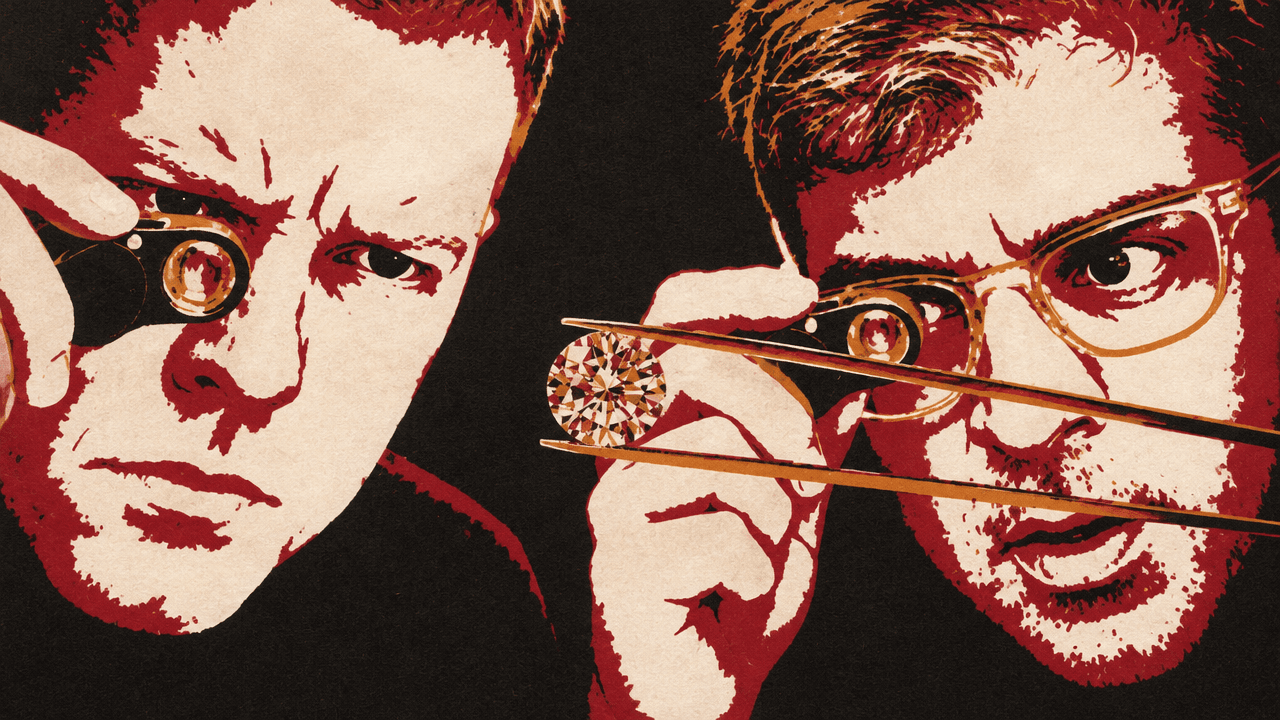
De Beers turned abundant supply into a marketing problem
Lab-grown diamond prices fell sharply between 2020 and 2024, but Shaan Puri’s opening figures describe two different things. A chart shown during the discussion tracks the average price per carat for one-carat lab-grown diamonds, from $3,410 in 2020 to $892 in 2024, a 74% decline. Separately, Puri says a two-carat lab-grown diamond can now cost $148. He uses that price to frame the puzzle: how did a stone become so closely tied to love and commitment that its meaning might outlast its price?
Shaan Puri begins his account with diamonds as a sign of power. They were rare enough that kings and queens could wear them as displays of wealth and status. That was not the same as associating a diamond with a proposal. For much of history, he says, marriage arrangements involved agreements between families, sometimes with a dowry. When rings were used, they might be made of iron or set with several kinds of stones. A diamond engagement ring was not yet the expected choice.


That changed after large diamond deposits were found in South Africa in the late 19th century. The new supply threatened the value of diamonds: if people could obtain them readily, rarity would no longer justify high prices. Puri describes Cecil Rhodes and Barney Barnato as entrepreneurs who began buying up mines and consolidating supply. He says that roughly 20 years after the discovery, they had formed De Beers.
Puri says De Beers controlled close to 90% of the world’s diamond supply and rationed how much reached the market, including which jewelers received stones. During the discussion, Sam Parr reads a displayed Wikipedia passage that says De Beers controlled 80% to 85% of rough-diamond distribution from its founding in 1888 until the start of the 21st century. The two figures are presented in the discussion without a reconciliation. Puri’s broader point is that the company’s control of supply helped keep diamonds expensive.


The more unusual part of the story, Puri argues, is how De Beers created demand. He calls diamonds a rare case study in marketing because the product had to be made meaningful to buyers, not merely sold to people who already wanted it. Before the marketing effort, he says, fewer than 10% of people bought a diamond engagement ring. The challenge was to turn a discretionary purchase into a cultural expectation.
Love and the proposal made diamonds feel necessary
The Great Depression exposed the limits of selling diamonds as markers of wealth. With consumers more focused on necessities, Puri says, De Beers hired the agency N. W. Ayer and asked for more than a conventional advertising campaign: it needed people to think differently about what diamonds were for.
The agency’s answer, as Puri tells it, was to connect diamonds to love. Copywriter Frances Gerety created the line “A diamond is forever,” making the stone’s expense signify lasting commitment rather than simply cost. If a diamond stood for a relationship that would endure, its price could be framed as part of the meaning.
De Beers also focused on the moment of purchase. An engagement offered a recurring occasion on which a man could be expected to buy a ring. Puri compares that approach to products tied to specific holidays: instead of asking people to buy diamonds whenever they felt like it, the marketing made the proposal a moment when a diamond was supposed to appear.
The campaign reached beyond advertisements. Puri says De Beers sent a woman named Gladys around the country to speak to schoolgirls about diamonds, including the four Cs. She later wrote a booklet titled Bigger Sales of Bigger Diamonds. The strategy, in Puri’s account, was to cultivate interest in diamonds among young women before they were likely to be engaged, helping establish what they might expect from a future proposal.
Hollywood supplied another route into the same expectation. Puri says De Beers offered actors or directors money or free diamonds in exchange for showing a diamond at the emotional climax of a movie: the man would profess his love to a woman with one. The company also arranged for celebrity engagement and diamond-purchase stories to be circulated to newspapers and magazines. A “Diamond News Bulletin” shown during the discussion lists engagement announcements alongside details of the stones and settings. The aim was not only to show diamonds in advertising, but to make diamond engagements feel like news—and like a familiar part of public life.
Together, these tactics linked the ring to a story people could recognize: a man demonstrates love through a costly gift at the moment of proposing, and the gift is expected to last. As Puri puts it, women came to expect the diamond and men came to understand that it was expected of them.
That created an opportunity to sell more than the basic idea of a ring. Puri says it was easier to persuade someone already planning to buy a diamond to spend more than to persuade someone who had never considered buying one. De Beers therefore had to encourage both the purchase and the larger purchase.
The spending benchmark helped. Puri says the advice began at two months’ salary and has since “crept up” to three. The advertisements shown in the discussion make the benchmark personal. One reads, “She married you for richer or poorer. Let her know how it’s going.” Another asks, “How 2 months’ salary wound up on Julie’s finger.” These lines turn a vague question—how much should someone spend?—into an anchor. A buyer can spend less and feel cheap, meet the suggested amount, or spend more and treat it as a gesture beyond the minimum.
The four Cs gave buyers a language for spending more
The spending benchmark addressed how much to spend; grading addressed which stone to choose. Puri says buyers often cannot easily tell which diamond is better. Two stones may look alike to the naked eye while their grades and prices differ. He describes distinctions such as flawless, internally flawless and virtually flawless as hard for most shoppers to see without magnification.
The four Cs—color, clarity, carat and cut—gave buyers and sellers a shared language for describing those differences. A graphic shown during the discussion lays out the categories as scales: color runs from colorless toward yellow tint; clarity from flawless toward included; carat marks weight; and cut runs from too shallow through ideal to too deep. In Puri’s interpretation, the framework also enables a wider range of prices. It gives sellers a vocabulary for presenting gradations as meaningful and buyers reasons to pay more for a higher grade.
He compares the system with wine, where specialist vocabulary can support a wide range of prices even when many consumers cannot reliably distinguish products in a blind taste test. Expertise can become its own kind of status: learning the language means becoming an insider.
Parr raises the role of the Gemological Institute of America, or GIA, as a third-party grading body. He describes it as a nonprofit that brings in hundreds of millions of dollars in revenue. Puri compares the relationship between graders and sellers to Michelin and restaurants: a ranking system can help the businesses it evaluates, while those businesses give the system practical relevance. He argues that the grader and the graded can benefit from one another.
That system does more than describe a stone. It helps answer a buyer’s question—“Is this one good enough?”—with a formal vocabulary and a grade, even when the distinctions are not apparent to the unaided eye.
Lab-grown diamonds challenge both the price and the category
Lab-grown diamonds put pressure on the price of natural stones and on the distinction between them. Puri says lab-grown stones have expanded quickly. A chart shown during the discussion tracks their share of U.S. engagement rings with a lab-grown center stone: 12% in 2019, 36% in 2022, 46% in 2023, 52% in 2024 and 61% in 2025. Puri says a lab-grown diamond can cost 80% to 90% less than a natural diamond of comparable quality.
Asked whether the difference can be seen, Puri says the stones are indistinguishable to the naked eye and that a jeweler may be able to identify one with sufficient testing. The lower price and similar appearance, he argues, made it difficult to dismiss lab-grown stones as a lesser choice.
Puri says De Beers first tried to discredit them as fake and emphasize natural diamonds as real. When that language failed to overcome the value proposition, De Beers launched its own lab-grown line, Lightbox, at a much lower price. The Lightbox ad shown in the discussion offers a one-carat stone for $800 and presents lab-grown diamonds in pink, white and blue as “delightfully priced.” Puri interprets the move as an attempt to make lab-grown diamonds seem like a cheap category of their own, preserving a sharper distinction between natural stones and the less expensive alternative.
A visit to a De Beers store gave Puri a more immediate view of how the category is presented. He describes being asked to make an appointment despite there being no other customers in the shop, then being taken into a private room where the sales associate used gloves and a felt display. He calls the experience theater: the appointment, private room and careful handling made the purchase feel ceremonial and consequential.
The presentation is not the only thing that has stayed in place. Puri says wholesale lab-grown prices have fallen much faster than retail prices. In the store, he found that prices had come down only about 15% to 20%, with retailers continuing to keep their markup. His explanation is that most customers cannot readily access a wholesale diamond and turn it into jewelry themselves, leaving stores room to retain the margin even as the underlying stones become cheaper.
For Parr, the broader lesson is that perception can be changed, though he notes that the process may take a long time. He suggests that supplements offer another example: taste and other cues may make a product feel as if it is working, even when he is unsure how much evidence supports that impression. He also says the data center industry could study how to change public perception.
Bitcoin’s language gives holders a reason to stay
Puri sees a parallel between diamond marketing and Bitcoin’s changing public narratives. He describes Bitcoin as having begun as a fringe, cyberpunk idea associated with distrust of government, cryptography and self-custody. When the currency framing did not work well, he says, the “digital gold” framing made it easier to understand: Bitcoin could be something to hold rather than a practical payment method.
“HODL” and “diamond hands” recast holding through a price decline as a sign of conviction rather than failure. Puri links this to diamonds’ “forever” story: a ring kept for sentimental reasons or as a family heirloom does not return to the market, just as Bitcoin holders who are urged not to sell keep coins out of circulation. Parr jokes that selling an engagement ring can carry its own bad symbolism, like naming a boat Titanic.
Puri also points to laser-eye profile pictures as a way Bitcoiners signal membership. People can recognize others in the group, and participants get a sense of belonging. He describes terms such as “super cycle” and Ethereum’s “flippening” as part of a continuing FOMO mechanism: a holder may hesitate to leave because the next promised surge might be near. Puri says that, like diamond marketing, a narrative can become partly self-fulfilling when enough people act as if it is true.
The words used to describe a period can shape how people live in it
Parr pushes back on the label “Greatest Generation,” arguing that the generation that lived through World War II should not be treated as uniformly superior to others. He cites soldiers who opposed being in the war, widespread racism, strikes and walkouts, and high crime and juvenile delinquency. His point is that generational labels can make the past look better than it was.
Puri offers “pronoia” as a counterpart to paranoia: the sense that the universe is conspiring in your favor. If people believed a “golden decade” was beginning, he argues, they might start looking for evidence that opportunity was expanding. That belief could change how they act and become partly self-fulfilling.
To make a different kind of perspective concrete, Puri demonstrates Any Human Ever, a website that invites visitors to draw a random life from the more than 100 billion humans it says have ever lived. The draw produces Tariq, a boy born in 1238 in what is now Yemen. The site presents a life shaped by the statistical conditions it gives for that place and era: the generated child dies of an unnamed fever at nine months. Puri uses the exercise to focus attention on the circumstances of one’s birth—the year and place that shape the life available to a person.