Diversification Is the Discipline of Keeping Upside and Cutting Downside
Ray Dalio argues that Bridgewater’s investing system was built less on finding brilliant individual bets than on reducing the damage from being wrong. The Bridgewater founder says investors should combine genuinely uncorrelated return streams, convert judgments into evidence-tested rules, and study the debt, political and technological forces that shape markets. He applies the same logic to organizations and personal wealth: seek people who expose your blind spots, and treat money as a means to freedom and meaningful work rather than an end in itself.
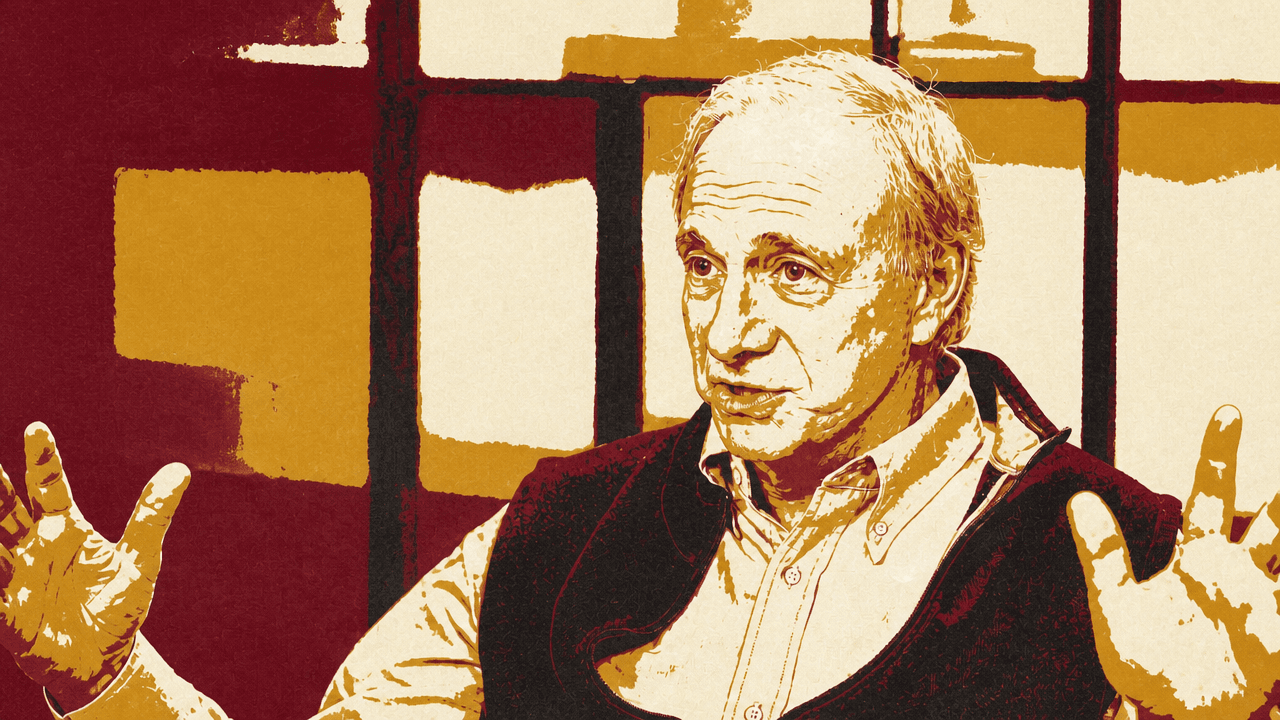
The investing problem is keeping the upside while cutting the downside
Ray Dalio traces Bridgewater’s investing philosophy to a failure that forced him to confront both overconfidence and concentrated risk. He had started Bridgewater in 1975 and, by 1981 and 1982, concluded that heavily indebted emerging countries were heading for a debt crisis. Mexico’s default in August 1982 supported that view. But Dalio also expected the broader economy to become a disaster.
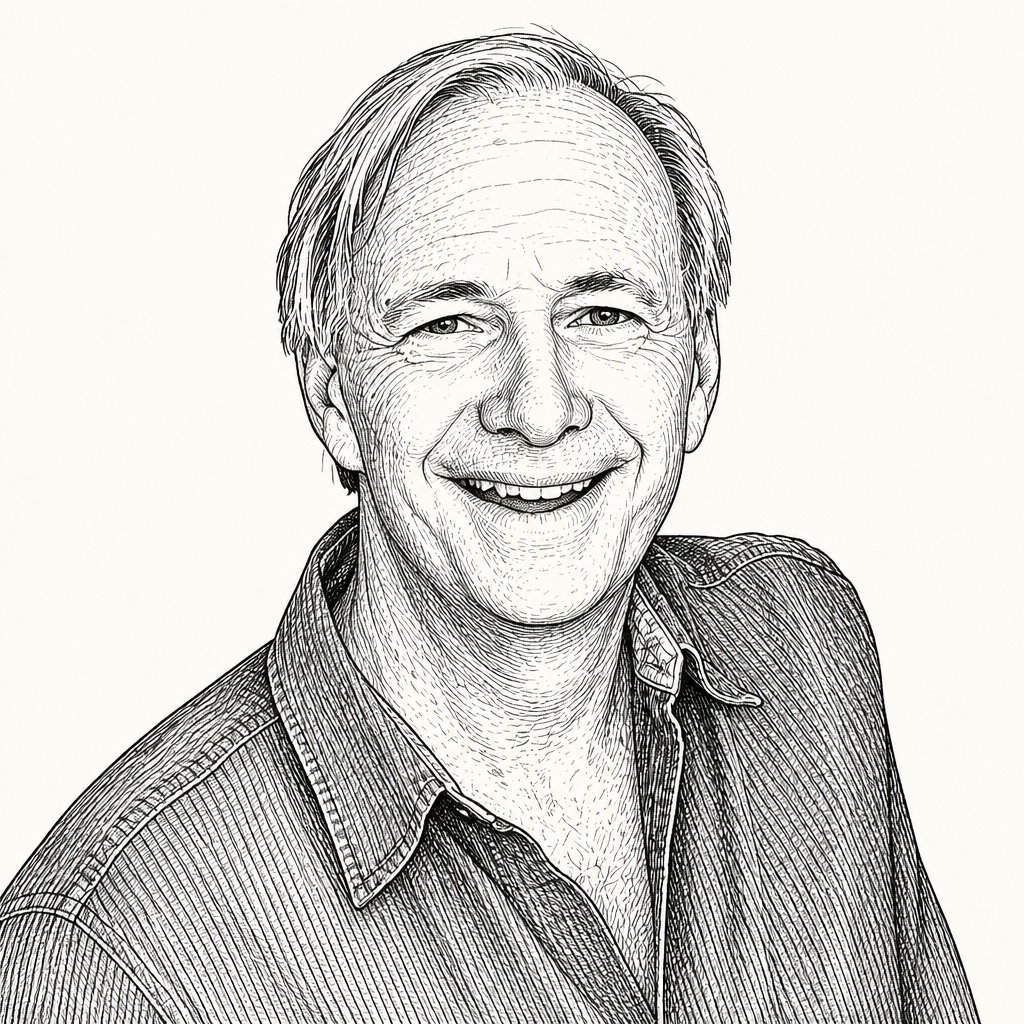
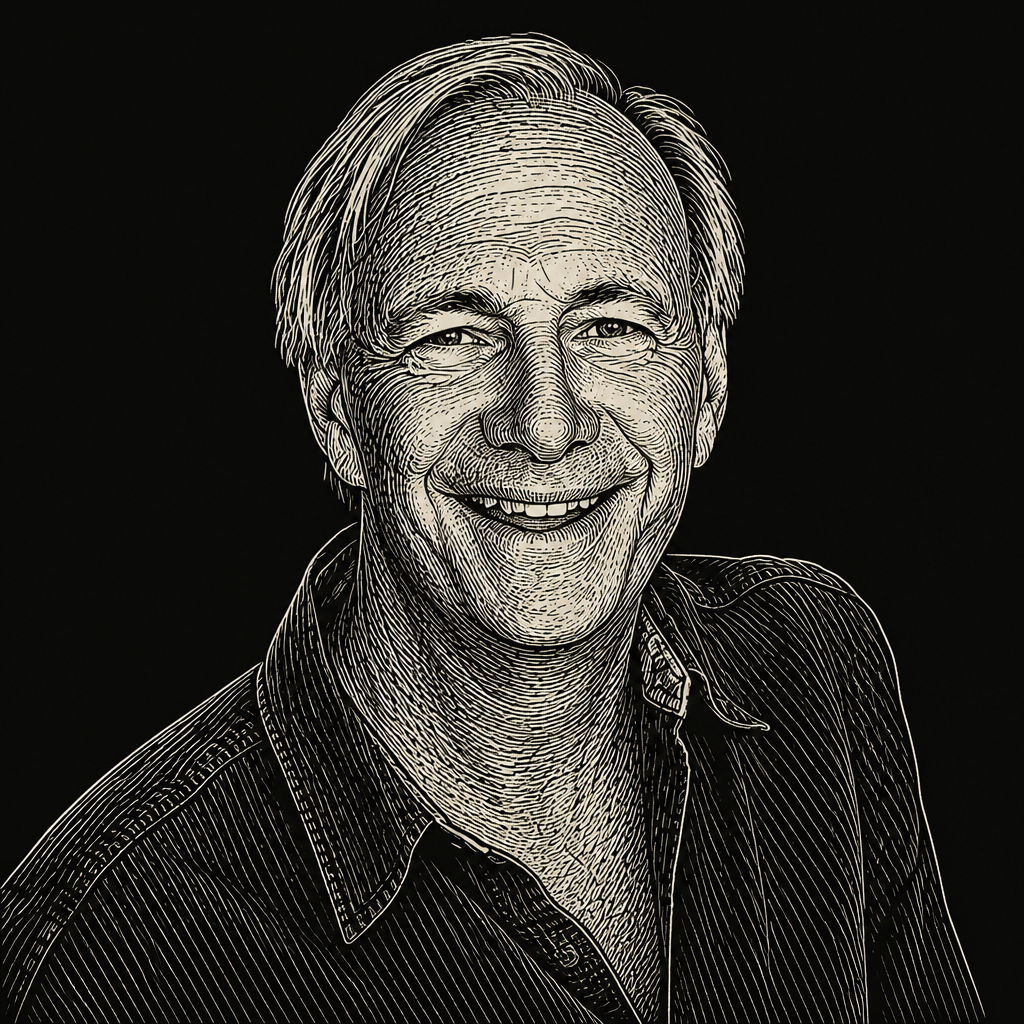
“I couldn’t have been more wrong,” he said.
He lost money for himself and clients, laid off Bridgewater’s employees, and borrowed $4,000 from his father. The episode did not persuade him to abandon the markets. It changed the way he wanted to operate in them. He says he learned “humility to balance my audacity,” and began actively seeking people willing to challenge his thinking rather than reinforce it.
The second lesson was diversification. Dalio wanted a way to reduce the chance that one wrong view could threaten the whole enterprise without giving up the possibility of strong returns.
Find 15 good, uncorrelated return streams.
He calls this the “Holy Grail” of investing. The point is not simply to own 15 things. The return streams must be sufficiently independent that they do not all rise and fall for the same reasons. Dalio said he studied the marginal benefits of diversification at different levels of correlation and concluded that 15 good uncorrelated bets could reduce risk by about 80% without reducing return. In his description, that improves the return-to-risk ratio by roughly five times.
The source displayed a cumulative-return chart comparing Bridgewater Pure Alpha 1 and the S&P 500 Total Return from 1991 through 2015. Dalio’s claim is not that a single performance line proves a method. It is that durability comes from avoiding the arithmetic trap of major losses: a portfolio down 50% must gain 100% simply to return to even.
He attributed Bridgewater’s growth to a combination of strong returns, controlled risk, and low correlation with other markets. He cited returns of about 11.8% annually over roughly 31 years while he ran the strategy, with about three losing years. He described the largest annual decline as roughly 13%, in an answer that referred both to “2000” and COVID, and said the next two largest declines were around 2%.
The practical implication of Dalio’s framework is less glamorous than identifying the one winning investment. A portfolio should be designed around what can fail together, not only around what might rise together. The source’s accompanying guide extended that logic beyond securities, inviting readers to examine whether investments, revenue streams, or clients really move independently of one another.
A game plan makes judgment inspectable
Ray Dalio says the most common mistake smart investors make is not having a game plan. A game plan, in his account, is a set of decision rules derived from evidence rather than a collection of current opinions.
Whenever he made an investment decision, he would study analogous circumstances in the past. If he had applied the same decision logic then, how would it have worked? That exercise created a track record for the rule, but it also forced a more demanding question: what cause-and-effect relationship actually explains the result?
The goal was to turn a judgment into an explicit rule: if these conditions arise, take this action. Once he had a rule, he said, he programmed it into a computer. Rather than relying on himself to notice a familiar setup in one market, the system could search for comparable conditions across markets and countries.
A useful rule, in Dalio’s view, should be “timeless and universal.” If it did not work during a long period of history, an investor should understand why before concluding that circumstances have changed enough to make it valid now. The standard is meant to resist inferring a permanent law from a short run of favorable outcomes.
This is how Dalio describes building Bridgewater’s decision systems: reflections became principles, and principles became code where possible. Over decades, he says, he accumulated thousands of written principles covering market decisions and personal decisions alike. The point was not to eliminate judgment. It was to make judgment challengeable and less dependent on mood or memory.
Pain plus reflection equals progress.
The phrase is not an endorsement of suffering for its own sake. Pain eventually fades, Dalio said, but people can remain stuck if they skip reflection. His practice is to treat a setback as a puzzle: what does this reveal about reality, what assumption was wrong, and what principle would make him better equipped for a similar situation?
A successful reflection yields what he calls a “gem”—a lesson that can be carried into future decisions. His response to being wrong was not merely to become more cautious. It was to identify the missed causal relationship, expose it to criticism, and write it down in a form that could be applied again.
Dalio writes when circumstances, decisions, or reflections produce something worth preserving, rather than through a fixed morning or evening ritual. He also recommends that people articulate their own principles. An unwritten lesson is difficult to test, revise, or distinguish from a convenient story told after the fact.
Meditation has supported this process for him since 1969. He described transcendental meditation as calmly repeating a meaningless sound until competing thoughts recede. In his account, the exercise calms the mind and brings conscious thought closer to emotional and instinctive processes that usually sit below awareness. He links that state to the kind of creativity that can emerge in a hot shower and cannot be forced by effort.
Humility therefore has operational consequences in Dalio’s system. Diversification acknowledges that any one view may be wrong; written rules and adversarial feedback are meant to show where it is wrong before markets do.
Macro investing begins with forces larger than the news cycle
Ray Dalio treats investing as inseparable from the larger systems in which markets operate. As a global macro investor, he said, he needs to understand politics, history, debt, technology, and social conflict because market positions sit within those forces.
He studied roughly 500 years of history after concluding that his own lifetime could not supply every relevant precedent. When he encountered something unfamiliar, he wanted to know whether it had happened before and what had caused it. In his view, large monetary, political, social, and geopolitical orders break down in recurring ways.
Dalio’s framework identifies five interacting forces.
| Force | Dalio’s mechanism |
|---|---|
| Debt, money, and the economy | When debt grows faster than income, debt service eventually squeezes spending and can force restructuring. |
| Internal order | Widening wealth and values gaps can undermine compromise, trust, and adherence to common rules. |
| Geopolitical order | War establishes an order; when no accepted system settles disputes, conflict becomes more likely. |
| Nature | Droughts, floods, and pandemics are persistent historical forces. |
| Human inventiveness | New technologies raise productivity and living standards over time. |
The debt-money-economic cycle is mechanical in Dalio’s telling. When debt grows faster than income, debt-service payments eventually squeeze spending, which he compares to plaque accumulating in a circulatory system. The result is eventually some form of restructuring. Debt also creates a reciprocal problem: one person’s debt is another person’s asset. If a government runs a large deficit and must issue bonds, investors need to ask who will buy them and on what terms.
The second force is internal political and social conflict. Dalio pointed to widening wealth gaps and values gaps as threats to democratic functioning when people stop compromising, trusting institutions, or accepting common rules.
The third is geopolitical order. Major wars establish the rules that follow them, he said. Dalio described the post-1945 system as a U.S.-led multilateral order associated with institutions including the United Nations, World Health Organization, and World Trade Organization. He argued that this order has broken down, leaving fewer mechanisms to settle disputes and more risk of conflict.
Nature and human inventiveness work in opposite directions in his framework. Droughts, floods, and pandemics have been major historical forces, Dalio said, and have killed more people than wars. Technology, by contrast, raises productivity, living standards, and life expectancy over time.
News is fleeting, Dalio said; the relevant question is which deeper forces are moving and how they interact. Historical context matters because a rule cannot be seriously tested only against conditions an investor has personally lived through.
That approach shapes his account of bubbles. Dalio insists that a technology can be genuinely transformative while its associated stocks remain poor investments. The reality of the innovation does not settle the question of price. In a bubble unwind, he said, even companies that ultimately succeed can fall by 80% or more.
His explanation turns on the distinction between wealth and money. A company can raise $50 million at a $1 billion valuation and thereby create a billion dollars of reported wealth, even though only $50 million actually changed hands. But wealth cannot itself be spent. It must be sold for money. If investors borrowed to acquire assets and later need cash—for example, because interest rates rise and debt payments increase—they may be forced to sell assets into a falling market.
Dalio’s bubble indicators include borrowing to finance purchases, wealth rising relative to money, widespread enthusiasm and fear of missing out, inadequate diversification, and the presence of a compelling new technology. He said his bubble gauge, which tracks cases across countries back to about 1900, was then about 75% of the way toward the readings seen in 1929 and 2000.
That is a warning about prospective returns, not a precise clock. Dalio said a high bubble reading may suggest an investment will not perform well over the next three to 10 years, but it does not identify when a reversal will begin. Timing requires recognizing what will “prick” the bubble—usually a new need for cash. Tightening monetary policy is a classic catalyst because higher rates increase debt burdens and change the relative attractiveness of stocks and bonds. A wealth tax could have a similar mechanical effect if asset owners need to sell holdings to obtain cash for the tax.
Dalio cautioned against trading on the comment. His larger point was that market events have mechanics: understanding their cause-and-effect relationships is more useful than treating every move as a disconnected surprise.
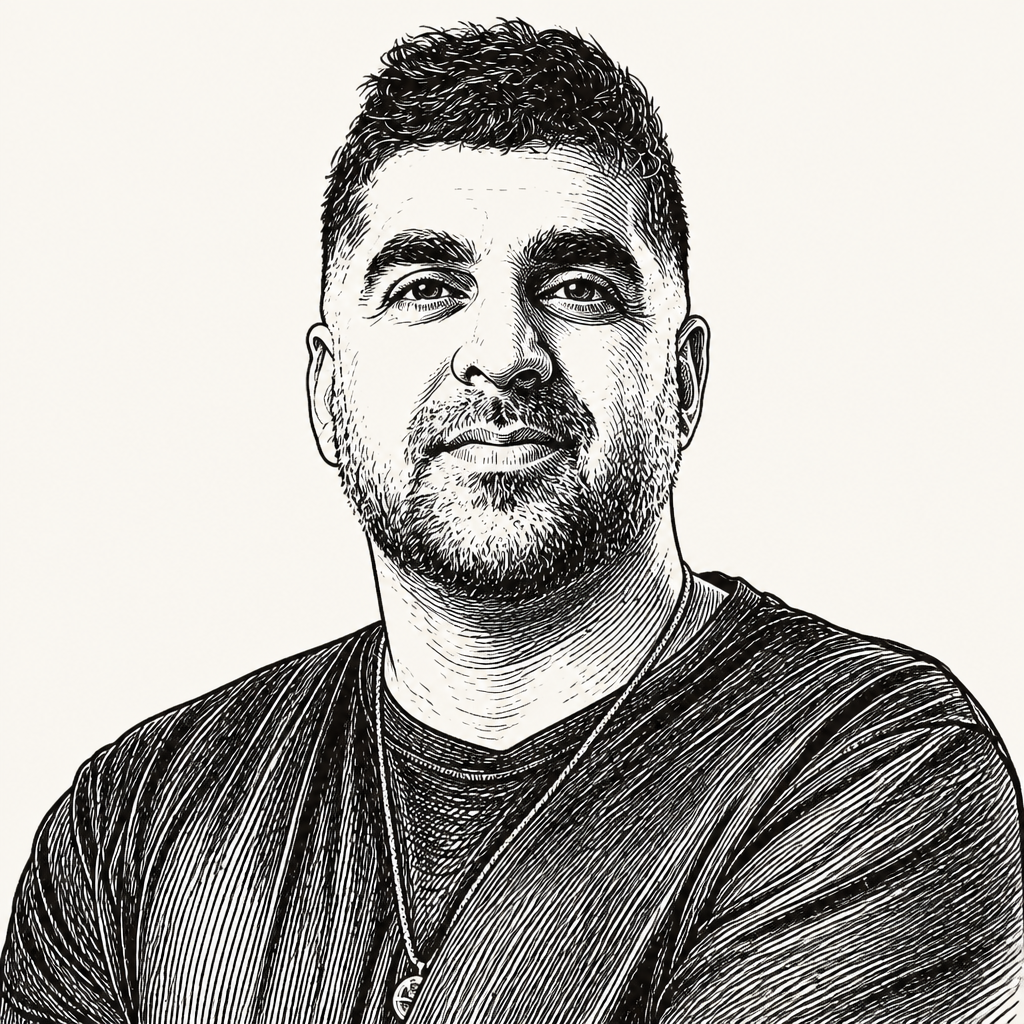
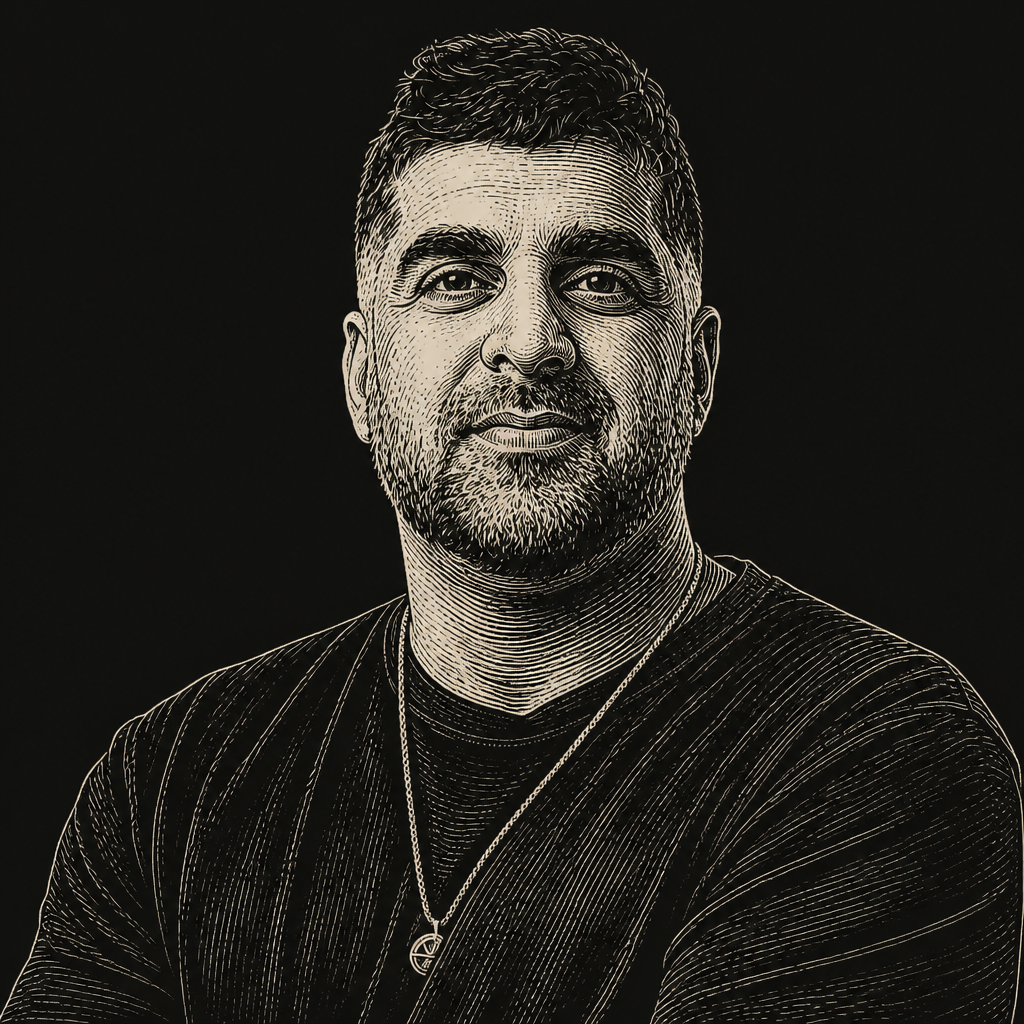
He applied the same logic to gold. When Shaan Puri raised a report that Dalio’s family office held 70% or 75% in gold ETFs, Dalio rejected it as “totally wrong.” His stated general view was that gold might account for between 5% and 15% of a portfolio, depending on the rest of its construction. It can be tactically overweighted during conditions such as a debt crisis or heavy money creation, but it belongs inside a balanced strategic allocation rather than as an all-encompassing conviction.
Complementary people are another form of diversification
Ray Dalio applies the same anti-concentration logic to organizations. People should understand their own nature, he said, then work with people whose strengths differ from and complement theirs.
Dalio created personality assessments while preparing to hand Bridgewater’s leadership to others. He said he began with Myers-Briggs and other tests, then developed his own approach to understanding how people think and work. He gave versions of the assessment to Elon Musk, Bill Gates, Reed Hastings, Muhammad Yunus, and others, and made the resulting test available through PrinciplesYou.
One category Dalio emphasizes is the “shaper”: a rare person drawn to moving from visualization to actualization. In his description, a shaper does not merely enjoy ambitious ideas. The person connects a large vision to the operational details required to make it real.
Dalio said Musk exemplified this trait. After Musk had made roughly $180 million from PayPal, Dalio advised him to reserve some capital before committing money to his Mars ambitions. Musk, according to Dalio, did not see the need for that safety net. Dalio’s broader point was that people differ in their needs for security, motivation, and satisfaction.
Shaan Puri found his own assessment useful precisely because it contradicted his preferred identity. He had expected to be categorized as a shaper but received “explorer,” which he said fit his curiosity, appetite for learning, and willingness to extract value from bad outcomes. He also recognized that he is less attentive to detail and less perfectionistic than he believes a shaper must be.
For Dalio, that recognition should affect how people build partnerships. A person cannot simply will away a tendency toward impatience, abstraction, or incomplete execution. The better move is to find people whose instincts cover those weaknesses.
Sam Parr described himself as inclined to act immediately—he tattooed “ACT NOW” on his feet in his early twenties—and later acknowledged that he sometimes needs to slow down and plan more strategically. Dalio’s response was not that Parr should suppress his impulse toward action. It was that he should work with people who complement it.
At Bridgewater, Dalio said, personality tests gave employees language to interpret differences that might otherwise produce irritation. A colleague who seemed frustrating was not necessarily incompetent or acting in bad faith; they might have a different cognitive or interpersonal style. The organizational task was to use those differences rather than demand sameness.
That reasoning also informs Dalio’s hiring hierarchy. He looks first at values, then abilities, then skills. Most hiring, he argued, reverses the order by placing excessive weight on résumés and current credentials.
Values determine what someone genuinely cares about and whether a shared mission is possible. Abilities determine how well they can think, adapt, discover, and solve problems. Skills matter, but they can be learned or made obsolete. Dalio’s example was Rob Fried, an early Bridgewater hire who had been a door-to-door Bible salesman with little finance experience. Dalio valued his curiosity and potential over conventional financial training.
This is why Dalio says talent matters more than money. Capital seeks people who can do exceptional things; it does not create the underlying ability. He used Musk as an example of someone investors backed because of his capabilities, not because he began with the most capital.
Bridgewater’s intended culture was an “idea meritocracy” built on radical truthfulness and radical transparency. Dalio acknowledged that outsiders sometimes perceived the culture as cult-like. He published Principles, he said, partly so prospective employees could understand the firm’s norms before joining. The system was meant to make disagreement productive: people should be able to challenge one another’s ideas, reveal blind spots, and improve the quality of collective decisions.
The analogy to portfolio construction is Dalio’s: a team should not be built from people who share the same blind spots. But he does not argue for variety as an end in itself. The differences must be understood well enough to become useful, and the group needs norms that allow those differences to be expressed.
Freedom and success require a purpose beyond accumulation
Ray Dalio distinguishes freedom from consumption. During Bridgewater’s difficult early years, he did not set his sights on a lavish lifestyle. He counted how many months and years he could live if the business stopped producing income. What he sought was enough money to cover basic needs and avoid being forced into work he did not want to do.
He called it “freedom money,” or “fuck you money.” The number was far below $1 million at the time, he said.
Dalio describes the choice as one between safety and the “jungle”: a difficult environment full of risk, uncertainty, and things that can hurt you, but also challenge and discovery. He could have taken a conventional job, he said, but wanted the upside of building and investing. Even after success, he did not want to leave the jungle for the “zoo.”
That preference is temperament, not a universal rule. Dalio said he does not need expensive watches and is reluctant to use private planes. But he spends on what he finds meaningful: an ocean-exploration ship that functions as a research platform for scientists, an interest rooted in watching Jacques Cousteau and in a shared passion for diving with one of his sons.
His standard is not austerity. It is whether spending corresponds to genuine joy. Someone else may sincerely value jewelry, luxury goods, or watches; Dalio sees no reason to condemn that. Those things simply do not fit his own nature.
The same reasoning applies to money more broadly. There is no correlation, he said, between happiness and the amount of money a person makes. Money has no intrinsic value; the question is what it is for. Does it improve one’s relationships, family life, freedom, or ability to do meaningful work? Without an answer, striving for wealth can become an aim detached from any larger purpose.
Dalio defines success as knowing one’s nature, finding the path that fits it, and being able to look back and say that this was the life one wanted. A person’s life phase changes—through work, children, leadership, or eventually passing knowledge to others—but Dalio believes the underlying nature remains comparatively stable.
His final standard is “meaningful work and meaningful relationships.” The work should be worth doing to the person doing it. The relationships should be strong enough to sustain truthfulness, disagreement, and mutual help. In Dalio’s formulation, that is the more durable objective behind both his investment principles and his organizational ones.